Stride Symmetry Assessment Apps Paired With Outdoor Recovery Walk Logging
You’re not just logging steps-you’re tracking recovery. Apps like GaitUp Move and BalanceTrack Pro assess stride symmetry in real time, catching imbalances before they cause joint stress. Paired with high-accuracy GPS, they sync gait and location data to reveal true progress and prevent overexertion. These tools don’t just count walks; they evaluate how well you’re healing. Better symmetry means safer, more effective recovery-and understanding your patterns opens the door to smarter, longer-term gains.
Notable Insights
- Stride symmetry apps detect gait imbalances during outdoor recovery walks to support proper healing.
- Real-time feedback from apps like BalanceTrack Pro helps correct asymmetry before setbacks occur.
- GPS integration ensures accurate tracking of distance and pace during outdoor recovery walks.
- Combining gait and GPS data enables precise monitoring of stride consistency and exertion levels.
- Clinically validated apps such as StepWatch Fit provide reliable symmetry metrics for rehabilitation progress.
Why Stride Symmetry Matters in Recovery

While recovering from injury or surgery, maintaining balanced movement isn’t just about comfort-it’s a key indicator of proper healing, and stride symmetry plays a critical role in that process. You’re likely to develop compensatory patterns without realizing it, especially when pain or weakness shifts your gait. Uneven stride symmetry disrupts normal muscle activation, leading to overuse on one side and weakening on the other. This imbalance also alters joint loading, increasing stress on knees, hips, and ankles, which can delay recovery or cause secondary injuries. Proper symmetry guarantees forces distribute evenly across both limbs, supporting healthier biomechanics. Fitness recovery gear that monitors gait helps you stay aware of these imbalances, but the real value lies in understanding them. Without addressing symmetry, even consistent walking may reinforce dysfunction instead of correcting it.
How Real-Time Gait Apps Improve Healing
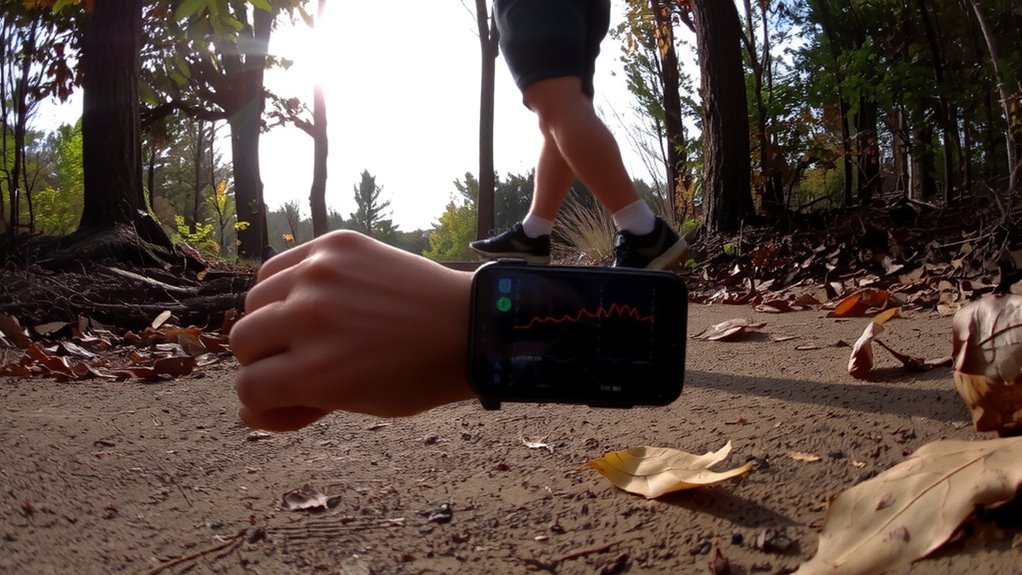
Because healing isn’t just about time and rest, real-time gait apps add a layer of precision to recovery by giving you immediate feedback on your walking patterns. You can detect imbalances the moment they occur, allowing you to adjust your stride before bad habits set in. These apps support gait normalization by guiding you toward symmetrical, efficient movement through audio or haptic cues. Over time, this consistent correction reinforces proper biomechanics, which is essential after injury. What makes these tools powerful is their role in injury prevention-by maintaining balanced loading across joints, you reduce stress on vulnerable areas. Most apps sync with wearable sensors or smartphone accelerometers, delivering reliable data without complex setups. They’re practical for daily outdoor recovery walks, turning each step into active rehabilitation. With real-time monitoring, you’re not just walking; you’re training your body to heal smarter and move safer, minimizing setbacks and supporting long-term mobility.
Best Apps for Tracking Step Balance
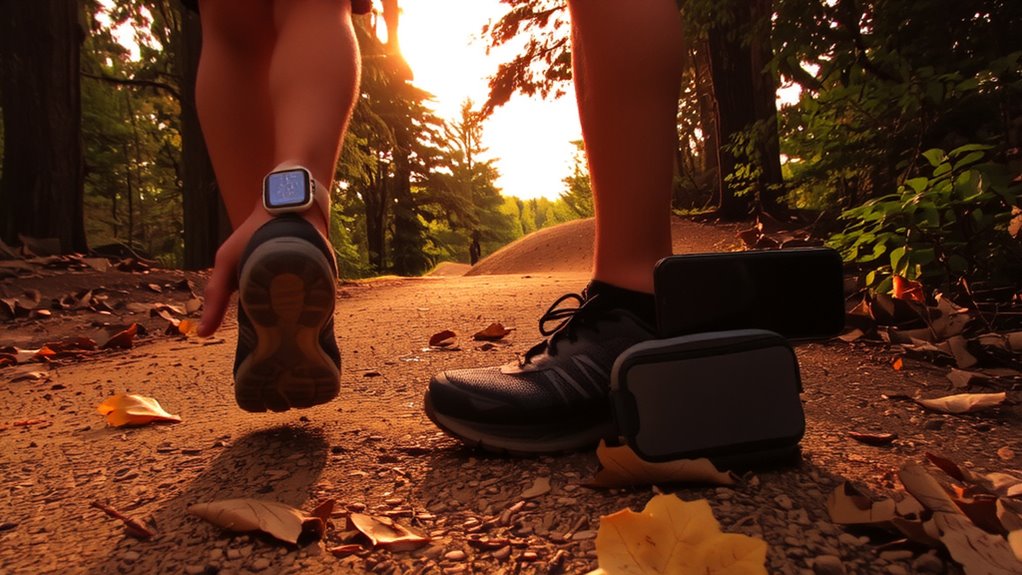
When tracking step balance during recovery, choosing the right app can make a real difference in how effectively you restore symmetry and build resilient movement patterns. You need tools that offer strong step counting accuracy and support proper device sensor calibration to reflect true progress. The best apps combine reliable data with intuitive feedback, helping you adjust gait imbalances over time.
| App Name | Key Feature |
|---|---|
| GaitUp Move | High step counting accuracy |
| StepWatch Fit | Clinical-grade sensor data |
| BalanceTrack Pro | Real-time symmetry alerts |
| RehabStride | Custom calibration routines |
These apps prioritize precision, especially when you’re logging recovery walks. Proper device sensor calibration guarantees each reading reflects your actual stride. While some apps estimate steps, the top performers use validated algorithms to reduce error. You’ll want consistency across sessions-something only well-designed apps deliver.
Combine GPS and Gait Data for Smarter Recovery
If you’re serious about tracking recovery progress, syncing GPS with gait data gives you a clearer, more actionable picture than either metric alone. When GPS accuracy is high, you can trust the distance and pace readings, making it easier to assess effort over time. Paired with gait consistency-measured through stride length, cadence, and symmetry-this combo reveals whether your recovery walks are actually improving stability and balance. Most fitness watches now sync both datasets seamlessly, letting you spot subtle shifts in performance even when you feel fine. Devices using multi-band GPS show superior accuracy in wooded or urban areas, minimizing signal drift that skews results. For meaningful recovery tracking, consistent gait metrics alongside precise location data help you avoid overexertion. It’s not just about walking more-it’s about walking smarter, using reliable tech feedback to guide your rehab rhythm with confidence.
Use Feedback to Optimize Your Recovery Walk
You’ve got the data-GPS-stamped walks and gait metrics tracking your stride symmetry, cadence, and consistency-but collecting numbers isn’t enough unless you act on them. Use real-time feedback to guide your recovery, turning passive logging into active stride refinement. Apps that highlight deviations help sharpen balance awareness, letting you adjust cadence or stance before fatigue distorts form. Consistent use builds muscle memory, promoting efficient movement patterns critical for recovery.
| Metric | Ideal for Recovery |
|---|---|
| Stride Symmetry | ≥90% balance |
| Cadence | 90–110 steps/min |
| Step Length | Consistent left/right |
| Ground Contact | Even pressure |
| Balance Awareness | Improved weekly |
Small tweaks based on feedback enhance joint loading and stride refinement. Wearable sensors paired with apps aren’t just tracking-they’re coaching. You’re not just walking; you’re rebuilding smarter, one balanced step at a time.
Catch Imbalances Early to Avoid Setbacks
Though subtle at first, imbalances in stride symmetry often signal deeper issues that, left unchecked, can derail recovery progress. You might not feel pain yet, but asymmetrical step patterns place uneven stress on joints and muscles, increasing injury risk. That’s where early detection becomes critical. By using stride symmetry assessment apps during outdoor recovery walks, you gain real-time data on gait deviations-often before symptoms arise. These tools track metrics like swing time, stance duration, and step count symmetry, highlighting patterns that could lead to setbacks. Catching imbalances early allows timely adjustments to your rehab routine, helping you prevent relapse and maintain forward momentum. Unlike generic fitness trackers, these specialized apps offer clinically relevant feedback, making them a valuable part of recovery-focused gear. With consistent logging, you don’t just monitor progress-you protect it.
On a final note
You’re getting faster, stronger, and more balanced when you use stride symmetry apps with outdoor recovery walks. These tools give precise gait feedback and GPS-tracked progress, helping you spot imbalances before they become problems. Top apps combine accelerometer data with real-world conditions, offering reliable insights. Used consistently, they refine recovery, support joint health, and boost overall performance-making them a smart, practical upgrade in fitness recovery gear.