Legs-Up-the-Wall Pose With Neck Support for Venous Return Enhancement
You boost venous return and reduce leg fatigue with Legs-Up-the-Wall pose when you add proper neck support. A firm prop like a rolled blanket or cervical pillow maintains cervical alignment, easing muscle tension and supporting circulation. Position your sit bones near the wall, hips just inches away, with a bolster under your neck-not head-to avoid strain. Practice 3–5 times weekly for 10–15 minutes to optimize recovery. Using the right gear enhances both comfort and circulatory efficiency. There’s more to learn about refining your setup for maximum benefit.
Notable Insights
- Legs-Up-the-Wall uses gentle inversion to enhance venous return by leveraging gravity for improved circulation.
- Neck support maintains cervical alignment, preventing tension that could restrict blood flow and hinder recovery.
- Proper placement of a firm prop under the neck-never the head-supports spinal neutrality and parasympathetic activation.
- Elevating legs against the wall reduces venous pressure, especially beneficial post-exercise for reducing leg fatigue.
- Practice 3–5 times weekly for 10–15 minutes to optimize venous return and circulatory benefits safely.
How Legs-Up-the-Wall Boosts Blood Flow
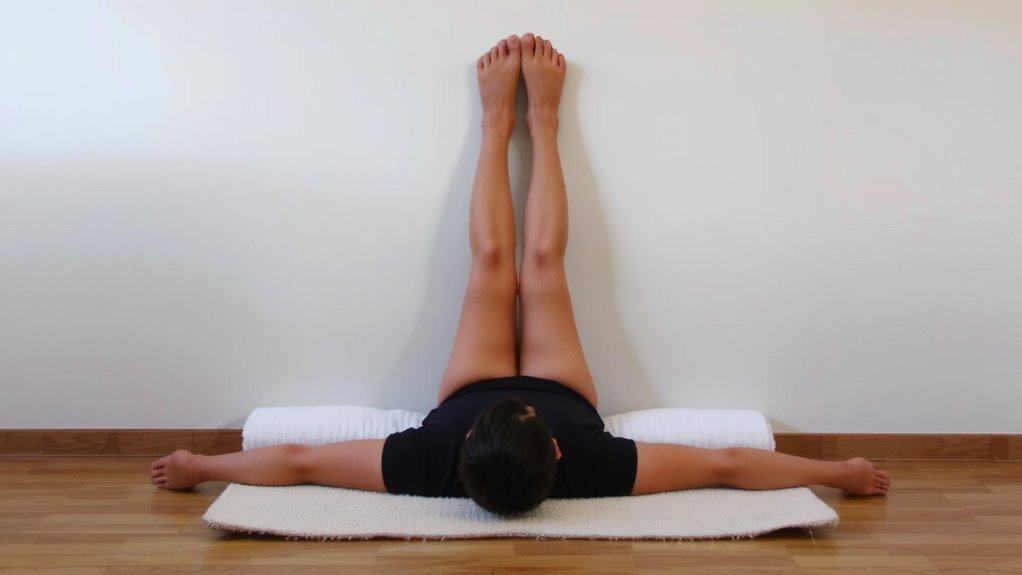
While you’re lying back with your legs resting vertically against the wall, the gentle inversion of Legs-Up-the-Wall pose helps reverse the effects of gravity on your circulatory system, making it easier for blood to return from your lower extremities to your heart. Gravity assistance now works in your favor, reducing venous pressure and encouraging efficient venous return. As your legs elevate, muscle relaxation sets in, particularly in the calves and thighs, which further supports blood flow by decreasing resistance in the vessels. This pose is especially effective post-exercise, when your body needs recovery most. Fitness recovery tools like supportive props enhance this effect, though even without gear, the pose delivers tangible circulatory benefits. You’ll notice reduced leg fatigue and improved comfort after just a few minutes. It’s a simple, low-effort technique with measurable impact-ideal for daily integration, whether you’re an athlete or just seeking smarter recovery.
Why Neck Support Improves Circulation and Alignment
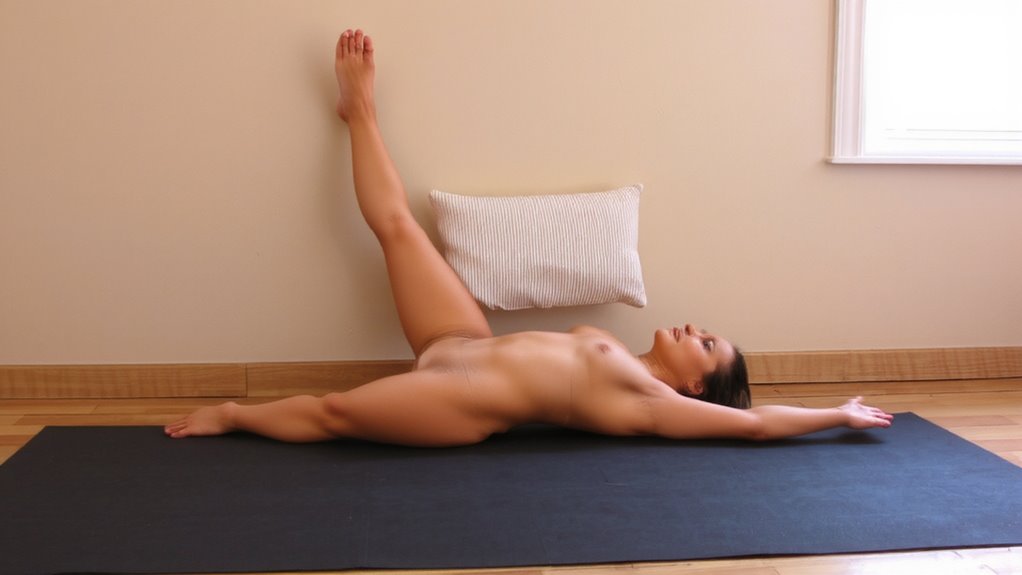
Ever wonder why adding neck support in Legs-Up-the-Wall pose makes such a difference? It’s because proper support promotes muscle relaxation in your neck and shoulders, reducing strain that can travel into your upper back. When your cervical spine is aligned, tension doesn’t inhibit blood flow or compromise venous return. This alignment supports nervous system balance, shifting your body into a parasympathetic state-ideal for recovery. Without support, subtle misalignments can trigger protective muscle engagement, counteracting the pose’s benefits. A well-placed prop, like a firm folded blanket or ergonomic bolster, maintains natural curvature, enhancing both comfort and circulatory efficiency. You’re not just resting; you’re optimizing conditions for blood to flow back toward the heart with less resistance. In recovery-focused fitness routines, such attention to alignment isn’t optional-it’s essential for maximizing physiological returns and ensuring sustainable, effective restoration. Incorporating a supportive best neck pillow can further stabilize the cervical spine and enhance therapeutic outcomes.
How to Set up the Pose With Neck Support
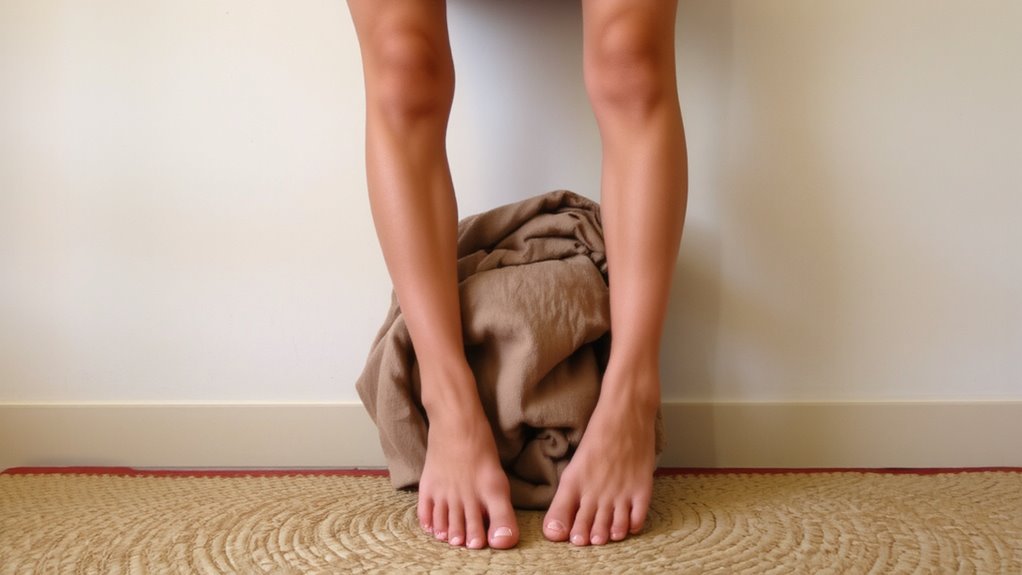
To get the most out of Legs-Up-the-Wall pose with neck support, start by positioning a firm, folded blanket or a contoured bolster just a few inches from the base of the wall-this small adjustment makes a measurable difference in spinal alignment and comfort. Sit beside the prop with one hip touching the wall, then swing your legs up as you lower your back to the floor. Your sit bones should rest just against or slightly onto the prop, allowing your spine to lengthen without compression. Proper wall alignment guarantees your head, neck, and spine stay in a neutral line, reducing strain. Careful prop placement under the neck-not the head-supports natural cervical curvature and enhances venous return. Avoid slumping or overextending; small shifts in positioning can improve circulation and recovery efficiency. This setup, while simple, is biomechanically significant for fitness recovery and effective use of support gear. Selecting the right support, such as a pillow designed for spine alignment, can further enhance cervical support and overall posture during the pose.
Best Props for Neck and Leg Support
A well-chosen prop can make all the difference in how effective and comfortable your Legs-Up-the-Wall pose feels, especially when supporting the neck and legs during fitness recovery. Cervical pillows offer firm, contoured support that maintains natural neck alignment, reducing strain. Foam rollers, while versatile, can compress too much under the neck unless high-density. For the legs, placing a foam roller under the thighs elevates them slightly, enhancing venous return. Best cervical pillows are specifically designed to support the neck’s natural curve and can significantly improve comfort in restorative poses. Below is a quick comparison:
| Prop Type | Best Use Case |
|---|---|
| Cervical pillows | Neck support, maintains curve |
| Firm foam roller | Leg elevation, moderate support |
| Soft foam roller | Less ideal, may flatten over time |
| Folded blanket | Budget neck support alternative |
Choose props that balance firmness and comfort for ideal recovery.
How Often to Do the Pose for Best Results
Typically, practicing Legs-Up-the-Wall pose three to five times per week delivers ideal results for fitness recovery, especially when paired with proper neck and leg support. The duration frequency matters-aim for 10 to 15 minutes per session to encourage venous return without strain. Shorter durations may not provide sufficient circulatory benefits, while longer holds offer diminishing returns for most users. Your practice consistency is key; irregular sessions reduce cumulative effects on muscle recovery and lymphatic flow. Athletes or those with high physical demand may benefit from daily practice, but three times weekly maintains baseline improvements. Fitness gear like supportive bolsters and non-slip mats enhances comfort, enabling longer holds and better form. Over time, consistent use supports reduced leg fatigue and improved post-exercise recovery. It’s not just about how long or how often-you’re building a sustainable routine that complements your body’s natural healing rhythms with reliable, measurable outcomes.
Common Setup Mistakes to Avoid
You’ll want to avoid placing the bolster too high under your neck, as this misalignment can compress cervical vertebrae and reduce the pose’s restorative benefits. Keep the support low and narrow-just enough to cradle the neck without lifting the head. Incorrect wall distance is another frequent error; if your hips are too far, you strain your lower back, but if too close, leg alignment suffers and circulation restricts. Aim for your sitting bones about two to four inches from the wall, allowing legs to rest vertically without pulling or splaying. Make certain your spine is neutral and shoulders relaxed. Using a flat, firm bolster or folded blanket prevents sinking, maintaining proper posture. This precision in setup enhances venous return and guarantees you gain maximal recovery with minimal risk-critical when using fitness gear designed for therapeutic outcomes.
On a final note
You’ll find legs-up-the-wall with neck support highly effective for venous return and recovery. Proper alignment, aided by a folded towel or cushion under the neck, reduces strain and enhances circulation. Using supportive props-like a yoga block for the hips or a mat for grip-improves stability and comfort. When practiced regularly, this pose helps relieve leg fatigue and supports cardiovascular function. Avoid common setup errors, like overextending the neck or placing legs too far from the wall, to maximize benefits safely.