Maximizing Recovery Through Strategic Application of High-Intensity Interval Training (HIIT) Programs
You’re not just building fitness with HIIT-you’re enhancing recovery by triggering cellular regeneration and metabolic efficiency. Strategic, low-volume sessions 24–48 hours post-training boost blood flow, clear metabolic waste, and support muscle repair without interfering with protein synthesis. When paired with recovery tools like massage guns or compression gear, HIIT helps recalibrate your body’s recovery baseline. Timing and intensity matter-get it right, and you’ll see faster adaptation, reduced soreness, and improved resilience. There’s more to optimizing this balance than meets the eye.
Notable Insights
- Schedule low-volume HIIT 24–48 hours post-intense training to align with natural recovery windows and avoid interference with protein synthesis.
- Use HIIT to boost blood flow and hormone release, enhancing nutrient delivery and waste clearance for faster muscle adaptation.
- Perform 15–20 minute HIIT sessions with active recovery intervals to stimulate cellular regeneration without overloading the body.
- Monitor heart rate variability to assess recovery readiness and determine optimal timing for the next HIIT session.
- Combine HIIT with recovery tools like massage guns and foam rollers to reduce soreness and support tissue repair and metabolic efficiency.
How HIIT Boosts Recovery (Not Just Performance)

A growing body of research shows that high-intensity interval training (HIIT) doesn’t just build endurance or burn calories-it actively enhances your body’s recovery systems over time. You experience improved cellular regeneration, allowing your tissues to repair and adapt more effectively between workouts. This isn’t just about bouncing back faster; it’s about becoming fundamentally more resilient. HIIT also boosts metabolic efficiency, meaning your body uses energy more wisely during rest and exercise. These adaptations make recovery a proactive process, not just downtime. Unlike passive rest, HIIT conditions your nervous and endocrine systems to manage stress better. When paired with proper recovery gear-like compression wear or quality foam rollers-you amplify these benefits. The right tools support the physiological changes HIIT initiates. So while performance gains are visible, the real advantage lies beneath: a recalibrated recovery baseline that keeps you consistent, reduces injury risk, and sustains long-term progress without burnout. Incorporating a best massage gun can further accelerate muscle recovery by increasing blood flow and reducing soreness post-exercise.
How HIIT Speeds Up Muscle Repair
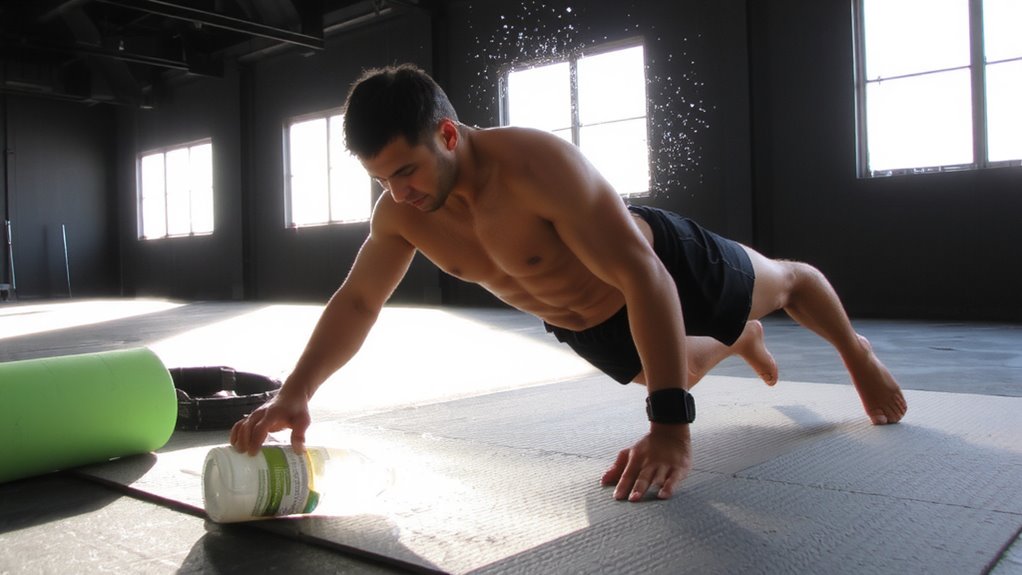
While you might assume intense exercise slows muscle repair, HIIT actually accelerates it by triggering a cascade of adaptive responses. Short bursts of effort followed by rest stimulate blood flow and hormone release, speeding nutrient delivery to damaged fibers. This fuels rapid muscle adaptation, allowing tissue to rebuild stronger and more resilient. HIIT also improves metabolic efficiency, ensuring your cells use oxygen and fuel more effectively post-workout-key for recovery. Over time, this enhances your body’s ability to bounce back faster. Below is a breakdown of key recovery benefits:
| Phase | Mechanism | Recovery Benefit |
|---|---|---|
| Acute | Blood flow surge | Delivers oxygen, clears waste |
| Early | Hormone spike | Stimulates repair proteins |
| Mid | Mitochondrial activation | Boosts metabolic efficiency |
| Late | Muscle adaptation | Increases fiber resilience |
| Chronic | Cellular efficiency | Sustains faster recovery |
Time HIIT for Maximum Recovery Gains
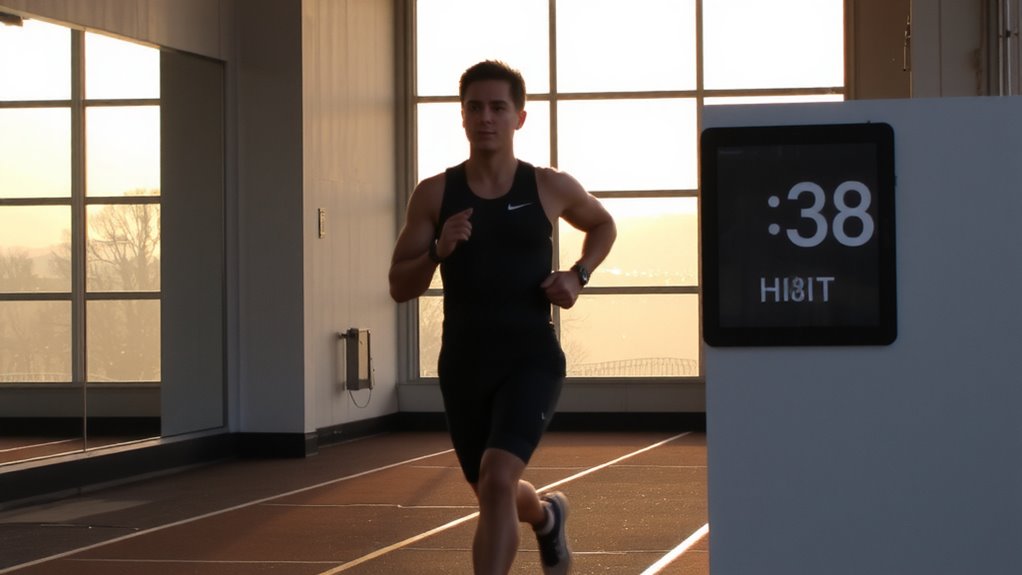
You’ve seen how HIIT speeds muscle repair through physiological triggers like increased circulation and hormonal responses, but timing those workouts right can make or break your recovery gains. For ideal timing, schedule low-volume HIIT sessions 24–48 hours post-intense training to align with your body’s natural recovery windows. This strategic spacing boosts blood flow without overtaxing fatigued muscles. Research shows performing HIIT too soon-within 12 hours-can interfere with protein synthesis, while waiting longer than 72 hours misses the peak window for adaptive stimulus. Aim for 15–20 minute sessions with active recovery intervals to enhance mitochondrial function and reduce soreness. Monitoring heart rate variability can help identify when your body is primed for this stimulus. When timed well, HIIT isn’t just performance-enhancing-it’s recovery-accelerating. Your gear should support mobility and comfort during these sessions to maintain form and consistency.
Do These 5 HIIT Moves After Hard Workouts
Because recovery isn’t just about rest, incorporating targeted HIIT moves after hard workouts can accelerate muscle repair and restore functional capacity more efficiently. These post workout cooldown exercises double as active recovery, enhancing circulation and reducing stiffness. Instead of collapsing after intensity, keep moving with purpose. The following movements blend mobility and light cardio, making them ideal for recovery days or immediate cooldowns.
| Exercise | Duration | Benefit |
|---|---|---|
| Jumping Jacks | 30 sec | Increases blood flow gently |
| Bodyweight Squats | 45 sec | Re-engages quads and glutes |
| Mountain Climbers | 30 sec | Promotes core stability & rhythm |
These moves support active recovery without taxing fatigued systems. When paired with proper breathing and form, they aid in clearing metabolic waste. Using a mat improves joint comfort, especially on hard floors. This structured post workout cooldown enhances long-term performance by balancing demand and restoration effectively.
Avoid Overtraining: Balance Intensity and Rest
Often, pushing too hard without adequate recovery leads to diminishing returns, especially when fitness goals hinge on consistency and smart programming. You’re likely drawn to HIIT for its efficiency and intensity, but ignoring recovery balance increases overtraining risks like fatigue, decreased performance, and elevated injury potential. Your body adapts not during the workout, but in the rest that follows-so skipping recovery undermines the very gains you’re chasing. Pair high-effort intervals with sufficient downtime, aiming for 48 hours between intense sessions. Listen to your body: persistent soreness or disrupted sleep signals poor recovery balance. Top trainers recommend foam rollers, compression gear, and quality sleep to support physiological repair. Smart programming isn’t just about hard work-it’s knowing when to step back. Avoid overtraining risks by respecting rest as a critical component of your routine. For enhanced circulation and reduced muscle soreness, consider using compression boots as part of your recovery regimen.
Track Recovery to Optimize HIIT Frequency
How do you know when your body’s truly ready for another HIIT session? The answer lies in consistent performance tracking. Monitoring metrics like workout output, resting heart rate, and perceived exertion helps you assess recovery status objectively. If your power drops or effort feels harder than usual, it’s a sign you’re not fully recovered. Active recovery-like light cycling or walking-on rest days enhances blood flow and speeds up repair without adding stress. Pairing this with performance tracking gives you real-time feedback on readiness. Ignoring these signals risks overtraining, while respecting them optimizes frequency. Recovery isn’t passive; it’s a measurable, adjustable part of your routine. Smart gear, like HR monitors or fitness trackers, supports this process by logging data that reflects your body’s actual state. Use that info to time sessions right-maximizing gains without burnout.
Customize HIIT for Your Body’s Needs
Tracking your recovery gives you the data to train smarter, but it’s just one piece of the puzzle-your body doesn’t follow a one-size-fits-all template, and neither should your HIIT routine. You’ve got to tweak your workouts based on how you feel, not just what the clock says. Pay attention to your body alignment; poor form increases injury risk and reduces efficiency, especially when fatigued. If you’re feeling off-kilter or sore in familiar places, adjust movement patterns or reduce impact. Your energy levels shift daily-honor them. On low-energy days, scale intensity or swap in active recovery instead of pushing through. Properly fitted fitness gear can support joint stability and improve alignment awareness. Breathable fabrics and responsive footwear help sustain performance. Customizing HIIT isn’t about comfort-it’s strategic. When you adapt to your body’s real-time needs, recovery becomes part of the training process, not just something you do after.
On a final note
You’ll recover faster with HIIT when you time it right and align intensity with your body’s needs. Strategic sessions boost blood flow, clearing metabolic waste and speeding muscle repair. Pair HIIT with quality recovery gear-compression wear, foam rollers-to enhance results. Track fatigue and adjust frequency to avoid overtraining. Done smartly, HIIT isn’t just for fitness gains-it’s a recovery tool. Balance is key.