The Role of Wearable Galvanic Skin Response Trackers in Monitoring Stress-Induced Recovery Delays
You’re not recovering as fast as you could because hidden stress disrupts repair, and wearable GSR trackers detect this in real time by measuring sweat-induced skin conductivity changes. These devices spot nervous system arousal before you feel it, revealing delays tied to elevated or prolonged GSR spikes during rest. While motion artifacts and sensor drift limit clinical use, they’re reliable for trend analysis. When you see evening GSR staying high, it’s a sign recovery’s off track-adjusting training or sleep becomes easier with this feedback, and there’s more to uncover about optimizing your recovery precisely.
Notable Insights
- Wearable GSR trackers detect stress-induced recovery delays by measuring real-time changes in skin conductivity from sweat gland activity.
- Elevated or prolonged GSR spikes during rest periods indicate autonomic nervous system dysregulation and incomplete recovery.
- GSR data reveals subconscious stress not captured by heart rate or sleep metrics, improving recovery assessment accuracy.
- Continuous GSR monitoring enables early detection of stress patterns that impair tissue repair and immune function.
- Personalized recovery plans can be adjusted using GSR trends, optimizing training, sleep, and stress management interventions.
Why Stress, Detected by GSR, Slows Recovery
While your body works to repair muscles and restore energy after intense workouts, lingering stress can quietly undermine that process-and GSR data makes it visible. When stress stays high, cortisol spikes disrupt recovery by slowing tissue repair and increasing inflammation. You’re not just tired-you’re biologically compromised. Chronic activation of this stress response leads to immune suppression, leaving you more vulnerable to illness and longer downtime. That post-workout window, meant for rebuilding, becomes counterproductive. Wearable GSR trackers help identify these harmful patterns early, offering insight beyond heart rate or sleep data. They measure subtle changes in sweat gland activity linked to sympathetic nervous system arousal-key indicators of unresolved strain. For serious fitness enthusiasts, this tech isn’t a gimmick; it’s a tool for precision recovery. By spotting stress before performance drops, you avoid overtraining and stay on track. Smart recovery isn’t passive-it’s monitored, managed, and measurable.
How GSR Tracks Stress as It Happens
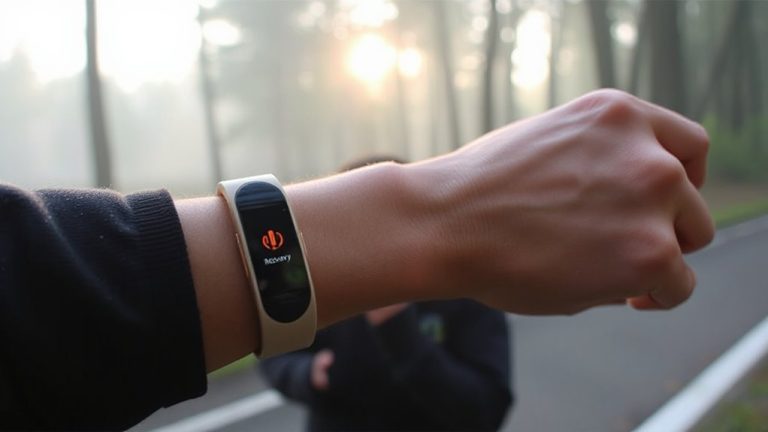
You already know stress can derail recovery, but what makes GSR tracking powerful is its ability to catch that stress in real time. When your body reacts to psychological or physical strain, your sweat glands activate, altering skin conductivity-GSR devices detect these tiny changes instantly. This biometric feedback provides a window into your autonomic nervous system, revealing stress spikes before you’re even consciously aware of them. With real time monitoring, wearable GSR trackers log fluctuations during daily activities, workouts, or rest periods, helping you correlate stress patterns with recovery setbacks. Unlike self-reported data, this objective measurement captures subtle, moment-to-moment shifts. Most devices use discreet electrodes on the wrist or finger, ensuring continuous tracking without interfering with movement. While the technology doesn’t diagnose conditions, it offers actionable insights, making it a practical tool for those optimizing fitness recovery.
Are GSR Trackers Accurate Enough for Clinicians?
How reliable are the GSR readings when clinical precision matters? You’re likely wondering if these wearable trackers deliver consistent data under strict medical scrutiny. While they detect stress-related changes quickly, signal noise from movement or dry skin can distort results, making them less dependable in sensitive assessments. Calibration drift is another concern-over time, sensor accuracy degrades without regular resetting, affecting longitudinal tracking. Most consumer-grade devices prioritize convenience over lab-level fidelity, which limits their use in clinical diagnosis. Though improvements in firmware and electrode design have helped, they still lag behind clinical equipment in stability. You can trust them for general stress monitoring, but when recovery metrics inform treatment, these flaws matter. For now, they serve best as supplementary tools, not standalone instruments. Clinicians need higher reliability than current wearables consistently offer.
Spotting Recovery Delays in GSR Data
Why do some athletes bounce back quickly while others stall despite similar routines? You can spot the difference in their GSR data. When recovery lags, your wearable often reveals telltale data anomalies-like prolonged spikes or irregular dips in skin conductance during rest. These deviations suggest the nervous system isn’t returning to baseline, hinting at incomplete recovery. Using consistent pattern recognition, you begin to distinguish normal stress responses from problematic trends. Elevated evening GSR levels, for instance, may signal accumulated fatigue even if the athlete feels fine. Advanced algorithms help, but your ability to interpret these signals matters just as much. Spotting delays early means adjusting training or rest before performance drops. While not foolproof, GSR trackers provide a quantifiable edge over subjective feedback. With disciplined monitoring, you turn subtle electrodermal shifts into actionable insights-making recovery less guesswork, more science.
Tailoring Recovery Plans Using GSR Trends
When recovery patterns are consistently mapped through GSR trends, personalized protocols become not just possible but practical. You can leverage this data to implement personalized interventions that respond directly to your body’s stress signals. Wearable GSR trackers detect shifts in electrodermal activity, allowing you to spot elevated stress levels that might delay recovery-even before symptoms appear. This means you’re not guessing; you’re adjusting. Real time adjustments to training intensity, sleep schedules, or mindfulness routines become actionable the moment GSR readings deviate from your baseline. Fitness recovery is no longer generic; it’s responsive. These wearables bridge subjective feeling and objective data, enhancing how you manage physical strain. While not infallible-skin temperature and movement can skew readings-their accuracy in controlled conditions supports reliable trend analysis. Used wisely, GSR trends help you optimize recovery, making your fitness gear not just functional, but intelligent and adaptive.
On a final note
You can rely on wearable GSR trackers to spot stress patterns that delay recovery, as they capture real-time autonomic shifts with decent accuracy. While not medical-grade, their data helps identify trends when combined with other metrics. Used wisely, GSR insights let you adjust training loads and rest periods, supporting smarter recovery. Just remember-consistent wear and proper calibration matter for reliable results.