Cervical Mobility Drills With Supine Neck Rotations for Gentle Stretching
You can use supine neck rotations to gently improve cervical mobility, especially after long periods of inactivity or screen use. Lying on your back with knees bent, rotate your head slowly side to side while keeping your chin level and shoulders relaxed. This position reduces spinal load, encouraging safe joint movement and suboccipital release. Avoid it if you have cervical instability or acute pain. Proper form matters more than range-control the motion, stay within comfort, and pair it with breathing for better neuromuscular coordination. There’s more to optimizing your routine with complementary drills.
Notable Insights
- Perform supine neck rotations lying on your back with knees bent to reduce spinal load.
- Gently rotate your head side to side while keeping your chin level and shoulders relaxed.
- Limit motion to pain-free ranges, performing 5–7 slow reps per side with brief end-range holds.
- Avoid if you have cervical instability, recent injury, or neurological symptoms like vertigo.
- Use diaphragmatic breathing and perform 2–3 sets daily, especially after prolonged sitting or screen use.
What Are Supine Neck Rotations? (And Do They Work?)
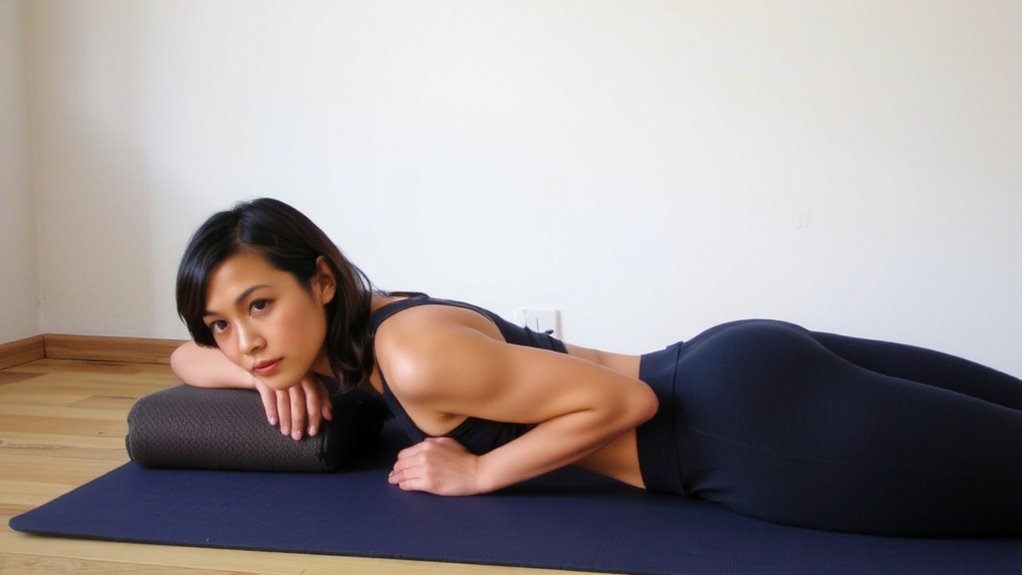
A growing number of recovery-focused fitness programs now include supine neck rotations as a go-to drill for improving cervical mobility, and for good reason. You perform them lying on your back, slowly rotating your head side to side, keeping your shoulders down. This position reduces gravitational load, allowing controlled motion with minimal strain. The anatomical benefits include improved joint articulation in the upper cervical spine, particularly at the atlantoaxial joint, while encouraging relaxation of the suboccipital muscles. Research suggests the biomechanical impact is subtle yet meaningful-gentle shear and rotational forces stimulate synovial fluid exchange without compressing discs. When paired with breathing cues, the drill enhances neuromuscular awareness. Fitness recovery gear like supportive neck rolls can amplify comfort, but they’re not essential. Evidence and user feedback indicate effectiveness for maintaining range of motion, especially post-training. Overall, supine neck rotations are simple, low-risk, and biomechanically sound for daily integration. For added support during the exercise, using a best neck stretcher can help maintain proper alignment and enhance relaxation.
Who Should (And Shouldn’t) Do Supine Neck Rotations
You’ve likely tried supine neck rotations or seen them recommended in recovery circuits, and while they’re generally safe and effective for improving cervical mobility, they aren’t right for everyone. If you’re managing acute neck pain, recent cervical spine injury, or have a history of cervical instability, you should hold off-these movements may worsen symptoms. This contraindications overview includes conditions like herniated discs, rheumatoid arthritis affecting the spine, or following cervical surgery, where range of motion must be carefully controlled. Always consider medical precautions before starting, especially if you’ve had vertigo or neurological symptoms with neck movement. On the other hand, those with chronic stiffness or postural strain from desk work often respond well, provided form is controlled and progression is gradual. Fitness recovery isn’t one-size-fits-all-knowing your limits and health background guarantees the drill helps, not harms, your mobility goals. A supportive sleep setup, including the right cervical pillow, can enhance recovery and alignment between mobility sessions.
How to Perform Supine Neck Rotations Safely
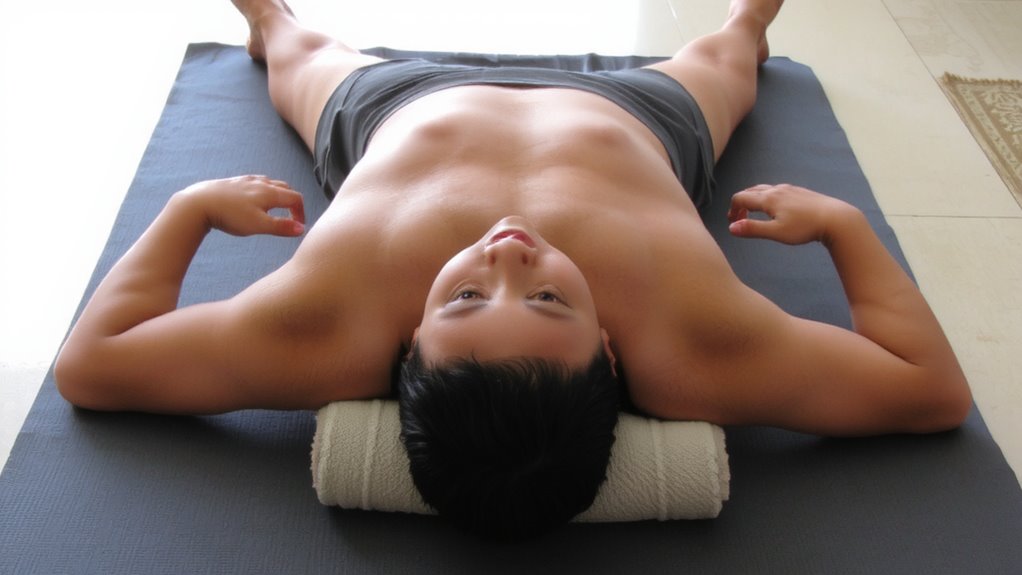
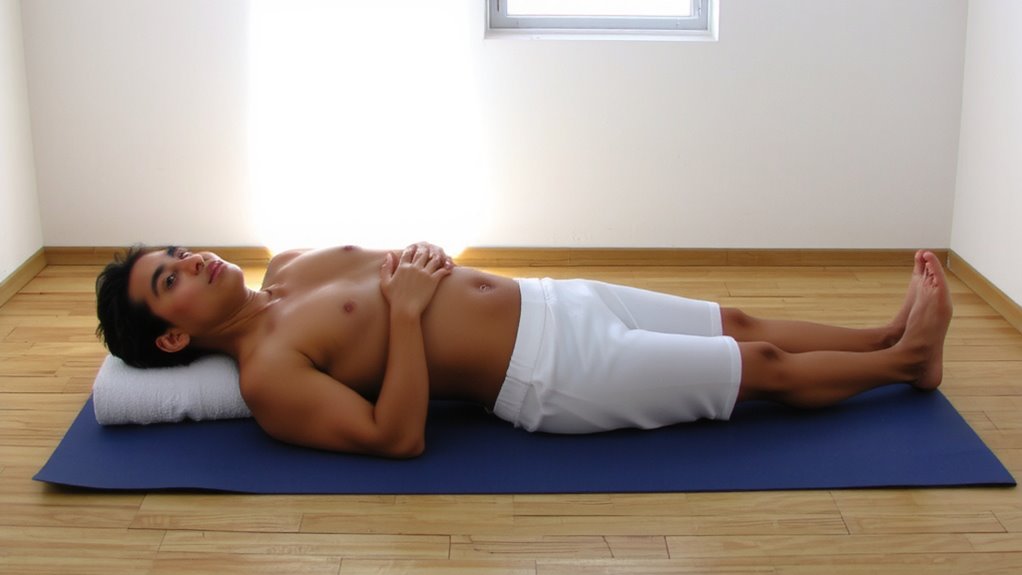
Though often included in mobility routines, supine neck rotations require precise execution to be effective and safe. Begin by lying on your back, knees bent, feet flat-this supports proper alignment of your spine. Keep your shoulders relaxed and neutral, avoiding any upward tension. Gently rotate your head toward one shoulder, using only a controlled movement that stops before discomfort begins. Your chin should stay level, not lifting or dipping, to maintain alignment and target the correct cervical segments. Perform each rotation slowly, holding for a few seconds to encourage gentle release. Aim for five to seven reps per side, focusing on symmetry and smooth shifts. This drill supports recovery by increasing blood flow and reducing stiffness, especially when done consistently. Ideal for those using recovery gear like cervical pillows or foam rollers, it complements tools designed to enhance mobility and posture over time.
Common Mistakes to Avoid in Neck Rotations
Why do so many people struggle with neck rotations despite their simplicity? You might think slow head turns are easy, but improper alignment sneaks up fast. Tilting your chin up or down during rotation shifts stress into vulnerable joints, increasing your risk of neck strain. Keep your head level-imagine a book balanced on top-to maintain neutral spine positioning. Don’t crank your neck to force a deeper stretch; momentum only reduces control and effectiveness. You’re aiming for smooth, intentional movement, not range at any cost. Letting shoulders hike or twist with the motion also undermines form, turning a cervical drill into a full upper-body compensation pattern. Perform the movement with awareness: small, symmetrical rotations and steady support from your back and neck. Quality beats quantity here-precision prevents injury. Using a properly designed cervical pillow can help maintain optimal neck alignment during rest and support healthier spinal posture over time.
When and How Often to Do the Drill
Performing neck rotations with proper form sets the foundation, but even well-executed drills lose value if done at the wrong time or frequency. Timing benefits emerge when you integrate supine neck rotations into your routine consistently and strategically-ideally post-warm-up or during cool-down, when muscles are pliable. Doing them first thing in the morning or after prolonged screen time helps reset cervical alignment. Frequency guidelines suggest performing the drill 3 to 5 times weekly for maximal mobility gains, though daily use is safe if discomfort doesn’t occur. Two to three sets of 5 slow reps per side offer balanced stimulation without overloading soft tissues. Overdoing it brings diminishing returns and may irritate neck stabilizers. Consistency matters more than volume, so stick to manageable sessions. This measured approach supports fitness recovery by enhancing joint lubrication and reducing stiffness, especially when paired with mindful breathing and posture awareness throughout the day.
Pairing Supine Rotations With Other Neck Drills
How can you get the most out of supine neck rotations when they’re not standing alone? By pairing them with complementary neck drills, you enhance both breathing coordination and muscle synergy, leading to smoother, more effective mobility. Combining supine rotations with chin tucks, lateral flexion holds, and shoulder blade setting activates deeper stabilization patterns. This sequence isn’t just about range-it’s about control. Proper breathing coordination reduces tension, while muscle synergy guarantees balanced recruitment across the cervical and upper thoracic regions. Below is a sample pairing routine:
| Drill Sequence | Primary Benefit | Frequency (per side/session) |
|---|---|---|
| Supine Neck Rotation | Improves rotation ease | 5 slow reps |
| Chin Tuck | Aligns cervical spine | 8 reps |
| Lateral Flexion | Stretches scalenes | 30-second hold |
| Shoulder Retraction | Enhances posture support | 10 reps |
| Diaphragmatic Breath | Promotes relaxation | 5 deep cycles |
This structured combo maximizes recovery and preps the neck for daily loads.
On a final note
You’ll find supine neck rotations effective for gently improving cervical mobility, especially if you sit often or carry neck tension. When done correctly, they boost circulation and joint lubrication without strain. But they aren’t a fix-all-pairing them with chin tucks or scapular squeezes enhances results. Avoid forcing range; progress is gradual. Used wisely, this drill supports recovery and complements quality recovery tools like contoured pillows or heat therapy.