Wall-Slide With Ball Squeeze to Promote Scapular Control in Overhead Athletes
You’ll build better scapular control with the wall-slide using a ball squeeze, a move that activates your mid- and lower trapezius while reinforcing proper shoulder mechanics. Stand against the wall, ball in hand, and slide down slowly while keeping contact at your head, back, and hips. It’s low-impact, requires no equipment, and sharpens neuromuscular precision-ideal for pre-workout prep or rehab. Avoid shrugging or flared elbows to stay effective. There’s more to mastering this move than meets the eye.
Notable Insights
- Wall-slides with ball squeeze enhance scapular stabilization by reinforcing proper shoulder mechanics during movement.
- Maintaining contact at head, upper back, and sacrum ensures optimal alignment and neuromuscular engagement.
- Squeezing the ball promotes activation of the middle and lower trapezius for better scapular control.
- Perform slow, controlled slides to improve joint proprioception and reduce risk of shoulder impingement.
- Modify range of motion or remove the ball to progress safely and accommodate athlete-specific needs.
How Wall-Slides Help Overhead Athletes
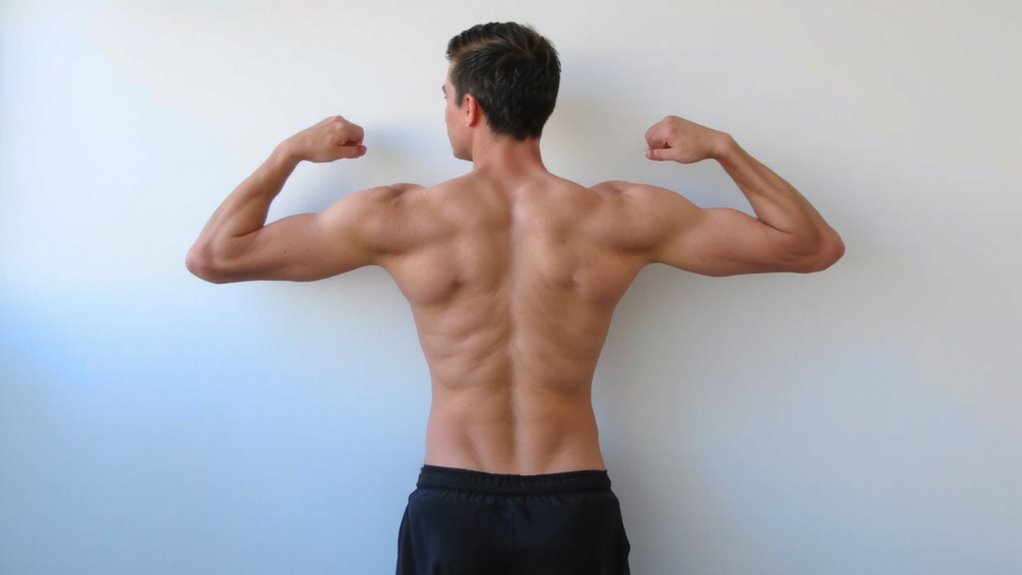
While overhead athletes often focus on building strength and power, improving scapular control is just as critical for both performance and injury prevention-and that’s where wall-slides shine. You rely on precise shoulder mechanics, and this exercise enhances scapular stabilization by reinforcing proper movement patterns against a fixed surface. It’s low-impact, yet highly effective for training the neuromuscular system to maintain ideal shoulder alignment. Over time, you’ll notice sharper joint proprioception, meaning your body becomes better at sensing shoulder position and movement-key for throwing or serving with control. Wall-slides don’t require equipment, making them practical for frequent use, whether you’re recovering or priming for activity. Unlike bulky fitness gear, this drill emphasizes body awareness over resistance, supporting long-term joint health. It’s not flashy, but its clinical precision makes it a staple in rehab and performance circles alike. When done consistently, you build a stronger foundation for overhead success.
How to Do the Wall-Slide With Ball Squeeze
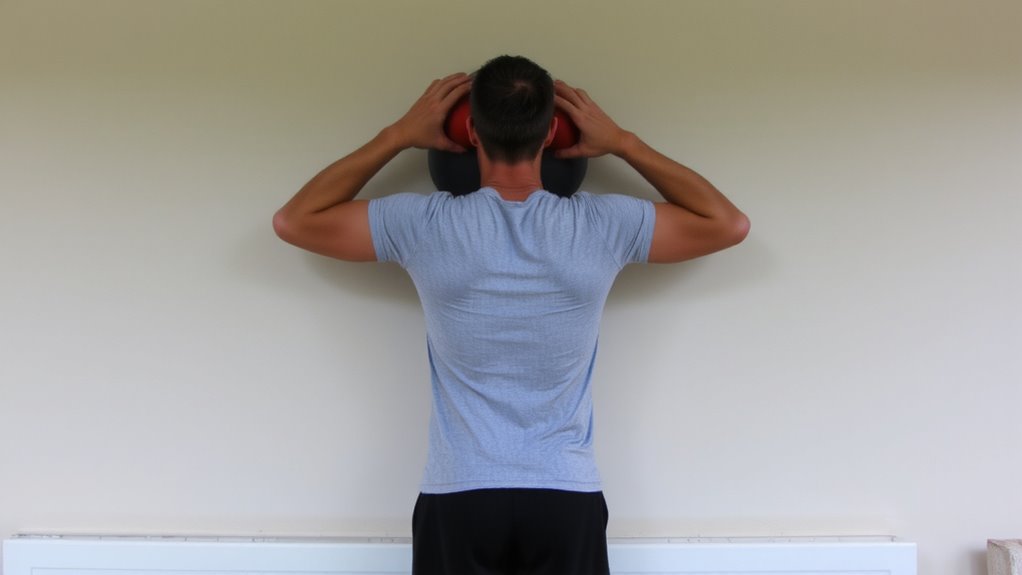
You’ve likely built some awareness of how scapular control supports overhead performance, and now it’s time to put that knowledge into action with the wall-slide with ball squeeze. Stand with your back against the wall, feet slightly forward, and tuck a therapy ball between your hands. Press your head, upper back, and sacrum into the wall to establish proper alignment. Begin with arms overhead, elbows bent 90 degrees, then slowly slide them down while squeezing the ball. Focus on steady muscle activation in your mid-back, not just arm movement. Keep your wrists neutral and avoid flaring ribs. The ball adds resistance, enhancing proprioception and ensuring you maintain scapular retraction throughout. Move slowly-rushing sacrifices control. This drill’s effectiveness hinges on consistency and attention to form. Used correctly, it builds neuromuscular precision critical for overhead athletes.
Fix These Wall-Slide Mistakes
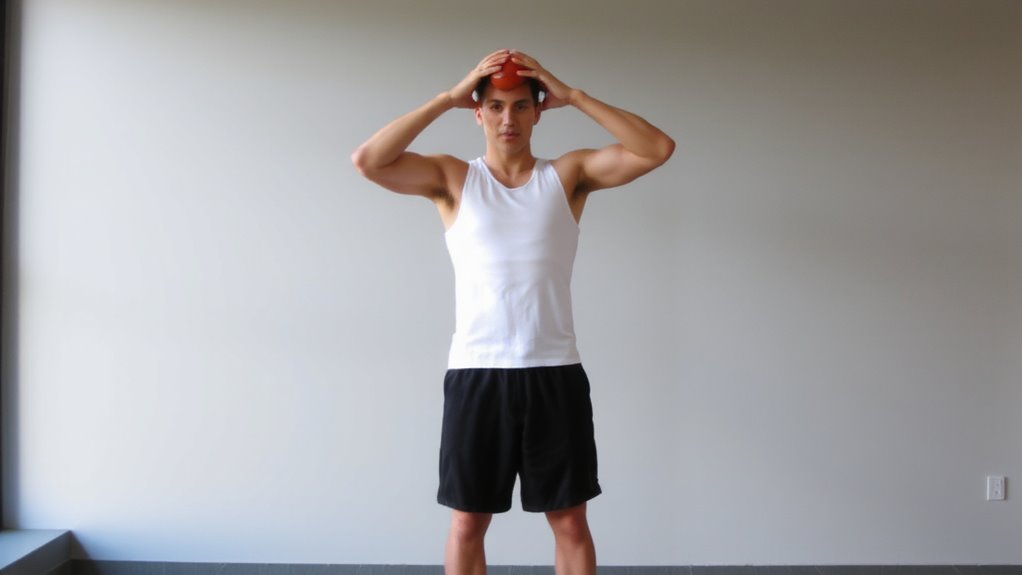
Why do so many people struggle to feel the right muscles working during the wall-slide with ball squeeze, even when they’re following the steps? Poor ball placement is often the culprit. If the ball’s too high or too low, it shifts focus from the scapular stabilizers to the shoulders or arms, reducing effectiveness. You should feel your mid-back engage, not your neck or traps. Another common error? Ignoring muscle fatigue. As the exercise progresses, fatigue can cause form breakdown, leading to shrugging or flaring elbows. That defeats the purpose. Recheck your alignment and ball position every few reps. Keep your head, shoulders, and hips touching the wall consistently. Squeeze the ball firmly but don’t over-grip-tension should be in your back, not your hands. Proper execution guarantees you’re training scapular control, not just going through motions.
Wall-Slide Training Tips for Performance
How do you turn a simple wall-slide with ball squeeze into a performance-enhancing movement drill? You focus on proper alignment and controlled motion every time. Keep your head, shoulders, and pelvis flat against the wall, ensuring minimal arching or gaps. Squeeze the ball gently but firmly-this isn’t about grip strength, it’s about activating the right muscles. Move slowly, arms sliding upward without letting your elbows flare. Controlled motion builds neuromuscular precision, which translates directly to better overhead mechanics. Don’t rush reps; quality beats quantity here. Proper alignment reduces compensatory patterns, making each repetition a functional investment. Use this drill before workouts to prime scapular stabilizers, not just as an afterthought. When performed mindfully, it bridges the gap between stability and dynamic performance. This isn’t just rehab-it’s high-level prep. Stick to form, and you’ll see carryover in throwing, swimming, or lifting.
Progressions and Easier Versions
Maintaining strict form during the wall-slide with ball squeeze sets the foundation, but not everyone starts at the same level of strength or mobility-some may struggle to keep contact at the head, upper back, and pelvis while lifting the arms. That’s where beginner modifications help. Reducing the range of motion or removing the ball temporarily allows you to focus on scapular engagement without compensation. Performing the movement with just your back against the wall, arms at shoulder height, builds initial control. For those with limited shoulder mobility or fatigue, seated variations offer a practical alternative-sitting maintains pelvic contact more easily, reducing lower back compensation. You can still perform the ball squeeze between the scapulae, preserving activation while simplifying mechanics. These adjustments don’t weaken the exercise; they make it accessible, ensuring consistent form before progressing.
What This Move Does for Shoulder Health
While it might seem like a simple wall-based drill, the wall-slide with ball squeeze delivers targeted benefits that directly support shoulder health by reinforcing proper scapular mechanics. You’re building scapular stability by controlling shoulder blade movement against the wall, minimizing unwanted winging or tipping. This enhances neuromuscular control-essential for overhead motion. The ball squeeze increases middle and lower trapezius engagement, promoting ideal scapular positioning. Over time, this improves joint congruency and reduces impingement risk. Simultaneously, the movement facilitates rotator cuff activation, especially from the infraspinatus and teres minor, as they work to stabilize the humeral head. This low-load exercise integrates motor control with strength, making it effective for injury prevention and rehab. It’s practical, requires minimal equipment, and fits seamlessly into warm-ups or recovery routines. For athletes, consistent use supports durable shoulder function under load.
On a final note
You’ll find the wall-slide with ball squeeze highly effective for building scapular control, especially if you’re an overhead athlete. It targets neuromuscular precision, improves thoracic positioning, and reinforces proper glenohumeral rhythm. When done correctly, it enhances shoulder stability and reduces injury risk. Pair it with smart recovery-like foam rolling and mobility work-and supportive fitness gear, such as compression sleeves, to maintain performance gains and joint health over time.