How to Create a Personalized Injury Prevention Plan Based on Common Sports Injuries and Chronic Overuse Syndromes
You’re more vulnerable to injury from repetitive strain and imbalances than sheer effort, so start by identifying your sport-specific risks-like ankle sprains in basketball or shoulder overuse in tennis. Assess movement patterns for asymmetries, then correct them with targeted drills and resistance training using tools like bands or adjustable kettlebells. Support recovery with percussion therapy, compression wear, and structured deloads. A smart, sustained plan blends strength, mobility, and recovery-there’s more to optimizing your routine than just gear.
Notable Insights
- Assess your injury history and activity level to identify personal risk factors for re-injury or overuse.
- Align prevention strategies with sport-specific demands, such as ankle support for basketball or knee protection for volleyball.
- Evaluate movement patterns for imbalances using squats, lunges, and running form to correct faulty mechanics.
- Build protective strength through targeted exercises like single-leg squats and planks to enhance joint and core stability.
- Incorporate recovery habits like deload weeks, foam rolling, and injury logging to monitor stress and prevent chronic issues.
Find Your Biggest Injury Risks
Where do your workout habits leave you most vulnerable? You might not realize how your injury history shapes your current risks-past sprains or strains can weaken tissues, making them prone to re-injury. Your activity level also plays a vital role; high-intensity routines without proper recovery increase wear and tear. Repetitive motion, especially in sports or endurance training, stresses the same muscle groups, escalating chances of overuse syndromes. Without evaluating these factors, even well-designed fitness gear-like supportive shoes or compression wear-can’t fully protect you. These tools help, but they’re not a fix-all. You need a tailored prevention strategy grounded in your personal data. Evaluating your injury history allows better prep, while aligning recovery practices with your activity level optimizes performance. Smart planning now reduces future setbacks.
Stop These Common Sport-Specific Injuries
How often do you consider whether your sport is setting you up for a specific type of injury? Runners frequently face muscle strains from overexertion or poor warm-ups, while basketball players commonly battle ankle sprains due to sudden pivots and jumps. These sport-specific risks aren’t random-they’re predictable and often preventable. If you play soccer, rapid direction changes increase your odds of lateral ankle sprains, especially on uneven surfaces. Tennis players, with repetitive shoulder motions, often sideline themselves with overuse strains. The right fitness gear, like sport-specific shoes with proper heel support or compression sleeves that stabilize vulnerable joints, can reduce these risks markedly. But gear alone isn’t enough-you need targeted prep. Dynamic warm-ups, sport-appropriate drills, and knowing your movement load help stop ankle sprains and muscle strains before they start. Smart prevention matches your sport’s demands with intelligent preparation. Volleyball players can benefit significantly from wearing knee support designed to absorb impact during frequent jumping and landing.
Fix Your Movement Imbalances Now
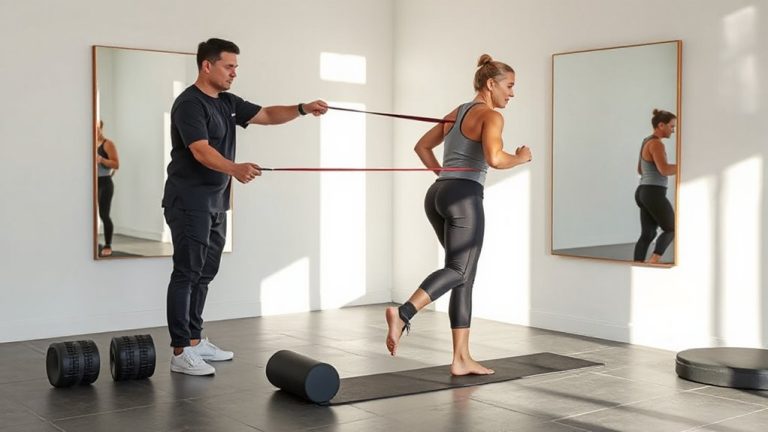
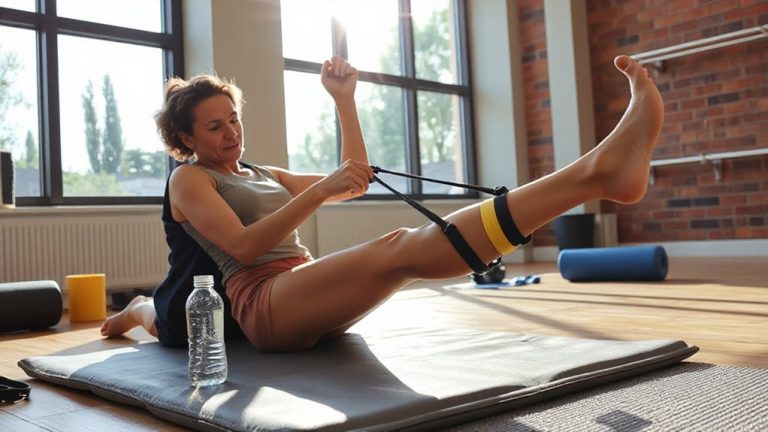
Why do some athletes seem to move with effortless precision while others struggle with nagging aches after every workout? The answer often lies in your movement patterns and muscle symmetry. If one side of your body works harder than the other, imbalances develop-leading to poor mechanics and increased injury risk. You might not notice it during training, but asymmetries show up under fatigue, distorting your form and efficiency. Correcting these issues starts with assessment-watch how you squat, lunge, or run. Do you shift to one side? Does one knee cave inward? These are red flags. Targeted mobility drills, corrective exercises, and bilateral awareness help retrain your neuromuscular system. Over time, balanced muscle engagement improves coordination, reduces strain, and promotes resilient movement patterns. Ignoring muscle symmetry doesn’t just limit performance-it sets you up for overuse. Fix imbalances now before they become chronic. Using best recovery bands can accelerate muscle recovery and support symmetry restoration during rehabilitation.
Build Strength to Prevent Injury
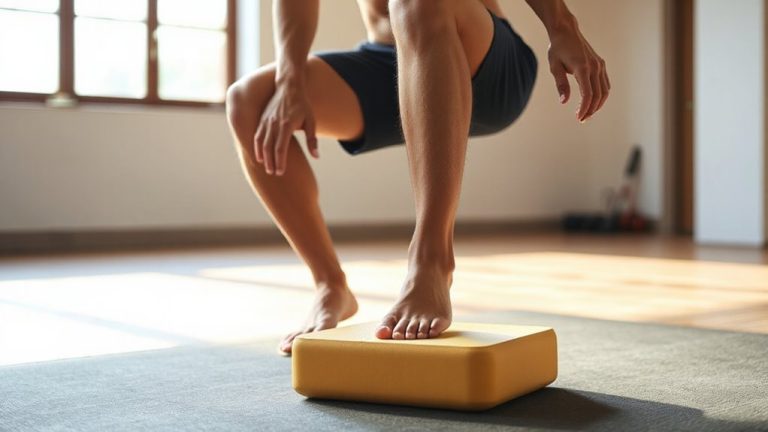
You’ve addressed your movement imbalances-now it’s time to reinforce those corrections by building strength that actively shields your body from injury. Focused strength training boosts joint mobility and promotes core stability, two foundations for resilient movement. When your joints move through their full range without restriction, and your core engages efficiently, forces distribute evenly during activity, reducing strain on tendons and ligaments. You’re not just getting stronger-you’re creating a body that handles load, pivots under pressure, and resists common overuse patterns. Exercises like planks, dead bugs, and single-leg squats train stability under load, bridging the gap between rehab and performance. Resistance bands and kettlebells are practical tools, offering scalable intensity without compromising form. Strength built this way isn’t about size; it’s functional, protective, and tailored. With consistent application, you’re not just preparing for today’s workout-you’re safeguarding tomorrow’s performance. An adjustable kettlebell can provide progressive resistance in a compact, versatile format ideal for injury prevention training.
Recover Smart to Avoid Overuse
While pushing your limits builds strength, ignoring recovery sabotages it-particularly when overuse injuries creep in from accumulated stress without adequate rest. You need smart recovery, not just more downtime. Effective rest strategies include scheduled deload weeks, sleep optimization, and active recovery like light cycling or walking, which boost circulation without straining tissues. These aren’t luxuries-they’re essential for tissue repair and nervous system regulation. Recovery tools like foam rollers, percussion massagers, and compression garments can enhance this process. Studies show percussion therapy improves range of motion and reduces muscle soreness when used post-exercise. But tools only work if paired with consistency and proper technique. Skipping recovery turns manageable fatigue into chronic strain. Monitor your body’s signals: persistent soreness or joint discomfort means it’s time to prioritize rest. Using rest strategies and Recovery tools wisely isn’t passive-it’s strategic training for long-term resilience.
Build a Long-Term Injury Prevention Routine
Recovery isn’t the end of your training cycle-it’s the foundation for what comes next. To build a long-term injury prevention routine, you need consistency and awareness. Start by embedding injury tracking into your weekly routine; log niggles, fatigue levels, and joint discomfort to catch patterns before they become serious. This data helps you adjust before setbacks occur. Combine this with smart exercise variation-rotate movement patterns, plane of motion, and load intensity to prevent muscular imbalances and overuse. For example, swapping barbell squats for split-stance dumbbell work reduces spinal load while enhancing stability. Use fitness gear like resistance bands or foam rollers not just for recovery, but as preventive tools to maintain mobility and tissue quality. Over time, variation and tracking create resilience. It’s not about avoiding fatigue-it’s about managing stress intelligently so your body adapts safely and stays durable.
On a final note
You’ve identified your injury risks and corrected imbalances, but sustainable fitness hinges on smart recovery and reliable gear. Foam rollers, compression wear, and quality shoes aren’t luxuries-they’re essential for tissue repair and alignment. Active recovery days boost circulation, while proper sleep enhances muscle regeneration. Consistent, informed choices in training and recovery equipment reduce overuse strain. Your long-term success depends less on intensity and more on disciplined, intelligent regeneration practices backed by effective tools.