Restoring Mobility Post-Injury: Key Exercises to Specific Joint Conditions
You heal faster when you move safely after a joint injury, using targeted exercises that match your recovery stage. Try seated knee extensions or shoulder pendulums to restore motion without strain. Mini-squats and banded rotations build strength in knees and shoulders, while balance drills on foam pads sharpen joint control. Daily smart stretching with resistance bands improves stiff ankles and elbows. Functional moves like heel-to-toe walks retrain your body for real-life stability-there’s more to gain with the right progression.
Notable Insights
- Controlled range-of-motion exercises like seated knee extensions and shoulder pendulum swings restore joint mobility safely after injury.
- Mini-squats and resistance band shoulder rotations build strength in knees and shoulders without excessive joint strain.
- Balance training on wobble boards or foam pads enhances proprioception and reduces re-injury risk during daily movements.
- Daily dorsiflexion stretches with resistance bands and gentle elbow flexion holds improve ankle and elbow mobility post-injury.
- Functional movements like heel-to-toe walks and standing rows retrain joints for real-life activities with proper alignment.
Regain Motion: Safe Moves After Joint Injury
While your joint needs time to heal, staying completely still can actually slow recovery, so it’s essential to reintroduce movement carefully and with purpose. You’ll want to prioritize joint alignment from the start-proper positioning reduces strain and supports healthy mechanics during motion. Controlled movement isn’t just recommended; it’s foundational. Simple range-of-motion exercises, like seated knee extensions or pendulum swings for shoulders, encourage circulation without overloading healing tissues. Fitness gear like resistance bands with low tension or adjustable sliders can enhance precision, helping you maintain form. These tools aren’t flashy, but their effectiveness lies in consistency and feedback. Avoid jerky actions-smooth, deliberate repetitions yield better adaptation. Think quality over quantity. You’re not rebuilding strength yet; you’re retraining mobility. Over time, correct joint alignment combined with controlled movement builds the neuromuscular foundation necessary for full, functional recovery-all without unnecessary risk.
Build Strength in Healing Knees and Shoulders
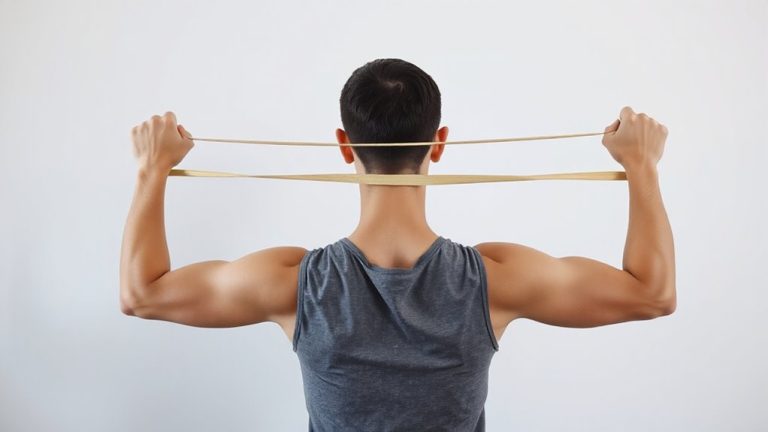
You’ve reestablished motion, protected joint alignment, and restored basic mobility-now it’s time to add controlled resistance and start rebuilding strength in healing knees and shoulders. For knee stabilization, focus on low-load, high-repetition exercises like mini-squats and step-ups; they enhance neuromuscular control without straining healing tissues. Resistance bands work well here-adjustable tension lets you progress safely. Shoulder rotation calls for precise, scapular-friendly movements such as internal and external rotations with light dumbbells or tubing. These build rotator cuff endurance, critical for joint integrity. Quality matters more than weight: maintain strict form to avoid compensation. Fitness gear like cuff weights or stability discs can amplify effectiveness, but only if used correctly. Overreliance on equipment without proper mechanics risks setbacks. Consistent, progressive loading trumps intensity-this phase is about durable strength, not speed. For those with ongoing joint sensitivity, incorporating best exercise equipment for bad knees can provide safe, effective training options.
Stay Steady: Balance Exercises That Prevent Re-Injury
How do you keep your progress from unraveling the moment you step off the rehab mat? You build resilience through balance. Proprioception training relearns your body’s awareness in space, sharpening the connection between joints and brain after injury. Simple stability drills-like single-leg stands on uneven surfaces or wobble board rotations-challenge your neuromuscular system in controlled ways. These aren’t just filler exercises; they reduce re-injury risk by improving joint control during everyday movements. You’ll notice greater confidence walking on uneven terrain or making quick directional shifts. Devices like foam pads or balance discs enhance these drills, offering scalable resistance through surface instability. Consistent use, 3–4 times weekly, yields measurable gains in postural control within weeks. Unlike generic strength work, balance exercises target precise motor deficits that linger post-injury. When integrated into recovery, they don’t just maintain progress-they solidify it.
Stretch Smart for Stiff Ankles and Elbows
What if tighter joints after injury aren’t just soreness, but signals of restricted mobility needing targeted attention? When recovering, improving ankle flexibility and elbow mobility isn’t optional-it’s essential. Stiffness limits functional range and delays return to normal activity. Smart stretching, done consistently, reprograms joint behavior. For ankles, seated dorsiflexion holds with a resistance band boost tissue length and response. Aim for 3 sets of 30-second holds daily. For elbows, gentle extension and flexion stretches, especially with light overpressure from the opposite hand, enhance mobility without strain. Use heat before stretching to increase blood flow and tissue pliability. Avoid aggressive pulls-progress hinges on consistency, not intensity. Recovery tools like foam rollers or soft braces support the process but work best alongside proper technique. Ignoring joint-specific needs risks incomplete healing. Prioritize intelligent, joint-focused stretching, and you’ll lay a stronger foundation for full recovery.
Return to Daily Moves: Without Pain
Why do some return to daily activities smoothly after an injury while others struggle with lingering discomfort? The difference often lies in joint alignment and muscle symmetry. Without proper alignment, movements place uneven stress on tissues, slowing recovery. Muscle symmetry guarantees balanced force distribution, reducing strain during common tasks. You can’t rush function-you need controlled retraining. Below are three foundational moves that bridge rehab to real life:
| Exercise | Focus | Benefit |
|---|---|---|
| Heel-to-Toe Walk | Joint alignment | Improves balance and foot positioning |
| Standing Rows | Muscle symmetry | Strengthens upper back evenly |
| Pelvic Tilts | Core & alignment | Enhances posture during sitting |
These aren’t flashy, but they rebuild how you move. Consistent practice restores confidence in daily motion-without pain leading the way. Track progress weekly; adjust as stability improves.
On a final note
You’ve covered proven moves to restore mobility, build strength, and prevent re-injury across key joints. These exercises, paired with proper recovery gear like compression sleeves or resistance bands, enhance healing and performance. Science supports progressive loading and flexibility work for lasting joint health. Your consistency matters more than intensity. Done right, this approach doesn’t just return you to daily life-it prepares your body to maintain function, adapt, and stay resilient long after recovery.