How Wearable Sleep Drive Monitors Align Recovery With Natural Adenosine Buildup
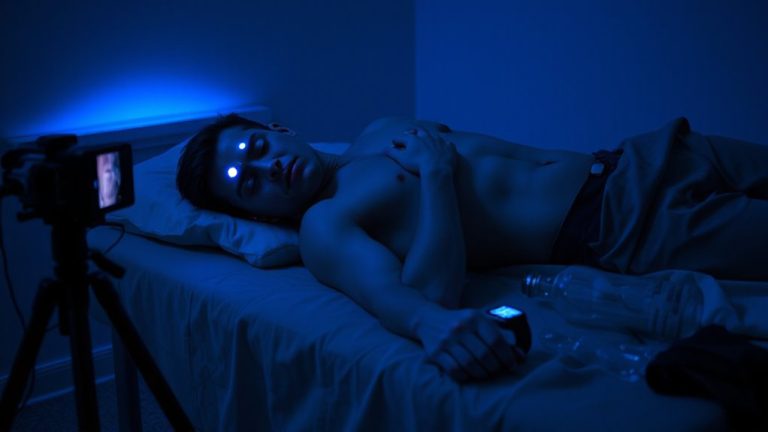
Your wearable tracks sleep drive by monitoring heart rate variability, skin temperature, and movement-subtle cues that reflect rising adenosine levels. Though it can’t measure adenosine directly, it uses these signals to estimate when sleep pressure peaks, helping you time bedtime for faster sleep onset. Aligning rest with your body’s natural buildup improves deep sleep and recovery. Devices like the Oura Ring and WHOOP Strap refine accuracy over time, so you’ll see how consistency sharpens their insights.
Notable Insights
- Wearables estimate adenosine-related sleep pressure by tracking heart rate variability and skin temperature trends.
- Rising sleep drive is inferred from physiological changes linked to prolonged wakefulness and adenosine accumulation.
- Devices time bedtime recommendations to align with peak sleep pressure for faster sleep onset.
- Proper alignment of sleep with natural adenosine buildup enhances deep and REM sleep for better recovery.
- Continuous monitoring improves accuracy in predicting optimal sleep windows through personalized pattern recognition.
What Is Adenosine and How It Builds Sleep Drive
Sleep pressure-that rising need to rest the longer you’re awake-is driven by adenosine, a neuromodulator that builds up in your brain during waking hours. You start accumulating adenosine the moment you wake, and the longer you’re active, the higher the adenosine accumulation becomes. This chemical gently depresses neural activity, promoting drowsiness and aiding sleep pressure regulation. Caffeine works by temporarily blocking adenosine receptors, which is why it delays fatigue-though it doesn’t stop accumulation. Your body relies on this system to align recovery with biological need, making adenosine key for healthy sleep-wake cycles. Fitness gear claiming to optimize recovery often overlooks this mechanism, focusing instead on heart rate or movement. But without tracking adenosine-related signals, such tools offer only partial insights. True performance monitoring should reflect internal biology, not just external output. Adenosine isn’t flashy, but it’s fundamental-your natural timer for rest.
How Your Wearable Knows When You’re Ready to Sleep
Your wearable doesn’t measure adenosine directly-that’s still beyond the reach of non-invasive sensors-but it infers your rising sleep pressure by tracking the downstream effects of that buildup. Through advanced sleep tracking, it monitors your heart rate variability, skin temperature, and movement patterns, all of which shift predictably as sleep drive increases. These physiological signals, combined with your established circadian rhythm, allow the device to estimate when drowsiness is likely to set in. Over time, consistent data improves accuracy, making the wearable better at flagging your ideal wind-down window. While not perfect, this method bridges the gap between biological reality and practical tech. Most high-end models use this approach effectively, offering actionable insights rather than just raw data. For fitness recovery, aligning rest with natural rhythms enhances adaptation. The best wearables don’t just record-they interpret, helping you sync recovery with your body’s internal clock.
Match Bedtime to Rising Adenosine for Faster Sleep
Why wait until you’re exhausted to go to bed when you could time it just right? Modern wearable sleep drive monitors help you align sleep timing with your body’s rising adenosine levels, letting you fall asleep faster. Instead of ignoring biological cues, these devices track indicators like heart rate variability and skin temperature to estimate sleep pressure. When adenosine builds up enough, you’re primed for sleep-but only if you listen. Hitting bed too early or too late can disrupt this natural rhythm, making it harder to drift off. Matching bedtime to your rising sleep drive isn’t just convenient; it’s scientifically sound. For fitness recovery, precision matters. Gear that delivers accurate data supports better decisions, but only if you act on it. These wearables don’t force compliance-they offer insight. Used wisely, they turn biology into a recovery advantage through smarter sleep timing and responsive routines.
Use Sleep Drive Data to Boost Recovery
Tracking your sleep drive isn’t just about falling asleep faster-it’s a strategic step toward smarter recovery. When you tap into data showing how adenosine builds throughout your day, you’re better equipped to time sleep when your body is primed for deep restoration. This alignment improves sleep quality by catching your natural dip in alertness, making rest more efficient. High sleep drive at bedtime often translates to faster shifts into restorative stages, which are critical for muscle repair and cognitive recovery. By syncing your schedule with these biological signals, you enable true recovery optimization. Wearables that estimate sleep pressure help you avoid under- or oversleeping-both of which can disrupt recovery. You’ll notice better energy, sharper focus, and improved workout performance over time. It’s not just about more sleep, but better-timed, higher-integrity rest that matches your body’s internal chemistry.
Which Wearables Actually Measure Sleep Drive Accurately?
How precise are your wearable’s claims about sleep drive when few actually measure adenosine directly? Most estimate it indirectly using biometrics like heart rate variability and sleep staging patterns. Devices like the Oura Ring and WHOOP Strap 4.0 analyze HRV trends across nights, combining them with sleep depth and duration to infer sleep pressure buildup. These wearables track REM, light, and deep sleep phases with moderate accuracy, helping approximate when adenosine likely peaked. Still, they’re models, not lab-grade sensors. While heart rate variability offers a solid proxy for autonomic recovery, individual differences can skew results. Sleep staging via actigraphy often misses subtle brainwave shifts measured in polysomnography. So, while these tools offer useful insights, they’re best used trends over time-not absolute values. You’re not seeing real-time adenosine, but with consistent wear, your wearable can highlight patterns that align closely with your body’s actual sleep drive.
Build a Routine That Follows Your Sleep Biology
Your wearable might give you a good idea of sleep pressure trends through HRV and sleep staging, but real recovery starts when you align your daily rhythm with your body’s natural sleep biology. To do this, build a routine that syncs with your biological rhythm by waking and sleeping at consistent times-even on weekends. This consistency stabilizes adenosine buildup, the chemical driving sleep pressure, and improves sleep quality over time. Use your wearable’s data to spot patterns, like restless nights or shallow REM, then adjust light exposure, meal timing, and workout schedules accordingly. Morning light boosts cortisol naturally, while avoiding blue light at night supports melatonin release. Over time, honoring your biological rhythm leads to more efficient recovery and sharper daytime performance. Ultimately, tech helps, but lasting results come from aligning daily habits with your body’s innate sleep patterns.
On a final note
You’re using wearable sleep drive monitors to align recovery with your body’s natural adenosine buildup, and that’s smart. These devices track physiological signals linked to sleep pressure, giving you data-backed insights. When timed right, your bedtime matches rising adenosine, speeding sleep onset. For fitness recovery, this precision supports muscle repair and cognitive restoration. Not all wearables deliver equal accuracy-choose ones with validated biometrics. Used wisely, this gear enhances routine and recovery.