Percussion Massage Modalities For Maximizing Recovery From Fractures And Traumas: A Comprehensive Guide
You can use percussion therapy to support recovery after fractures and traumas, but only once healing is well underway. Avoid the injury site early-you’ll risk disrupting tissue repair or irritating sensitive nerves. Instead, target surrounding muscles to maintain circulation and reduce tension. Timing matters: wait at least 48–72 hours post-injury, or longer for fractures, and always get medical clearance. When safe, apply short bursts-15 to 30 seconds-with light pressure on muscle bellies, not bones or scars. Combining this with mobility drills like leg swings helps retrain movement. There’s more to optimizing recovery with the right technique and timing.
Notable Insights
- Wait until bones are fully healed and medically cleared before using percussion therapy post-fracture.
- Avoid applying percussion directly over fractured bones, surgical scars, or inflamed joints during recovery.
- Use percussion on surrounding muscles to support circulation, reduce tightness, and aid neuromuscular re-education.
- Begin therapy only after acute inflammation subsides, typically beyond 72 hours post-injury.
- Combine brief, low-intensity percussion sessions with dynamic movements to enhance functional recovery safely.
Is Percussion Therapy Safe After a Fracture?
Why would you consider using a percussion massager after a fracture? You might be tempted by claims of faster recovery, but caution is essential. Once the bone has healed sufficiently, light percussion therapy may support circulation and ease surrounding muscle tension. However, during early healing, the area remains vulnerable. Applying pressure near the fracture site could disrupt bone density improvements or irritate developing tissue. You must also consider nerve sensitivity-damaged nerves may react poorly to vibrations, potentially worsening discomfort. Medical guidance is vital before starting any treatment. Low intensity and indirect application, away from the injury, are wise choices. While massage guns aren’t inherently unsafe post-fracture, improper use risks setbacks. Evaluate your recovery stage honestly. When timed correctly and used carefully, percussion therapy might aid rehabilitation-but never at the expense of structural integrity or neurological response. Choosing a device with adjustable settings allows for safer use during recovery, making best massage guns an important consideration for those integrating percussion therapy into their rehabilitation routine.
How Massage Guns Speed Soft Tissue Recovery
Recovery isn’t just about rest-active support matters, and that’s where massage guns come into play. These devices deliver rapid pulses deep into soft tissue, encouraging muscle relaxation and promoting circulation. You’ll notice reduced tightness and faster recovery times, especially after intense activity or trauma. The percussive action also supports inflammation reduction by improving lymphatic flow and breaking up adhesions. While not a cure-all, massage guns are practical tools when used appropriately during recovery phases. Top models offer customizable percussion therapy intensity to match individual recovery needs and target specific muscle groups effectively.
| Benefit | Effect on Recovery |
|---|---|
| Muscle relaxation | Decreases tension and spasms |
| Inflammation reduction | Supports immune response |
| Improved blood flow | Enhances oxygen delivery |
| Fascial release | Reduces stiffness and binding |
| Pain modulation | Alters pain signal perception |
Their portability and adjustable settings make them efficient for targeted therapy.
When to Start Using Percussion Therapy Post-Injury
How soon can you reach for that massage gun after a strain or sprain? Not right away-especially if acute inflammation is still present. During the first 48 to 72 hours post-injury, your body is managing swelling and protecting damaged tissue, so applying percussion therapy too soon can worsen irritation and delay healing. Once inflammation subsides and you enter the repair phase, gentle use may help stimulate blood flow and relax surrounding muscles. But if you’re recovering from a fracture, timing is even more essential. You’ll want to wait until bone remodeling is underway-typically after initial healing is confirmed by imaging-and only then consider low-intensity settings. Even so, clearance from your healthcare provider is essential. Used wisely, percussion therapy supports recovery; used too early, it might do more harm than good. Patience and professional guidance are key. Choosing the right device can enhance effectiveness during later recovery stages, especially when using a best percussion massager with adjustable intensity and ergonomic design.
Where to Massage: And Where to Avoid: During Healing
You’ve waited through the initial healing phase and gotten the go-ahead from your provider-now it’s time to think carefully about where you apply that percussion device. Focus on surrounding muscle groups to support joint stability and encourage muscle activation without stressing the injury site. For example, massage the quadriceps when recovering from a tibial fracture-this aids circulation and promotes inflammation reduction indirectly. Avoid direct stimulation over broken bones, surgical scars, or swollen joints, as excessive pressure can disrupt delicate tissues. Tendon insertions and bony prominences are also off-limits; these areas lack protective soft tissue and respond poorly to rapid percussion. Instead, target intact muscle bellies that support movement patterns related to your recovery. Strategic use enhances neuromuscular re-education and decreases compensatory strain. Proper placement isn’t just about safety-it’s about maximizing therapeutic value where it counts, ensuring each session contributes meaningfully to functional restoration and long-term resilience during healing.
How to Use a Massage Gun Safely Near Injuries
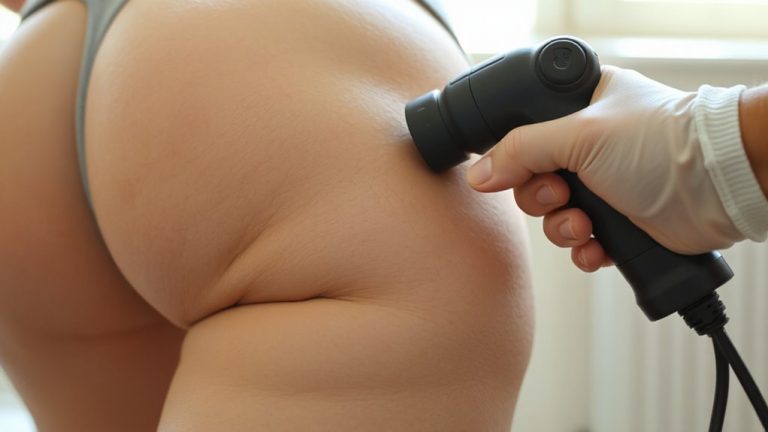
A percussion massage gun can be a valuable tool during rehabilitation, but using it near injuries demands caution and precision. You should never apply direct pressure on acute injuries, open wounds, or swollen areas, as this can worsen the inflammation response. Instead, target surrounding muscle groups with light to moderate intensity, using slower passes to help reduce muscle guarding without overstimulating damaged tissue. Keep sessions brief-no more than 15 to 30 seconds per area-and monitor your body’s feedback closely. If you feel sharp pain or increased swelling, stop immediately. Choose lower amplitude settings to minimize deep tissue disruption, especially in the early healing phases. While massage guns offer deep penetration and improved blood flow, their power requires responsible use. Used correctly, they can support recovery, but improper application risks delaying healing. Always prioritize safety over intensity.
Combine Percussion Therapy With Mobility Exercises
While percussion therapy can loosen tight muscles and increase circulation, pairing it with mobility exercises enhances functional recovery more effectively than either method alone. You boost muscle activation and improve joint mobility by following a targeted percussion session with dynamic movements. This combination preps tissues for movement, reduces stiffness, and supports neuromuscular re-education post-trauma.
| Feeling Before | Feeling After |
|---|---|
| Stiff and limited | Looser, freer |
| Hesitant to move | Confident in motion |
| Dull discomfort | Reduced pain |
| Restricted range | Improved joint mobility |
| Low muscle activation | Responsive, engaged muscles |
Apply percussion for 30–60 seconds per muscle group, then perform controlled leg swings, arm circles, or spinal rotations. The synergy between vibration-based release and active motion accelerates recovery, making it ideal for rehabilitation protocols. Evidence suggests this integrated method outperforms isolated therapies in restoring daily function.
On a final note
You’re likely to find percussion therapy beneficial for recovery when used correctly. It boosts circulation, reduces muscle tension, and supports mobility after trauma. Yet timing and placement matter-avoid acute fractures or inflamed areas. When combined with movement exercises, it enhances soft tissue healing. Massage guns aren’t a cure-all, but with proper use, they’re a practical tool in modern recovery routines.