Massage Techniques To Maximize Results in Shoulder Tendonitis Management: An In-depth Analysis
You’re most likely to see improvement in shoulder tendonitis when you apply targeted massage techniques that match your recovery phase. Deep transverse friction helps remodel damaged tendon fibers, while myofascial release restores mobility in stiff connective tissues. Trigger point therapy tackles referred pain by deactivating tight muscle knots. When timed correctly, these methods boost circulation, reduce adhesions, and support tendon healing-just avoid aggressive work during acute inflammation. Choosing the right technique at the right time makes all the difference in long-term recovery outcomes.
Notable Insights
- Deep transverse friction massage promotes collagen realignment by applying firm, cross-fiber strokes for 3–5 minutes, 3 times weekly.
- Myofascial release restores shoulder mobility by targeting restricted fascia with sustained pressure using hands, elbows, or tools.
- Trigger point therapy alleviates referred shoulder pain through sustained pressure on hyperirritable muscle nodules for functional reset.
- Massage technique selection should match recovery phase-gentle in acute, deeper in subacute, and maintenance-focused in later stages.
- Avoid aggressive or mistimed massage to prevent increased inflammation and tissue damage during shoulder tendonitis recovery.
What Causes Shoulder Tendonitis: and How Massage Helps
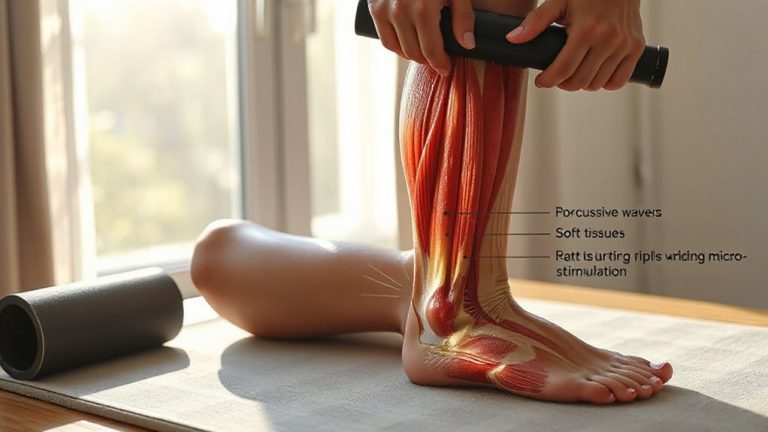
Shoulder tendonitis often starts with repetitive strain-think of swimmers pulling through miles of laps, weightlifters pushing through tough sets, or office workers hunched at desks for hours. You overload the rotator cuff tendons, and over time, anatomical causes like poor shoulder mechanics or muscle imbalances加剧 the stress. This triggers an inflammation response, marked by swelling, pain, and reduced mobility. Left unchecked, microtears develop, setting the stage for chronic issues. But here’s where massage helps-it modulates that inflammation response by boosting circulation and calming irritated tissues. Unlike passive recovery gear, skilled massage targets深层 structures, helping realign collagen fibers and release adhesions. It’s not just soothing; it’s corrective. When combined with proper fitness recovery strategies, massage addresses both symptoms and root causes. You’re not just resting-you’re actively repairing. Informed application makes it a superior adjunct to braces or foam rollers, especially when anatomy and physiology guide the technique. For deeper tissue relief between sessions, a high-quality massage gun can enhance recovery by delivering targeted percussion therapy.
Use Deep Transverse Friction to Heal Damaged Tendons
When it comes to healing damaged tendons, especially in the shoulder, few techniques are as targeted and physiologically effective as deep transverse friction massage (DTFM). You’re not just relieving pain-you’re stimulating controlled microtrauma to promote collagen remodeling. This cross fiber friction disrupts adhesions and kickstarts tendon realignment, guiding fibers to lay down parallel, which boosts tensile strength. Apply DTFM directly over the injured tendon, using firm, focused strokes perpendicular to the fiber direction. Below is a quick comparison of key factors:
| Technique | Target Outcome | Frequency |
|---|---|---|
| Deep Transverse Friction | Tendon realignment | 3–5 min, 3x/week |
| Cross Fiber Friction | Reduce adhesions | 2–4 min, daily |
| General Massage | Pain relief | As needed |
Used correctly, DTFM enhances recovery when integrated into a structured rehab plan. For optimal results, consider pairing DTFM with best muscle stimulators to support muscular activation and reduce atrophy during recovery.
Release Shoulder Stiffness With Myofascial Techniques
While your focus may be on healing tendon damage, you can’t afford to overlook the role of restricted fascia in prolonging shoulder stiffness-something myofascial release directly addresses. This technique applies sustained pressure to loosen tight fascial layers, restoring mobility and reducing tension around the shoulder joint. When fascia loses its natural elasticity, it restricts movement and impairs recovery; myofascial release encourages fascial glide, allowing tissues to slide smoothly over one another. You’ll likely notice improved range of motion after just a few sessions, especially when combined with consistent post-treatment stretching. Unlike more aggressive methods, it prioritizes gentle manipulation, making it safer for chronic conditions. Practitioners often use hands, elbows, or specialized tools to target adhesions effectively. For ongoing maintenance, pairing professional sessions with self-myofascial techniques using foam rollers or mobility balls can extend benefits. In managing shoulder tendonitis, fostering fascial glide isn’t just supportive-it’s essential. A high-density foam roller enhances self-myofascial release by providing consistent pressure across tight muscle groups.
Target Referred Pain With Trigger Point Therapy
Ever wondered why your shoulder aches in seemingly unrelated spots, even after resting the joint? That’s referred pain-tight muscles develop trigger points that refer discomfort far from the source. You’re not imagining it; these hyperirritable nodules in taut muscle bands send pain signals elsewhere, often misleading diagnosis. Trigger point therapy targets these spots with sustained pressure to achieve trigger release, helping reset muscle function. When applied correctly, this technique reduces referred pain and restores mobility faster than general massage alone. It’s especially effective when self-administered with fitness recovery tools like massage balls or ergonomic handheld devices, letting you precisely locate and compress key areas. Though uncomfortable at first, the relief post-release is often immediate. For persistent shoulder tendonitis, integrating trigger point work improves outcomes, though it shouldn’t replace broader treatment. Consistency and accuracy matter most.
Match Massage Type to Your Recovery Stage
Since your shoulder tendonitis evolves through distinct phases, picking the right massage technique at each stage makes a measurable difference in recovery speed and tissue healing. In the acute phase, gentle effleurage and light lymphatic drainage help reduce inflammation without aggravating sensitive tissues. As you enter the subacute stage, shifting to deeper transverse friction or myofascial release supports collagen realignment and improves mobility. For sports recovery and long-term injury prevention, incorporating regular sports massage boosts circulation and muscle elasticity, aiding in quicker return to training. During the maintenance phase, consistent sessions with moderate pressure maintain tendon flexibility and joint integrity. Matching technique to your recovery phase doesn’t just relieve pain-it enhances tissue quality and function. Using the wrong method too soon can delay healing, while timely, stage-specific massage optimizes outcomes, making it a smart, proactive part of any rehabilitation or fitness regimen.
Avoid These Massage Mistakes That Worsen Tendonitis
Your therapist’s choice of pressure and technique can make or break your recovery when dealing with shoulder tendonitis. Applying improper pressure-especially deep, aggressive strokes-can inflame already irritated tendons, delaying healing. You might think more intensity equals faster results, but in acute stages, that approach does more harm than good. Incorrect timing is another common error; receiving aggressive massage too early in the injury phase can increase swelling and discomfort. Instead, gentle techniques like effleurage or light transverse friction work better during initial recovery. As your shoulder progresses, deeper work may be appropriate-but only if guided by pain response and professional assessment. Avoid relying on generic massage guns or recovery gadgets without adjusting settings to your condition, as they often deliver uneven pressure. Choosing the right tool and method matters just as much as skilled hands. Recovery depends on precision, not force.
On a final note
You’ve seen how targeted massage-like deep transverse friction and myofascial release-supports tendon healing and reduces stiffness when applied correctly. Timing and technique matter: early-stage irritation needs gentle work, while later phases tolerate deeper input. Avoid aggressive rubbing that flares inflammation. Paired with proper recovery gear-compression sleeves, ergonomic supports-these methods enhance circulation and tissue quality. Used wisely, massage isn’t a quick fix, but a strategic tool that improves shoulder function and speeds real recovery.