Stretching Techniques for Optimal Muscular Performance and Flexibility
You boost performance and flexibility by using dynamic stretches like leg swings and arm circles to warm up, priming muscles and joints for movement. Post-workout, apply static holds of 30–60 seconds to build lasting range of motion. For rapid gains, try PNF techniques with a band or partner to deepen stretches safely. Timing and proper form are key-warm muscles respond better, and avoiding ballistic moves reduces injury risk. There’s more to optimizing your routine than just the stretch itself.
Notable Insights
- Dynamic stretching before workouts enhances neuromuscular activation and prepares muscles for exercise-specific movements.
- Static stretching after workouts improves long-term flexibility by targeting connective tissue adaptations in warm muscles.
- PNF stretching combines isometric contractions and passive stretching to rapidly increase range of motion.
- Hold static stretches for 30–60 seconds to maximize flexibility gains without diminishing returns beyond 60 seconds.
- Warm muscles respond better to stretching, making post-activity or post-warm-up the ideal time for flexibility work.
How Stretching Boosts Performance and Flexibility
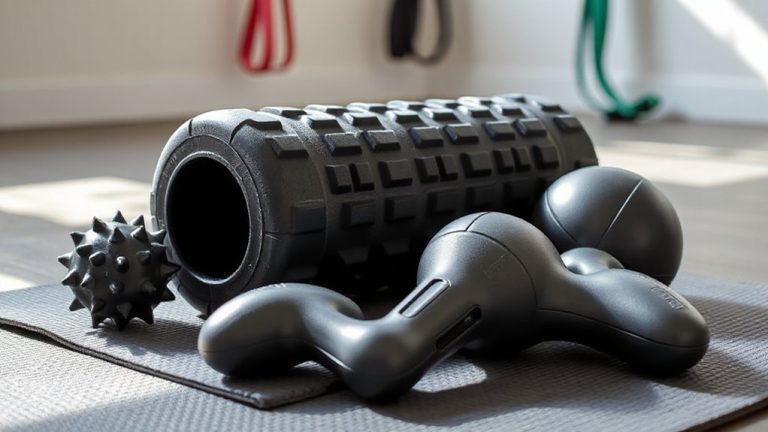
Flexibility isn’t just about touching your toes-it’s a key factor in how well your body moves, recovers, and performs under load. When you stretch consistently, you improve muscle elasticity, allowing tissues to lengthen efficiently under tension without strain. This isn’t just beneficial-it’s essential for reducing injury risk during explosive or loaded movements. At the same time, stretching enhances joint mobility, enabling smoother, greater-range motion that supports complex lifts and athletic maneuvers. Think of your muscles and joints as a high-performance suspension system: ideal flexibility guarantees they absorb force, recover faster, and operate with precision. Fitness recovery tools like foam rollers or quality resistance bands support this process, helping maintain gains in elasticity and mobility. Well-designed gear complements stretching by targeting tight areas effectively, guaranteeing long-term flexibility improvements that boost overall performance. For best results, consider using the best stretching equipment to enhance your routine and support consistent progress.
The Power of Dynamic Stretching
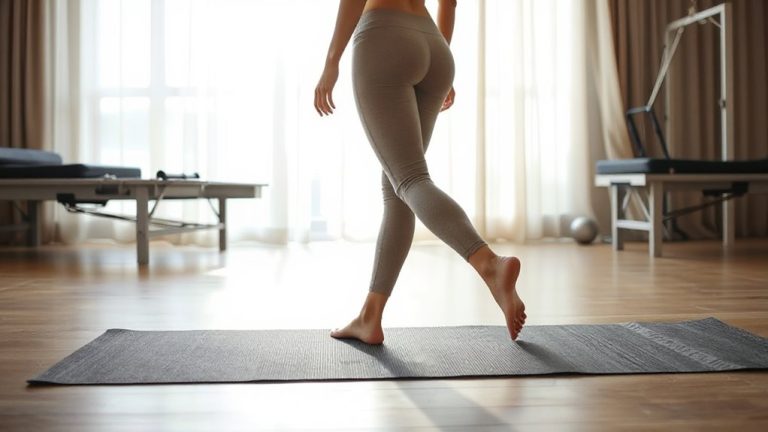
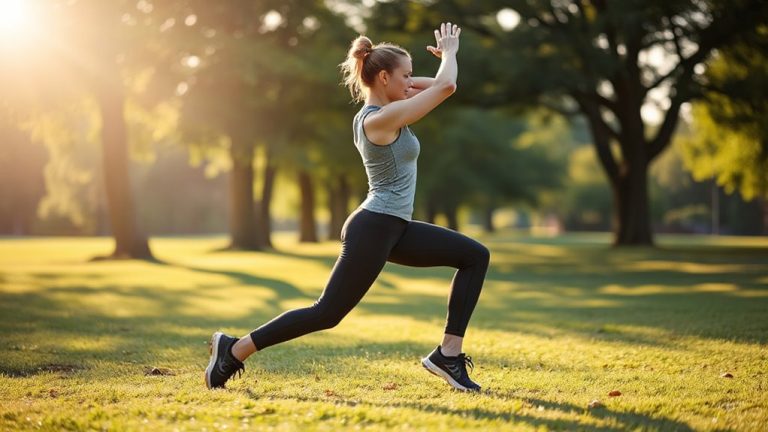
While static stretches have their place, you’ll get far more out of your warm-up when you prioritize dynamic stretching-especially before workouts that demand power or speed. Dynamic movements like leg swings, arm circles, and walking lunges prime your muscles and joints for action, delivering real warm up benefits. Unlike holding a stretch, these controlled motions increase blood flow, elevate core temperature, and enhance neuromuscular activation. That means your body’s ready for the demands ahead-this is movement preparation at its finest. You’re not just loosening up; you’re simulating exercise-specific patterns, which sharpens coordination and reduces injury risk. Research shows athletes who use dynamic routines perform better in sprinting, jumping, and agility tasks. For maximum results, spend 5–10 minutes on dynamic drills pre-workout. This approach aligns with how your body naturally moves, making it a smarter, more functional choice for performance-focused training.
Master Static Stretching for Long-Term Flexibility
Consistency is where lasting change takes root, and when it comes of building long-term flexibility, static stretching is your most reliable tool. You’ll see improved joint mobility and reduced muscle stiffness when you hold stretches for 30 to 60 seconds, ideally after workouts or on rest days. Unlike dynamic methods, static stretching targets muscle length over time, encouraging structural adaptations in connective tissues. You should aim for 3–5 sessions weekly, focusing on major muscle groups like hamstrings, hip flexors, and shoulders. Over weeks, you’ll notice better range of motion and less resistance during movement. It’s not flashy, but the results are measurable and durable. Pair this with recovery-friendly gear-like supportive mats and proper footwear-and you’ll protect joints and enhance performance. Static stretching isn’t a shortcut, but with patience, it delivers lasting gains in flexibility few other techniques can match.
Unlock Deeper Flexibility With PNF Stretching
One of the most effective methods for accessing deeper flexibility is proprioceptive neuromuscular facilitation (PNF) stretching, a technique that combines passive stretching with isometric contractions to produce rapid gains in range of motion. You’ll typically use it with a partner or resistance band, starting with a passive stretch, then contracting the target muscle for 5–10 seconds. After relaxing, you deepen the stretch, leveraging the contract relax technique to override neuromuscular resistance. Proprioceptive neuromuscular facilitation works because it exploits autogenic inhibition, calming the muscle spindle reflex. This makes it far more effective than static stretching alone, especially for tight or stubborn muscles. You’ll notice improved flexibility in just a few sessions. Though it demands more effort and sometimes fitness gear like straps, the performance benefits justify the input. For recovery and mobility, PNF stands out as a scientifically supported, efficient method worth integrating.
Best Times to Stretch for Peak Performance
When should you stretch to get the most out of your workouts? Timing matters. Incorporating dynamic stretches into your morning routines jump-starts circulation and prepares muscles for activity, though static stretching on cold tissue isn’t ideal. For peak performance, focus on movement-based prep before exercise. Save static holds for post workout cooldowns, when your muscles are warm and more pliable-this supports elasticity and reduces soreness. Evidence suggests consistent cooldown stretching enhances long-term flexibility and aids recovery. While fitness gear like foam rollers can complement these efforts, they don’t replace proper timing. Morning routines build habit, but post workout cooldowns deliver greater functional benefits. Prioritize stretching when your body is warm, especially after strength or endurance sessions. That’s when your muscles are primed for lengthening, making your efforts more effective and sustainable over time.
Hold Times That Actually Work
Thirty seconds turns out to be the sweet spot for most static stretches if you’re looking to actually improve flexibility over time. That’s the ideal duration research supports for triggering neuromuscular relaxation without overstressing connective tissues. Holding longer than 60 seconds offers minimal added benefit for most people, while shorter holds-under 15 seconds-don’t provide effective timing for lasting change. You’ll get the best results when you stretch after warming up or post-workout, when muscles are more pliable. For dynamic flexibility, focus on controlled movement patterns instead. Stick to 2–4 sets per muscle group, maintaining steady tension throughout. This approach guarantees consistent progress without compromising joint stability. The effective timing isn’t just about the clock-it’s about aligning your stretch routine with your body’s response to movement and recovery. Consistency beats intensity here, so prioritize regular practice over extreme hold times.
Avoid These Common Stretching Mistakes
While aiming to boost flexibility, you might unknowingly set yourself back by making mistakes that undermine your progress and, in some cases, increase injury risk. One of the most common errors is overstretching risks-pushing too hard can lead to muscle strains or joint stress, especially without proper warm-up. You should feel tension, not pain. Another issue is improper breathing; holding your breath activates the sympathetic nervous system, increasing tension instead of releasing it. Steady, deep breaths enhance oxygen flow and help muscles relax into the stretch. Bouncing during static stretches, known as ballistic motion, is also counterproductive and dangerous. Quality stretching requires control, consistency, and awareness. Using fitness recovery gear like foam rollers beforehand can prepare muscles, improving stretch efficiency. Avoid rushing-it defeats the purpose. Effective stretching isn’t about intensity; it’s about technique, timing, and mindful execution to support long-term flexibility and muscular health. A stretching strap can enhance your routine by providing support and proper alignment, especially when targeting hard-to-reach areas with best stretching straps.
On a final note
You boost performance and flexibility by choosing the right stretch at the right time. Dynamic moves prime muscles before workouts; static and PNF builds long-term range. Hold static stretches 30–45 seconds for real gains, and time them post-exercise for safest, most effective results. Avoid bouncing or overstretching-precision beats intensity. Proper technique, not fancy gear, delivers progress, though supportive, breathable apparel can aid comfort and movement tracking during recovery.