Combining Percussive Devices With EMS for Comprehensive Hamstring Injury Rehabilitation
You recover faster when you combine percussive therapy with EMS because they target different aspects of hamstring healing. Percussion reduces stiffness and boosts blood flow, while EMS reactivates weakened muscles and improves neural signaling. Used together in sequence-percussion first, then EMS-you enhance tissue pliability and neuromuscular coordination. Elite sprinters have cut recovery time by 40% using this approach, suggesting a smarter, more systematic path to rehab. There’s more to how timing and technique maximize results.
Notable Insights
- Use percussion therapy in the subacute phase to reduce hamstring stiffness and increase blood flow before EMS application.
- Apply 2–3 minutes of percussion followed immediately by 50–80 Hz EMS to enhance neuromuscular synchronization and tissue readiness.
- Avoid percussion during the acute injury phase but use low-frequency EMS to safely maintain neural connectivity.
- Combine both therapies before dynamic exercises to improve motor unit recruitment and hamstring force distribution.
- Limit percussion to 30–60 seconds per area to prevent overstimulation while supporting post-workout recovery and reducing soreness.
How Percussion Therapy Heals Injured Hamstrings
How does a vibrating mass of plastic and motor help a strained hamstring heal faster? Percussion therapy devices target damaged tissue with rapid, concentrated pulses that penetrate deep into the muscle. You’re not just soothing soreness-you’re promoting muscle relaxation by disrupting hypertonic contractions and calming overactive nerve signals. That rhythmic pressure boosts circulation, flushing metabolic waste and supporting inflammation reduction, a key step in recovery. Unlike static massage, the percussive action reaches layers traditional methods often miss, improving tissue pliability without excessive force. Most models offer adjustable frequencies, letting you tailor intensity to your pain threshold and injury stage. While not a standalone cure, when used consistently during early recovery, these devices accelerate healing by maintaining blood flow and minimizing scar tissue formation. They’re practical, portable, and increasingly essential in fitness recovery. Top models integrate advanced settings for precise best percussion massagers performance.
Percussion + EMS: Step-by-Step Rehab Protocol
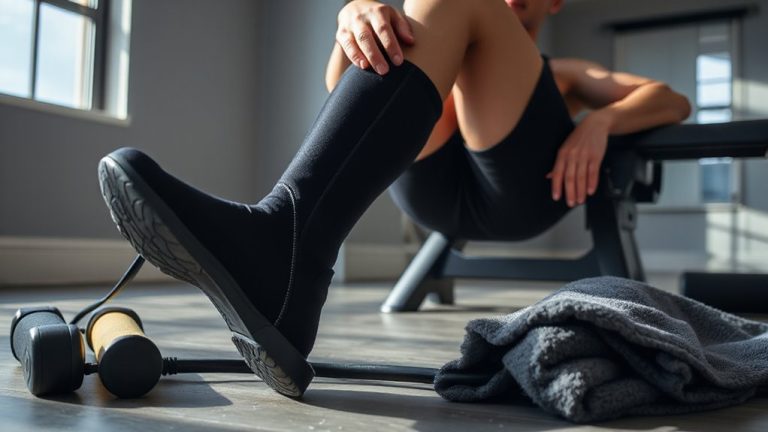
While recovery from a hamstring injury demands more than just passive rest, combining percussive therapy with electrical muscle stimulation (EMS) can markedly accelerate rehabilitation when applied in a structured protocol. Begin with 2–3 minutes of percussion to increase blood flow and loosen tight tissue, priming the muscle for activity. Immediately follow with EMS, using a frequency of 50–80 Hz to promote muscle synchronization and re-educate neuromuscular pathways. Perform this sequence before dynamic loading exercises like lunges or controlled sprints, ensuring the muscle is activated and responsive. Use percussive therapy again post-workout to reduce soreness and inflammation. Over time, consistent pairing enhances motor unit recruitment and improves force distribution. Though results vary, most users report stronger, more resilient hamstrings within 4–6 weeks. The combination isn’t a shortcut, but when timed right, it supports smarter, more efficient recovery through targeted, science-backed stimulation. For optimal results, consider integrating a high-quality muscle stimulator selected from top-rated devices on the market.
When to Use Each Therapy After Hamstring Injury
Since recovery timelines and tissue responses vary after a hamstring injury, knowing when to apply percussive therapy versus EMS can make a meaningful difference in your rehab outcomes. In the early stages, when inflammation is present, percussive therapy is generally too aggressive-timing considerations here favor caution. Instead, low-frequency EMS helps maintain neuromuscular connection without stressing healing fibers. As you progress into subacute phases, device selection shifts: percussion aids in reducing muscle stiffness and improving blood flow, especially before movement-based therapy. You’ll want to use it briefly-around 30 to 60 seconds per area-to avoid overstimulation. Later, during functional strengthening, combining both devices strategically enhances recovery. EMS supports muscle activation in weakened hamstrings, while post-workout percussion soothes tissue tension. Effective rehab hinges on aligning timing considerations with smart device selection-matching each tool to your current healing phase for ideal results.
Don’t Make These Hamstring Rehab Mistakes
Isn’t it frustrating when progress stalls despite sticking to your hamstring rehab routine? You might be undermining your recovery by ignoring pain or skipping assessments. Pushing through discomfort seems tough-minded, but it worsens tissue damage and delays healing. Pain isn’t just feedback-it’s a signal to reassess. Similarly, skipping assessments means you’re guessing instead of tracking real metrics like strength symmetry or muscle activation. Without objective data, you risk imbalances and re-injury. Many athletes rely too much on feel, especially when using percussive devices or EMS, but feel isn’t precision. These tools work best when applied based on clinical evaluations, not habit. Skipping assessments leads to misused therapy-over-treating one area, under-treating another. Don’t confuse activity with progress. Smart rehab means listening to your body, honoring pain as information, and using professional assessments to guide each step forward.
How EMS Reprograms Healing in Hamstring Injuries
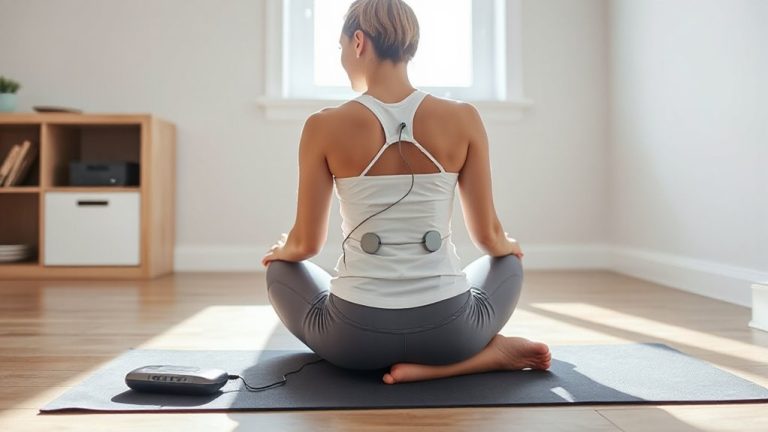
What if you could turn your recovery into an active process, not just passive rest? EMS does exactly that by stimulating muscle contractions to promote healing. It’s not just about strength-it’s about rebuilding muscle memory and guiding neural retraining so your hamstring fires correctly again. This tech doesn’t replace effort, but it accelerates the re-education your nervous system needs post-injury. For those incorporating EMS at home, pairing it with recovery tools like best EMS devices can optimize results during rehabilitation.
| Benefit | How EMS Delivers |
|---|---|
| Activates dormant fibers | Uses low-frequency pulses to contract muscles |
| Enhances muscle memory | Repeats patterns to reinforce movement recall |
| Supports neural retraining | Improves signal timing from brain to muscle |
| Reduces atrophy risk | Maintains engagement during early recovery |
EMS turns downtime into productive training, making it a smart addition to rehab gear. You’re not just waiting to heal-you’re actively reprogramming it.
How Sprinters Recovered Faster Using Percussion + EMS
You’ve seen how EMS jumpstarts neural re-education and keeps muscle fibers active during early hamstring recovery, but elite sprinters are taking it a step further by pairing it with percussive therapy for faster, more complete comebacks. You’re not just healing-you’re engineering accelerated recovery. Percussion devices increase blood flow, reduce muscle tension, and break up scar tissue, priming the hamstring for more effective EMS stimulation. When used together post-injury, this combo enhances neuromuscular activation while improving tissue quality. Sprinters report less downtime and faster return to sprint mechanics, making it a go-to for performance optimization. Devices like Hypervolt and Compex sync well, offering targeted, adjustable protocols that adapt to recovery stages. It’s not just rehab-it’s smart recovery. Coaches now view this integrated approach as essential, blending science and recovery gear to maintain peak condition. Used consistently, the synergy between percussive therapy and EMS supports stronger, more resilient hamstrings-critical when milliseconds count.
On a final note
You’ll find that combining percussion therapy and EMS sharpens hamstring recovery by boosting blood flow, reducing stiffness, and re-educating muscle fibers. Used correctly, these tools cut downtime without replacing movement-based rehab. Evidence, especially among sprinters, supports faster return-to-sprint times when protocols are timed to injury phase. Just remember-gear enhances, not replaces, smart rehab. Consistency and timing matter most.