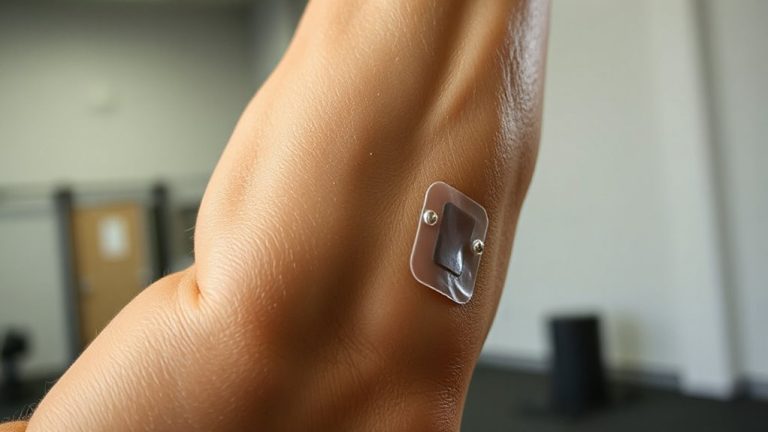
Leveraging Creatine Supplementation to Preserve Strength During Rehabilitation
You lose strength fast when injured, but creatine helps preserve muscle by maintaining ATP and reducing protein breakdown. Taking 3–5 g daily-especially around rehab sessions-boosts uptake and supports muscle integrity even without loading. Pair it with protein or carbs to enhance effectiveness. Athletes and those with low baseline levels see the clearest benefits, and it’s safe long-term. Stay hydrated and stick to dosing guidelines. You’ll learn how to optimize every part of your recovery strategy with simple, science-backed tweaks.
Notable Insights
- Creatine helps preserve muscle mass during immobilization by reducing protein breakdown and supporting anabolic processes.
- It maintains ATP energy levels in muscles, aiding strength retention even without mechanical loading.
- A loading phase of 20 g/day for 5–7 days accelerates muscle creatine saturation during early rehabilitation.
- Combining creatine with protein or carbohydrates enhances uptake and supports muscle repair post-injury.
- Long-term creatine use is safe and particularly beneficial for athletes and older adults during recovery.
Why You Lose Muscle When Injured
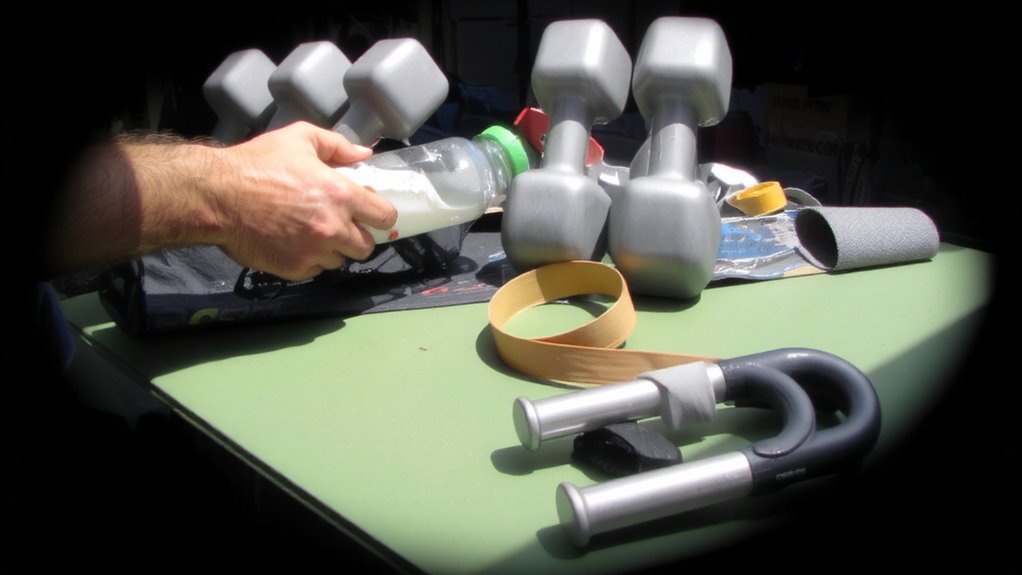
While you’re healing from an injury, your body doesn’t just repair tissue-it also responds to inactivity in ways that can quickly erode muscle mass. You’re likely unaware of how fast muscle atrophy sets in; within days, your muscles begin losing size and strength due to reduced mechanical loading. This decline isn’t just structural-your body also experiences a metabolic slowdown, meaning it burns fewer calories at rest, which can lead to fat accumulation even with unchanged diet. Immobilization disrupts protein synthesis and increases protein breakdown, tipping the balance toward loss. Even high-quality fitness gear like braces or supports won’t counteract this internal shift. The combination of muscle atrophy and metabolic slowdown undermines recovery efficiency, making it harder to return to prior performance levels. Addressing these changes early improves outcomes, but passive recovery alone won’t suffice-you need strategies that target physiology directly.
How Creatine Protects Muscle During Recovery
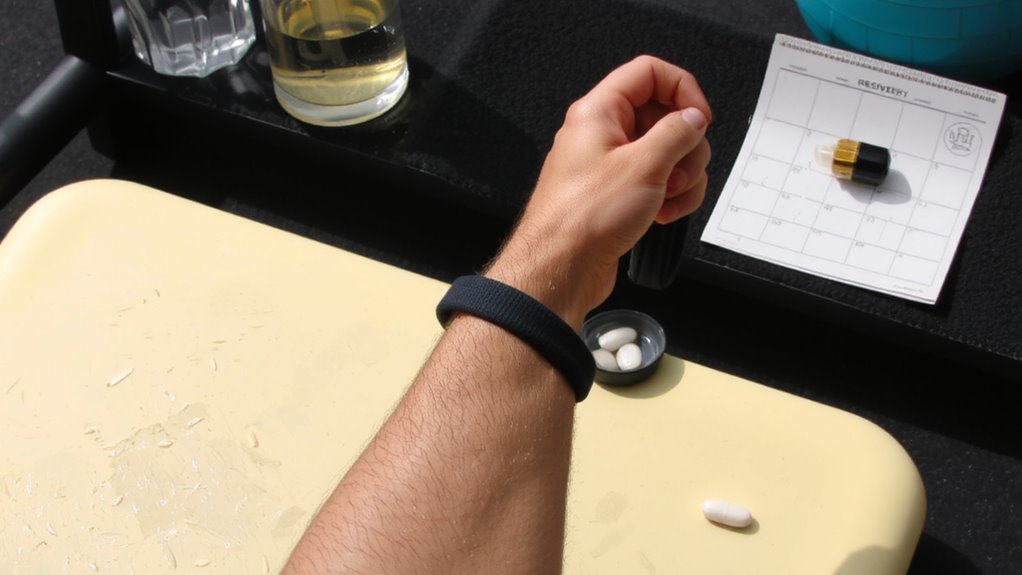
Because your muscles aren’t being actively loaded during recovery, they quickly shift into a catabolic state where breakdown outweighs synthesis-but creatine helps tilt the balance back in your favor. It enhances muscle preservation by increasing satellite cell activity and myonuclear accretion, supporting structural integrity even without mechanical loading. Creatine also delivers metabolic support by buffering ATP levels, helping maintain muscle energy homeostasis during inactivity. This dual action reduces atrophy and accelerates strength retention.
| Without Creatine | With Creatine |
|---|---|
| Rapid muscle loss | Improved muscle preservation |
| Low energy reserves | Enhanced metabolic support |
These physiological benefits make creatine a pragmatic addition to rehab protocols, especially when every bit of strength matters. You’re not just waiting to heal-you’re actively fighting decay.
How Much Creatine to Take and When
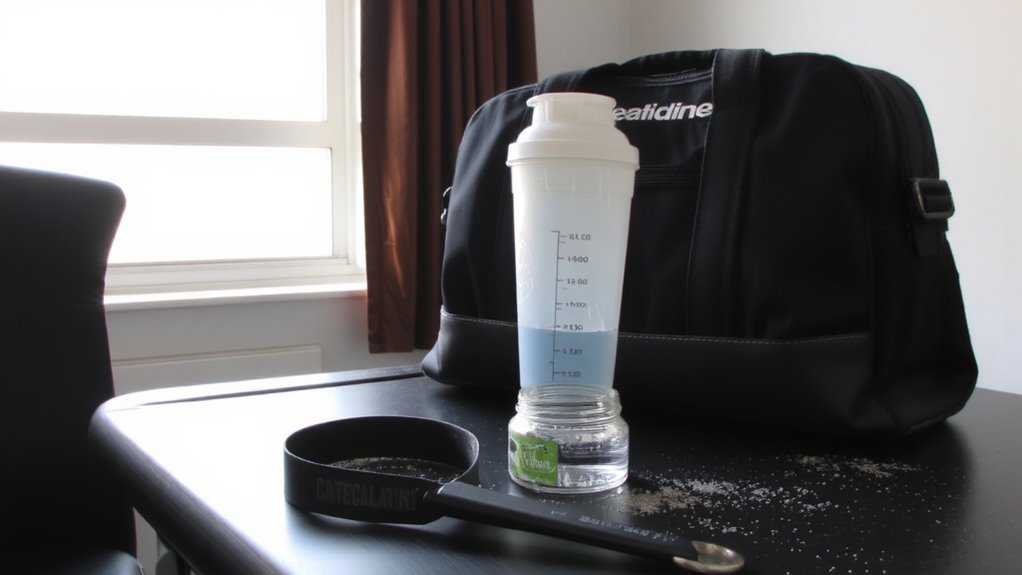
A well-timed creatine dose can make a meaningful difference in your recovery timeline, and getting the amount right is key to seeing results. Most research supports a loading phase of 20 grams daily, split into four 5-gram doses, for 5–7 days to rapidly saturate your muscles. After that, a maintenance dose of 3–5 grams per day sustains those levels. Skipping the loading phase works too, but it takes about 3–4 weeks to achieve the same saturation. Dosage timing isn’t critical, but taking creatine close to your rehab exercises-either before or after-may enhance uptake due to increased blood flow. Some studies suggest slightly better results when taken post-rehab, though the difference is modest. Consistency matters more than perfect timing. Pairing your daily dose with a carbohydrate can also improve absorption, but it’s not required. Stick with creatine monohydrate-it’s well-researched, effective, and affordable.
Pair Creatine With Protein for Better Results
You’ve already got the basics of dosing and timing down-hitting 20 grams a day during loading or sticking with 3–5 grams for maintenance, ideally around your rehab sessions for better uptake. Now, take it a step further: pair creatine with protein. This combo taps into protein synergy, boosting muscle repair and growth more effectively than either alone. When you consume creatine with a high-quality protein source-like whey or lean meat-insulin response improves, driving more creatine into muscle cells. That’s smart nutrient timing. Taking them post-rehab or with a snack shortly before strengthens recovery by aligning metabolic demand with nutrient supply. Studies show this pairing enhances lean mass retention and strength gains during immobilization or reduced activity. You’re not just supplementing-you’re optimizing. Practical? Absolutely. Mix creatine into a protein shake or have it with a chicken breast and rice. It’s a small tweak with measurable impact.
Who Gains the Most From Creatine in Rehab
Who really benefits most from adding creatine to rehab? You do-if you’re engaged in structured recovery with clear goals. Research shows that athlete stratification matters: trained individuals, especially strength or power athletes, see greater preservation of muscle and strength during immobilization. Your body’s prior adaptation to load makes creatine’s role in ATP resynthesis more effective. Endurance athletes benefit less dramatically, but still gain if power output is part of their sport. Timing plays a key role-consistent dosage timing, ideally post-rehab or with protein, increases retention and functional outcomes. You’ll maximize results by aligning supplementation with your rehab phase and physiological demands. Older adults and those with lower baseline creatine stores also respond well, but performance-focused rehab patients gain the most. It’s not a magic fix, but paired with precision, it sharpens your recovery edge.
Is Creatine Safe During Prolonged Inactivity?
While concerns occasionally arise about using creatine during extended periods of inactivity, current evidence suggests it’s not only safe but potentially beneficial when aligned with recovery goals. You might worry about side effects, but studies show excellent long term safety, even in inactive populations. Creatine doesn’t overstimulate; instead, it supports cellular energy reserves, which can help maintain muscle integrity when movement is limited. Research involving older adults and individuals with reduced mobility confirms no increased risk of kidney or liver issues when used as directed. In fact, for those healing or immobilized, creatine may reduce muscle degradation. It’s not just for athletes-you can benefit too, especially when preserving strength matters most. Always follow recommended dosages and stay hydrated. The data supports confidence in its use during recovery phases, making creatine a smart, science-backed addition to your rehabilitation strategy.
How to Use Creatine While Healing From Injury
If you’re recovering from an injury, incorporating creatine into your rehabilitation plan can help preserve lean muscle mass and support metabolic resilience during periods of reduced activity. Pairing creatine with proper injury nutrition enhances its effectiveness, ensuring your body has the tools to maintain strength. A consistent recovery mindset reinforces adherence, turning daily supplementation into a ritual of progress.
| Dosage | Timing |
|---|---|
| 3–5 g/day | Daily |
| No loading needed | Morning or post-nutrition |
| Stable dosing | With meals |
| Continue through rehab | Even on rest days |
| Combine with protein | Optimizes uptake |
This approach bridges fitness recovery and physiology, supporting adaptation when movement is limited. Creatine isn’t just for athletes-it’s a practical tool during healing, especially when integrated into a disciplined recovery mindset and balanced injury nutrition plan.
On a final note
You’ll lose muscle faster than you think when injured, but creatine helps slow that decline by supporting cell energy and protein synthesis. Taking 3–5 g daily, ideally with protein, maximizes retention. It’s safe even with limited movement and most effective for those with higher initial strength. While not a replacement for training, it’s a smart, evidence-backed tool during rehab-practical, efficient, and easy to incorporate into recovery protocols.