Strategies for Enhancing Adaptation and Supercompensation Processes During Long-Duration Exercise Programs
You build fitness during recovery, not just workouts, so prioritize sleep, nutrition, and active recovery to fuel supercompensation. Consume 20–30 grams of protein post-exercise and time training increases every 1–2 weeks to match your body’s adaptation. Use foam rolling, compression gear, or wearables to monitor fatigue and guide recovery. Plan tapering every 4–6 weeks within a periodized program to prevent overtraining. Smart, consistent choices now set the foundation for greater gains just ahead.
Notable Insights
- Prioritize recovery as the phase where adaptation and supercompensation actually occur, not during exercise itself.
- Implement active recovery, sufficient sleep, and compression tools to optimize physiological restoration between training sessions.
- Consume 20–30 grams of high-quality protein within 60 minutes post-exercise to accelerate muscle repair and adaptation.
- Gradually increase training load every 1–2 weeks while monitoring fatigue to align stress with recovery capacity.
- Use periodized training cycles with planned tapers every 4–6 weeks to maximize supercompensation and prevent plateaus.
Understand Adaptation and Supercompensation First
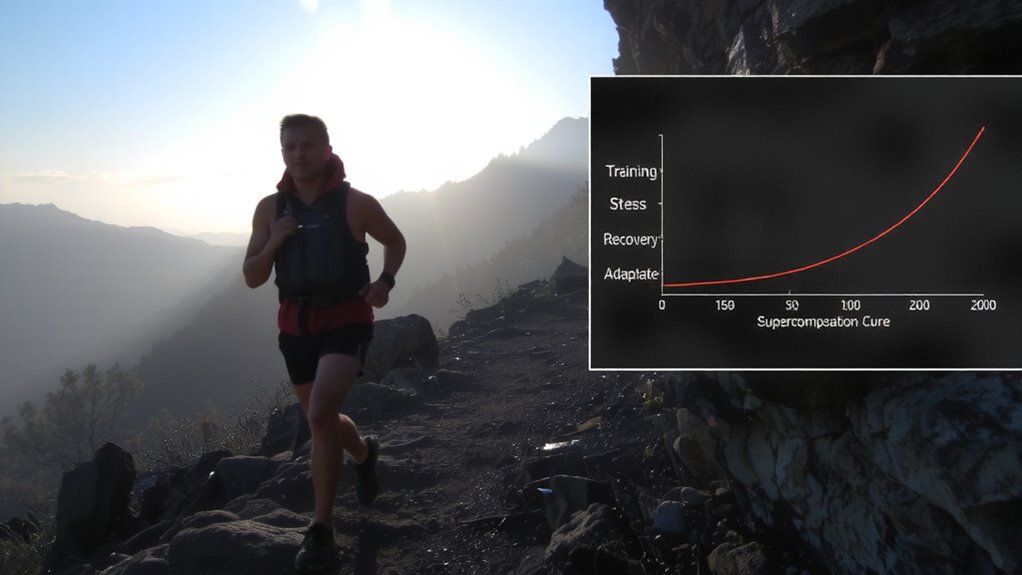
While your body responds to exercise as a form of stress, it’s only during recovery that real progress happens-this is where adaptation and supercompensation come into play. You impose physiological stress through training, and your systems break down temporarily. But growth doesn’t occur during the workout-it happens after, when your body rebuilds stronger, provided recovery timing aligns with your training load. Get this wrong, and you risk overtraining or stagnation. Smart recovery means syncing rest with your body’s needs, not just your schedule. High-end fitness gear, like compression wear or recovery boots, may support this process, but they can’t override poor timing. Their value depends on how well you integrate them into a recovery plan grounded in physiology. Used correctly, they enhance circulation and reduce soreness, but they’re tools, not shortcuts. Adaptation is earned through consistency, precision, and respect for recovery timing. Research-backed models show that optimal recovery can be augmented with devices such as best compression boots.
Recover Strategically to Trigger Performance Gains

| Method | Effectiveness & Use Case |
|---|---|
| Active recovery | Improves circulation; ideal post-intense day |
| Sleep optimization | Critical for hormone regulation; nightly need |
| Compression gear | Moderate benefit; best for travel or soreness |
| Foam rolling | Temporary relief; complements mobility work |
Compression sleeves can enhance blood flow during recovery, with top models offering graduated pressure to support optimal performance during both training and rest.
Eat to Support Muscle Repair and Energy Balance

What if the real game-changer in your recovery wasn’t the foam roller or the compression tights, but what you’re fueling your body with after a workout? You need to prioritize protein timing-consuming 20–30 grams of high-quality protein within 30 to 60 minutes post-exercise jumpstarts muscle repair. That window isn’t absolute, but hitting it consistently supports faster adaptation. Pair that with nutrient-dense foods-think colorful vegetables, whole grains, lean meats, and healthy fats-to replenish glycogen and supply essential micronutrients. These foods offer more bang per calorie, optimizing recovery without excess. While fitness gear may feel high-tech, it can’t compensate for poor nutrition. What you eat directly influences supercompensation: skimp on protein or choose empty calories, and your gains stall. Focus on real food first. Your body doesn’t adapt in response to gadgets-it responds to fuel.
Increase Intensity Without Crossing Into Overtraining
You’ve got the nutrition piece down-hitting your protein window, fueling with nutrient-dense foods, and supporting recovery from the inside out. Now it’s time to push harder-but smart. Progressive overload is essential, but without control, you risk stalling progress or tipping into overtraining. Gradually increase weight, volume, or complexity every 1–2 weeks, allowing your body to adapt. Track fatigue through sleep quality, mood, and performance drops-key signals your system is strained. Incorporate planned tapering phases every 4–6 weeks to let your body fully supercompensate. These short resets boost resilience and prevent accumulated stress from turning harmful. Wearables can help monitor heart rate variability and resting heart rate, offering real-time feedback on readiness. Ignore these cues, and even the best-designed program fails. Balance aggression with patience-true gains come not from constant grind, but from strategic escalation and recovery.
Use Periodization to Sustain Long-Term Progress
While consistent training drives adaptation, it’s periodization that keeps your progress from plateauing after the initial gains fade. You need structured Periodization planning to align your workload with recovery, ensuring supercompensation occurs at ideal times. By cycling phases-like hypertrophy, strength, and taper-you allow your body to adapt without stagnation. Training variation isn’t just about changing exercises; it’s strategic shifts in volume, intensity, and modality that prevent overuse and mental burnout. Think of it as a roadmap: macrocycles lay the annual plan, mesocycles break it into months, and microcycles fine-tune weekly loads. Without this, even the best recovery gear-foam rollers, compression boots, massage guns-can’t compensate for poor programming. Use data from performance and perceived exertion to adjust phases. Smart periodization doesn’t just sustain progress-it accelerates it, making your long-term goals not just possible, but predictable.
On a final note
You’ve seen how smart recovery fuels adaptation and supercompensation, turning stress into strength. Prioritizing sleep, nutrition, and periodized training keeps your body in balance. Tools like compression gear or foam rollers support circulation and muscle recovery, but only when used strategically. Overtraining risks progress, so listen to your body. With consistent, evidence-based methods-backed by physiology, not hype-you’ll sustain gains and avoid setbacks efficiently.