Optimal Timing of Carbohydrate and Protein Consumption for Post-Rehab Workout Recovery
You get the best results when you consume carbs and protein within 30 minutes after your rehab session. Your muscles are most receptive right away, especially in the first 10 minutes, absorbing nutrients more efficiently to reduce inflammation and kickstart repair. A 3:1 carb-to-protein ratio-like 30g carbs with 10g protein-optimizes glycogen replenishment and tissue healing. Whole food pairings, such as yogurt with berries, enhance recovery through natural nutrient synergy. Proper timing and ratios don’t just support healing-they accelerate it, and there’s more to explore for long-term gains.
Notable Insights
- Consume carbs and protein within 30 minutes post-rehab to maximize nutrient uptake and recovery.
- Aim for peak intake in the first 10 minutes when muscle sensitivity to nutrients is highest.
- Use a 3:1 carb-to-protein ratio, such as 30g carbs with 10g protein, for effective recovery.
- Pair whole food sources like Greek yogurt with berries to enhance insulin response and repair.
- Adjust carb-protein timing and ratios based on rehab phase and specific recovery goals.
Why Timing Matters in Post-Rehab Recovery

Recovery isn’t just about rest-it’s about strategy, especially when you’re rebuilding after rehab. You need precise timing to maximize inflammation reduction and support muscle regeneration. After therapy or training, your body enters a fragile state-delayed nutrition scheduling can slow healing, while well-timed intake sharpens recovery. Consuming protein soon after activity provides amino acids critical for repairing damaged tissues, and pairing it with carbs helps replenish glycogen while enhancing absorption. Inflammation reduction isn’t about eliminating natural immune responses but modulating them-omega-3s and antioxidants play a role, but timing amplifies their effect. Muscle regeneration thrives on consistency, not just effort. Recovery gear like compression sleeves or percussion tools can assist, but they’re secondary to metabolic timing. You can have the best fitness gear, but without smart nutrient timing, progress stalls. Prioritize the when as much as the what-your recovery depends on both.
The 30-Minute Recovery Window
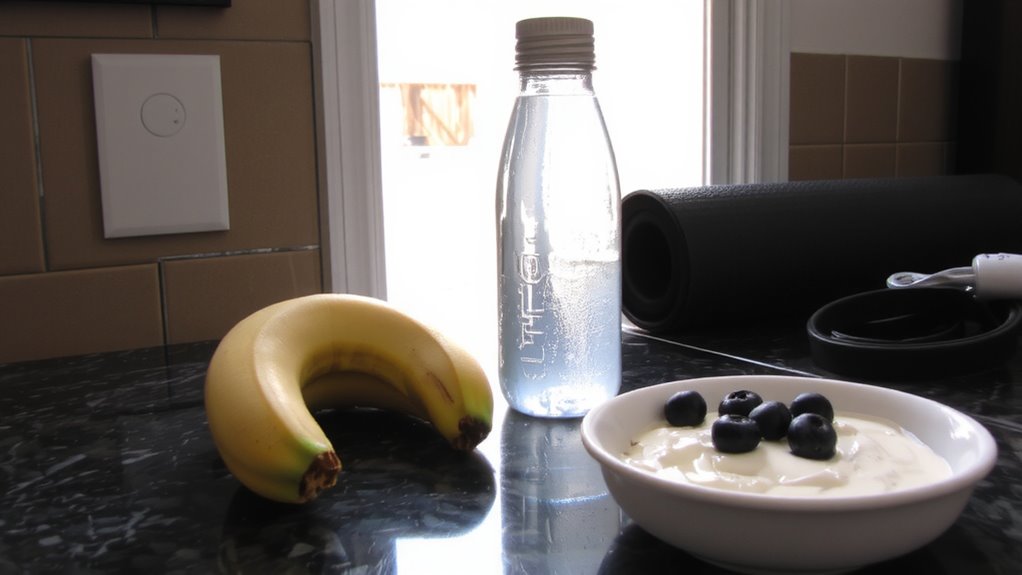
Why is it that the moments right after your rehab session could make or break your progress? Because your body enters a 30-minute recovery window where nutrient uptake skyrockets. This is prime time for carb loading and protein timing-your muscles are primed to absorb glucose and amino acids. Missing it slows healing and reduces strength gains. Think of this period as your body’s metabolic golden hour.
| Time Post-Workout | Muscle Sensitivity | Nutrient Absorption |
|---|---|---|
| 0–10 min | Very High | Excellent |
| 10–20 min | High | Good |
| 20–30 min | Moderate | Fair |
| 30–60 min | Low | Poor |
| 60+ min | Minimal | Very Poor |
Act fast: consume carbs and protein within 30 minutes to maximize recovery. Delaying weakens adaptation, especially with consistent rehab demands.
Optimal Carb-Protein Ratios for Healing
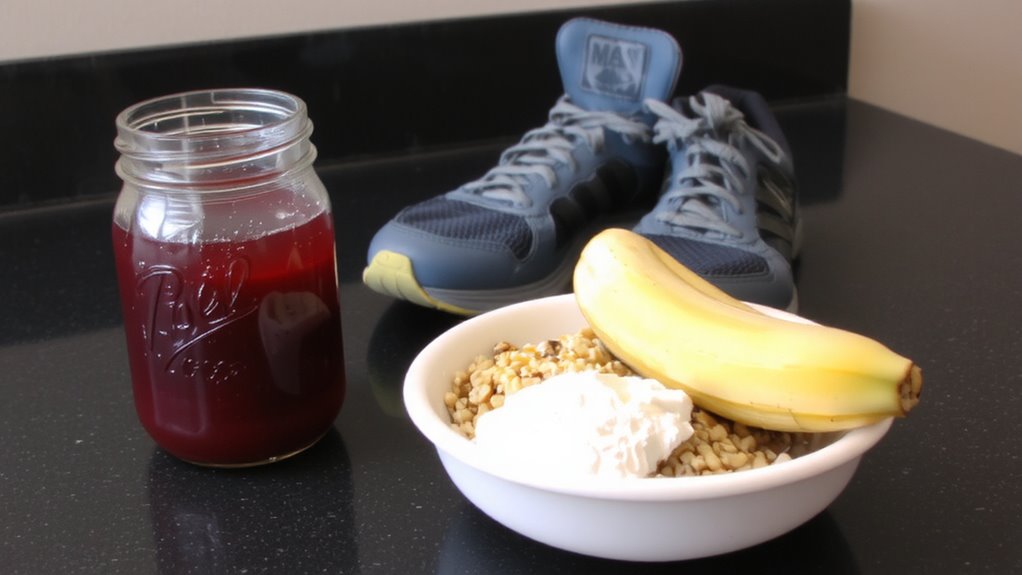
You’ve got a narrow window to act-those 30 minutes post-rehab are when your muscles are most receptive-but timing alone won’t maximize healing if you’re not fueling with the right balance of carbs and protein. For ideal tissue repair, aim for a 3:1 ratio of carbohydrates to protein; this ratio supports carb synergy, enhancing insulin response to shuttle nutrients into damaged muscle cells. A 30-gram carb and 10-gram protein combo has been shown to replenish glycogen stores efficiently while maintaining protein balance necessary for rebuilding. This isn’t one-size-fits-all-higher intensity sessions may benefit from slightly increased protein, up to a 2:1 ratio. Studies suggest this sweet spot accelerates recovery, especially when paired with consistent rehab protocols. Avoid skewing too heavily toward protein; without sufficient carbs, your body can’t fully trigger recovery pathways. Precision in ratios matters just as much as timing.
Recovery-Boosting Food Pairings
A solid recovery plan hinges not just on timing and ratios but on smart food pairings that amplify nutrient delivery and muscle repair. You’re leveraging food synergy when you combine carbohydrates and protein in ways that enhance insulin response and shuttle amino acids into muscle cells more efficiently. Think Greek yogurt with berries or a banana with peanut butter-these aren’t just satisfying, they’re strategic. Nutrient pairing like this boosts glycogen replenishment and reduces muscle breakdown. Whole foods work better than processed bars or shakes in most cases, offering fiber, antioxidants, and healthy fats that support sustained recovery. You’ll notice less soreness and quicker readiness for your next rehab session when you prioritize natural combinations over isolated supplements. While fitness gear tracks progress, it’s these daily food choices that drive real healing. Consistency with nutrient pairing builds a foundation no gadget can replicate.
Tailoring Nutrition to Your Rehab Goal
How different would your recovery look if your meals were designed not just for performance but for your specific rehab objective? If you’re rebuilding muscle after injury, you’ll want more protein to support repair, while those managing inflammation might prioritize antioxidants and healthy fats. Nutrient synergy matters-pairing vitamin C with iron, or carbs with protein-amplifies tissue healing and replenishes glycogen efficiently. For joint recovery, collagen-boosting nutrients like vitamin C and glycine, taken before bedtime, may improve structural repair. Your metabolic efficiency improves when meals align with your rehab phase: early stages may require fewer carbs, while return-to-activity phases need timed carbohydrate intake to fuel movement without spiking inflammation. It’s not just about eating right-it’s about fueling the exact process your body is focused on. Tailoring nutrition this way turns meals into medicine, enhancing recovery with precision and care.
How to Tell If Recovery Nutrition Is Working
Signs your recovery nutrition is on track start to show not in dramatic leaps but in consistent, measurable improvements across physical function and daily well-being. You’ll notice reduced muscle soreness, quicker return to baseline energy, and smoother performance in follow-up sessions. Effective progress tracking helps you connect dietary timing with physical outcomes, revealing patterns that inform adjustments. Below is a snapshot of key indicators:
| Indicator | Improving Sign | Not Improving Sign |
|---|---|---|
| Muscle soreness | Mild, fades in 24h | Persistent beyond 48h |
| Workout performance | Consistent or up | Declining reps or power |
| Energy levels | Stable, no crashes | Fatigue between meals |
| Sleep quality | Deep, restful | Interrupted, restless |
| Progress tracking | Clear gains | Plateaus or regressions |
When these markers trend positively, your carb-protein strategy is likely working.
On a final note
You’ll recover faster when you time carbs and protein right after your rehab workout. That 30-minute window matters-aim for a 3:1 carb-to-protein ratio to refuel glycogen and repair tissue. Pairing whole foods like yogurt and fruit or a smoothie with oats works well. Tailor intake to your rehab goal, whether it’s mobility or strength. If soreness drops and function improves, your nutrition’s on track.