Tai Chi Single Whip Modification for Tennis Elbow Symptom Management
You can modify the Tai Chi Single Whip to manage tennis elbow by keeping your elbow slightly bent and aligned with your shoulder and wrist in a gentle arc. Avoid locking the joint or overreaching to reduce strain on forearm tendons. Use controlled weight shifts and neutral wrist positioning to maintain stability and circulation. This mindful adaptation supports recovery while preserving form-adjusting technique now leads to safer, more effective practice over time.
Notable Insights
- Modify the Single Whip by maintaining a slight elbow bend to reduce tendon strain.
- Align wrist, elbow, and shoulder in a gentle arc to promote proper energy flow.
- Keep the wrist neutral to prevent ulnar or radial deviation during the posture.
- Shorten the reach temporarily to maintain control and avoid overextending the arm.
- Practice controlled weight shifts on a non-slip surface to minimize joint loading.
Can Tai Chi Help Tennis Elbow Pain?
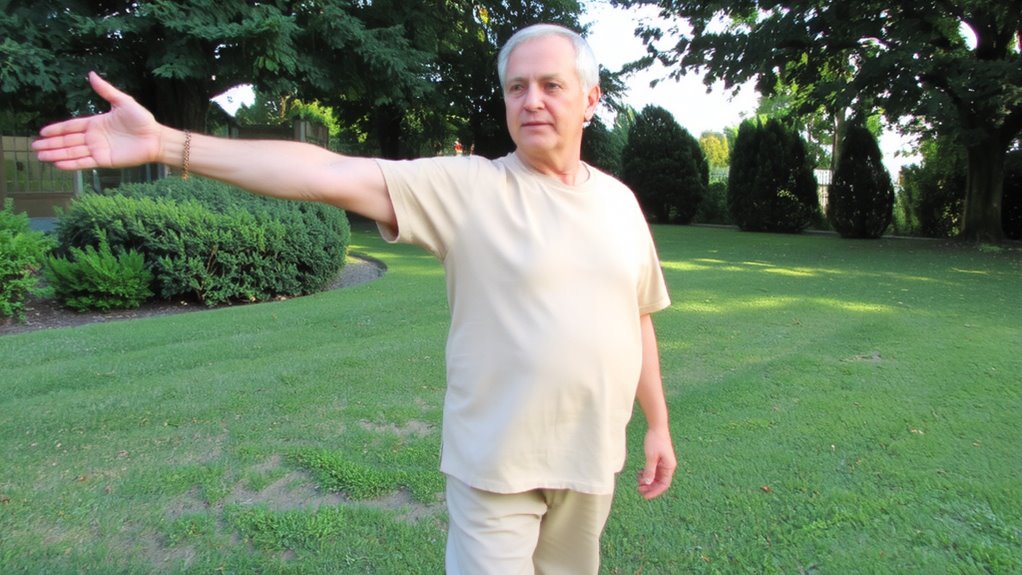
Could something as gentle as Tai Chi actually make a difference in managing tennis elbow pain? Yes, especially when you focus on mindful movement and proper mechanics. Tai Chi promotes healing through controlled gestures that enhance circulation and reduce joint stress. Its Qigong flow encourages smooth energy transfer, easing muscular tension around the affected area. You’ll find that maintaining correct wrist alignment during forms minimizes strain on forearm tendons-key for both recovery and prevention. Unlike aggressive fitness gear or high-impact rehab tools, Tai Chi requires no equipment, just attention to form. Studies suggest regular practice improves joint proprioception and functional strength without overloading injured tissue. While it won’t replace medical treatment, it complements fitness recovery by fostering body awareness and tendon resilience. When practiced consistently, the slow, deliberate motions support long-term elbow health. It’s low-risk, accessible, and integrates seamlessly into daily wellness routines.
Adjust Single Whip to Protect Your Elbow
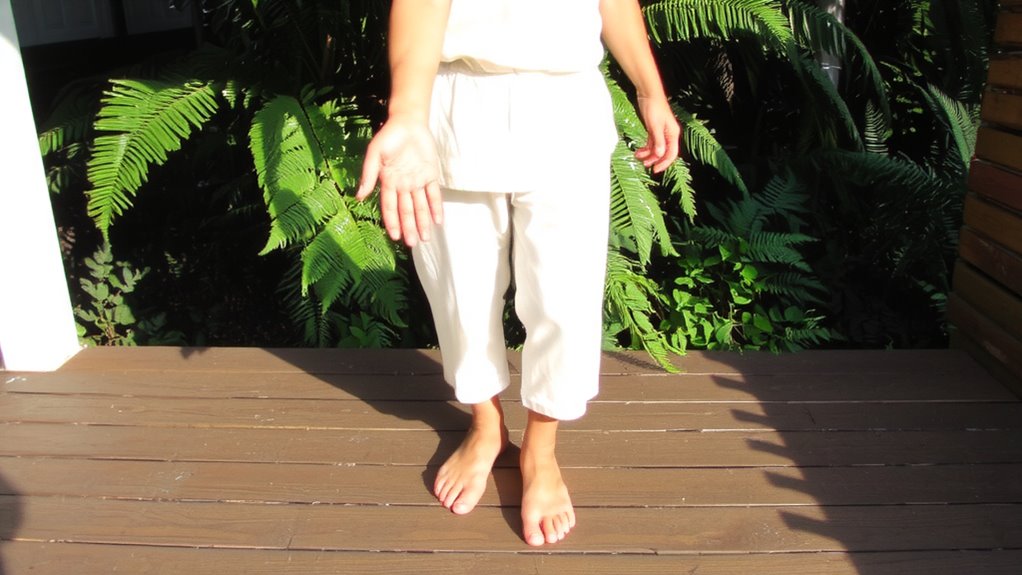
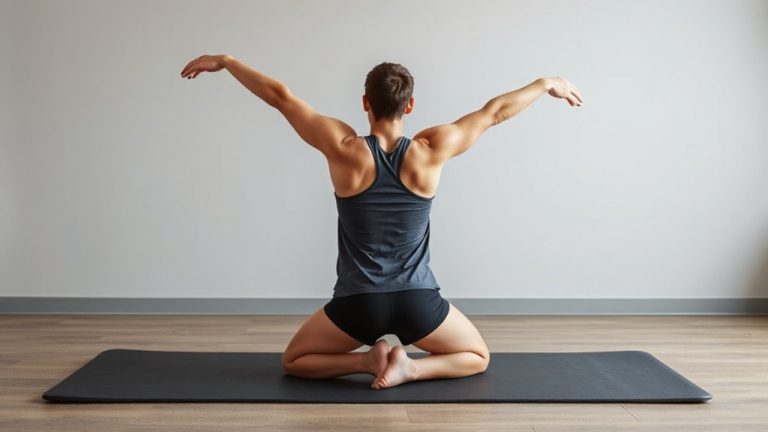
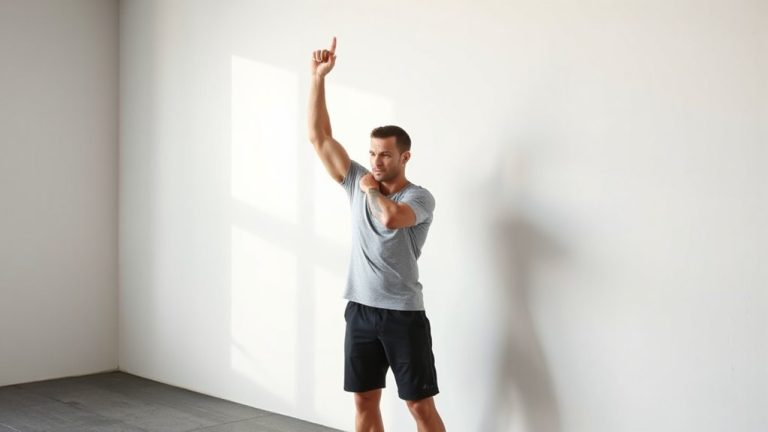
While refining your form in Tai Chi, you’ll want to pay close attention to the Single Whip posture, especially if you’re managing tennis elbow. Proper elbow alignment is essential-keep your arm slightly bent, never locked, to reduce strain on the tendons. Avoid overextending or twisting the joint, which compromises joint stability. Instead, align your wrist, elbow, and shoulder in a gentle arc, allowing energy to flow without compression. You might find that shortening the reach temporarily helps maintain control and form. This small adjustment supports healing by minimizing irritation while preserving movement quality. Think of it as smart repositioning, not limitation. Over time, improved mechanics enhance both function and comfort. These modifications aren’t just workarounds; they reflect deeper principles of mindful motion and fitness recovery. Using correct form acts like supportive gear-protective, preventive, and integral to long-term joint health. Incorporating a compression sleeve can further stabilize the elbow and reduce tendon strain during practice.
Do the Modified Single Whip Safely
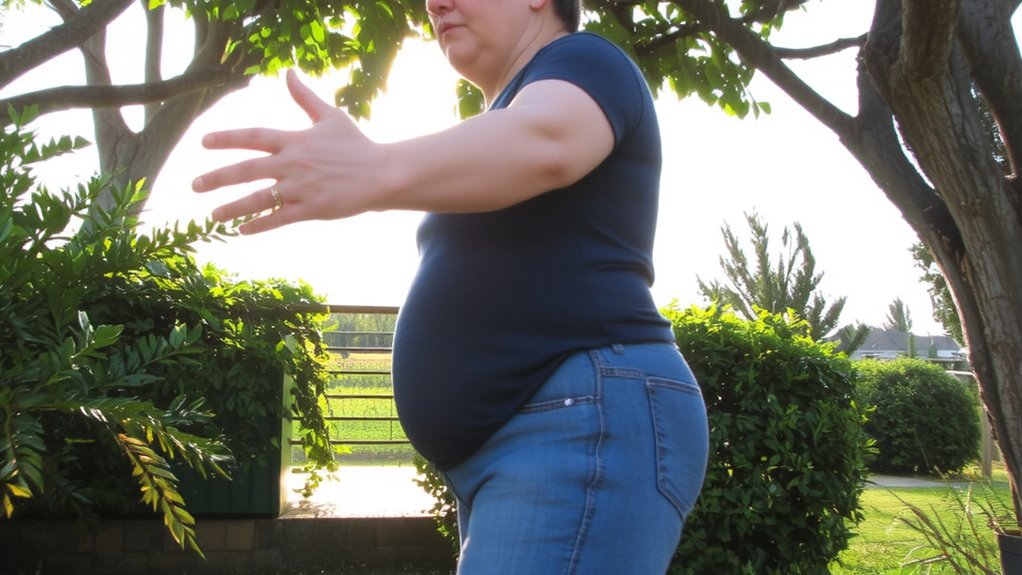
You’ve already adjusted the Single Whip to protect your elbow by refining alignment and reducing strain, and now it’s time to put that modification into practice safely. Focus closely on elbow alignment-keep it slightly bent, not locked, to minimize stress on tendons. Your wrist positioning should remain neutral, avoiding ulnar or radial deviation that could aggravate symptoms. Move slowly, using controlled weight shifts to maintain balance without overloading the affected arm. This modified form supports fitness recovery by promoting circulation and joint awareness without sacrificing technique. Practicing on a non-slip mat enhances stability, especially during shifts. Quality gear-like supportive footwear and breathable clothing-helps sustain proper posture and reduces compensatory movements. Monitor how your arm responds; mild warmth is normal, but sharp pain means you’ve pushed too far. Top Elbow Braces for Golfers can provide additional support during rehabilitation and daily activities, helping to stabilize the joint and reduce tendon strain. Done right, this version strengthens resilience while protecting your elbow from further irritation.
Avoid These Tai Chi Mistakes With Tennis Elbow
Because poor form can undo the benefits of tai chi when recovering from tennis elbow, it’s essential to recognize common errors that strain the affected arm. You might unknowingly adopt improper alignment, especially in the wrist and shoulder, which increases pressure on the lateral epicondyle. Avoid locking your elbow or raising your hand above shoulder level during the Single Whip modification-this creates excessive tension in the forearm extensors. Keep your movements slow and controlled; jerky shifts compromise joint stability and delay recovery. Your stance should support fluid weight transfer, reducing load on the injured side. Don’t overextend the reaching arm-this often leads to compensation and flawed mechanics. Maintain a relaxed grip and mindfully monitor your shoulder position to prevent shrugging. These mistakes, though subtle, can transform a therapeutic practice into a source of reinjury. Consistent awareness guarantees tai chi remains a safe, effective tool in fitness recovery-no special gear needed, just disciplined attention to form.
Practice Daily Without Aggravating Pain
Regularly practicing modified tai chi movements can significantly support recovery from tennis elbow, as long as you stay within pain-free ranges. You should prioritize gentle repetition over intensity, allowing tendon tissue to adapt without irritation. Perform each movement slowly, focusing on form and alignment to prevent compensatory patterns. Mindful pacing is essential-limit sessions to 10–15 minutes daily, gradually increasing duration only if symptoms remain stable. Avoid holding static postures too long or over-rotating the forearm, which can strain the lateral elbow. Pay attention to feedback from your body; soreness after practice suggests you’ve exceeded safe thresholds. Consistency matters more than duration, so maintaining a daily routine within tolerable limits yields better long-term outcomes than occasional, intense sessions. Using supportive gear like a compression sleeve may help manage discomfort during movement, though it shouldn’t mask pain. For golfers managing similar elbow strain, wearing a properly fitted elbow brace for golf can provide targeted support during rotational activities.
On a final note
You can manage tennis elbow with Tai Chi by modifying movements like Single Whip to reduce strain. A controlled, low-amplitude version decreases joint load while maintaining flow and form. This adaptation supports fitness recovery, preserving tendon mobility without aggravating symptoms. Quality gear, like supportive footwear and compression sleeves, enhances stability and circulation. Daily practice, done mindfully, promotes healing-but only if technique and equipment align with therapeutic goals.