Using Tempo-Based Push-Ups to Strengthen Scapular Stabilizers in Climbers
You rely on scapular stability for efficient, injury-free climbing, and tempo push-ups build that foundation by strengthening your serratus anterior and lower trapezius. With a slow, controlled 3–4 second descent, you boost time-under-tension and neuromuscular control, correcting imbalances that lead to winging. Proper form-neutral spine, engaged core, elbows at 30–45°-ensures targeted activation. Done 2–3 times weekly, these push-ups enhance endurance and joint integrity. There’s more to optimizing this exercise for your climbing routine.
Notable Insights
- Tempo push-ups enhance scapular stabilizer strength by emphasizing controlled, slow eccentrics to increase time under tension.
- Proper scapular retraction and core engagement during tempo push-ups improve neuromuscular control for climbing-specific stability.
- Keeping elbows at 30–45° and maintaining body alignment prevents compensation and maximizes stabilizer activation.
- Performing 3–4 sets of 8–12 reps, 2–3 times weekly, builds endurance and supports shoulder joint integrity in climbers.
- Integrate tempo push-ups on recovery or strength days to avoid interference with climbing performance and reduce injury risk.
Why Scapular Stability Is Essential for Climbers
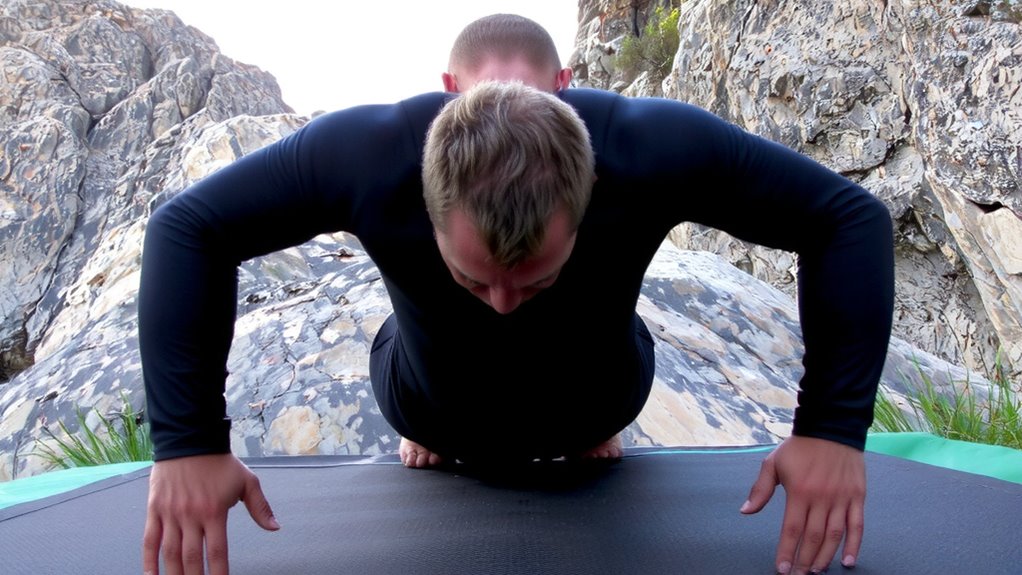
Stability in your scapulae isn’t just a nice-to-have-it’s fundamental to how well you move on the wall. When your scapular stabilizers are weak, you’re more likely to develop scapular winging, especially during sustained overhead motion. That not only looks awkward but undermines joint integrity, increasing your risk of shoulder injury over time. As a climber, every reach, pull, and shift in body tension relies on a stable base from your shoulder girdle. Without it, force distribution becomes inefficient, fatiguing muscles prematurely. You’re not just losing power-you’re compromising long-term resilience. Strong scapular control enhances movement precision and protects the glenohumeral joint during dynamic sequences. Think of it as foundational support, like proper footwear on a multi-pitch route. Equipment helps, but nothing replaces your body’s internal stabilization. Investing in this area means fewer setbacks and better performance when it counts.
How Tempo Push-Ups Boost Shoulder Stability for Climbing
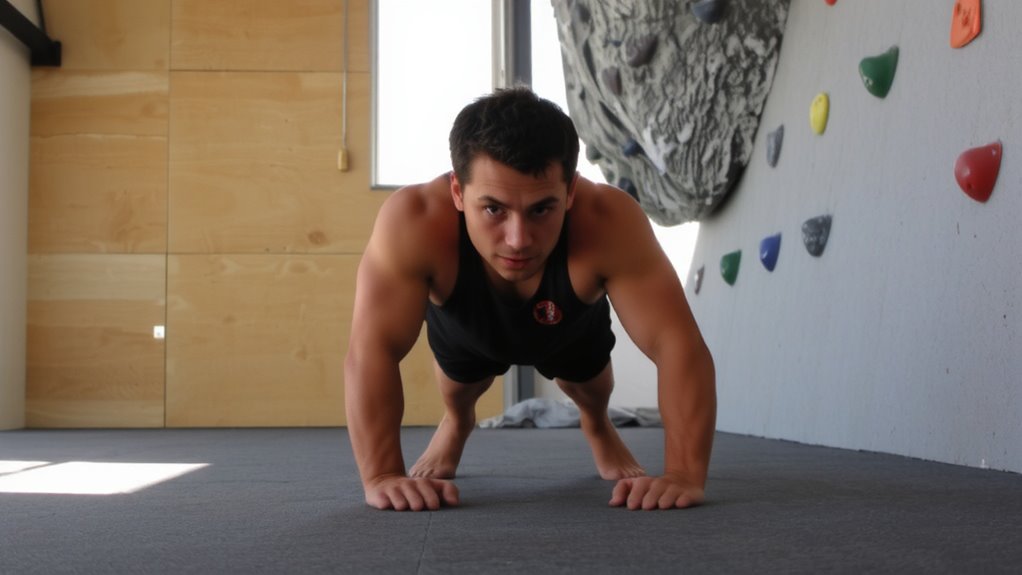
While you might not immediately link push-ups to climbing performance, incorporating tempo-based variations can greatly strengthen the stabilizing muscles critical for shoulder health on the wall. By controlling the push up cadence-slowing the eccentric and isometric phases-you force your scapular stabilizers to work harder, enhancing neuromuscular control. This method shifts focus from pure strength to time-under-tension, building the muscular endurance climbers need for sustained shoulder stability on overhangs or long routes. A slow, deliberate tempo increases activation of the serratus anterior and lower trapezius, reducing injury risk caused by scapular winging. Unlike standard push-ups, tempo variations expose weaknesses and imbalances, making them a valuable assessment and training tool. Over time, this disciplined approach conditions the shoulder complex to stay resilient under fatigue, translating to smoother movement, better posture on small holds, and improved joint longevity-all essential for consistent, high-level climbing performance.
How to Do a Tempo Push-Up (Step by Step)
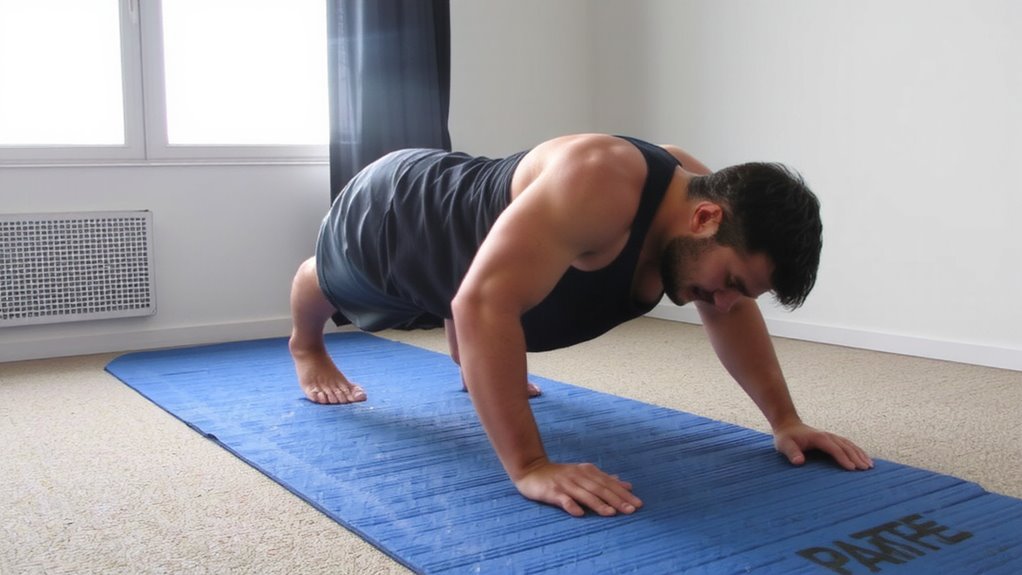
If you’re looking to build shoulder resilience that translates directly to climbing performance, mastering the tempo push-up starts with proper form and intention. Begin in a high plank, hands slightly wider than shoulder-width, body forming a straight line from head to heels. Engage your core and retract your scapula to stabilize your shoulders. Lower yourself over three to four seconds, controlling the descent to maximize muscle engagement. At the bottom, pause briefly without letting your torso touch the ground. Push through your palms, extending your arms fully while keeping your core tight. Each repetition should emphasize tension and timing, not speed. Proper form guarantees your scapular stabilizers-and not just your chest and triceps-gain strength. Consistent practice with focused muscle engagement builds the shoulder integrity climbers need when hanging, reaching, or power moves.
Fix These Common Tempo Push-Up Mistakes
Though you’re aiming to build strength and control, small errors in tempo push-ups can undermine your progress and increase injury risk, especially when climbing demands shoulder durability. Elbow flaring and poor head alignment are two of the most common issues. Elbow flaring strains your shoulders and reduces scapular engagement, while misaligned head posture compromises spinal safety and muscle activation.
| Mistake | Fix |
|---|---|
| Elbow flaring past 45° | Keep elbows at 30–45° to torso |
| Neck craning forward | Maintain neutral head alignment |
| Sagging hips | Brace core throughout the tempo |
| Uneven hand pressure | Distribute weight evenly across palms |
Correcting these improves stability, boosts scapular control, and better prepares you for vertical demands on the wall.
Best Sets and Reps for Climbers
Most climbers benefit from performing tempo push-ups in 3 to 4 sets of 8 to 12 controlled reps, using a slow eccentric-typically 3 to 4 seconds down-to maximize time under tension and build the connective tissue resilience needed for demanding overhead moves. You should maintain a consistent repetition rhythm to enhance motor control and guarantee proper scapular engagement throughout each phase. As volume accumulates, watch for signs of scapular fatigue, which can compromise form and reduce training effectiveness. When fatigue sets in early, it’s a cue that either recovery is insufficient or your repetition rhythm is off. These tempo-based sets aren’t about brute strength-they’re about control, timing, and joint integrity. Performing them 2–3 times weekly allows adequate recovery while steadily improving stabilizer endurance. Quality matters more than quantity here, so prioritize clean movement over added reps. Over time, this approach conditions your shoulders to stay stable under prolonged climbing strain.
Add Tempo Push-Ups to Your Training (Without Overtraining)
Since you’re already prioritizing joint integrity and muscular control in your climbing training, integrating tempo push-ups doesn’t have to disrupt your recovery-provided you time them strategically. Add them 2–3 times per week, aligning with your current training frequency to avoid compounding fatigue. Perform 3 sets of 6–8 reps with a 3-second eccentric, 1-second pause, and explosive concentric phase. This tempo builds scapular stability without excessive volume. Pair them with climbing-specific recovery techniques like foam rolling and shoulder mobility drills to maintain tissue quality. Avoid placing them on hard climbing or hangboard days-instead, use them during active recovery or strength-focused sessions. Tempo push-ups demand control, not max effort, so monitor form over reps. Done right, they enhance motor control and injury resilience without overloading your system. Consistency beats intensity here-stick with it, and you’ll see better scapular engagement on the wall.
On a final note
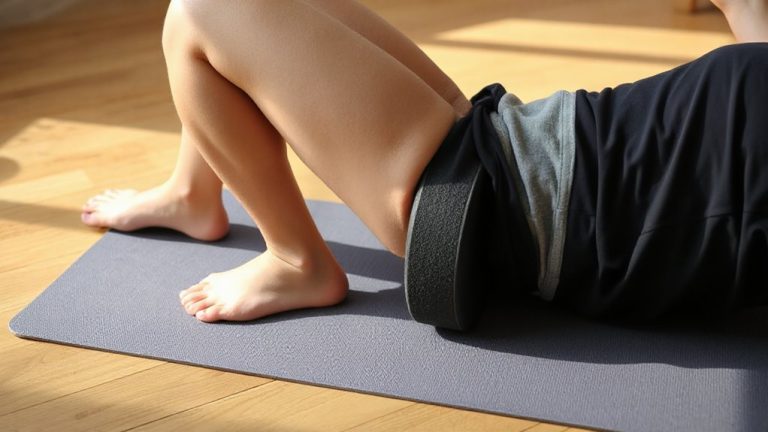
You’ve seen how tempo push-ups build scapular control critical for climbing. When done right, they enhance stability, reduce injury risk, and improve movement efficiency. Paired with proper recovery-like foam rolling and sleep-and supported by quality gear such as durable mats and supportive apparel, gains compound. It’s not just about reps; it’s consistency, form, and recovery working together to keep you strong and resilient on and off the wall.