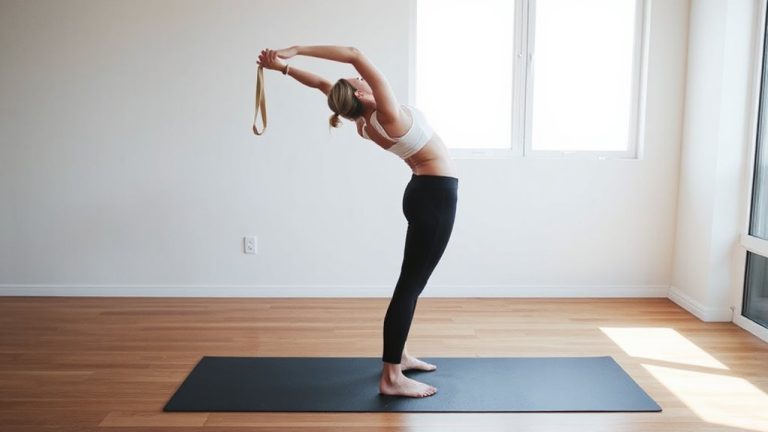
Thoracic Expansion Exercises With Resistance Band and Conscious Inhalation
You’ll get better thoracic mobility and deeper breaths by using a resistance band during chest expansions. The band adds gentle feedback, helping you engage your diaphragm while preventing shoulder shrugging. Position it around your lower ribcage to feel controlled expansion with each inhale. This method boosts posture, lung capacity, and core stability-all while correcting common breathing flaws. Perform drills like the 90/90 setup to refine alignment and control. There’s more to discover about optimizing each breath.
Notable Insights
- Use a resistance band around the lower ribcage to enhance thoracic expansion and promote diaphragmatic breathing.
- Perform banded chest expansions to improve posture and activate scapular stabilizers during conscious inhalation.
- Apply light to medium resistance bands to avoid limiting breath while providing feedback for ribcage expansion.
- Practice 90/90 breathing with band feedback to develop diaphragmatic control and symmetrical ribcage movement.
- Avoid shoulder elevation and slouched posture to maximize thoracic mobility and breathing efficiency.
Breathe Better With Banded Chest Expansions

Why do so many physical therapists reach for a simple resistance band when guiding patients through thoracic mobility work? Because it’s effective, portable, and promotes real neuromuscular feedback. When you wrap the band around your upper back and pull your arms back, you’re not just opening the chest-you’re enhancing posture alignment by activating the scapular stabilizers and reducing kyphotic rounding. This position also creates space for deeper diaphragmatic engagement, allowing fuller inhalation without compensatory shoulder elevation. The band’s tension gently resists overuse of accessory muscles, retraining movement patterns. Unlike bulky equipment, its low-profile design supports controlled, repeatable reps ideal for recovery or daily maintenance. Therapists favor it because it’s durable, easy to clean, and adaptable across fitness levels. Used consistently, banded chest expansions become a cornerstone drill-bridging mobility, breath, and postural integrity efficiently.
Use Resistance Bands to Deepen Your Breathing

How often do you really notice your breath during a workout? With resistance bands, you can’t afford to ignore it. These simple tools create gentle feedback across your ribcage, guiding you toward deeper, more effective inhales. As you inhale against the band’s tension, you’re not just moving air-you’re encouraging diaphragmatic engagement, which stabilizes your core and improves oxygen flow. The band also promotes lateral costal expansion, helping your ribs move outward and up, not just your belly rising. That means more lung capacity, better posture, and sharper breath control. Unlike passive breathing, this method turns respiration into an active, measurable part of training. You’ll notice how it sharpens focus and recovery, especially after intense sets. Used consistently, bands transform breath from an automatic function into a trainable skill, making them more than just fitness gear-they’re functional feedback tools.
Pick the Best Band for Breathing Drills
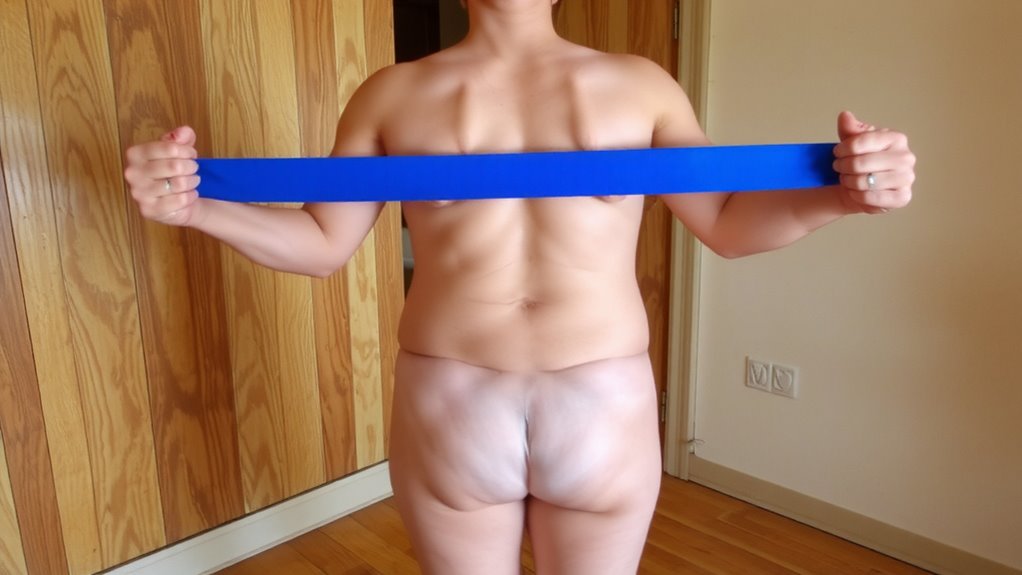
A well-chosen resistance band can make all the difference in your breathing drills, and not every band is built for the job. You need one that provides consistent band tension without restricting movement or causing discomfort. Too much resistance overwhelms subtle diaphragmatic engagement, while too little won’t challenge thoracic expansion. Opt for a light to medium band, preferably flat and latex-free if you have sensitivities. The anchor position is just as vital-secure it snugly across your lower ribcage, just above the abdomen, so it resists expansion during inhalation. This encourages conscious ribcage elevation and lateral breathing. Avoid looped bands that twist or migrate during use; instead, choose a straight band you can fasten tightly. A durable, non-stretch handle or fixed knot guarantees reliability. Test different tensions and anchor positions to match your breathing capacity, prioritizing control and rhythm over force.
Try the 90/90 Breathing With a Band
You’ve picked the right band and secured it properly across your lower ribcage, setting the stage for effective thoracic engagement - now it’s time to put that setup to work with the 90/90 breathing exercise. Lying on your back with hips and knees at 90 degrees, focus on diaphragmatic activation by inhaling deeply into your belly, letting the band expand evenly. Maintain light pelvic bracing to stabilize your core without limiting breath depth. This position enhances ribcage symmetry and teaches breath control under mild resistance.
| Phase | Key Action |
|---|---|
| Setup | 90/90 limb position |
| Inhalation | Expand lateral and posterior ribs |
| Exhalation | Engage pelvic bracing |
| Band Feedback | Even pressure around ribcage |
| Goal | Improve diaphragmatic activation |
This drill enhances respiratory efficiency, particularly useful in fitness recovery when retraining breathing patterns post-exertion. The resistance band provides real-time feedback, making it a reliable tool for consistent, measurable progress.
Add Row-to-Inhale for Rib Mobility
Why settle for static breathing drills when you can integrate movement to access greater rib mobility? The row-to-inhale exercise does just that by syncing resistance band rows with deliberate inhalation. As you pull the band toward your ribs, you trigger active rib articulation-each breath expands the thoracic cage while the backward motion encourages spinal reciprocity, balancing flexion and extension. This dual action enhances neuromuscular coordination, making each inhale more efficient. Unlike passive drills, this method uses functional tension to train the ribs and spine to move as a unified system. You’re not just stretching-you’re retraining movement patterns. The band’s resistance amplifies proprioceptive feedback, helping you feel misalignments and correct them in real time. It’s ideal for recovery too, since controlled rib motion supports lymphatic flow and decreases muscle guarding. For best results, anchor the band low and maintain a tall spine. It’s a simple upgrade with measurable gains in breath depth and thoracic control.
Fix These 3 Common Breathing Drill Mistakes
How often do you finish a breathing drill and still feel like something’s off-tightness lingering, expansion uneven, or breaths not quite reaching the depths they should? You’re likely making one of three common mistakes. First, you’re not anchoring your diaphragmatic engagement; without consciously drawing air low into the belly, you’re cheating ribcage expansion. Second, poor posture alignment-slouched spine or protracted shoulders-restricts thoracic movement, making resistance band drills less effective. Third, you’re rushing reps instead of pacing inhalation with tension. Proper form means sitting tall, spine neutral, shoulders back-this optimizes lung capacity. The band should provide feedback, not force. When aligned, you’ll feel even expansion front-to-back and side-to-side. Mastery isn’t about speed; it’s about quality reps that train both neuromuscular control and breath efficiency. Fix these, and your recovery, endurance, and gear performance improve.
On a final note
You’re getting more from your recovery when you combine resistance bands with conscious breathing. The band adds tactile feedback, helping you engage the right muscles during thoracic expansion. Paired with deliberate inhalation, these drills improve rib cage mobility and diaphragmatic function. Quality resistance bands-durable, appropriately tensioned-support consistent use. Done correctly, this method enhances respiratory efficiency and posture, making it a smart addition to recovery routines, especially for those retraining breath mechanics after inactivity or injury.