Why Overheating at Night Sabotages Muscle Repair and How to Prevent It
You sabotage muscle repair when you overheat at night because high core temperature disrupts deep sleep, reduces growth hormone release, and prolongs inflammation. Cooling your bedroom to 60–67°F supports recovery, while breathable bedding and moisture-wicking pajamas help maintain thermal balance. Evening hydration and light activity also aid heat regulation. If you’re waking up sweaty or sore, your sleep environment may be hindering gains-optimal recovery depends on more than just workout intensity.
Notable Insights
- Overheating at night elevates core temperature, prolonging muscle inflammation and delaying recovery.
- High nighttime temperatures reduce deep sleep, limiting growth hormone release essential for muscle repair.
- Night sweats and frequent awakenings signal disrupted sleep cycles that impair tissue regeneration.
- Keeping the bedroom between 60–67°F optimizes melatonin release and supports restorative sleep.
- Use cooling fabrics, phase-change materials, and proper hydration to maintain a recovery-friendly sleep environment.
How Overheating at Night Slows Muscle Recovery
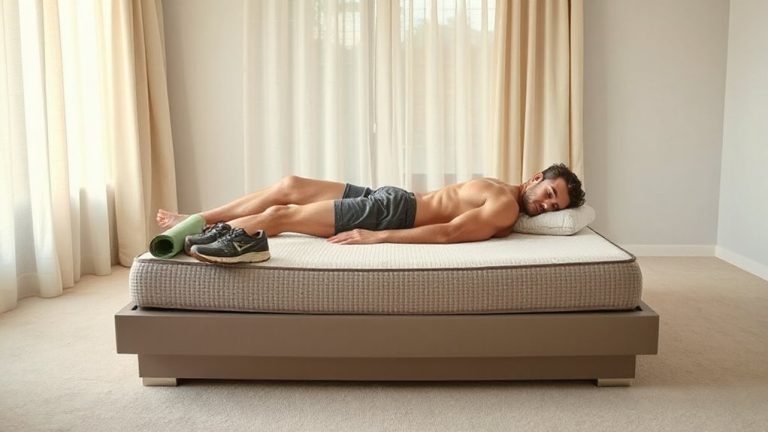
While your body works hard to repair muscle tissue during sleep, overheating at night can seriously disrupt that process. When your core temperature stays elevated, it prolongs muscle inflammation instead of letting it resolve naturally. That lingering inflammation delays recovery and increases soreness. You’re also more prone to metabolic stress, which skews hormone balance-cortisol stays high while growth hormone dips. Both of these impair tissue repair. Even quality fitness gear like cooling mattresses or moisture-wicking pajamas can’t fully offset poor sleep conditions if your room’s too warm. Studies show ideal recovery happens below 68°F. At that range, blood flow optimizes, shuttling nutrients to muscles efficiently. Overheating negates these benefits, turning rest into wasted recovery time. So, if you’re serious about muscle repair, controlling sleep temperature isn’t optional-it’s essential. Smart environmental control complements even the best workout routines.
How Deep Sleep Builds Muscle (And Why Heat Breaks It)
Because your body relies on deep sleep to trigger the most effective muscle repair, staying in this critical phase without interruption is essential for recovery-and overheating can break the cycle you need. During deep sleep, your pituitary gland releases growth hormone in pulses, syncing with natural growth cycles that drive muscle synthesis. This restorative phase supports tissue regeneration, protein production, and metabolic recovery, all vital for building strength. But when your core temperature rises too much, sleep architecture becomes fragmented, pulling you out of deep sleep too soon. That disruption weakens muscle synthesis and delays recovery. High-quality sleep gear-like breathable sheets and cooling mattresses-helps maintain thermal balance, preserving the deep sleep needed for peak repair. Without such support, even intense training may yield poor gains due to compromised growth cycles. Maintaining a cool sleep environment isn’t just comfort-it’s a recovery necessity.
Signs Your Body Is Overheating During Sleep
How often do you wake up drenched in sweat, wondering if your body’s trying to tell you something? Nighttime overheating disrupts recovery, and recognizing the signs is key. Hot flashes during sleep aren’t just uncomfortable-they’re red flags signaling a potential metabolic imbalance that interferes with muscle repair. You might not always wake up fully, but your body registers the distress.
| Symptom | What It Means |
|---|---|
| Night sweats | Core temp too high, disrupting rest |
| Restless sleep | Body struggling to cool itself |
| Morning fatigue | Poor recovery due to heat interference |
| Frequent awakenings | Hot flashes interrupting deep cycles |
These signs suggest your sleep environment or physiology is promoting excess heat retention. Ignoring them risks undermining fitness gains, as recovery falters when metabolic imbalance prevents restorative rest.
The Ideal Bedroom Temperature for Recovery
You’re probably not sleeping at the right temperature if you’re serious about recovery. For muscle repair, your body needs a favorable climate that supports deep, uninterrupted sleep. Research shows the ideal thermostat setting falls between 60–67°F (15–19°C), a range that aligns with your body’s natural drop in core temperature during sleep. This slight thermal decline triggers melatonin release and enhances sleep quality-critical for tissue regeneration and growth hormone secretion. Deviating even a few degrees can disrupt restorative cycles, slowing recovery. Many overlook this detail, yet it’s one of the most effective, low-cost upgrades to your nightly routine. Maintaining a consistent, cool environment doesn’t require expensive gear-just smart thermostat use and attention to room ventilation. When you prioritize the favorable climate, you’re not just improving sleep; you’re engineering better recovery. Don’t underestimate the power of the ideal thermostat-it’s foundational.
Cooler Bedding That Prevents Nighttime Overheating
Temperature-regulating bedding isn’t just a comfort upgrade-it’s a recovery tool. If you’re serious about muscle repair, your sheets and blankets matter more than you think. Cooling fabrics like Tencel, bamboo, and moisture-wicking performance blends actively pull heat and sweat away from your body, supporting natural temperature regulation. Unlike traditional cotton or flannel, these materials breathe better and reduce thermal retention, so you’re less likely to wake up sweaty. Many high-performance options also incorporate phase-change materials (PCMs) that absorb excess heat when you’re warm and release it when you cool down. They’re durable, machine-washable, and feel soft without sacrificing function. Investing in quality cooling bedding isn’t a luxury-it’s a smart recovery strategy. If overheating disrupts your sleep, upgrading your linens with temperature-regulation tech gives your body the stable, cool environment it needs to repair effectively.
Pre-Bed Habits to Lower Body Temperature
Why do some nights leave you tossing under sweat-damp sheets, no matter how cool your room feels? Your pre-sleep habits might be overheating your core. Managing body temperature before bed supports deeper muscle recovery. Strategic hydration timing prevents nighttime fluid retention and sudden sweat spikes. Sip water 2–3 hours before bed-avoid chugging right before sleep. Combine this with slow breathing exercises like 4-7-8 breathing to activate the parasympathetic system, gently lowering heart rate and core temp.
| Habit | Effect on Body Temperature |
|---|---|
| Breathing exercises | Reduces core heat via nervous system regulation |
| Hydration timing | Prevents metabolic heat from processing water at night |
| Light evening walk | Aids thermal dissipation through mild exertion |
These simple routines enhance recovery quality-no fancy gear required, just consistency.
When to See a Doctor About Night Sweats and Recovery
Could it be more than just a warm night if you’re regularly drenched in sweat during sleep? If night sweats persist despite adjusting your room temperature or swapping to moisture-wicking sleepwear, they might signal underlying medical conditions. Frequent overheating can disrupt deep sleep stages vital for muscle repair, slowing your recovery. While fitness gear like cooling mattresses or breathable pajamas helps manage surface heat, it won’t fix internal issues. If you’re also fatigued, losing weight unexpectedly, or feeling feverish, consider seeing a doctor. Night sweats can stem from infections, medications, or hormonal imbalances like low testosterone or thyroid dysfunction-both known to impair recovery. Don’t dismiss chronic sweating as mere overheating. A medical evaluation can identify root causes and preserve your gains. Addressing hormonal imbalances early improves sleep quality, boosts recovery efficiency, and guarantees your training efforts aren’t wasted.
On a final note
You’re more likely to recover well when your body temperature drops at night, since deep sleep fuels muscle repair. Overheating disrupts this process, weakening recovery and growth. Cool, breathable bedding and a bedroom around 65°F support ideal conditions. Pre-sleep habits like avoiding heavy meals help too. These targeted adjustments in fitness recovery and gear use don’t just improve comfort-they enhance physiological performance, making temperature control a non-negotiable part of your recovery strategy.