How Sleep Optimizes Recovery From Eccentric Exercise-Induced Muscle Damage
Eccentric exercise causes more muscle damage and soreness because your fibers tear as they lengthen under tension. Sleep helps you recover by triggering protein synthesis and releasing growth hormone during deep stages. This repair process rebuilds tissue, reduces inflammation, and clears metabolic waste. Without enough quality sleep, recovery slows and soreness lingers. Getting 7–9 hours supports full cycles of restoration. You’ll see better results when you prioritize rest as part of your training plan.
Notable Insights
- Eccentric exercise causes micro-tears in muscle fibers, increasing soreness and repair needs during sleep.
- Deep sleep stages trigger growth hormone release, essential for repairing damaged muscle and connective tissue.
- Protein synthesis peaks during sleep, rebuilding muscle fibers broken down during eccentric contractions.
- Sleep regulates inflammation by balancing cytokines, reducing excessive swelling and speeding recovery.
- Completing 4–6 sleep cycles nightly maximizes recovery through sustained hormone release and tissue repair.
Why Eccentric Training Causes More Muscle Soreness
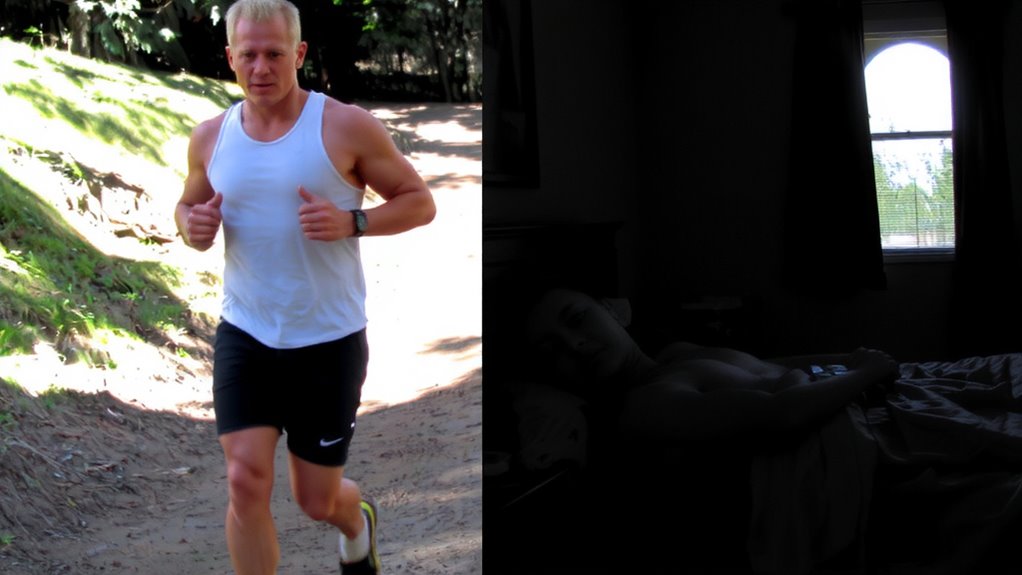
While all strength training stresses muscle fibers to some degree, eccentric movements-where you lengthen a muscle under tension, like lowering a dumbbell during a bicep curl-tend to cause more soreness than other phases of the lift, and that’s not just your imagination. You’re dealing with greater muscle fiber tearing because the muscle contracts while being stretched, creating micro-damage that triggers inflammation and soreness. This phase also leads to higher metabolic stress accumulation, as waste products like lactate build up more dramatically during prolonged tension. Although this sounds negative, the damage is beneficial-it signals growth and adaptation. Eccentric training’s efficiency means you get more stimulus per rep, but recovery becomes critical. That’s where quality fitness gear, like supportive braces or compression wear, helps manage symptoms and maintain form. These tools don’t prevent soreness, but they improve control during movement, letting you train effectively without sacrificing joint stability or long-term progress. For enhanced recovery, consider using leg compression boots to support circulation and reduce muscle fatigue.
How Sleep Activates Muscle Repair and Recovery

When you sleep, your body shifts into repair mode, releasing growth hormone and ramping up protein synthesis to rebuild muscle fibers damaged during workouts-especially after intense eccentric training. This nightly recovery window is essential for muscle regeneration, allowing structural proteins to reassemble and damaged tissues to heal. Without sufficient sleep, protein synthesis slows, undermining adaptation and strength gains. Consider how recovery unfolds across sleep stages:
| Stage | Biological Action | Impact on Muscle |
|---|---|---|
| Light Sleep | Heart rate slows, body cools | Prepares for repair processes |
| Deep Sleep | Growth hormone peaks | Triggers protein synthesis |
| REM | Brain activity increases | Supports nervous system reset |
| Late Night | Inflammation markers decrease | Enhances muscle regeneration |
| Full Cycle | Cumulative repair completed | Optimizes recovery capacity |
Quality sleep isn’t passive-it’s your most effective recovery “gear.”
How Growth Hormone Surges in Deep Sleep

Although you’re unaware of it, your body kicks into high gear during deep sleep, releasing a surge of growth hormone that’s critical for repairing strained muscles and rebuilding connective tissue. This growth hormone spike isn’t random-it’s tightly linked to the intensity and duration of deep sleep, peaking early in the night when slow-wave activity is strongest. You don’t produce significant growth hormone during lighter stages, which makes uninterrupted deep sleep non-negotiable for recovery. Unlike surface-level rest, deep sleep drives physiological repair, turning sleep into active recovery time. For athletes or anyone using fitness gear to push physical limits, this hormonal wave supports muscle adaptation and strength gains. Skimping on sleep dulls this response, slowing progress. Optimizing deep sleep-through consistent schedules, reduced screen time, and proper recovery routines-ensures your body fully harnesses growth hormone’s restorative power night after night.
How Sleep Speeds Recovery by Reducing Inflammation
Your body’s overnight recovery isn’t just about rebuilding muscle-it’s also about calming the internal fires stoked by strenuous workouts. During sleep, especially when sleep timing aligns with circadian rhythms, your body shifts into repair mode, using immune modulation to fine-tune inflammation. After eccentric exercise, muscle damage triggers an inflammatory response, which is necessary but can become excessive without proper regulation. Quality sleep guarantees cytokine production stays balanced, preventing prolonged swelling and soreness. Unlike recovery gadgets that promise quick fixes but lack consistent evidence, sleep offers proven, cost-free physiological benefits. It actively suppresses pro-inflammatory markers while supporting anti-inflammatory pathways. This natural form of immune modulation accelerates tissue healing without side effects. Optimizing sleep timing-such as maintaining consistent bed and wake times-enhances this effect, making it a smarter, more reliable recovery tool than most fitness gear on the market.
How Poor Sleep Slows Muscle Recovery
Sleep isn’t just a passive state-it’s an active recovery period where your body repairs muscle tissue, balances hormones, and modulates inflammation. When you skimp on sleep, you’re not just tired-you’re fueling sleep deprivation, which directly undermines these processes. Without sufficient rest, your body struggles to regenerate muscle fibers damaged during eccentric exercise, leading to delayed recovery. Growth hormone secretion drops, protein synthesis slows, and cortisol levels rise, all of which impair healing. Studies consistently show individuals with poor sleep take longer to regain strength and report higher soreness. If you’re serious about recovery, skimping on sleep sabotages even the best fitness gear or nutrition plan. It’s not just about logging hours-it’s about quality. You can wear compression gear and track every metric, but without solid sleep, your recovery will stay compromised.
Best Sleep Duration for Muscle Recovery
Most adults need 7 to 9 hours of sleep per night to fully support muscle recovery, and falling short can undermine even the most well-designed fitness routines. You aren’t just resting-you’re enabling critical repair processes that align with natural sleep cycles. During deeper stages, like slow-wave sleep, your body releases growth hormone, which aids in rebuilding muscle fibers damaged during eccentric exercise. These cycles repeat every 90 minutes, so completing four to six full cycles maximizes recovery timing. If you cut sleep short, you’re likely truncating the final cycle, reducing repair efficiency. While fitness gear like recovery boots or compression sleeves can assist circulation, they can’t replace the physiological benefits of adequate duration. Prioritizing full sleep cycles guarantees your efforts in training translate into actual adaptation. For ideal timing and repair, don’t skimp-you’ll wake up stronger only when you respect the full night’s structure.
Tips to Improve Sleep Quality After Workouts
Though you might feel physically drained after an intense workout, that fatigue doesn’t always translate to restful sleep-especially if your post-exercise habits disrupt your body’s wind-down process. To improve recovery, prioritize a consistent bedtime routine that signals your body it’s time to rest-like dimming lights, stretching, or sipping herbal tea. Your sleep environment plays a vital role: keep the room cool (around 65°F), dark, and quiet, and consider blackout curtains or a white noise machine if needed. Avoid screens at least 30 minutes before bed, as blue light can suppress melatonin. While recovery gear like compression suits may aid circulation, they’re most effective when paired with quality sleep. A stable routine and optimized sleep environment together enhance sleep depth and duration, directly supporting muscle repair after eccentric exercise.
On a final note
You’re better equipped to recover from eccentric exercise when you prioritize sleep, since deep stages trigger growth hormone release and reduce inflammation. Poor sleep slows muscle repair, weakening gains. Aim for 7–9 hours nightly, especially post-workout. Quality matters: cool, dark rooms and consistent schedules enhance restorative cycles. Recovery isn’t just about gear or supplements-sleep is a proven, potent tool for muscle resilience and long-term performance.