Cervical Mobility Drills With Gentle Neck Flexion in Supine
You should perform cervical mobility drills with gentle neck flexion in supine to safely restore alignment and reduce compressive loads on your spine. Lying down supports proper posture and minimizes strain, making exercises like chin tucks more effective. Focus on small, controlled motions to activate deep neck flexors without overworking tissues. Avoid common errors like jaw jutting or pressing your head down. Progress gradually into dynamic movements for lasting mobility gains-there’s a smarter way to rebuild neck function.
Notable Insights
- Perform chin tucks in supine to activate deep neck flexors with minimal strain.
- Maintain eye level throughout to ensure proper cervical alignment during gentle flexion.
- Use a cervical pillow to support natural spine curvature during exercises.
- Progress to controlled side tilts and rotations after mastering chin tucks.
- Avoid pressing head into surface or lifting it to prevent tissue strain.
Why Your Neck Needs Better Mobility
Ever wonder why your neck feels stiff after just a few hours at the desk? Poor posture disrupts anatomical alignment, forcing your cervical spine into unnatural curves. This misalignment doesn’t just cause discomfort-it can lead to neural tension, irritating nerves that travel from your neck down your arms. You’re likely not aware, but prolonged sitting with your head forward increases compressive loads on spinal discs, reducing mobility over time. Without intervention, stiffness becomes chronic, limiting daily movement and impacting fitness recovery. Simple drills improve joint glide and muscle coordination, helping restore natural motion. Think of your neck like a well-oiled hinge-it needs regular, mindful movement to function ideally. Maintaining alignment reduces strain and prevents neural irritation. While fitness gear like ergonomic chairs or posture braces may help, nothing replaces targeted mobility work. Your neck isn’t just along for the ride-it’s central to whole-body movement and long-term musculoskeletal health. For seated support during recovery, consider using one of the best sciatica pillows for sitting to maintain proper spinal alignment, especially if lower back discomfort affects your posture. A well-chosen sciatica pillow can make a meaningful difference in comfort and alignment.
Use the Supine Position for Safer Neck Movement
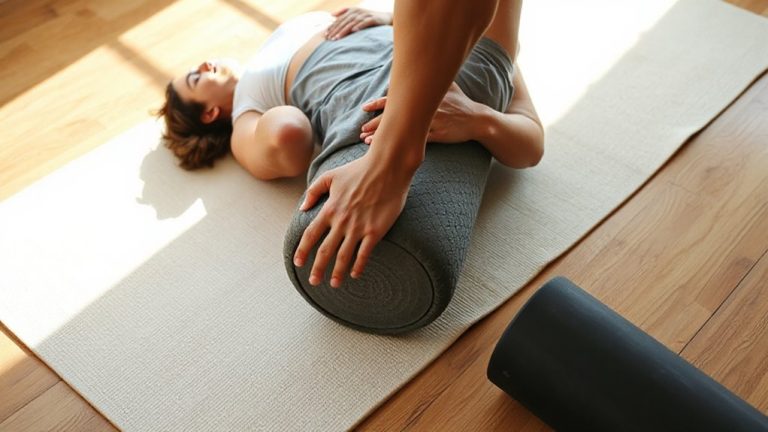
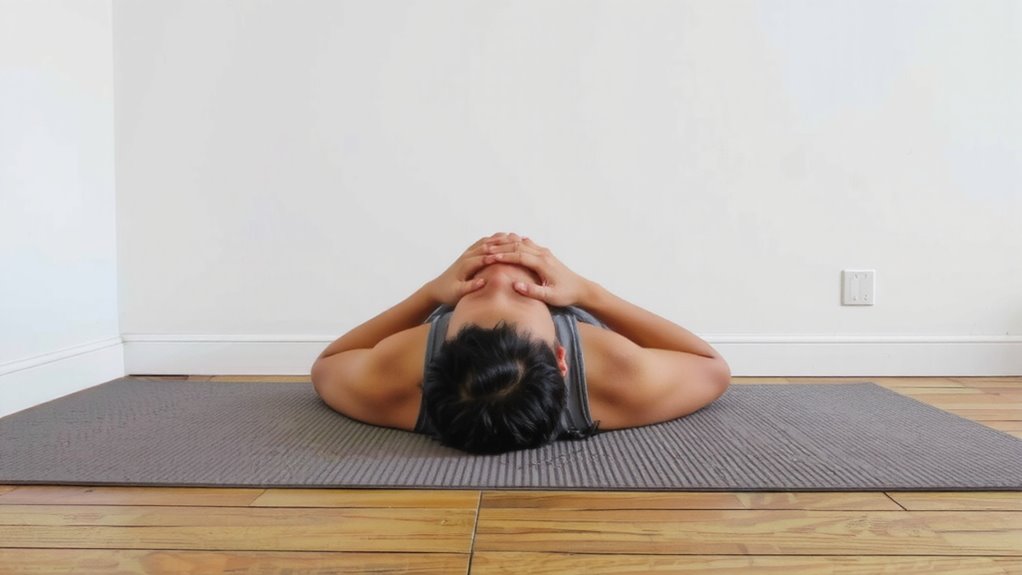
Lying on your back isn’t just for rest-you’re actually in the best position to retrain neck movement safely and effectively. The supine position supports proper spinal alignment, reducing strain on the cervical spine and allowing for controlled, low-risk motion. Without gravity pulling your head forward, you’ll experience natural muscle relaxation, which helps release tension and improve mobility over time. This setup is especially useful if you’re recovering from stiffness or adapting to new movement patterns. Compared to upright exercises, lying down limits compensatory motions, so you’re more likely to engage the right muscles. Fitness recovery tools like foam rollers or cervical pillows can enhance this position, but they’re not always necessary-your body weight and posture do most of the work. The supine position offers consistent, measurable benefits, making it a reliable starting point for sustainable neck health. Using a high-density foam roller can provide additional support and improve alignment during these drills.
Master Gentle Chin Tucks in Lying
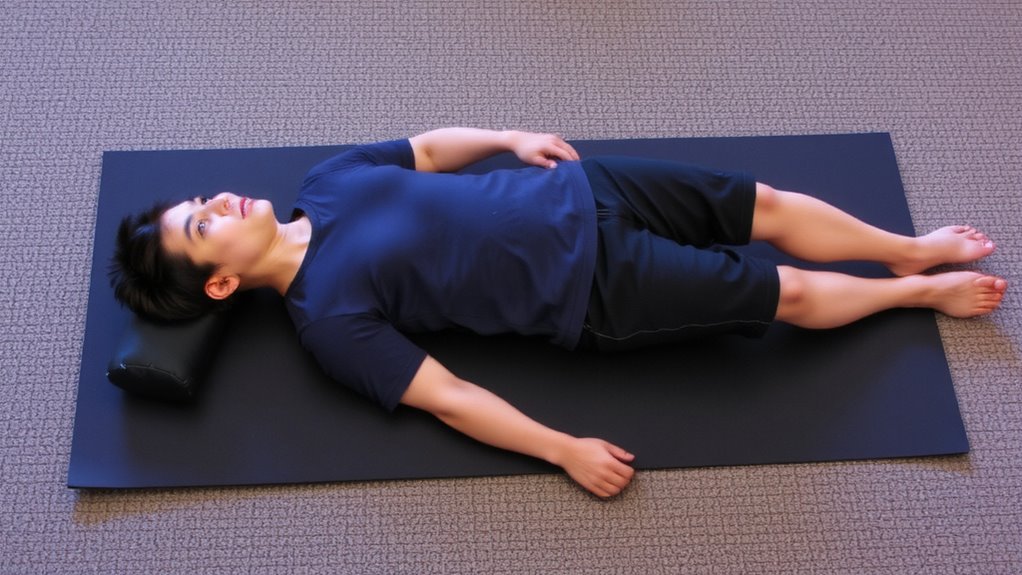
A key movement pattern to master in cervical rehabilitation is the gentle chin tuck-the subtle nod that activates deep neck flexors without straining surrounding tissues. You’ll improve anatomical alignment while promoting proper muscular engagement, essential for recovery. Performed in lying, this movement reduces gravitational resistance, allowing focus on form over force. To execute, gently glide your chin back as if making a double chin, keeping your eyes level. Avoid flexing the entire neck-motion should be small and precise. Using the right cervical pillow can further support proper neck alignment during rest and enhance rehabilitation outcomes.
| Focus Area | Benefit |
|---|---|
| Head position | Maintains neutral spine |
| Movement range | Encourages controlled motion |
| Muscle activation | Targets deep cervical flexors |
| Posture feedback | Enhances body awareness |
| Repetition quality | Builds neuromuscular control |
Practice daily for best results-consistency trumps intensity.
Progress to Dynamic Neck Mobility Drills
Once you’ve built a solid foundation with gentle chin tucks, you’re ready to advance to dynamic neck mobility drills-controlled, active movements that enhance range of motion while reinforcing neuromuscular coordination. You’ll start exploring full cervical ranges by slowly tilting your head side to side, rotating left to right, and combining motions in smooth dynamic shifts. These drills should be performed with awareness-no jerking or overextending-so you maintain joint safety while improving mobility. Think of it as active precision: each motion strengthens stabilizers and refines motor control. Unlike passive stretches, these drills demand engagement, making them more effective for long-term neck resilience. Use a mat for comfort and keep your shoulders relaxed. Don’t rush; accuracy trumps speed. Performed consistently, these movements not only expand cervical ranges but also prepare you for more complex coordination patterns down the line.
Avoid These Common Supine Neck Mistakes
Why do so many people experience discomfort during supine neck exercises despite following proper form cues? You’re likely introducing subtle errors that promote neck strain and reinforce poor posture. Lifting your head too high or tucking your chin excessively increases compressive forces on cervical discs. You might not realize it, but even slight jaw protrusion or shoulder elevation alters alignment, reducing exercise efficacy. Many people also press the back of the head into the floor, creating unnecessary tension. Instead, maintain a nodding motion with minimal range-think micro-movements. Using a small towel roll under the neck can support neutral alignment, but too much thickness encourages over-flexion. Consistently practicing with these mistakes undermines mobility gains and may delay recovery. Be mindful: precision matters more than repetition. Correcting these habits guarantees safer, more effective progress without straining tissues or reinforcing dysfunctional posture patterns.
Build Your Cervical Mobility Routine
How do you create a cervical mobility routine that actually delivers lasting gains without risking strain? Start with gentle supine neck flexion, focusing on maintaining proper cervical alignment throughout each movement. Perform slow, controlled motions to encourage muscle relaxation and reduce tension around the neck and upper traps. Hold each position for 20–30 seconds, repeating 3–5 times daily for best results. Include lateral glides and chin tucks to address multiple planes of motion, ensuring balanced joint articulation. Consistency matters more than intensity-overdoing it can trigger stiffness, not improvement. Pair your routine with supportive recovery gear like contoured orthopedic pillows to maintain neutral alignment during rest. These tools don’t replace active work but enhance muscle relaxation when used correctly. Over time, you’ll notice improved range of motion, reduced stiffness, and better posture. Stick with a disciplined, gradual approach for sustainable neck health.
On a final note
You’ve likely noticed how gentle supine neck drills improve cervical control without strain. When performed correctly, these movements enhance mobility while minimizing risk, especially for those with stiffness or prior discomfort. Consistency matters more than intensity here. Pairing proper form with supportive recovery gear-like contoured pillows or posture aids-can extend benefits. Over time, this approach fosters sustainable neck health, making it a practical addition to any recovery-focused fitness routine.