What Electrodermal Activity Sensors Reveal About Your Autonomic Nervous System Recovery
Your electrodermal activity (EDA) sensor tracks sweat gland changes, revealing real-time stress responses through skin conductance. When your nervous system activates during strain, EDA spikes-how fast it returns to baseline shows your recovery efficiency. Consistent use helps spot trends in autonomic balance, though environmental factors can skew results. Paired with heart rate variability, EDA sharpens recovery insights. Accuracy depends on proper wear and calibration, making some consumer devices useful but imperfect. You’ll find more practical ways to act on this data next.
Notable Insights
- EDA sensors detect sweat gland activity linked to sympathetic nervous system arousal during stress.
- Rising skin conductance reflects real-time autonomic activation, indicating nervous system stress load.
- Faster return of EDA to baseline after stress shows more efficient nervous system recovery.
- Prolonged high EDA levels suggest impaired recovery and reduced autonomic balance.
- Combined with HRV, EDA data guides personalized adjustments to improve long-term resilience.
How EDA Sensors Track Your Stress Response
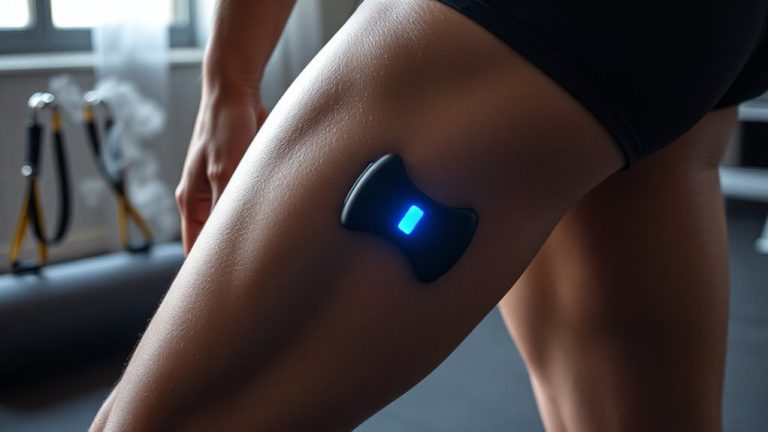
While your body reacts to stress in ways you might not immediately notice, electrodermal activity (EDA) sensors pick up on subtle changes in your skin’s electrical conductance, giving you real-time insight into your nervous system’s response. These sensors detect shifts tied to emotional arousal, like sweaty palms during anxiety, and increased cognitive load when your brain works hard under pressure. When you’re using fitness recovery gear with built-in EDA monitoring, you’re not just tracking physical output-you’re seeing how your autonomic nervous system copes. High readings often mean your body is in fight-or-flight mode, which, if sustained, can delay recovery. The best EDA-enabled wearables offer accurate, continuous data without skin irritation, syncing seamlessly to apps that interpret spikes in context. They’re practical for athletes managing training intensity, but their real value lies in helping you recognize when to push and when to rest, balancing performance with true physiological recovery.
What Your Skin Conductance Reveals About Stress
What if your skin could tell you when stress is quietly undermining your recovery? With electrodermal activity (EDA) sensors, it can. Your skin conductance rises when you experience emotional arousal, a key indicator of how your nervous system responds to pressure. These tiny shifts reflect sweat gland activity, controlled by the sympathetic nervous system, and offer real-time insight into your stress levels. Elevated readings over time may signal that your body isn’t returning to baseline, potentially weakening psychological resilience. Unlike subjective mood logs, EDA provides objective data, helping you adjust training loads, sleep routines, or mindfulness practices. While the technology isn’t infallible-motion artifacts or ambient temperature can skew results-consistent use reveals patterns others might miss. Paired with heart rate variability, EDA strengthens recovery tracking. For fitness enthusiasts relying on precision gear to optimize performance, understanding skin conductance isn’t gimmicky-it’s a practical edge in mastering stress response.
How EDA Reflects Nervous System Recovery
You can actually see how well your nervous system recovers by tracking electrodermal activity (EDA) over time. When your body faces stress, your sweat glands activate, increasing skin conductance-this spike shows up clearly in EDA data. After the stressor passes, how quickly EDA returns to baseline indicates your recovery speed. Faster normalization suggests better nervous system balance and improved stress resilience metrics. Over days or weeks, consistent recovery patterns reflect stronger autonomic regulation. This isn’t just about feeling calm-it’s a measurable sign of fitness recovery. Devices that monitor EDA help quantify these shifts, offering insight beyond subjective feelings. While not all wearables deliver clinical-grade data, high-performing models provide reliable trends when used consistently. Proper calibration and regular use enhance accuracy. For anyone serious about optimizing performance, EDA trends offer practical, science-backed feedback on how well your body bounces back.
Using Wearable EDA Sensors in Real Time
How do wearable EDA sensors actually help you monitor recovery as it happens? They continuously track your skin’s conductance, translating shifts in sweat gland activity into readings tied to autonomic arousal. With real time alerts, you’re notified the moment your EDA values approach stress levels, helping you take corrective action before strain accumulates. These alerts rely on personalized thresholds, calibrated to your baseline physiology, making feedback far more accurate than generic benchmarks.
| Feature | Benefit |
|---|---|
| Continuous EDA tracking | Monitors nervous system activity 24/7 |
| Real time alerts | Notifies you during elevated stress |
| Personalized thresholds | Adapts to your unique physiological profile |
| Wireless syncing | Seamlessly transfers data to apps |
| Long battery life | Supports multi-day wear without charging |
This precision makes EDA wearables a practical tool for optimizing fitness recovery with science-backed insights.
How to Read EDA Spikes and Drops Daily
A spike in your EDA reading isn’t just noise-it’s a measurable signal of sympathetic nervous system activation, often tied to stress, exertion, or mental load. When you see sharp increases, you’re likely reacting to real physiological arousal. Drops, meanwhile, suggest parasympathetic engagement-your body winding down. To interpret these patterns accurately, track your baseline variability over several days; it helps you distinguish normal fluctuations from meaningful changes. Without understanding your baseline, you might misread minor shifts as significant. Also, watch for environmental interference-heat, humidity, or even a loose sensor band can distort readings, leading to false spikes or drops. Consumer EDA wearables are useful, but their daily insights depend on consistent placement and controlled conditions. You’ll get the most reliable recovery feedback when you combine data trends with how you actually feel-because tech should support, not override, your body’s cues.
Evaluating Accuracy of Consumer EDA Devices
Could the device on your wrist really capture the subtle shifts in sweat gland activity linked to stress and recovery? While consumer EDA sensors offer convenience, their accuracy often faces signal interference from motion or poor skin contact. Calibration challenges also arise since individual physiology varies, and many devices lack personalized baselines. Medical-grade equipment uses controlled settings, but wearables must contend with real-world conditions that affect data quality.
| Feature | Consumer Device | Clinical Device |
|---|---|---|
| Signal Accuracy | Moderate (prone to noise) | High (controlled environment) |
| Calibration | Generic settings | Individualized, frequent |
| Interference Risk | High (motion, sweat) | Low (stable placement) |
Despite advancements, these limitations mean you should interpret your EDA trends cautiously-especially when tracking autonomic recovery.
Using EDA Feedback to Improve Recovery Habits
Your wrist-based EDA readings might not match clinical precision, but they still offer actionable insights when used thoughtfully. By tracking your autonomic shifts, you can spot patterns in stress and recovery, adjusting habits accordingly. When your EDA data shows heightened sympathetic activity, applying breathwork benefits-like slow, diaphragmatic breathing-can help reset your nervous system. You’ll likely see EDA stabilize within minutes, supporting faster recovery. Likewise, monitoring trends over days highlights the hydration impact: even mild dehydration often correlates with erratic EDA spikes, suggesting increased physiological stress. Using this feedback, you can time water intake more effectively. While no consumer sensor replaces medical tools, consistent use improves self-awareness. Pairing EDA trends with deliberate recovery tactics-breathwork, hydration, sleep-turns passive data into proactive recovery strategies, making fitness gear a partner in sustainable performance.
On a final note
You’re likely using EDA sensors to monitor stress and recovery, and they can offer meaningful insights when interpreted correctly. These wearables track skin conductance tied to sympathetic nervous system activity, revealing real-time stress responses and recovery trends. While consumer-grade devices are convenient, their accuracy varies-consistent placement and calibration matter. Used wisely, EDA feedback helps refine sleep, hydration, and mindfulness habits, supporting smarter recovery strategies backed by data you can actually trust.