How Sleep Promotes Tendon and Ligament Repair Through Collagen Synthesis
Your body repairs tendons and ligaments during deep sleep by boosting collagen synthesis, when growth hormone surges and fuels fibroblasts to rebuild tissue. Poor sleep disrupts this cycle, weakening repair and raising injury risk. Unlike fitness gear, which only supports function, sleep actively restores structural integrity. Maintaining consistent, high-quality rest guarantees peak recovery-explore how sleep habits enhance healing for long-term resilience.
Notable Insights
- Deep sleep boosts collagen synthesis, essential for repairing tendons and ligaments.
- Growth hormone released during deep sleep stimulates fibroblasts to regenerate connective tissue.
- Collagen production peaks during slow-wave sleep, enhancing structural integrity of repaired tissues.
- Sleep regulates inflammation, allowing cytokines to reduce swelling and support tissue healing.
- Poor sleep disrupts collagen synthesis, leading to accumulated microdamage and higher injury risk.
Why Sleep Heals Tendons and Ligaments

Recovery isn’t just downtime-it’s when your body goes to work repairing strained tendons and overstretched ligaments. While you sleep, your system reduces tendon inflammation through regulated cytokine release, allowing swollen, irritated tissues to calm and rebuild. Without this nightly restoration, microtears accumulate, raising injury risk during workouts. You also restore ligament elasticity, a vital factor in joint stability and movement efficiency. High-quality sleep supports fibroblast activity, which maintains the structural integrity of connective tissues. Fitness gear like compression sleeves can assist during waking hours, but they’re no substitute for the deep physiological repair sleep provides. You’re not just resting-you’re actively reinforcing your body’s framework. Neglecting sleep undermines even the best-designed recovery protocols, slowing adaptation and weakening resilience. For lasting performance, prioritize consistent, restorative sleep to keep tendons strong and ligaments supple.
How Deep Sleep Increases Collagen Naturally

While your body carries out most of its tissue regeneration during deep sleep, it’s in this phase that collagen production ramps up substantially, supporting tendon and ligament strength. This boost is tied closely to your sleep cycles, especially slow-wave sleep, when metabolic activity peaks and repair processes dominate. Collagen fibers rebuild with greater precision, enhancing structural integrity over time. Consistent, high-quality sleep enables sustained tissue regeneration, which is as essential as nutrition or training in fitness recovery.
| Sleep Stage | Collagen Activity |
|---|---|
| Light Sleep | Minimal increase |
| Deep Sleep | Significant boost |
| REM | Reduced synthesis |
| Wakefulness | Baseline production |
| Sleep Deprivation | Noticeable decline |
Fitness gear like recovery boots or supportive mattresses can optimize conditions for deep sleep, but they’re only effective if aligned with natural biological rhythms. Prioritize sleep consistency to maximize collagen’s benefits.
Growth Hormone’s Role in Overnight Recovery
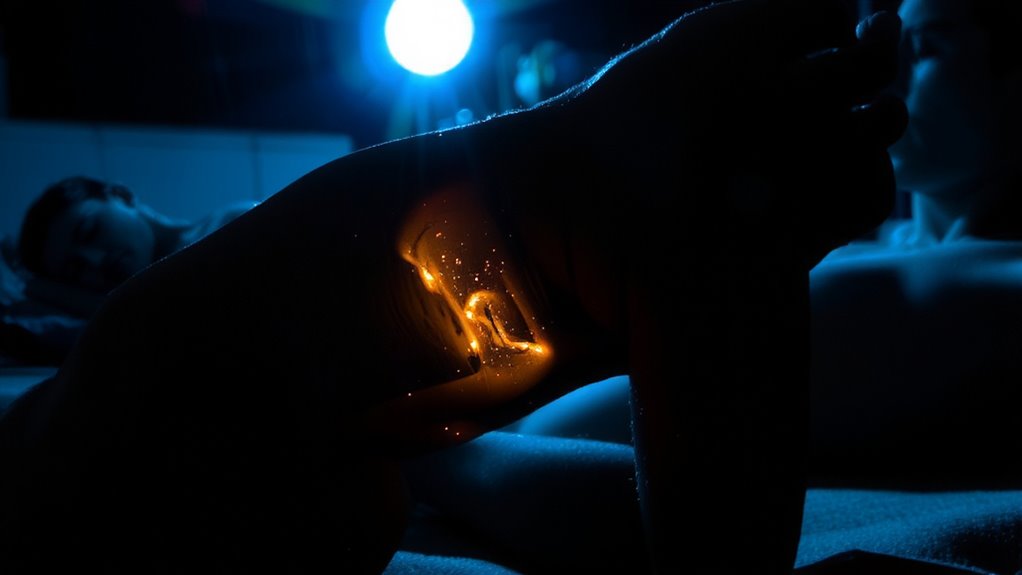
Why do you wake up feeling more healed after a solid night’s sleep? Because during deep sleep, your body releases a powerful recovery tool: growth hormone. This hormone drives tissue regeneration, especially in tendons and ligaments, precisely when you’re at rest. You experience a Growth peaks event in the first few hours of sleep, triggering a Protein surge that fuels collagen synthesis. This isn’t just passive rest-it’s active repair. Growth hormone stimulates fibroblasts, the cells responsible for rebuilding connective tissue, making sleep a non-negotiable part of recovery. Without it, even the most effective fitness gear or advanced recovery tools can’t compensate. Consistent, high-quality sleep guarantees this hormonal process runs efficiently, aligning with your body’s natural rhythms. In fitness recovery, timing matters as much as effort-your gains aren’t just built in the gym, but restored in bed.
What Poor Sleep Does to Connective Tissue
You’re not just missing rest when you cut sleep short-you’re disrupting the very process that keeps your tendons and ligaments resilient. Poor sleep blunts collagen synthesis, weakening structural repair and leaving connective tissue vulnerable. Without deep sleep, your body can’t regulate the inflammation response properly, leading to chronic swelling that delays healing. Over time, this imbalance promotes tissue degradation, especially under repetitive strain. You might not feel it at first, but microscopic damage accumulates, increasing injury risk during workouts or daily activity.
| Sleep Quality | Connective Tissue Impact |
|---|---|
| Poor | Reduced collagen production |
| Poor | Elevated inflammation response |
| Chronic lack | Slowed repair cycles |
| Insufficient | Accelerated tissue degradation |
This silent breakdown is why skimping on sleep undermines even the most disciplined fitness routines.
Better Sleep Habits for Faster Healing
If you’re looking to speed up connective tissue recovery, optimizing your sleep habits is one of the most effective yet underused strategies available. Creating a consistent sleep schedule helps regulate your body’s repair cycles, especially collagen synthesis during deep sleep. Improve your sleep environment by minimizing light and noise, keeping the room cool, and investing in a supportive mattress-these factors enhance sleep quality and directly influence recovery efficiency. Combine this with healing nutrition: consume adequate protein, vitamin C, and amino acids like proline and lysine, which supply the building blocks for tendon and ligament repair. Avoid heavy meals or caffeine before bed, as they can disrupt rest. While fitness gear like recovery boots or foam rollers offers some benefit, they can’t replace the physiological advantages of solid, uninterrupted sleep. Prioritize sleep and nutrition together-they’re foundational to faster, more complete healing.
On a final note
You heal faster when you sleep deeply because your body boosts collagen synthesis, vital for repairing tendons and ligaments. Growth hormone peaks overnight, accelerating tissue recovery. Poor sleep disrupts this process, weakening connective structures over time. Prioritizing consistent, high-quality sleep enhances recovery just as much as proper training and nutrition. For fitness recovery, rest isn’t passive-it’s foundational, especially when supported by effective gear like recovery boots or quality sleep trackers that monitor restorative cycles.