Toe Yoga Separation Drills to Improve Metatarsophalangeal Joint Independence
You can improve metatarsophalangeal (MTP) joint independence with toe yoga separation drills by activating the intrinsic foot muscles often ignored in traditional training. Perform them barefoot on a firm surface, lifting one toe at a time with control, holding for three seconds. This sharpens neural pathways and proprioception, boosting balance and gait efficiency-especially in minimalist footwear. Avoid common errors like toe bunching or floor gripping. Consistent practice builds lasting foot dexterity and stability, with subtle gains revealed through structured progression.
Notable Insights
- Perform barefoot toe separation drills to enhance metatarsophalangeal (MTP) joint control and neural communication.
- Lift one toe at a time, hold for three seconds, and focus on precise, slow movements.
- Avoid common mistakes like toe bunching, drifting, or gripping the floor during exercises.
- Strengthen underused toes, especially the fourth and fifth, to correct muscle imbalances.
- Practice daily for 5–10 minutes to build foot dexterity, stability, and gait efficiency.
Why Toe Yoga Strengthens MTP Joint Control
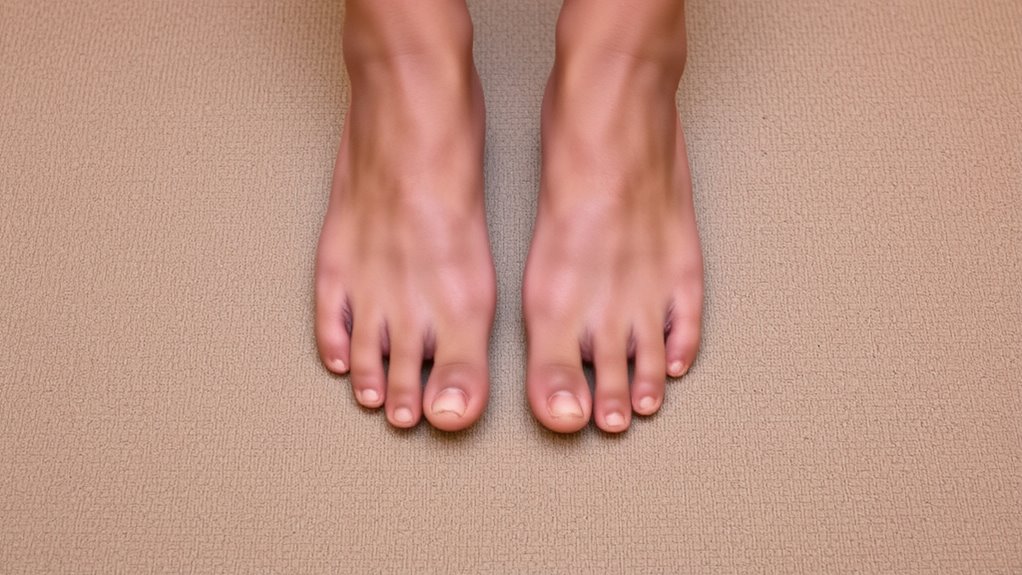
While most people overlook the smaller muscles in their feet, practicing toe yoga can make a noticeable difference in how well you control the metatarsophalangeal (MTP) joints-the hinge points where your toes meet the ball of your foot. You’re not just stretching; you’re triggering neural adaptation that enhances communication between your brain and foot muscles. Over time, this builds more precise motor control. Toe yoga also sharpens proprioceptive feedback, helping you sense toe position and movement without looking, which is essential for balance and gait efficiency. Unlike passive recovery tools, this active training strengthens intrinsic foot muscles often neglected in conventional fitness. You’ll notice improved stability during weight-bearing activities and fewer compensatory patterns in your stride. These drills demand no equipment, making them a practical, low-cost adjunct to footwear or orthotic use. They’re especially useful if you rely on supportive gear-your feet regain what shoes often diminish. With consistent practice, you’re not just recovering; you’re rebuilding foundational control.
How to Do Basic Toe Separation Drills
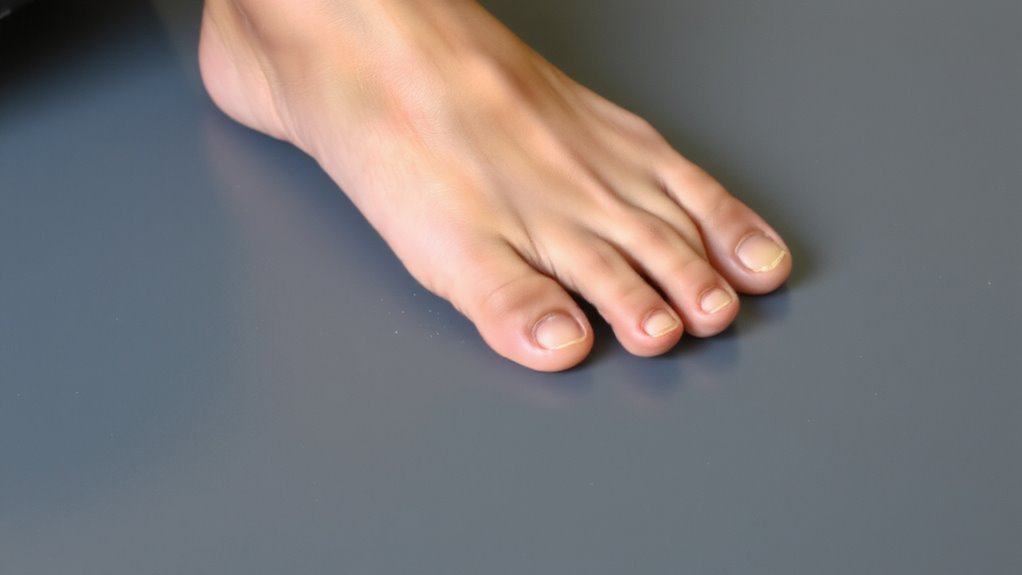
Think of your foot as a precision instrument, where each toe plays a role in balance and movement. Start basic Toe Isolation by sitting bare deficient, lifting one toe at a time-beginning with the big toe-while keeping others flat. Hold for three seconds, then release. Repeat this across all toes, both feet. It’s not easy at first, but consistent practice improves Foot Coordination markedly. Use a non-slip mat to maintain stability and prevent strain. Focus on slow, deliberate motion rather than speed. Over time, you’ll notice better control in daily movements like walking or climbing. These drills require no gear, just body awareness and patience. While tools like toe spreaders exist, they’re optional and shouldn’t replace active exercises. Done right, these drills build neural-muscular connections essential for MTP joint independence. You’ll gain subtle yet meaningful strength, enhancing overall foot function without flashy accessories or recovery shortcuts.
Fix These Common Toe Yoga Mistakes
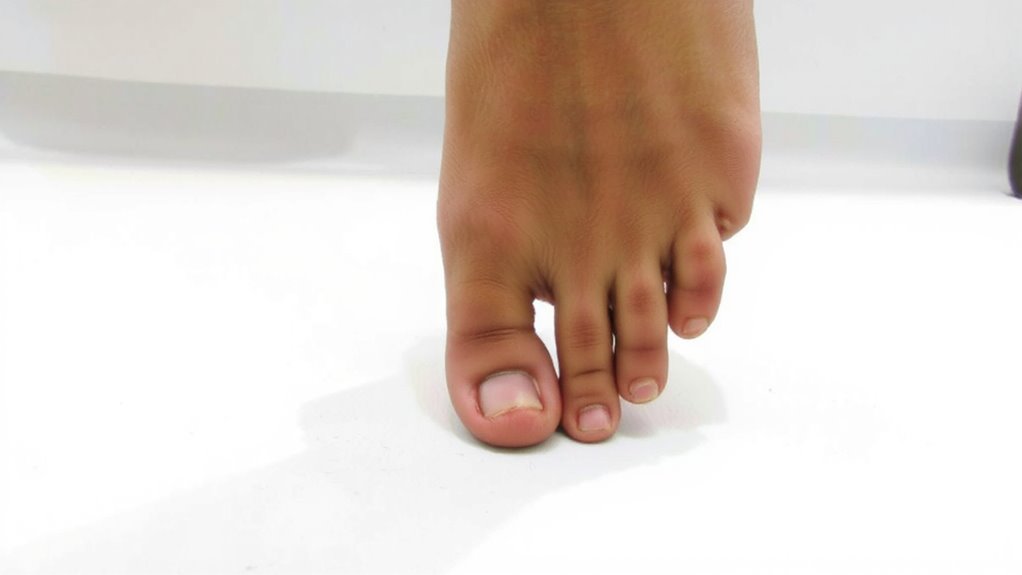
When performing toe yoga drills, you’re likely to overlook subtle form errors that undermine their effectiveness. A common mistake is allowing poor toe alignment, where toes drift outward or bunch together instead of lifting independently. This misalignment often stems from undetected muscle imbalance, with stronger muscles compensating for weaker ones, especially between the flexors and extensors. You might think you’re engaging all toes equally, but closer observation reveals dominance in the hallux and lesser motion in the fourth and fifth toes. To correct this, perform drills barefoot on a firm surface, focusing on slow, intentional lifts and presses. Avoid gripping the floor, as it masks true control. Consistent practice with attention to symmetry improves neuromuscular precision. Over time, correcting these errors enhances foot stability and prevents compensatory patterns that affect gait. Proper form guarantees you’re building balanced strength, not reinforcing existing imbalances.
Advance Your Foot Dexterity With Expert Moves
You’ve nailed the basics and ironed out common alignment errors, so now it’s time to step up with moves that truly challenge your foot control. Focus on precise toe alignment during advanced lifts-like isolating your big toe while keeping the others grounded. This sharpens metatarsophalangeal joint independence and enhances muscle activation across intrinsic foot muscles. Try the “short foot” progression: contract your arch without curling toes, then slowly lift each toe in sequence. These drills demand focus but build real dexterity. Consistent practice improves balance and gait efficiency, especially noticeable in barefoot or minimalist footwear. While fitness recovery tools like massage balls support maintenance, nothing replaces active training. Expert moves aren’t flashy, but their impact on foot intelligence is measurable. Done right, they refine movement quality and prevent dysfunction. Stick with it-your feet will respond.
Build a Daily Toe Yoga Habit
Regularly practicing toe yoga doesn’t require long sessions or special equipment-just five to ten minutes a day can yield noticeable improvements in foot strength and coordination. You can do these drills barefoot at home, making toe mindfulness simple to integrate into your morning or evening routine. Focus on isolating each metatarsophalangeal joint, lifting and spreading toes with control. Over time, this builds neural awareness and fine motor control. Routine consistency is essential; sporadic effort won’t develop lasting adaptations. Think of it like grip training for your hands-steady, mindful repetition strengthens intrinsic muscles and supports long-term foot health. While fitness gear like toe spacers or resistance bands can assist, they aren’t essential. What matters most is daily engagement. Pairing toe yoga with post-workout recovery enhances circulation and reduces stiffness. Unlike high-intensity training, this low-impact practice emphasizes sustainability, making it a smart addition to any fitness recovery plan.
On a final note
You’ve likely noticed better balance and foot strength since starting toe yoga, and that’s no accident. These drills sharpen metatarsophalangeal joint control, boosting stability during walking and running. When paired with quality recovery gear-like targeted foot rollers or compression socks-results improve further. Consistent practice, even briefly, enhances foot dexterity and reduces injury risk. It’s practical, science-backed self-care that fits seamlessly into daily routines, making it a smart long-term investment in your mobility.