Progressive Return-to-Sport Protocol for Pitchers After UCL Reconstruction Using Throwing Volume Metrics
You must prioritize controlled throwing volume to safely return after UCL reconstruction. Start with short, flat-ground throws and gradually increase distance and intensity across five phases. Metrics like total throws, rest intervals, and pain response matter more than arm speed or tech data. Listen to fatigue and soreness-they guide safe progression. Skip this structure, and re-injury risk spikes. Adjust workload early, and you’ll build durable strength. A structured path reveals smarter next steps.
Notable Insights
- Gradually increase throwing volume to promote collagen alignment and ligament strength during UCL recovery.
- Monitor total throws, distance, and intensity as primary metrics to guide safe workload progression.
- Progress through phased throwing programs from 30 ft to mound throws based on healing milestones.
- Adjust load immediately if pain, swelling, or fatigue exceeds mild soreness or declines performance.
- Use pitch counts, rest intervals, and game simulations to ensure safe return to competitive pitching.
Why Throwing Volume Reduces Re-Injury Risk After UCL Surgery
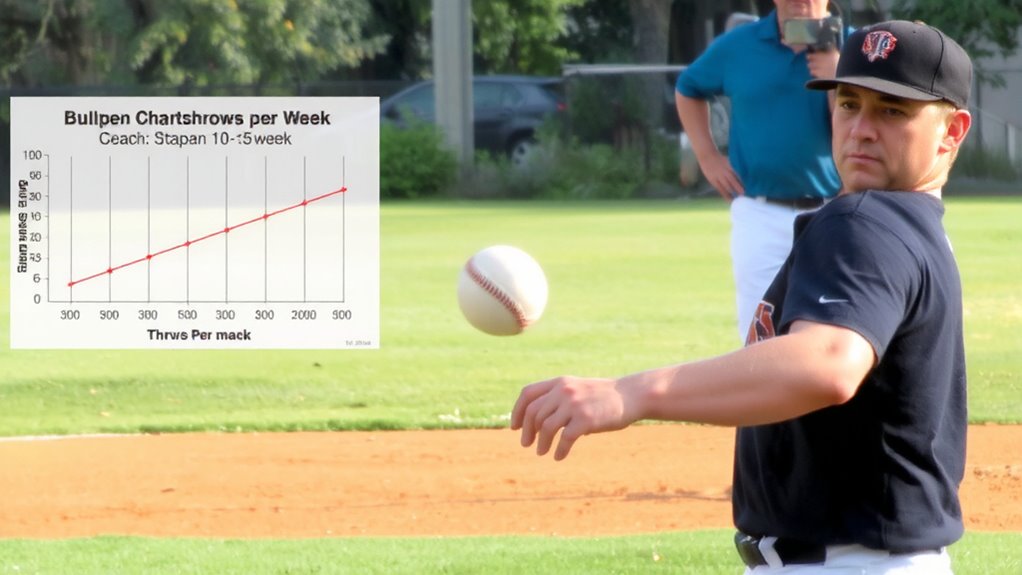
Often, pitchers underestimate just how essential controlled throwing volume is during recovery after UCL reconstruction, but gradually increasing that volume isn’t just routine-it’s a protective strategy. You’re not just regaining arm strength; you’re guiding your body through tissue adaptation, allowing the reconstructed ligament to respond safely to increasing demands. Without a structured plan, you risk overwhelming the joint to biomechanical stress that exceeds what the healing tissue can handle. By progressively loading the elbow, you signal the body to reinforce collagen alignment and improve tensile strength. It’s not about pushing harder-it’s about timing and dose. Smart volume management reduces re-injury odds because it mirrors natural physiological responses. You’re building resilience, not just endurance. This process respects the biological limits of recovery, making it a cornerstone of any effective return-to-sport protocol. Proper volume isn’t optional-it’s foundational.
Which Metrics Matter Most in a Post-Surgery Throwing Program?
How do you know when your arm is truly ready to handle a 90-mph fastball after UCL reconstruction? It comes down to which metrics you track. Throwing volume-measured in total throws, distance, and intensity-gives a clear picture. But not all metrics hold equal weight. Arm speed and elbow torque matter, but overemphasizing them can distract from consistent Recovery monitoring. Instead, focus on gradual workload progression, pain response, and tissue tolerance. These are better predictors of success. Smart devices can help, yet their data should support-not replace-clinical judgment. Prioritize metrics tied directly to Injury prevention, like daily throw counts and rest intervals. They offer actionable insights without unnecessary complexity. You don’t need every sensor; you need reliable, repeatable data that aligns with healing milestones. In the end, smart monitoring beats high-tech guesswork.
4 Phases of Return-to-Sport Throwing Progression
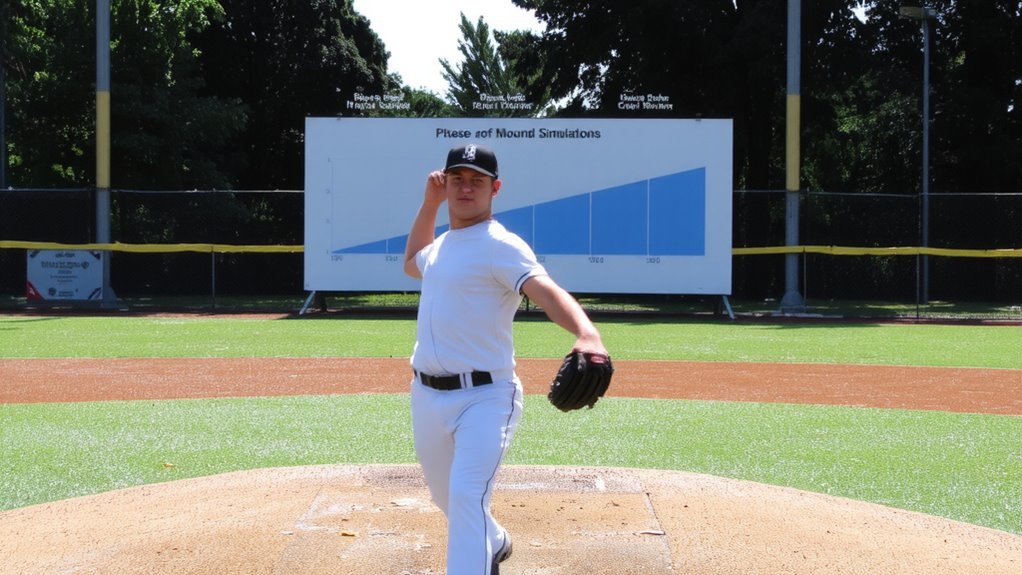
While healing timelines vary, most pitchers follow a structured return-to-sport throwing progression that balances tissue readiness with gradual workload demands. You start with early assessment to confirm functional stability before advancing. The program emphasizes gradual intensification, ensuring your arm adapts without excess strain. Below is a simplified breakdown of key phases:
| Phase | Distance (ft) | Activity |
|---|---|---|
| 1 | 30–60 | Flat-ground toss, 2x/wk |
| 2 | 90 | Progressive arm speed |
| 3 | 120 | Long toss, build volume |
| 4 | Mound | Bullpens, controlled intensity |
| 5 | Game | Simulated or live outing |
Each stage uses throwing volume metrics to track workload, ensuring measurable progression while reducing re-injury risk.
How to Adjust Throwing Load Based on Pain and Fatigue
You’ve followed the phases of throwing progression after UCL reconstruction, gradually increasing distance and intensity to rebuild arm tolerance. Now, fine-tuning your workload hinges on honest pain management and consistent fatigue monitoring. If you feel pain beyond mild soreness-especially near the elbow or forearm-you should scale back immediately; pushing through delays healing. Fatigue isn’t just muscle tiredness-it’s a signal your nervous system and tissues need recovery. Use throwing volume metrics like pitch count, intensity zones, and rest intervals to guide adjustments. Even if you’re cleared for long toss, doing extra throws when fatigued raises re-injury risk. Smart progression means pausing or repeating a phase, not rushing ahead. Trust the data, but also trust how your body feels. Effective rehab blends objective metrics with subjective feedback, ensuring gains aren’t lost to poor recovery choices. Incorporating a best massage gun can enhance recovery by reducing muscle tension and improving tissue quality between throwing sessions.
Warning Signs of Overload During UCL Rehab
Sharp pain, lingering stiffness, or a noticeable dip in throwing accuracy-these aren’t just minor setbacks, they’re red flags your body’s sending loud and clear. If you’re experiencing joint swelling or nerve tingling, don’t ignore them; these symptoms suggest tissue overload and possible neural irritation. During UCL rehab, your arm’s adapting to progressive stress, but exceeding capacity risks setbacks. Monitor symptoms closely and adjust volume or intensity immediately.
| Symptom | Action Required |
|---|---|
| Sharp pain | Stop activity, reassess load |
| Joint swelling | Apply ice, consult therapist |
| Nerve tingling | Evaluate mechanics, rest |
| Persistent stiffness | Modify recovery protocols |
| Declining accuracy | Reduce volume, focus on form |
Pushing through discomfort compromises healing. Smart recovery means respecting your body’s signals and using metrics to guide, not override, feedback.
From Bullpens to Games: Completing the Return-to-Sport Journey
You’re now throwing bullpens with consistent velocity and control, a sign your elbow’s handling the load and your mechanics are re-synchronized. The next step is game simulation, where you’ll face live batters in controlled scrimmages that mimic real in-game stressors. These sessions let you fine-tune pitch selection, sequencing, and composure under pressure while monitoring volume closely. Gradual in season adaptation follows, easing you into competitive innings with strict pitch counts and recovery protocols. This phase isn’t just about arm health-it evaluates command, stamina, and mental readiness. Data from wearable metrics help track workload, ensuring you don’t outpace tissue tolerance. Returning too fast risks setbacks, so progression must be individualized and evidence-based. Success lies in balancing game simulation authenticity with conservative dosing. Only when you demonstrate resilience across multiple outings should full integration into the rotation be considered. Patience here defines long-term durability.
On a final note
You’ve followed the data-driven path back to the mound, using throws, distance, and velocity to guide load progression. Tracking volume cuts re-injury risk, while pain or fatigue means backing off-no exceptions. This protocol balances structure with responsiveness, letting tissue adapt safely. Smart metrics beat guesswork, and consistency beats intensity every time. Return-to-sport isn’t just physical-it’s strategic, measured, and earned.