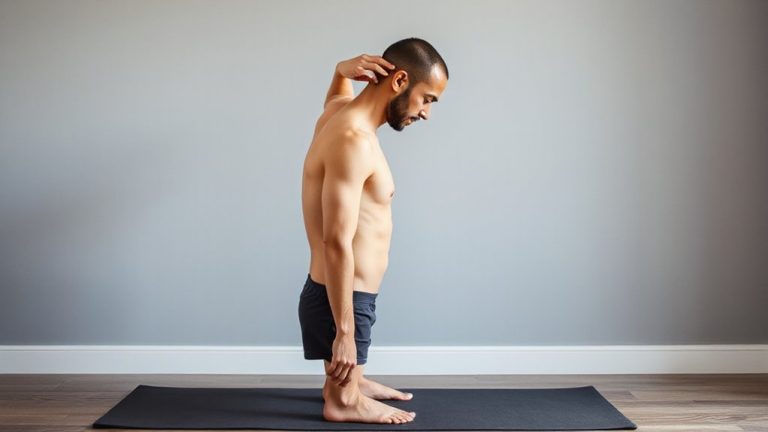
Gentle Spinal Twists in Supine Position to Alleviate Mid-Back Discomfort Post-Bench Press
After bench press, your mid-back often tightens from prolonged spinal extension and compression, especially with wide grips or poor shoulder positioning. A gentle supine spinal twist counters this by restoring thoracic mobility and reducing paraspinal tension. Lie on your back, knees bent, and slowly lower them to one side while keeping shoulders grounded. Engage your core slightly and breathe deeply to enhance the release. For best results, perform the twist within five minutes post-lift when muscles are warm and more responsive. Avoid forcing the movement or twisting too far-this can increase stiffness rather than relieve it. Using a pillow under your knees or a yoga strap around your thighs helps maintain control and prevents over-rotation. Pairing the stretch with a heated wrap or vibrating foam roller after the twist boosts blood flow and accelerates recovery. You’ll find even greater benefit by timing your stretches right and adjusting the move to your flexibility.
Notable Insights
- Perform supine spinal twists within five minutes post-bench press to relieve mid-back tension when muscles are warm.
- Keep shoulders grounded and knees bent while gently rotating legs to one side to maintain spinal alignment.
- Engage core lightly and use exhalation to deepen the twist without forcing movement or over-rotation.
- Avoid neck strain by relaxing the head and gaze, keeping it opposite the direction of the twist.
- Support comfort and control by placing a pillow under knees or using a yoga strap around thighs.
Why Bench Press Causes Mid-Back Tightness
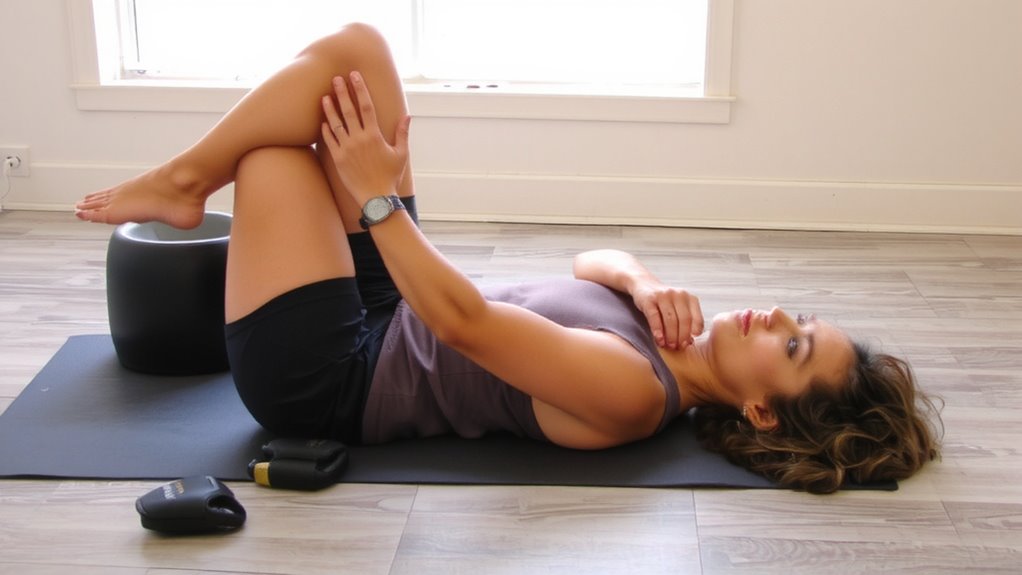
While you’re focused on building chest strength, the bench press can quietly strain your mid-back due to the static, extended position you hold throughout each set. Your spine remains fixed while pressure builds, especially if your barbell grip is too wide or uneven-this can pull your shoulders forward and disrupt natural alignment. Poor shoulder positioning, like excessive retraction or elevation, increases tension across the thoracic region, leading to tightness over time. Even with proper form, the isometric load compresses the mid-back, limiting blood flow and encouraging stiffness. Recovery tools like foam rollers or compact massage wands help, but preventing strain starts with technique. Adjusting your barbell grip width and ensuring neutral shoulder positioning markedly reduce unwanted stress. Fitness gear supports recovery, but it can’t fix flawed mechanics. Smart form adjustments deliver better long-term results than post-workout gadgets alone.
Do the Supine Spinal Twist Safely
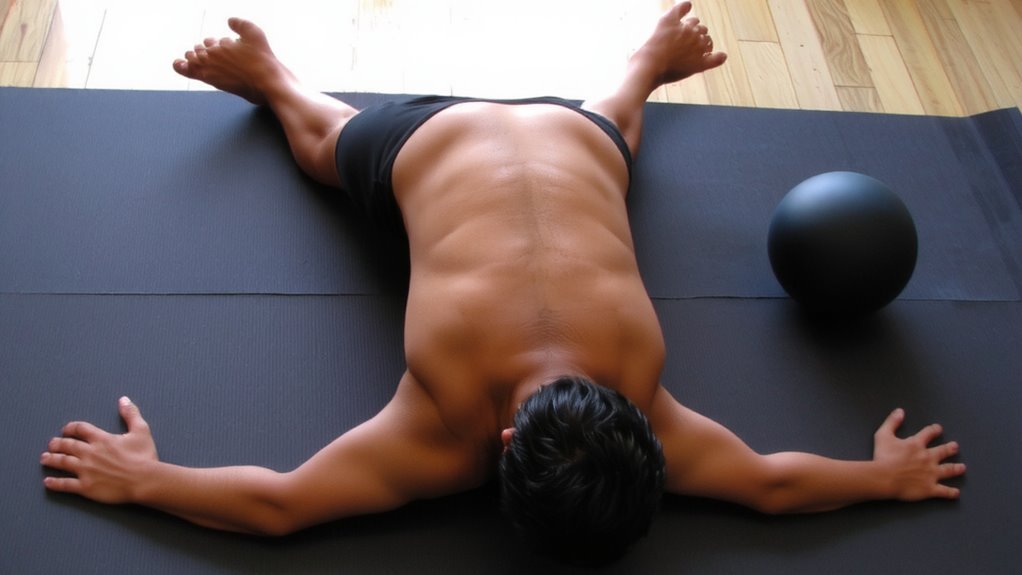
If you’re dealing with mid-back tension from bench pressing or prolonged sitting, the supine spinal twist can offer targeted relief when performed correctly, but improper execution risks straining your lower back or neck. To do it safely, start by lying on your back with knees bent and arms out in a T. Engage your core gently and let your knees drift to one side while keeping your shoulders grounded-this guarantees proper alignment. Use breath control: inhale deeply to prepare, then exhale as you ease into the twist. Avoid forcing the movement. A foam roller or stability ball nearby can aid recovery, but alignment matters more than gear. Keep your neck relaxed and gaze upward or opposite the twist. Hold for 20–30 seconds per side, focusing on steady breathing. Consistency with form enhances spinal mobility and reduces post-workout stiffness effectively. For additional support, consider using a spinal decompression device to complement your recovery routine.
Avoid These Common Spinal Twist Mistakes
Why do so many people walk away from spinal twists with more stiffness instead of relief? You’re probably forcing the movement or twisting too far, especially if you’re rushing into advanced poses like seated rotation without warming up. Your mid-back responds better to gentle, controlled motions-especially after bench pressing. Avoid locking your shoulders or letting your neck strain; keep it neutral. Overhead reaching right after a twist can also aggravate tension if your thoracic spine isn’t ready. Many mistakenly treat spinal twists like flexibility tests, but they’re recovery tools, not performance feats. Don’t use unstable surfaces or overly soft mats that compromise alignment. A firm, supportive surface enhances effectiveness and reduces risk. Small, mindful rotations beat exaggerated ranges any day. You’ll see better results and avoid setbacks when technique trumps intensity. Let your breath guide the twist, not momentum. Incorporating the right back stretching equipment can further support spinal mobility and reduce post-exercise discomfort.
When to Stretch for Fastest Pain Relief
When should you stretch to get the quickest relief from mid-back discomfort? Right after your bench press session-when muscles are warm and pliable. Timing frequency matters: performing gentle supine twists immediately post-workout boosts blood flow and reduces stiffness. This isn’t just about habit; it’s about harnessing your body’s peak recovery window. Immediate relief often follows when you stretch within five minutes of finishing your last set. Delaying increases muscle guarding, slowing response time. Aim for 3–5 sets of 30-second holds per side, maintaining slow, controlled movement. Don’t rush-it’s not the intensity but the consistency and timing frequency that enhance recovery. Pair this with diaphragmatic breathing to further quiet neuromuscular tension. For best results, prioritize these stretches before cooling down completely. Immediate relief isn’t guaranteed every time, but the odds improve markedly when you act fast, using proper form on a firm surface, ideally with a recovery-focused mindset.
Combine This Stretch With Post-Workout Recovery
While your muscles are still warm and circulation is elevated, integrating spinal twists into your post-workout recovery routine enhances their effectiveness, especially when paired with recovery-focused gear. Proper post workout timing maximizes flexibility gains and reduces mid-back stiffness after bench press. Recovery integration isn’t just about stretching-it’s about creating a system that supports long-term musculoskeletal health.
| Gear Type | Benefit for Recovery Integration |
|---|---|
| Foam roller | Prepares spinal muscles for deeper stretch |
| Heated wrap | Increases tissue elasticity during twist |
| Recovery mat | Provides joint support in supine position |
Using quality equipment elevates the stretch’s impact, turning a simple movement into a targeted recovery protocol. You’re not just cooling down-you’re actively repairing. When combined with deliberate breathing and controlled holds, this approach delivers measurable relief and improves mobility over time. Recovery integration done right saves you from chronic discomfort. For deeper muscle release, consider using a vibrating foam roller to enhance myofascial relaxation.
Modify the Twist for Your Flexibility Level
If your spine isn’t used to deep rotational movement, diving into a full spinal twist could do more harm than good-so scaling the stretch to your current flexibility level isn’t just smart, it’s essential for safe recovery. You can adapt intensity by reducing the range of motion; keep your knees higher or limit how far they drift across your body. Don’t force alignment-instead, adjust alignment gradually as mobility improves. For stiffer backs, placing a pillow under the knees offers support and reduces strain. Those with greater flexibility can deepen the twist gently, but control matters more than depth. Using a yoga strap around the thighs helps maintain form and prevents over-rotation. Listen to your body: mild tension is normal, but sharp discomfort means you’ve gone too far. This measured approach guarantees the movement remains therapeutic, supporting consistent post-workout integration without risking injury.
How This Move Releases Thoracic Tension
Though your mid-back often bears the brunt of daily tension, a properly executed spinal twist targets the thoracic spine with precision, releasing stiffness that builds from prolonged sitting or repetitive movement. This supine twist enhances thoracic mobility by gently rotating vertebrae, loosening tight fascia, and restoring segmental motion. You also experience passive spinal decompression as gravity helps separate compressed discs, reducing nerve irritation. Below is how key components contribute:
| Benefit | Mechanism | Outcome |
|---|---|---|
| Thoracic rotation | Controlled lateral twist | Improved mobility |
| Hip stabilization | Grounded knee position | Targeted spine engagement |
| Shoulder alignment | Arms out at 90 degrees | Balanced decompression |
| Deep breathing | Diaphragmatic expansion | Enhanced muscle relaxation |
On a final note
You’ll find gentle supine spinal twists highly effective for easing mid-back tightness after bench pressing. This move targets thoracic stiffness without strain, especially when done post-workout. When performed correctly, it boosts mobility and complements recovery-particularly alongside proper cooldowns and supportive gear like foam rollers. Avoid rushing the motion or forcing depth; progress comes with consistency, not intensity. It’s a practical, low-risk stretch that fits well into most recovery routines.