Maximizing Recovery Through Strategic Application of Whole Body Vibration Therapy
You speed up recovery with whole body vibration by triggering rapid muscle contractions that boost circulation and ease soreness better than rest alone. Aim for 12–30 Hz, with 20 Hz matching your body’s natural rhythm. Use 10–15 minute sessions post-workout or in the morning to support healing. Pair with light cycling or stretching for greater effect. Adjust frequency, amplitude, and timing based on your fitness or injury status. Consistent, targeted use enhances collagen synthesis and reduces DOMS. Fine-tuned protocols deliver better long-term results than generic routines - there’s more to optimize than just time on the platform.
Notable Insights
- Use whole body vibration at 12–30 Hz frequencies to enhance muscle recovery and joint mobility effectively.
- Limit sessions to 10–15 minutes post-workout or in the morning to boost blood flow and neuromuscular readiness.
- Combine WBV with light cycling, walking, or dynamic stretching to increase circulation and metabolite clearance.
- Apply lower amplitudes (1–3 mm) and frequencies around 20 Hz to match natural body rhythms and reduce soreness.
- Customize frequency, amplitude, and timing based on fitness level, injury status, and daily training demands for optimal recovery.
Speed up Recovery With Whole Body Vibration
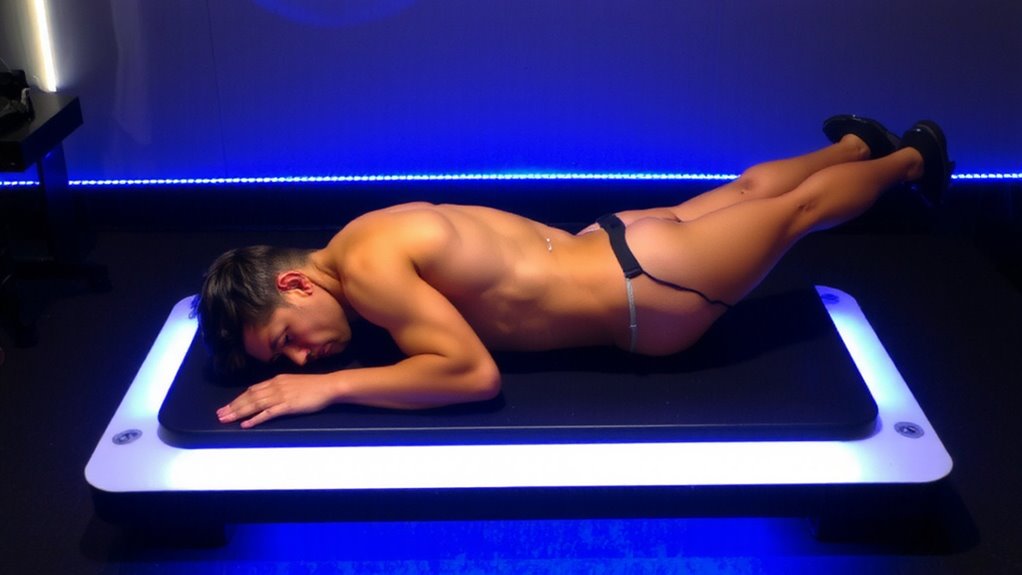
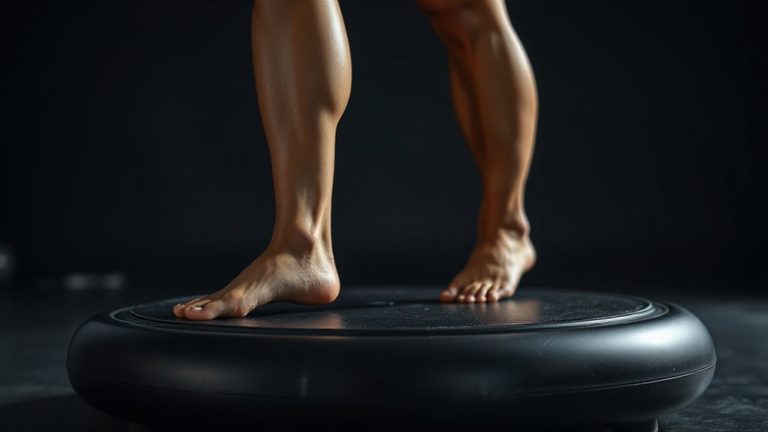
While traditional recovery methods rely heavily on rest and passive treatments, whole body vibration (WBV) offers an active approach that could accelerate your recovery timeline. You engage muscles through rapid contractions induced by platform vibrations, stimulating blood flow and reducing soreness more efficiently than rest alone. Studies suggest ideal vibration duration ranges between 10 to 20 minutes per session-long enough to trigger physiological benefits but short enough to prevent fatigue. When timed correctly, WBV can align with your recovery timing, especially post-exercise or after injury rehab phases. Devices vary in intensity and control, so consistent, measured use enhances effectiveness. Though not a standalone solution, integrating WBV into a broader recovery plan improves muscle readiness and joint function. It’s a practical addition to fitness gear, especially for athletes prioritizing efficient, science-backed recovery methods without compromising training volume or schedule.
Choose the Best WBV Frequency for Your Goal
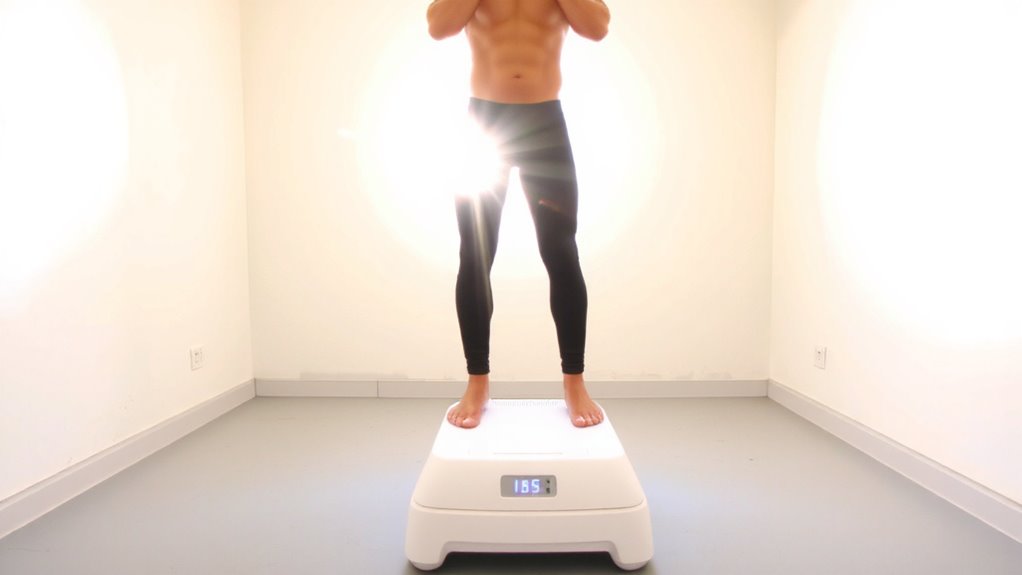
How do you pinpoint the right vibration frequency to match your recovery goals? It starts with understanding that different frequencies trigger distinct physiological responses. For muscle recovery and joint mobility, you’ll find the ideal frequency typically ranges between 12–30 Hz-low enough to promote blood flow without stressing tissues. Higher frequencies, while stimulating, may lack the therapeutic resonance needed for deep recovery. Research suggests that frequencies around 20 Hz align closely with the body’s natural oscillation patterns, enhancing cellular repair and neuromuscular relaxation. You shouldn’t assume more vibration means better results; precision matters. Devices that allow fine-tuned frequency control let you target specific adaptations, whether it’s reducing soreness or accelerating tissue healing. Choosing the right setting isn’t guesswork-it’s about matching the science of vibration to your recovery needs with intention and accuracy. Top-rated devices offer customizable programs to support your specific goals, including models highlighted in the best vibration therapy devices.
Time Sessions for Maximum Recovery Impact
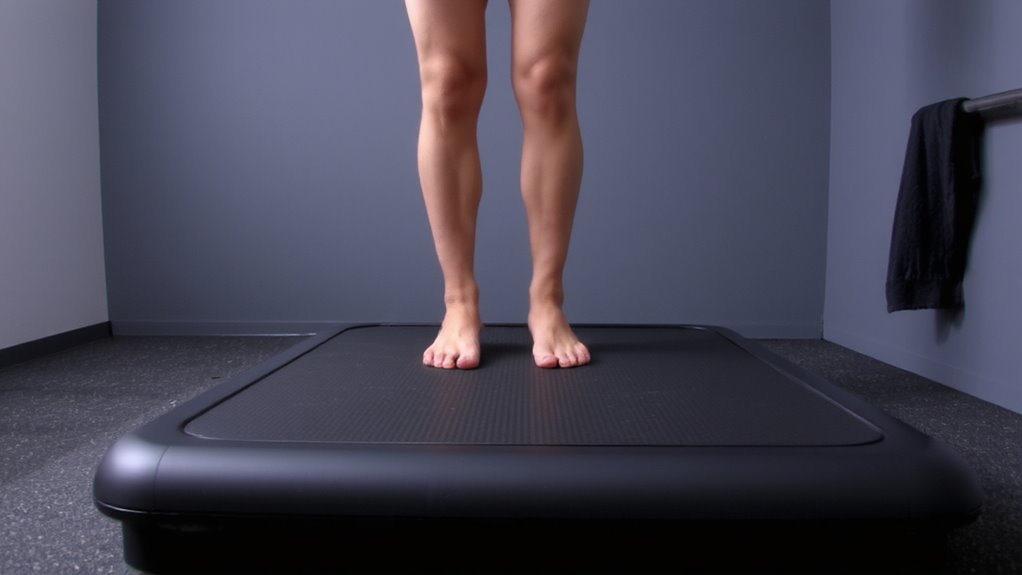
Since recovery isn’t just about what you do but when and how long you do it, timing your whole body vibration (WBV) sessions right can make a clear difference in results. For ideal duration, most studies suggest 10 to 15 minutes per session-long enough to stimulate muscle and circulation, but short enough to avoid fatigue. You’re better off with consistent, brief sessions than pushing for 20+ minutes and risking overexposure. Session timing matters too: using WBV post-workout enhances blood flow and may reduce soreness, while morning use can prime neuromuscular function. Some find two shorter sessions (morning and evening) boost recovery more than one, but results vary by fitness level and training load. The key is aligning session timing with your body’s natural rhythms and workout schedule. As with any fitness gear, effectiveness hinges on smart, evidence-based use-not just frequency, but when and how long you engage.
Combine Vibration Therapy With Active Recovery
When paired with active recovery strategies like light cycling, walking, or dynamic stretching, whole body vibration therapy can enhance circulation and accelerate muscle repair more effectively than either approach alone. This combination promotes active engagement and supports dynamic movement, stimulating neuromuscular pathways while maintaining muscle suppleness. You’re not just passively riding the vibrations-you’re working with them to boost recovery efficiency.
| Activity | Vibration Setting (Hz) |
|---|---|
| Light cycling | 25–30 |
| Walking | 20–25 |
| Dynamic stretching | 30–35 |
| Bodyweight squats | 35–40 |
| Lunges | 30–35 |
Using targeted frequency ranges during dynamic movement helps maintain joint mobility and muscular responsiveness. The platform’s oscillations amplify muscle activation, making your active recovery more productive. You get better blood flow, faster metabolite clearance, and improved tissue readiness-all essential for consistent training.
Reduce Muscle Soreness With Targeted Protocols
You’ve already seen how pairing vibration therapy with active recovery can speed up muscle repair and improve circulation, but now let’s focus on fine-tuning your approach to tackle muscle soreness directly. By using targeted amplitude, you can dial in the exact intensity needed to stimulate muscle fibers without overloading strained tissue. Lower amplitudes, typically between 1–3 mm, help soothe microtrauma and reduce inflammation when applied post-exercise. Combine this with customized waveforms-like sinusoidal or square patterns-and you’re able to match the vibration profile to your body’s specific recovery needs. Research shows these protocols decrease delayed onset muscle soreness (DOMS) by up to 30% when used consistently. Devices offering programmable settings make it easier to repeat effective routines. You’re not just reducing discomfort-you’re optimizing neuromuscular communication, which supports faster return to training. For best results, stick to brief, frequent sessions immediately after intense workouts.
Adjust Intensity for Injury or Fitness Level
If you’re working with an injury or still building your fitness base, diving into high-intensity vibration sessions can do more harm than good. Your body needs time to adapt, and pushing too hard might worsen existing conditions or delay healing. That’s where custom modifications come in-most quality WBV machines let you adjust frequency, amplitude, and duration to match your tolerance. By tailoring sessions to your personal limitations, you maintain therapeutic benefits without overloading stressed tissues. Lower settings still stimulate circulation and muscle activation, which supports recovery without excessive strain. Evaluating your response after each session helps determine when it’s safe to progress. Ignoring personal limitations risks setbacks, especially during early rehabilitation. Smart use of adjustable intensity guarantees consistent, safe gains, making WBV a practical tool across fitness levels.
Build a Daily WBV Routine for Faster Healing
How often are you actually maximizing your recovery window with a structured, daily approach? Building a consistent WBV routine accelerates healing by enhancing circulation and neuromuscular engagement. Start with 10–15 minutes daily, using low to moderate intensity, especially post-injury. Focus on static poses like quarter squats or heel raises to improve posture alignment and joint mobility without strain. Over time, progress to dynamic movements-gentle lunges or calf rocks-to further stimulate tissue repair and functional stability. Ideal frequency is 5–7 days weekly, depending on recovery demand. Consistent use enhances collagen synthesis and reduces inflammation markers, making WBV a smart addition to recovery-focused fitness gear. Unlike passive tools, WBV actively supports structural balance. You’re not just resting-you’re training your body to heal. With proper posture alignment and incremental load, joint mobility improves measurably in weeks, validating WBV’s role in smart, science-backed recovery protocols.
On a final note
You’ll speed recovery by using whole body vibration (WBV) strategically. Choose lower frequencies (10–20 Hz) for healing, higher ones for activation. Morning or post-workout sessions boost circulation without taxing muscles. Pair WBV with light stretching or foam rolling for better results. Start at low intensity if injured, then progress. Daily use, even for 10 minutes, supports muscle recovery, balance, and strength when applied consistently and correctly.