Utilizing Acoustic Stimulation to Enhance Central Nervous System Recovery Mechanisms
You’re using acoustic stimulation to boost CNS recovery by syncing brainwaves with precise sound frequencies, enhancing mental clarity and neural balance. Devices in advanced fitness gear deliver 10 Hz for relaxation or 40 Hz for focus, supporting cognitive restoration as much as physical repair. Research shows rhythmic audio cues improve motor control after stroke or TBI by driving neuroplastic change. When properly calibrated, these tools offer real-time auditory feedback that sharpens movement and speech. Just know improper use can disrupt brain activity, so tailored settings matter. There’s more to how frequency-guided recovery reshapes rehabilitation.
Notable Insights
- Acoustic stimulation uses specific frequencies to entrain brain waves, enhancing neural recovery and promoting CNS balance.
- Gamma (40 Hz) and alpha (10 Hz) frequencies improve focus, relaxation, and cognitive restoration after neurological stress.
- Rhythmic auditory cues synchronize neural oscillations, supporting motor and speech recovery in stroke and TBI patients.
- Devices delivering structured sound therapy can be integrated into rehabilitation to amplify neuroplastic changes.
- Proper frequency calibration and safety assessments are essential to avoid neural disruption and ensure therapeutic efficacy.
How Sound Helps Heal the Brain
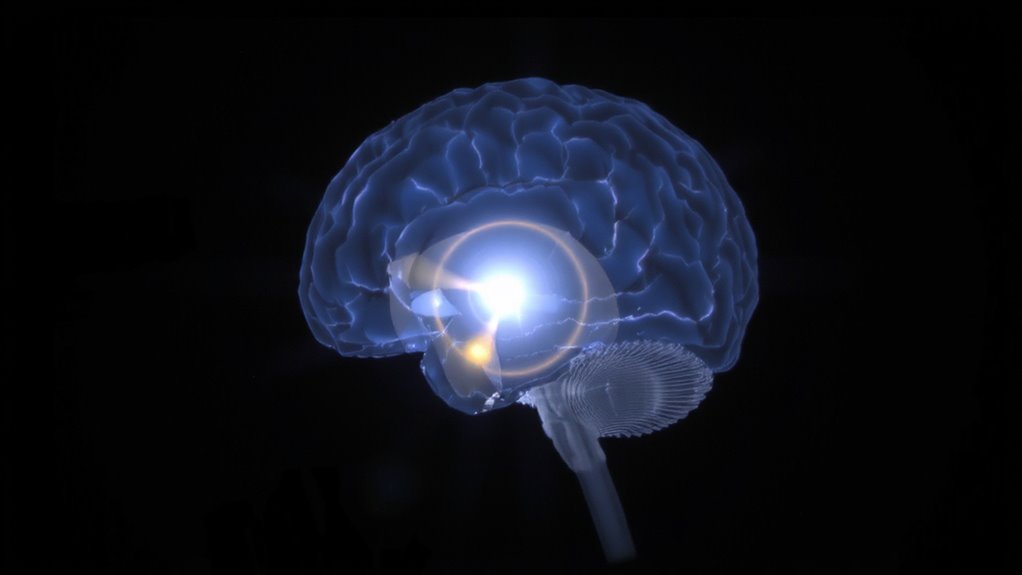
Why do certain sounds seem to calm your nerves or sharpen your focus after intense physical exertion? The answer lies in how your brain processes sound. Auditory perception directly influences brain waves, shifting them into patterns linked with relaxation or concentration. When you listen to structured acoustic stimuli-like rhythmic tones or binaural beats-your brain synchronizes neural activity, promoting mental recovery. This synchronization, known as entrainment, helps restore balance in the central nervous system after stress. Fitness recovery isn’t just about muscles; cognitive restoration matters too. Acoustic stimulation devices, increasingly integrated into fitness gear, leverage this science. Though not all products deliver consistent results, well-designed ones use precise frequencies to support neural regulation. They’re practical for athletes seeking efficient recovery. While research continues, current evidence suggests that when used appropriately, sound-based tools can enhance mental clarity and physiological recovery, making them a credible addition to modern fitness routines.
Which Sound Frequencies Boost Neural Recovery?
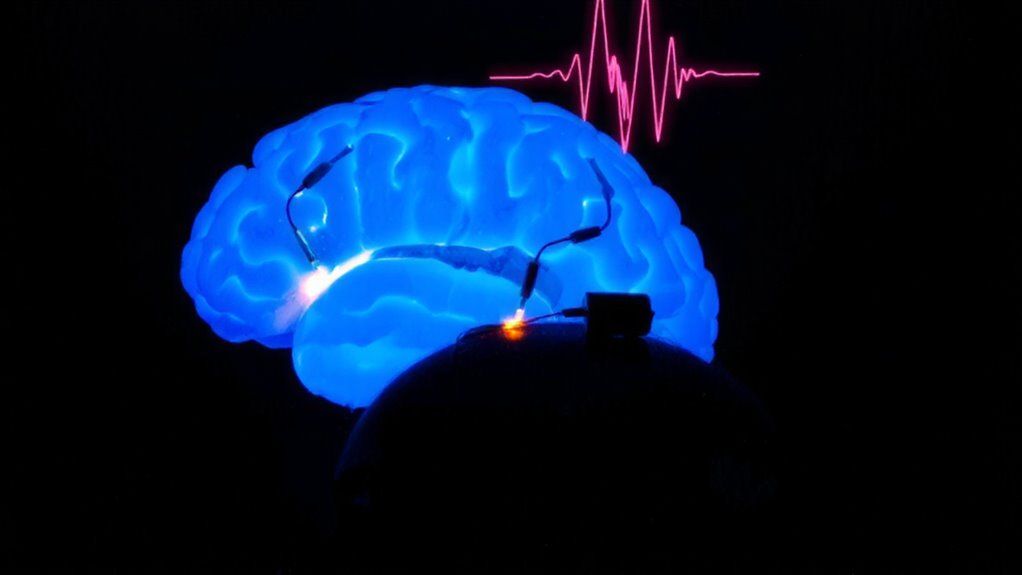
What makes certain frequencies more effective for neural recovery than others? It’s tied to how your brain responds to sound. Gamma entrainment, especially around 40 Hz, boosts cognitive processing and may strengthen neural repair. Harmonic resonance also plays a role-when sound waves align with your brain’s natural rhythms, they amplify beneficial patterns. You’ll see the best results with targeted frequencies that match neural oscillations involved in healing.
| Frequency (Hz) | Effect on Brain | Application Case |
|---|---|---|
| 40 | Gamma entrainment | Memory & focus improvement |
| 10 | Alpha synchronization | Relaxation & stress recovery |
| 7.83 | Schumann resonance | Balanced neural activity |
| 500–1000 | Harmonic resonance carriers | Enhanced signal coherence |
These aren’t one-size-fits-all, but evidence suggests structured acoustic input supports recovery pathways in the CNS effectively.
What Stroke and TBI Research Says About Sound Therapy
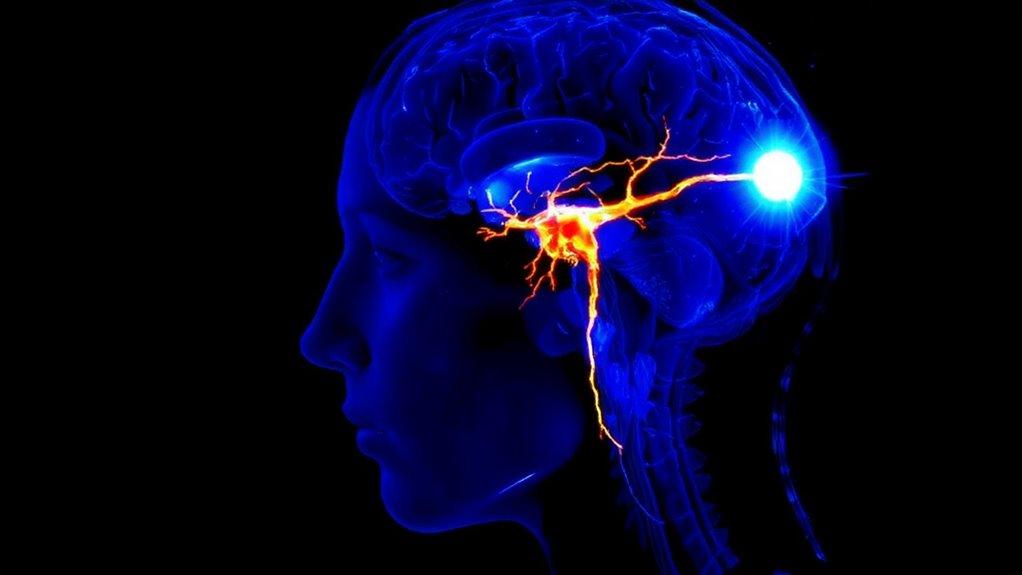
Could it be that something as accessible as sound might actually reshape recovery after stroke or traumatic brain injury? Research suggests you’re not imagining it. Studies show music therapy isn’t just soothing-it activates undamaged brain regions to support motor and speech recovery. When rhythmic entrainment is applied, neural oscillations sync to auditory beats, enhancing gait coordination and speech patterns in stroke survivors. You’ll find that predictable rhythms help retrain timing deficits common in TBI patients. Clinical trials report improved motor function and reduced spasticity when patients engage with structured auditory cues. Though results vary, consistent exposure amplifies neuroplastic changes. You shouldn’t expect miracles, but integrating sound therapy strengthens rehabilitative outcomes. It’s non-invasive, low-cost, and adaptable across settings. Rhythmic entrainment, in particular, offers a functional bridge between sensory input and motor output, making it a promising adjunct in your recovery toolkit.
How Clinicians Use Sound Therapy in Rehabilitation
While sound therapy isn’t a standalone cure, clinicians are increasingly weaving it into rehabilitation protocols as a functional tool to support neural relearning after stroke or traumatic brain injury. You’ll use rhythmic entrainment to align motor movements with auditory cues, helping patients regain gait stability and limb coordination. This synchronization leverages the brain’s natural responsiveness to timing, making movement more fluid and intentional. Auditory feedback, meanwhile, allows patients to hear their performance in real time-like step patterns or speech rhythms-so they can adjust and improve accuracy. You’re not just playing sounds; you’re shaping neuroplastic change through structured, repeatable sessions. Devices emit precise frequencies and beats, often calibrated to individual needs, ensuring consistency across therapy cycles. Though results vary, many clinicians observe improved motor control and speech fluency when combining sound cues with traditional rehab. It’s not magic-it’s science-backed conditioning that enhances patient engagement and functional outcomes.
Safety, Limits, and the Future of Sound-Based Healing
Though promising, acoustic stimulation isn’t risk-free, and you’ll need to apply it carefully within clinical boundaries to avoid unintended effects. Excessive exposure or improper frequency settings might disrupt neural activity instead of supporting it, especially in sensitive populations. You must consider both the device specifications and the individual’s health status before use. Long term effects remain unclear, and without consistent monitoring, potential risks could outweigh benefits. That’s why ethics oversight is essential-researchers and clinicians must guarantee protocols prioritize patient safety and informed consent. As sound-based healing evolves, you’ll see tighter regulations emerge alongside improved technology. These tools aren’t fitness gear meant for casual use; they’re medical interventions requiring training and precision. Future advancements may expand applications, but only with rigorous study and responsible implementation can acoustic therapies gain lasting credibility in CNS recovery.
On a final note
You’re seeing real promise in acoustic stimulation as a tool for CNS recovery, with specific frequencies enhancing neural plasticity and repair. Research supports its use post-stroke and TBI, showing improved function when paired with rehab. Clinicians integrate it carefully, balancing innovation with safety. While not a standalone fix, it complements existing therapies well. Future advances may refine targeting and accessibility, making sound-based treatments a practical, non-invasive asset in neurorehabilitation protocols.