Elbow Flexor Eccentrics at Varying Angles to Treat Medial Epicondylosis
You’re targeting medial epicondylosis right by using elbow flexor eccentrics at specific angles-45°, 90°, and 120°-to match tendon stress with degenerated zones. These positions shift load across the flexor-pronator mass, boosting collagen realignment under tension. Resistance bands and adjustable straps improve control, making rehab more precise. Daily, slow eccentrics at varied angles beat rest by actively rebuilding tendon strength. Stick with proper form and timing, and you’ll see why smart loading beats passive recovery-there’s more to how each angle fine-tunes healing.
Notable Insights
- Medial epicondylosis involves degeneration of flexor-pronator tendons, treated effectively with eccentric loading to stimulate tendon remodeling.
- Varying elbow angles during eccentrics alters muscle-tendon stress distribution, targeting specific regions of the damaged tendon complex.
- At 90 degrees, slow eccentric wrist curls with a dumbbell optimally load the flexor-pronator mass for functional recovery.
- A 45-degree elbow angle increases brachialis and deep flexor activation, enhancing medial stabilization and targeted tendon adaptation.
- Performing 3 sets of 15 reps daily or every other day with controlled form ensures progressive loading without overtraining flare-ups.
What Is Golfer’s Elbow and Why Eccentrics Work
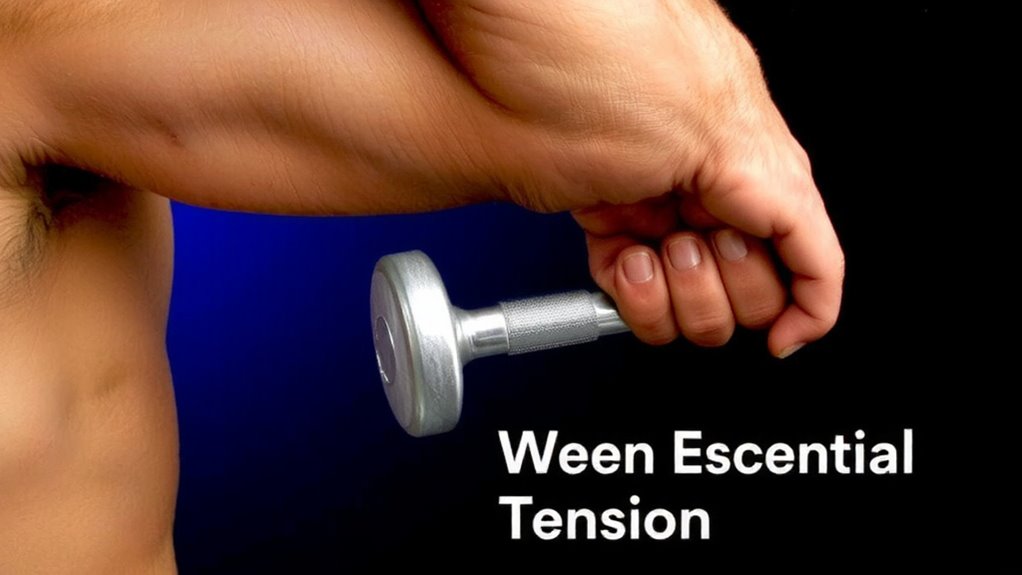
Why does your forearm ache every time you grip something tightly or try to lift a weight with your palm up? You’re likely dealing with golfer’s elbow, a condition where damaged tendon structure at the medial epicondyle triggers persistent pain mechanisms. This isn’t just muscle soreness-it’s degeneration in the flexor tendon, often from repetitive strain. Eccentric exercises work because they apply controlled tension during muscle lengthening, stimulating tendon remodeling. Unlike passive rest, eccentrics actively strengthen the compromised tissue, improving load tolerance. Fitness recovery tools like resistance bands or slow-speed weight routines enhance this process, offering measurable resistance and consistent form. These methods target the tendon structure directly, modulating pain mechanisms over time. While braces or massage might offer temporary relief, eccentrics address the root cause. For those using fitness gear, consistency matters more than intensity-daily, guided eccentrics integrate seamlessly into recovery protocols, making them a practical cornerstone in treating medial epicondylosis effectively. Top-rated elbow braces for golfers can provide additional support during the healing process, especially when managing load during sport-specific movements.
How Elbow Bend Changes Muscle Targeting
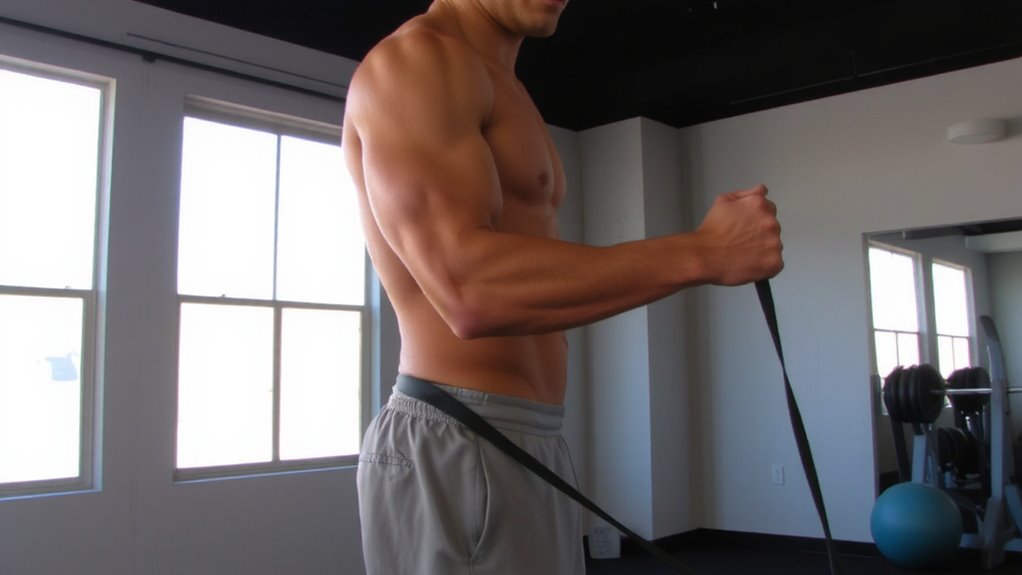
The angle of your elbow during eccentric training isn’t just a detail-it directly shifts which forearm muscles bear the load. At more acute bends, around 45 degrees, you increase muscle activation in the brachialis and deeper wrist flexors, essential for stabilizing medial elbow stress. Open angles, near 90 degrees, spread joint torque more evenly but reduce peak loading in the flexor-pronator mass. This specificity matters because targeted activation promotes better tendon remodeling. You’re not just building strength-you’re guiding adaptation where it’s needed most. Adjusting elbow flexion lets you dial in the stimulus, matching the injury’s irritability. Too much joint torque can aggravate symptoms, while too little won’t drive recovery. The right angle balances load and comfort, making your eccentric protocol more effective long term. Precision here improves outcomes, turning generic exercise into focused rehabilitation.
Best Eccentric Exercises by Elbow Angle
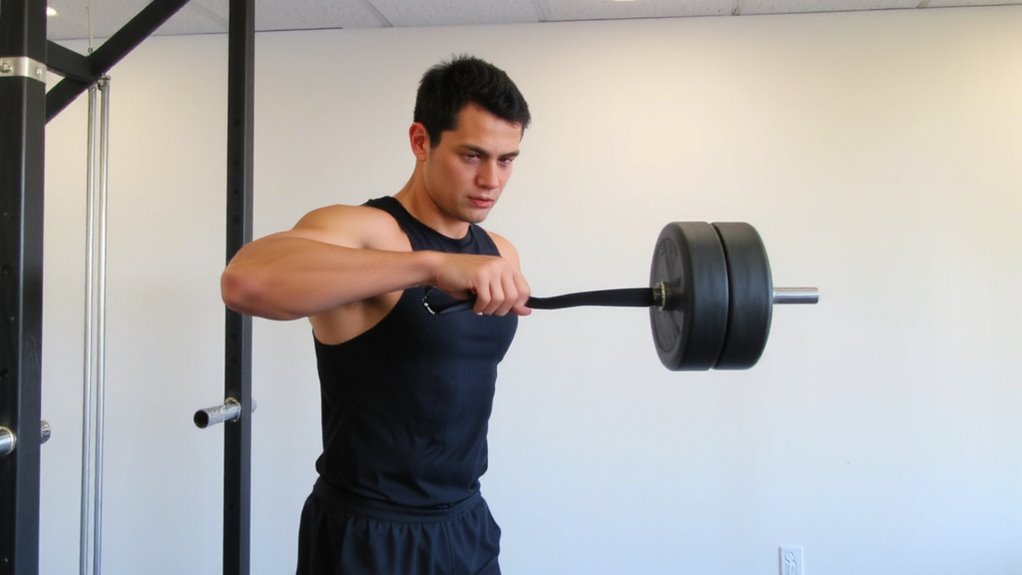
You’ve already seen how elbow angle shapes muscle engagement during eccentrics, so now it’s time to match specific exercises to those positions for ideal tendon response. At 90 degrees of flexion, perform resisted wrist curls with a dumbbell, emphasizing slow lowering-this angle hits the flexor-pronator mass effectively. Use a supinated grip initially, then switch to neutral with grip variation to distribute load and avoid over-stressing medial tissue. For deeper flexion (around 120 degrees), seated preacher curls with eccentric overload work best; here, exercise timing should favor a 3–4 second descent to maximize tendon remodeling. At extended angles (near 45 degrees), band-attached eccentrics promote comfort and control, especially with adjustable straps for consistent positioning. Grip variation-using thick-handled tools or fat grips-can modulate stress and improve adherence. These exercises, when matched to angle-specific weakness, enhance recovery precision. Always control movement tempo and adjust load progressively.
Science: Why Angle-Specific Loading Heals Tendons
Although tendon healing isn’t always predictable, targeting specific elbow angles during eccentric loading improves outcomes by aligning mechanical stress with the regions of the flexor-pronator tendon most affected by degeneration. You’re not just strengthening-you’re guiding tendon remodeling by stimulating cellular activity where it’s needed most. Research shows that tendons adapt best when loaded in positions that replicate functional demands, making angle-specific work more effective than generic exercises. Eccentrics at targeted angles promote collagen realignment, helping restore the tendon’s structural integrity. This precision encourages newly formed fibers to organize along lines of stress, increasing load tolerance over time. Unlike broad strengthening, this method addresses pathology directly, making recovery more efficient. It’s not just about doing reps-it’s about choosing the right joint position to maximize tissue adaptation. You get better results because the tendon heals in a way that supports real-world movement patterns.
How Often to Do Eccentrics for Recovery
Picking up where angle-specific loading leaves off, frequency turns out to be just as strategic when it comes to eccentric exercises for medial epicondylosis. Your exercise frequency should strike a balance-too little, and you won’t stimulate repair; too much, and you’ll disrupt recovery timing. Most studies support performing eccentrics daily or every other day, allowing 48 hours between intense sessions. This schedule aligns with tendon biology, giving microdamaged fibers time to rebuild without losing adaptive momentum. Consistency matters more than volume, so aim for 3 sets of 15 reps per angle, using slow, controlled motions. Recovery timing isn’t just about rest-it’s about strategic loading. Devices like adjustable forearm braces or resistance bands can help maintain proper form and tension, enhancing workout efficacy. Used correctly, they support tendon remodeling over weeks. Stick to the rhythm: load, recover, repeat. Missed sessions or erratic timing reduce gains, so treat your routine like rehab homework-non-negotiable.
Avoid These Mistakes in Golfer’s Elbow Rehab
Why do so many people struggle to recover from golfer’s elbow despite consistent effort? You’re likely making preventable errors in your rehab approach. One common mistake is using an improper grip during exercises, which shifts stress away from the targeted flexor tendons and reduces exercise effectiveness. Whether you’re doing eccentrics or daily activities, grip width and wrist alignment matter-too narrow or twisted, and you compromise form. Another issue is ignoring overtraining risks; pushing too hard, too soon leads to flare-ups. Tendinosis rehab requires progressive loading, not max effort daily. Your equipment choice also plays a role-some forearm trainers offer poor resistance control, increasing strain. Instead, use adjustable tools that let you modulate intensity. Pair proper gear with correct technique and sufficient rest. Avoid these pitfalls, and your recovery path becomes far more predictable-and successful.
On a final note
You’ll find that performing elbow flexor eccentrics at varied angles targets the wrist flexors more effectively, especially in medial epicondylosis. Adjusting the elbow bend lets you load the tendon where it’s weakest, boosting collagen remodeling. Combined with consistent, daily practice and proper form, this method outperforms generic rehab. It’s not just about strength-angle-specific work enhances tendon resilience. Avoid rushing; progress depends on precision, not speed.