Stroke Efficiency Metrics (SWOLF) Applied to Track Technical Improvement in Recovery
You can use SWOLF to track how well your stroke technique rebounds during recovery, not just speed. By combining stroke count and lap time, it reveals efficiency changes when fatigue fades. A stable or dropping SWOLF suggests your form is returning, even if effort is low. Wearables calculate it automatically, though accuracy varies with stroke style and device placement. Just remember, a low score doesn’t always mean better-context matters. There’s more to optimizing your comeback than the number alone shows.
Notable Insights
- SWOLF combines stroke count and time per lap to measure swimming efficiency during recovery phases.
- Stable SWOLF scores post-exercise indicate preserved technique and effective physiological recovery.
- Rising SWOLF during recovery may reveal deteriorating stroke mechanics or pacing issues.
- Wearable-derived SWOLF helps monitor technical consistency when training volume is reduced.
- Use SWOLF alongside perceived effort to distinguish true efficiency from exertion masking poor technique.
What Is SWOLF and Why It Matters for Recovery?
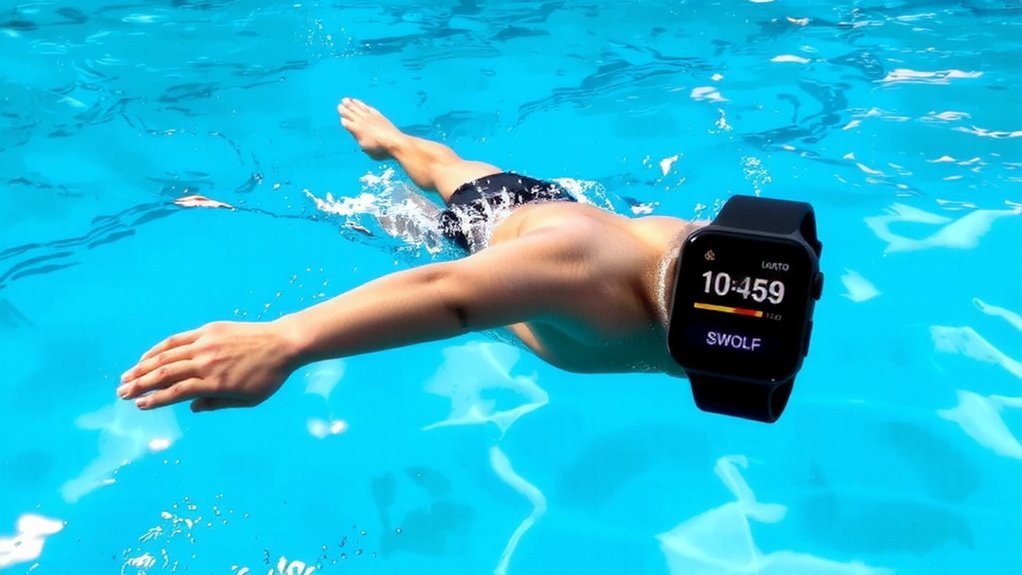
Efficiency in the water isn’t just about speed-it’s about how smoothly you get there, and that’s where SWOLF, a blend of “swim” and “golf,” comes in. You calculate it by adding your stroke count to the seconds it takes to cross the pool-lower scores mean better performance. For recovery, SWOLF matters because it highlights biomechanical efficiency when fatigue sets in. Instead of pushing pace, you focus on maintaining form, letting stroke analysis reveal subtle breakdowns. Devices like smartwatches or swim trackers capture this data, helping you monitor technique under real conditions. Unlike pure speed metrics, SWOLF reflects how well your body moves through water with minimal wasted effort. During recovery phases, consistency in SWOLF scores suggests you’re preserving technique despite reduced volume. That makes it a reliable gauge-not of fitness alone, but of smart, sustainable progress. Recovery isn’t just rest; it’s refinement.
How SWOLF Measures Technique, Not Just Speed
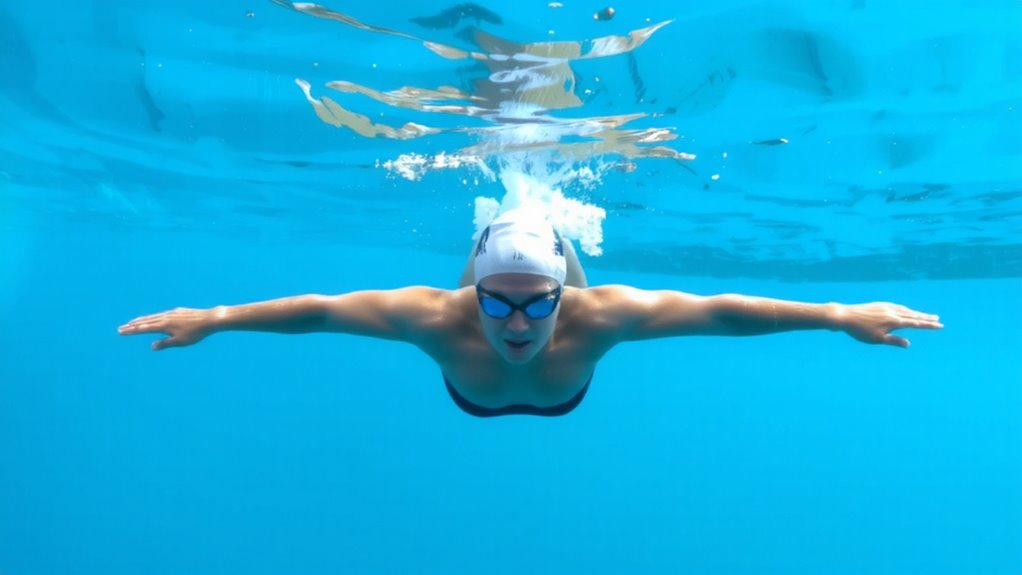
A SWOLF score tells you more than how fast you swim-it reveals how well you move through the water. You might swim a lap quickly, but if your stroke timing is off or your kick efficiency is poor, you’ll waste energy and raise your SWOLF. The metric combines stroke count and time per lap, so a lower score means you’re covering distance with fewer strokes and less effort. When your stroke timing is smooth and coordinated, your propulsion improves without added exertion. Likewise, a streamlined, efficient kick supports balance and forward motion without dragging. Equipment like smartwatches or swim trackers capture these details, letting you assess technique objectively. Unlike raw speed, SWOLF shows whether gains come from fitness alone or true technical refinement. That’s essential during recovery, where preserving energy and minimizing strain matters just as much as pace. You’re not just swimming faster-you’re swimming smarter.
Track Your Recovery: Key SWOLF Trends to Watch
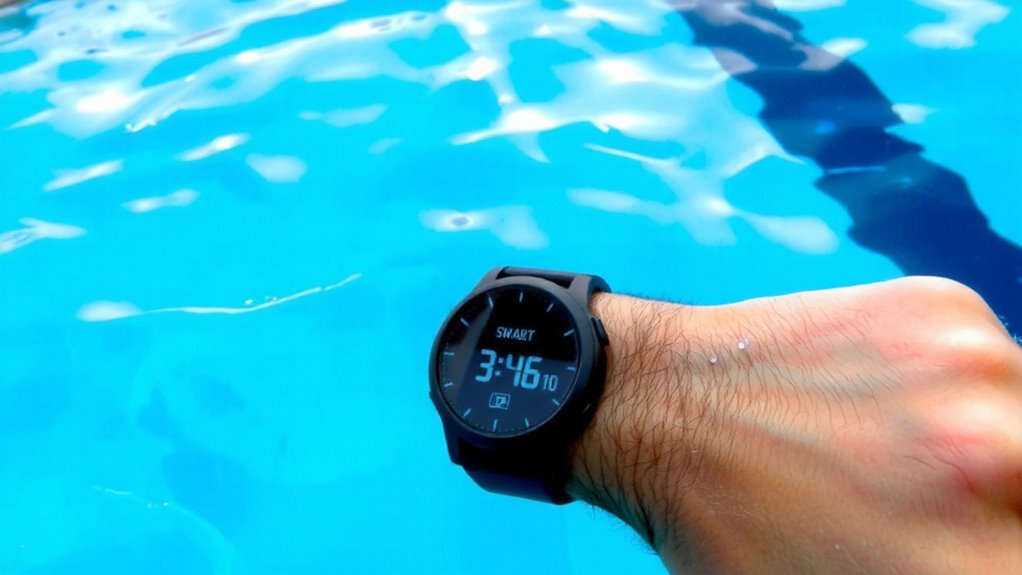
You’ve seen how SWOLF reflects your technique by balancing stroke count and lap time, but now it’s just as important to watch how that number shifts during recovery phases. As your body regains composure after intense sets, a stable or gradually improving SWOLF suggests effective recovery. If it spikes, your stroke rhythm may be breaking down-erratic pacing or rushed entries often follow. Breathing coordination plays a key role; when it falters, SWOLF rises even if you’re swimming slowly. Monitoring these trends across sessions reveals whether your recovery is truly restorative. A consistent post-recovery SWOLF indicates neuromuscular efficiency returning, signaling readiness for the next effort. Tracking these subtle shifts helps fine-tune rest intervals and optimize technique under fatigue. It’s not just about resting longer-it’s about recovering smarter, letting stroke rhythm and breathing coordination reset fully before the next challenge.
Can Your Watch Be Trusted? SWOLF From Wearables
How accurately can your smart
watch really measure SWOLF when you’re counting on it to gauge recovery between sets? While modern wearables promise real-time stroke efficiency tracking, their reliability hinges on sensor accuracy and consistent placement. Optical heart rate sensors and accelerometers can misread subtle stroke changes, especially in choppy water or during quick shifts. Even minor shifts in wrist position may skew data, leading to misleading SWOLF scores. Beyond hardware, algorithm bias plays a role-many devices are trained on elite swimmer patterns, which might not reflect recreational technique or recovery-phase changes. That means your watch could underestimate improvements or overstate fatigue. While useful for broad trends, SWOLF from wearables should be cross-referenced with perceived effort and stroke count. Don’t blindly trust the number; understand its limits.
Is a Low SWOLF Always Better? Efficiency vs. Effort
Why assume a lower SWOLF always means you’re swimming smarter? While a low SWOLF suggests efficiency, it doesn’t account for effort. You might reduce strokes or increase speed slightly, but if your perceived exertion spikes, you’re likely overreaching. That trade-off can hinder recovery, especially post-injury or during active rehab. A comfortably paced swim with steady stroke rhythm often supports better technical development and physiological adaptation than pushing for the lowest number. Monitoring SWOLF without context risks undervaluing how hard your body works. Some wearables now pair SWOLF with heart rate and exertion logs, offering a fuller picture. But even then, perceived exertion remains key-what feels smooth and controlled usually sustains long-term improvement. Efficiency shouldn’t come at the cost of strain. Balancing stroke rhythm with effort guarantees smarter, more sustainable progress in your recovery-focused swimming.
Improve Your Stroke With Real-Time SWOLF Feedback
Isn’t it frustrating when you’re trying to refine your stroke but can’t tell if you’re actually improving? Real-time SWOLF feedback changes that by combining stroke count and time per length into one actionable metric. When you swim with a compatible fitness tracker, you get instant data enabling precise stroke analysis and immediate adjustments. You’ll notice how small tweaks in hand entry or kick timing affect efficiency. More importantly, real-time SWOLF helps with tempo optimization-letting you find the sweet spot between stroke rate and glide. Devices like Garmin’s swim metrics or FORM Swim Goggles display SWOLF live, so you’re not guessing. While not all trackers are equally accurate, those with advanced accelerometers deliver reliable insights. Over time, consistent feedback supports smarter recovery by reducing unnecessary strain. It’s not just about swimming harder-it’s about swimming smarter, using data to guide technique, pacing, and ultimately, effective fitness recovery.
On a final note
You can trust SWOLF as a practical metric to gauge stroke efficiency during recovery, not just speed. Modern wearables track it reliably, though occasional sync errors occur. A lower SWOLF often indicates better technique, but pushing too hard defeats recovery’s purpose. Used wisely-paired with perceived effort and rest-SWOLF helps refine form without overloading the body, making it a valuable, though imperfect, tool in your fitness recovery toolkit.