Lumbar Mobility Drills With Seated Spinal Rotations
You need lumbar mobility drills like seated spinal rotations to combat stiffness from sitting all day. Do them right by sitting tall, hands on shoulders, and rotating smoothly from the waist-control matters more than depth. Avoid common errors like over-rotating or hiking your hips, which strain your spine. Pair these drills with mindful posture habits for real gains. Add resistance only after mastering form. There’s a smarter way to build resilience-you’ll see how it ties together.
Notable Insights
- Seated spinal rotations improve lumbar mobility by promoting controlled movement in a supported position.
- Maintain a tall spine and engage the core to isolate rotation and prevent compensatory movements.
- Perform 8 slow, controlled repetitions per side, holding each rotation for 2 seconds.
- Avoid over-rotation to prevent facet joint compression and muscle guarding.
- Introduce resistance only after mastering bodyweight form to maintain movement quality and safety.
Why Lumbar Mobility Matters for Desk Workers
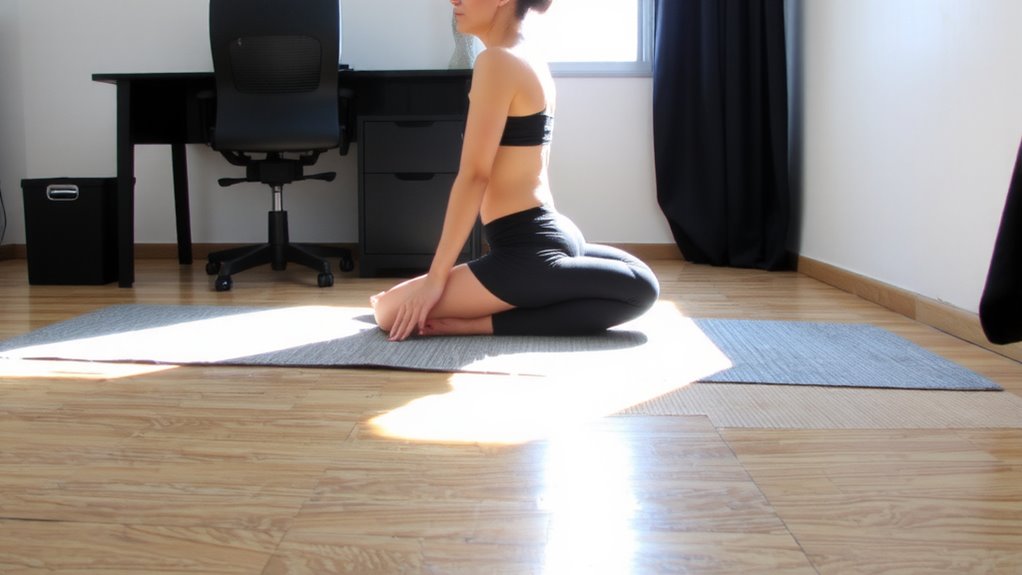
While you’re sitting for hours each day, your lumbar spine gradually loses the ability to move through its natural range, and that’s where targeted lumbar mobility drills become essential, especially for desk workers. Prolonged sitting amplifies sedentary risks, contributing to stiffness, imbalanced posture, and eventual strain. These drills directly support spinal health by restoring motion, improving circulation, and reducing compression on intervertebral discs. Unlike passive stretching, mobility work engages controlled movement, activating deep stabilizers and enhancing neuromuscular coordination. For those using supportive fitness gear like lumbar cushions or ergonomic chairs, pairing them with active drills yields better long-term outcomes than reliance on equipment alone. Without movement, even high-end gear can’t offset the effects of inactivity. Regular mobility practice not only counters structural decline but also improves recovery between workouts. You’re not just preventing pain-you’re building resilience in a system designed to move. Choosing the right chair, such as one of the best chairs for bulging discs, can further support spinal alignment during prolonged sitting.
Do Seated Spinal Rotations Right: Step-by-Step
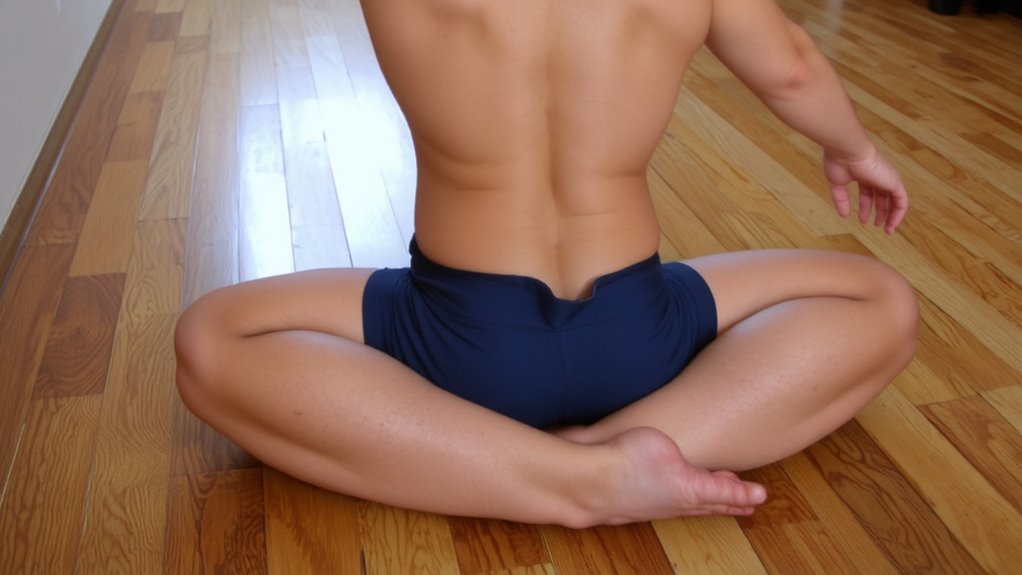
You’ve probably felt the stiffness creep in after hours in your desk chair, and although lumbar cushions or ergonomic supports help maintain alignment, they won’t restore lost motion on their own. Seated spinal rotations rebuild mobility while reinforcing joint stability. Do them right by starting tall: sit with feet flat, spine long, and shoulders relaxed.
| Phase | Action | Focus Area |
|---|---|---|
| Setup | Sit tall, hands on shoulders | Spinal alignment |
| Rotation | Twist from the waist | Thoracic mobility |
| Control | Hold 2 seconds, return slow | Joint stability |
| Repetition | 8 reps per side | Balanced engagement |
Maintain a neutral pelvis throughout-this guarantees targeted movement without straining discs. Quality beats speed; controlled motion enhances neuromuscular coordination. Proper form builds functional capacity, making daily movements easier and reducing long-term wear. Incorporating tools like the best back stretching equipment can further enhance flexibility and support pain relief when used alongside mobility drills.
Common Mistakes in Lumbar Rotation Drills
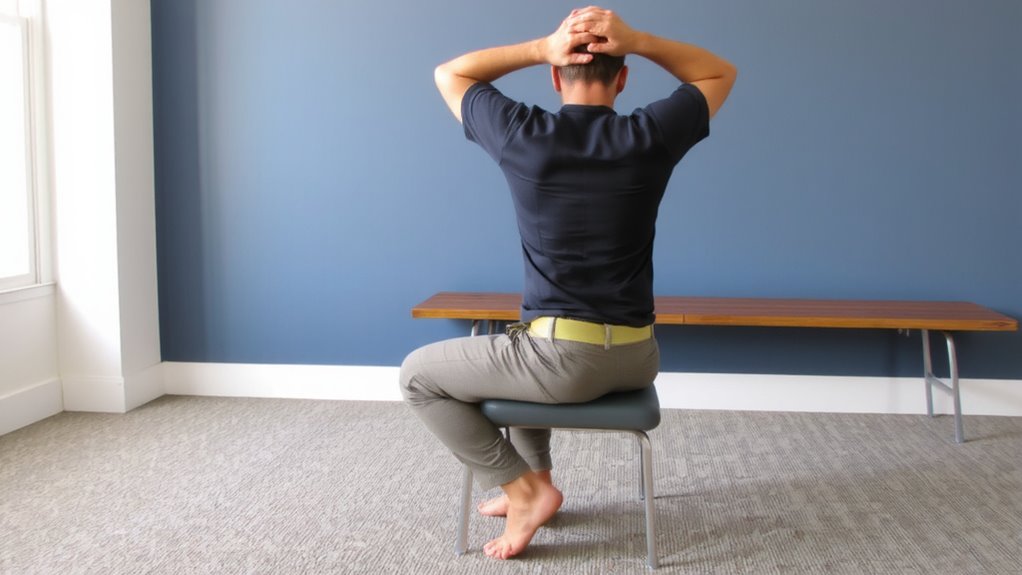
Why do so many people finish lumbar rotation drills feeling more strained than freed up? You’re likely pushing past your true range, triggering muscle guarding-the body’s protective spasm that limits motion when it senses instability. This isn’t just discomfort; it’s a red flag your nervous system is resisting. When you ignore these signals, especially during seated rotations, you increase the over rotation risk, which can compress spinal facets and irritate connective tissues. Many assume “more twist” equals better mobility, but without core engagement and controlled pacing, you’re reinforcing poor movement patterns. You might think you’re loosening tight lower back muscles, but if your pelvis shifts or shoulders jerk, you’re not isolating lumbar motion properly. Precision beats intensity here. Use small, mindful reps to avoid provoking guarding and reduce strain. Proper form protects joints and builds sustainable mobility-rushing it does more harm than good. Incorporating a supportive back stretcher device can help maintain spinal alignment and enhance mobility work when used correctly.
Combine Rotations With Daily Posture Fixes
Rotating your spine correctly doesn’t end when the drill is over-it carries into how you sit, stand, and move throughout the day. Proper spinal alignment during routine activities reinforces the mobility gains from your rotations. When you sit at a desk or drive, subtle muscle activation in your core maintains stability, preventing slouching and reducing strain. Adjusting your posture mindfully strengthens neuromuscular control, linking each rotation to real-world function. Daily posture fixes-like sitting tall with shoulders back and feet grounded-support long-term alignment and enhance muscular endurance. Over time, this consistency improves coordination and decreases compensatory movement patterns. Incorporating these postural cues turns passive moments into active recovery, letting your body function efficiently. Fitness recovery isn’t just rest; it’s about quality movement repetition. Without proper follow-through, even effective drills lose impact. Using supportive gear like ergonomic chairs or posture reminders helps, but awareness and muscle activation remain key to lasting spinal health.
Level Up: When to Add Resistance to Rotations
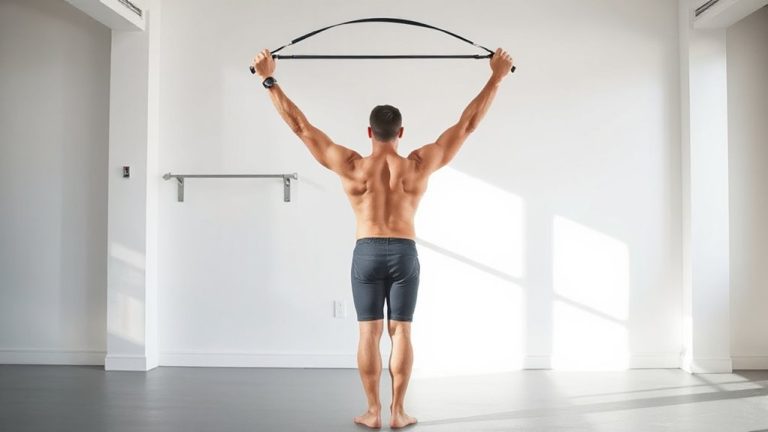
Once you’ve built consistent control through bodyweight rotations and notice your spine moving with greater ease, it’s time to contemplate resistance-but only if your form stays sharp. Introducing resistance too soon can compromise spinal alignment and increase injury risk, so resistance timing is essential. Start with light bands or a padded dowel to amplify rotational tension without sacrificing control. Gradual load progression guarantees your paraspinal muscles adapt safely, improving both strength and mobility. A modest 5–10% increase in resistance weekly allows steady adaptation while minimizing strain. Monitor your range and quality: if movement becomes jerky or asymmetrical, scale back. Tools like resistance bands with measurable tension levels or rotational trainers with adjustable resistance provide reliable feedback. Don’t prioritize force over finesse-controlled, full-range motion beats heavy, sloppy turns every time. Used wisely, added resistance enhances neuromuscular coordination, supporting long-term spinal resilience and functional fitness outcomes.
On a final note
You’ve likely spent hours seated, tightening your lumbar spine without realizing it. Seated spinal rotations, done correctly, restore essential mobility and reduce stiffness. When paired with proper posture and occasional resistance, they become even more effective. These drills aren’t flashy, but they’re practical, low-risk, and supported by biomechanics. For long-term recovery and resilience, consistency beats intensity-making them a smart choice in any desk worker’s routine.