Utilizing Isometric Adductor Squeezes to Reduce Groin Injury Risk in Soccer Players
You can reduce groin injury risk by doing isometric adductor squeezes 2–3 times weekly, which correct muscle imbalances and boost tendon resilience. These holds strengthen the adductors without joint strain, improving pelvic stability during cutting and sprinting. Use a foam pad between your knees, engage your core, and maintain neutral alignment for best results. Consistent, properly executed squeezes enhance neural drive and stiffness where you need it most-keep going to fine-tune your injury prevention strategy.
Notable Insights
- Isometric adductor squeezes correct muscle imbalances that contribute to groin injuries in soccer players.
- They enhance tendon stiffness and joint resilience, reducing soft tissue strain during rapid lateral movements.
- Regular squeezing exercises improve neural activation and mind-muscle connection for stronger adductor recruitment.
- Proper form with a ball or pad between knees ensures targeted activation and prevents compensatory movements.
- Performing squeezes 2–3 times weekly post-training supports recovery and builds lasting injury resistance.
Why Groin Injuries Need Isometric Squeezes
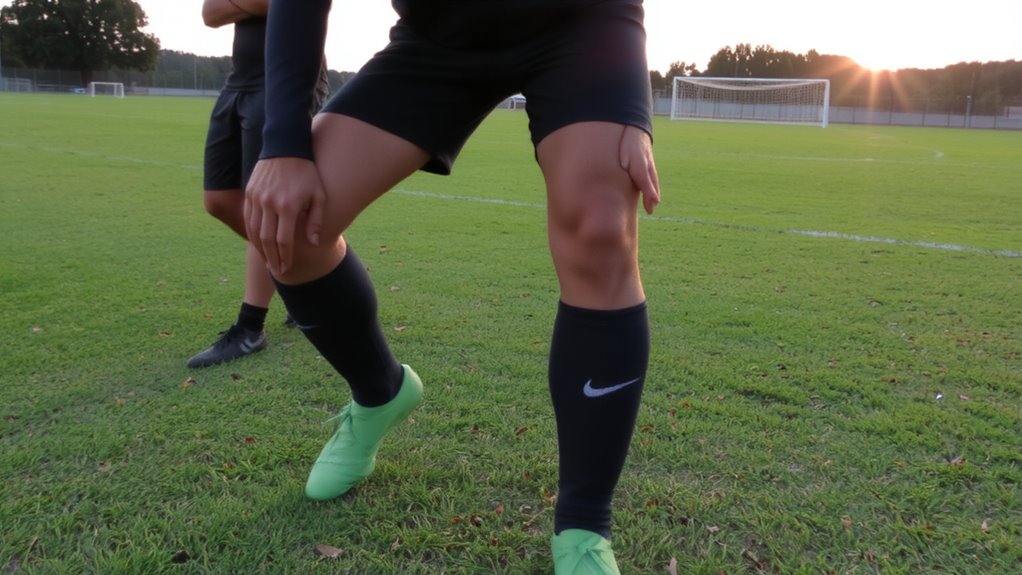
You’ve probably felt it-that sharp pull in your groin after a sudden sprint or awkward tackle on the field. Groin injuries in soccer players often stem from muscle imbalances between the adductors and abductors, leaving you vulnerable during quick lateral movements. These imbalances reduce stability and increase strain on soft tissue. Isometric adductor squeezes help correct this by stimulating neural adaptation, enhancing the mind-muscle connection and improving recruitment patterns during dynamic play. Unlike traditional strength exercises, isometrics build tendon stiffness and joint resilience without excessive movement, making them ideal during recovery or intense in-season training. When paired with proper recovery gear like compression shorts or foam rollers, these squeezes support faster rehab and sustained performance. The minimal equipment and low risk make them practical for regular use. Evidence shows consistent isometric training reduces reinjury rates, proving their role isn’t just supplementary-it’s essential.
How Adductor Squeezes Prevent Groin Strains
While dynamic movements dominate soccer, it’s the static strength built through isometric adductor squeezes that often makes the difference in preventing groin strains. You engage in high-intensity cutting, sprinting, and kicking-movements that heavily stress the adductors. The injury mechanism for groin strains often involves sudden eccentric loading when the muscle isn’t prepared. Isometric squeezes train your adductors to activate more efficiently, improving muscle activation under load. This enhanced neural drive increases stiffness in the muscle-tendon unit, helping it resist overstretching during play. By consistently performing these squeezes, you’re not just building strength-you’re reinforcing control exactly where it’s needed. The controlled contraction teaches your body to stabilize the pelvis during single-leg tasks, reducing strain on vulnerable tissues. It’s a direct, measurable way to address the root causes of groin injury without relying solely on dynamic exercises.
Why Isometric Training Prevents Injuries
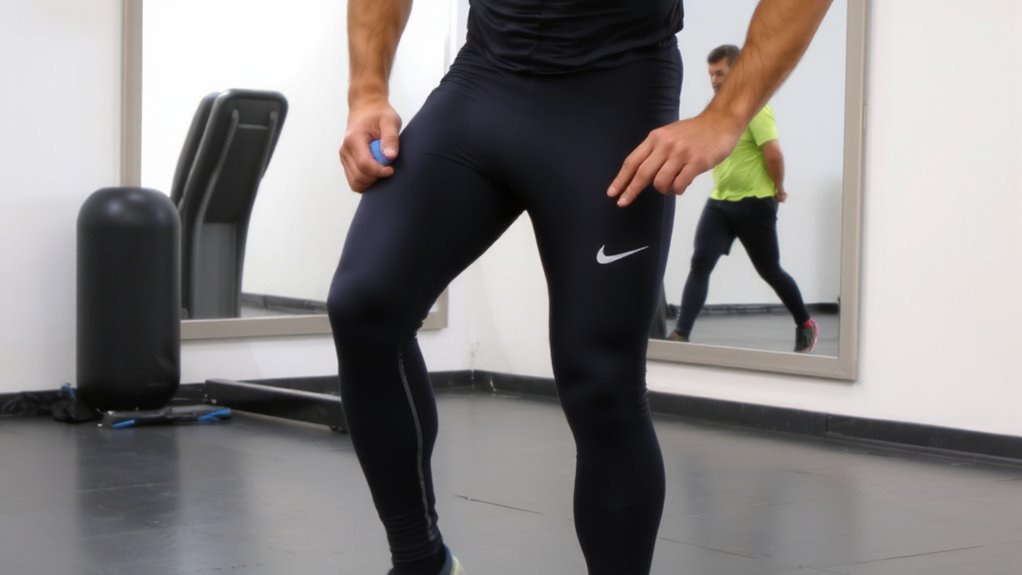
Because isometric training builds resilience at the muscle-tendon junction, it plays a critical role in injury prevention-especially in high-demand sports like soccer. When you hold a contraction without moving the joint, you’re not just building strength-you’re improving muscle endurance and enhancing neural activation. This means your adductors can sustain force longer and respond faster during explosive movements like cutting or kicking. You’re also training the nervous system to recruit motor units more efficiently, which leads to better control under fatigue. Over time, this adaptability reduces the risk of strain when muscles are challenged suddenly. Isometric exercises like adductor squeezes don’t require complex gear, making them practical for consistent use. They’re low on joint stress but high on functional return-ideal for players prioritizing durability. You’ll find these drills integrate easily into warm-ups or recovery days, supporting long-term resilience without overloading the body.
Do Adductor Squeezes With Proper Form
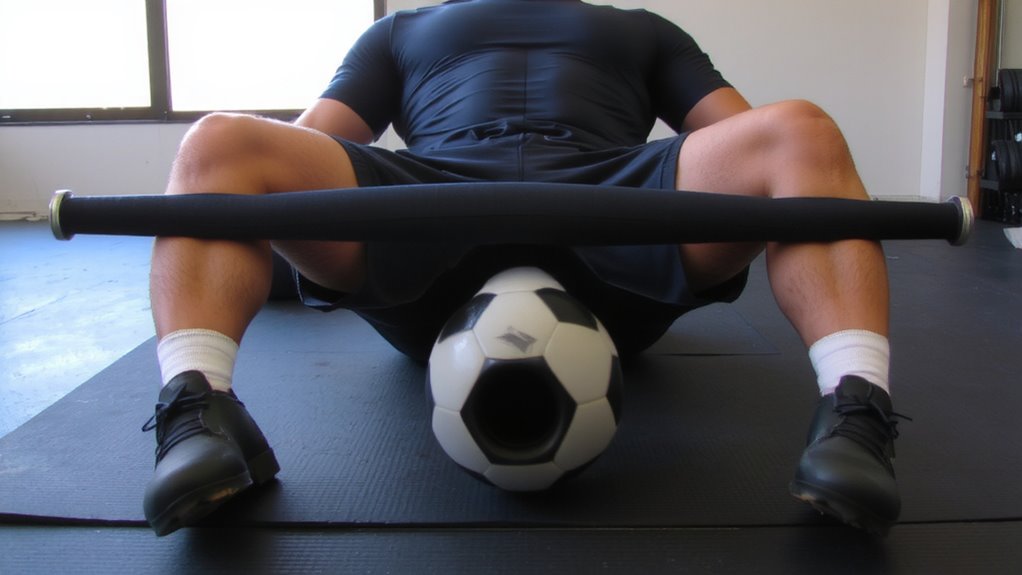
Form is everything when it comes to adductor squeezes-the right alignment turns a simple exercise into a powerful tool for both performance and injury prevention. Proper alignment guarantees your hips, knees, and feet are stacked and neutral, reducing strain on the joints while boosting muscle activation in the inner thighs. You’ll get the most benefit when you squeeze a ball or foam pad between your knees, keeping your core engaged and avoiding pelvis tilt. This setup promotes targeted adductor engagement without compensating with other muscle groups. Inadequate form leads to diminished returns and may even increase injury risk. You’re not just going through the motions-you’re training specific muscles to react efficiently during dynamic movements on the field. Consistent practice with correct technique sharpens neuromuscular control. Proper alignment isn’t optional; it’s essential for effective muscle activation and long-term groin health in soccer players.
When to Do Squeezes and How Often
You’ll typically get the best results when doing isometric adductor squeezes two to three times per week, allowing enough recovery time between sessions to support tissue adaptation and strength gains. The timing frequency matters-spacing sessions 48 hours apart helps prevent overtraining while promoting neuromuscular recovery. Your consistency routine is key; sporadic efforts won’t build the residual strength needed to protect against groin injuries. Doing squeezes on off-days or after training maintains stimulus without compounding fatigue. Top athletes using fitness recovery gear, like compression units or foam rollers, often pair those tools with isometrics to enhance blood flow and muscle readiness. These devices don’t replace the exercise, but they support recovery between sessions. For lasting results, treat the squeezes like a long-term investment-short daily gains add up when your routine stays on track. Stick with it, and you’ll see measurable improvements in adductor strength and joint stability over time.
Boost Warm-Ups With Adductor Squeezes
Isometric adductor squeezes aren’t just effective during recovery-they can also be a dynamic component of your warm-up routine. By integrating them pre-training, you boost dynamic activation and prepare your groin muscles for explosive movements. This isn’t just about firing up tissue-it’s strategic muscle engagement that enhances stability during cuts, kicks, and sprints. Use a foam roller or adductor squeeze device to intensify the stimulus without adding fatigue.
| Exercise | Duration (sec) |
|---|---|
| Seated squeeze (light) | 15 |
| Standing squeeze (moderate) | 20 |
| Ball squeeze (high tension) | 25 |
Hold each contraction steadily, focusing on form and tension quality. These squeezes prime your adductors more effectively than static stretches alone, supporting sharper movement readiness. With consistent use, your warm-up becomes a tool for resilience-not just performance.
Track Progress to Prevent Groin Injuries
A growing body of evidence suggests that tracking adductor strength gains over time can greatly reduce the risk of groin injuries, especially in high-intensity sports like soccer. You can’t improve what you don’t measure, and that’s where injury tracking and performance monitoring come in. Using isometric adductor squeeze tests every 4–6 weeks helps you spot weaknesses before they become problems. Devices like handheld dynamometers give reliable readings, letting you quantify progress. When you see strength imbalances or plateaus, you can adjust training intensity or volume accordingly. This proactive approach isn’t just smart-it’s essential for long-term resilience. Consistent performance monitoring means you’re not guessing whether rehab or prevention work is effective. You’ll know. Plus, integrating this data into broader fitness recovery plans helps optimize gear use, like compression or recovery boots, based on actual demand. Smart tracking turns routine exercises into powerful prevention tools.
On a final note
You’re reducing groin injury risk by incorporating isometric adductor squeezes into your routine. These exercises build strength at key muscle lengths, improving resilience during sudden lateral movements. When done consistently with proper form, they enhance joint stability and muscle balance. Used in warm-ups or rehab protocols, they’re practical and effective. Tracking progress guarantees measurable gains, making them a smart, science-backed addition to any soccer player’s fitness and recovery toolkit.