Maximizing Glycogen Replenishment Through Strategic Timing and Quantity of Carbohydrate Intake
You’ll maximize glycogen replenishment by eating 0.8 to 1.2 grams of carbs per kilogram of body weight within 30 to 60 minutes post-workout, when insulin sensitivity peaks. Pairing carbs with protein boosts glycogen storage up to 38% faster and supports muscle repair. Whole foods like sweet potatoes and brown rice offer steady glucose release. Skip the recovery gadgets-strategic nutrition delivers real metabolic advantage. There’s more to optimizing recovery than timing alone.
Notable Insights
- Consume carbohydrates within 30 to 60 minutes post-workout to maximize glycogen replenishment due to heightened muscle insulin sensitivity.
- Aim for 0.8 to 1.2 grams of carbs per kilogram of body weight to optimize glycogen resynthesis rates after exercise.
- Combining carbs with protein post-exercise increases glycogen storage up to 38% faster than carbs alone.
- Sweet potatoes and brown rice are ideal carb-rich whole foods that support sustained glucose release and effective recovery.
- Delaying carb intake after exercise can reduce glycogen synthesis rates by up to 50%, impairing recovery and performance.
Best Time to Eat Carbs After a Workout

When should you eat carbs after a tough workout-immediately, or can you wait? You’ll want to prioritize carb timing to maximize glycogen replenishment. Within 30 to 60 minutes post-exercise, your muscles are primed to absorb nutrients, thanks to heightened insulin sensitivity. This window boosts insulin response, helping shuttle glucose into muscle cells efficiently. While waiting a couple of hours isn’t catastrophic, earlier intake speeds recovery. You don’t need high-tech fitness gear to benefit-just well-timed nutrition. Studies show immediate carb consumption post-training increases glycogen synthesis rates by up to 50% compared to delayed intake. Think of your body like a rechargeable battery: plug in early, and you refill faster. Practical recovery doesn’t require expensive tools-just smart carb timing. Relying on this metabolic advantage guarantees you’re prepared for the next session. Immediate post-workout carbs? Worth the effort.
How Many Carbs You Need Post-Exercise
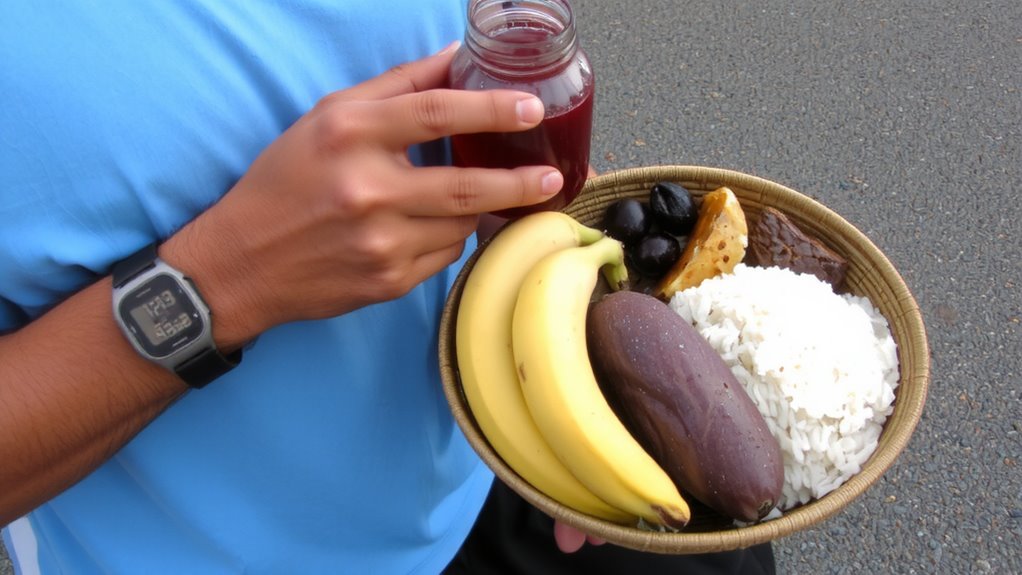
You’ve just crushed your workout, and now you’re riding that metabolic wave where insulin sensitivity is working in your favor-timing your carbs right after exercise gives you a real edge in recovery. To maximize glycogen resynthesis, aim for 0.8 to 1.2 grams of carbs per kilogram of body weight within 30 to 60 minutes post-exercise. This range supports maximum refueling, especially if you’re training multiple times a day. If you follow carb cycling, this post-workout window is the ideal time to hit higher carb targets, aligning with increased insulin sensitivity for efficient nutrient uptake. Ignoring this need can delay recovery and reduce performance in subsequent sessions. While fitness gear like compression wear or smart trackers won’t directly boost glycogen storage, understanding your body’s metabolic response helps you make smarter fueling choices. Precision in post-exercise carb intake matters more than relying on recovery gadgets alone.
Why Carbs and Protein Work Better Together

Although carbs alone kickstart glycogen replenishment, pairing them with protein enhances recovery in ways that neither nutrient achieves on its own. You benefit from carb synergy when protein stimulates insulin release, which helps shuttle glucose into muscle cells more efficiently. This nutrient interaction doesn’t just speed up glycogen storage-it also reduces muscle breakdown and supports repair. Studies show you can refill glycogen stores up to 38% faster with a carb-protein combo than carbs alone. Plus, the amino acids from protein initiate muscle protein synthesis, which is vital after intense training. While your post-workout focus may be fueling depleted muscles, don’t overlook how protein amplifies that process. Together, they create a recovery advantage that standalone carbs can’t match. For fitness recovery, this combo is more than practical-it’s strategic. Consider it essential gear for your body’s long-term performance and resilience.
Best Carb-Rich Foods for Recovery
Recovery starts with smart fuel choices, and not all carbs deliver the same punch. You need dense, nutritious sources to refuel your depleted muscles efficiently. Sweet potatoes are a top pick-packed with complex carbohydrates, they offer steady glucose release and are rich in vitamins that support metabolic recovery. Their natural sweetness makes them easy to include in post-workout meals without processed additives. Brown rice is another excellent option, providing a high carb yield per serving with added fiber that aids digestion and sustains energy. Unlike refined grains, it maintains nutrient integrity, helping your body restore glycogen more effectively. Both foods are versatile, simple to prepare in bulk, and pair well with protein-rich components. When you’re focused on recovery, selecting whole-food carbs like sweet potatoes and brown rice gives you measurable benefits-supporting replenishment without spiking insulin too drastically. Make them staples in your post-training nutrition plan.
How Muscle Glycogen Fuels Performance
Muscle glycogen acts as your body’s premium fuel source during high-intensity training, storing glucose directly in muscle tissue for rapid energy access. You rely on this stored energy when your workout demands exceed what’s available through oxygen alone. Glycogen synthesis kicks in post-exercise, restoring these depleted reserves so you’re ready for the next session. Efficient energy metabolism depends on timely carb intake, especially within the first 30–60 minutes after training. Without sufficient glycogen, performance drops fast-think fatigue, reduced power, and poor focus. Proper recovery means more than just eating; it’s about aligning nutrition with your body’s physiological response to training.
| Performance Factor | With Full Glycogen |
|---|---|
| Power Output | High |
| Endurance | Extended |
| Focus | Sharp |
| Recovery Time | Shortened |
| Energy Metabolism | Optimized |
On a final note
You’ll recover faster when you time carb intake right after exercise, since muscles replenish glycogen most efficiently within 30 to 60 minutes post-workout. Aim for 1–1.2 grams of carbs per kilogram of body weight hourly, paired with protein to boost absorption. Foods like bananas, rice, and recovery shakes work well. Combined with reliable fitness gear that tracks output and recovery, this strategy sharpens performance, supports endurance, and streamlines adaptation. It’s practical, science-backed, and effective.