Enhancing Slow-Wave Sleep Through Strategic Protein Intake Within Two Hours of Evening Workouts
You can still boost slow-wave sleep after evening workouts by timing protein intake just right. Aim for 20–30 grams within two hours post-exercise to align with circadian recovery rhythms. Whey isolate or casein hydrolysate work well-fast absorption without taxing digestion. Avoid heavy, sugary blends close to bedtime. Pair this with cool, dark sleep conditions and relaxation techniques to enhance deep sleep. The right strategy turns late training into quality recovery-there’s more to optimizing your routine than you might think.
Notable Insights
- Time protein intake within two hours post-workout to align with circadian rhythms and support muscle repair during early sleep stages.
- Consume 20–30 grams of high-quality protein to optimize recovery without impairing sleep through digestive overload.
- Choose fast-absorbing whey isolate or sustained-release casein hydrolysate to enhance overnight amino acid availability and recovery.
- Avoid heavy protein doses or sugary blends close to bedtime, as they can disrupt sleep onset and slow-wave sleep.
- Combine strategic protein consumption with cool, dark sleep environments and relaxation techniques to maximize slow-wave sleep quality.
How Evening Workouts Disrupt Deep Sleep

Why do you feel wired late at night after an intense evening workout? Your body’s temperature and adrenaline stay elevated, interfering with sleep architecture. Even though exercise benefits recovery, timing matters-especially when it disrupts slow-wave sleep. Late workouts can trigger circadian misalignment, shifting your internal clock and delaying melatonin release. That’s why you might fall asleep slower or wake up unrested. Fitness trackers often show reduced deep sleep cycles after night sessions, confirming the impact. While recovery gear like cooling mattresses or blue-light blockers help, they don’t fully offset the biological effects. You’re better off finishing intense workouts earlier. If evenings are your only option, keep them moderate and prioritize wind-down routines. The evidence suggests evening exertion, while convenient, often undermines sleep quality more than most realize, especially for those serious about performance and recovery.
Time Protein Right to Enhance Recovery

You can still support deep recovery even if your evening workout pushes close to bedtime-timing your protein intake right makes all the difference. Consuming protein within two hours post-exercise aligns with natural circadian rhythms, enhancing muscle repair during early sleep stages. This window optimizes protein timing, supporting sustained amino acid availability without disrupting sleep onset. Studies suggest that this strategy not only promotes muscle recovery but also improves sleep quality by stabilizing nighttime metabolism. Unlike late, heavy meals, a well-timed, moderate dose of protein-around 20–30 grams-reduces physiological stress, letting your body shift efficiently into restorative phases. Think of it as strategic fueling: just as fitness gear needs proper maintenance, so does your body. Proper protein timing works synergistically with recovery-focused habits, ensuring you gain the full benefits of both training and rest, without compromising either performance or sleep quality.
Choose These Proteins for Better Sleep
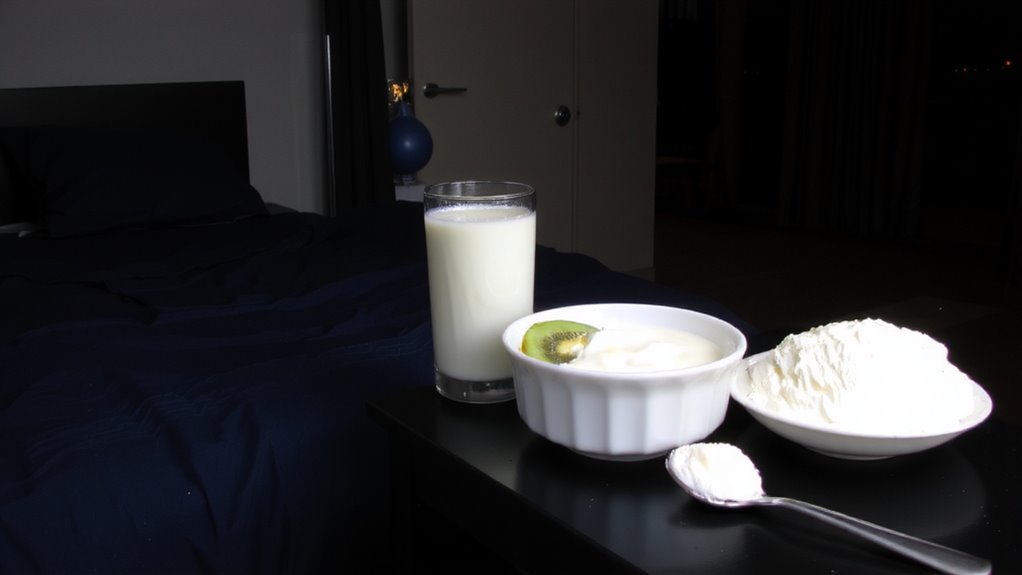
What if the key to deeper sleep after an intense evening workout isn’t just *when* you eat, but *what* kind of protein you choose? You’ll want to prioritize options that support muscle repair without taxing digestion before bed. Whey isolate is fast-absorbing, rich in leucine, and spikes muscle protein synthesis quickly-ideal if you’re eating shortly after training. But for sustained release throughout the night, casein hydrolysate offers a middle ground: it’s pre-digested for faster uptake than regular casein, yet delivers a steady trickle of amino acids. Combining both may optimize overnight recovery, though evidence leans toward casein hydrolysate for sleep-specific benefits. Your choice affects not just recovery, but sleep architecture itself. While whole foods matter, these refined proteins give you control over timing and dosage. For evening use, their purity and digestibility make them practical tools in your nightly routine.
Combine Protein With Pro-Sleep Habits
Could timing really be everything when it comes to maximizing recovery through protein intake after an evening workout? It’s not just about what you eat, but how you pair it with proven pro-sleep habits. While protein supports slow-wave sleep, optimizing your sleep environment enhances its impact. Keep your room cool, dark, and quiet-ideal conditions that signal your brain it’s time to rest. Combine this with relaxation techniques like deep breathing or progressive muscle relaxation to lower cortisol and prepare your body for deep recovery. These practices, paired with strategic protein intake, create a synergistic effect on sleep quality. Think of protein as part of a broader recovery toolkit, not a standalone fix. Consistency in both nutrition and bedtime routines leads to measurable improvements in sleep architecture and physical restoration.
Avoid These Nighttime Protein Mistakes
Why do so many people still wake up groggy despite consuming protein after their evening workouts? Often, it’s due to poor digest timing or falling for common protein myths. You might think more protein equals better recovery, but overloading at night can strain digestion and disrupt sleep. Your body needs about 20–40 grams of high-quality protein post-workout-enough to stimulate muscle repair without taxing your gut. Timing matters just as much: consuming protein too late delays gastric emptying, interfering with slow-wave sleep onset. Avoid heavy casein shakes right before bed unless digestion is slow and steady for you-this isn’t universal. Also, skip sugary protein blends that spike insulin and disturb sleep cycles. Don’t assume all supplements are equal; check labels for clean formulations. Recognizing digest timing and dispelling protein myths guarantees recovery aligns with rest, not works against it.
On a final note
You’ve likely noticed how evening workouts can delay deep sleep, but timing protein intake right helps. Consuming 20–40 grams of casein or whey within two hours post-exercise supports muscle recovery and may improve slow-wave sleep. Pair this with good sleep hygiene-cool rooms, limited screens-and avoid heavy fats or sugars. Done consistently, this strategy enhances recovery efficiency. Fitness gear like recovery trackers can validate progress, making this combo both practical and measurable.