Prehabilitation Exercises for Preventing Medial Epicondylitis in Baseball Catchers
You’re at risk for medial epicondylitis from repetitive pitch framing, so prioritize prehab with wrist flexor curls, eccentric loading, and forearm rotation drills using resistance bands. Strengthening your wrist and forearm reduces strain on the medial elbow tendon, while scapular stability exercises prevent compensatory stress. Unlike rehab, prehab keeps you game-ready. Consistent, controlled training builds tendon resilience-key for catchers facing high-volume stress. A smart routine now prevents setbacks later.
Notable Insights
- Strengthen wrist flexors with curls and squeeze ball drills to reduce medial elbow stress during pitch reception.
- Perform eccentric wrist curls to enhance tendon resilience and improve load tolerance in the forearm.
- Use resistance bands for forearm rotation exercises to improve pronation-supination control and joint stability.
- Train scapular stability with prone Y-raises to optimize force distribution and minimize elbow strain.
- Incorporate dynamic, controlled forearm exercises three times weekly to build neuromuscular coordination and prevent overuse injuries.
Why Catchers Get Golfer’s Elbow
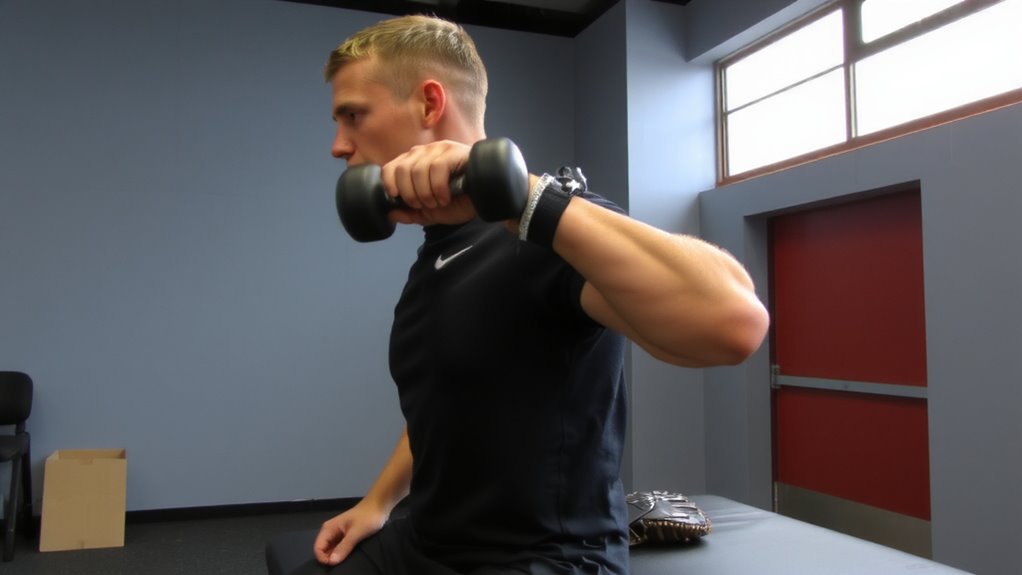
Why do so many catchers end up with golfer’s elbow when they’re not even swinging clubs? Because every time you snap your glove hand to receive a pitch, you’re placing serious anatomical stress on your forearm’s flexor-pronator mass. Think about it-game after game, hundreds of repetitive motion cycles from catching fastballs, sliders, and curveballs at high velocity. That constant strain, especially with poor mechanics or fatigue, irritates the medial epicondyle tendon. You’re not swinging a club, but your arm’s doing a similar twisting load-over and over. Unlike position players, you can’t afford to ease up; the role demands relentless precision. This repetitive motion, combined with inadequate recovery time, sets the stage for medial epicondylitis. Even with high-quality gear like compression sleeves or ergonomic mitts, those don’t fix the root cause-they just manage symptoms. You’ve got to respect the cumulative toll. Prevention starts with recognizing that your technique and workload management matter more than any recovery gadget.
Prehab Vs. Rehab: Why Prevention Wins
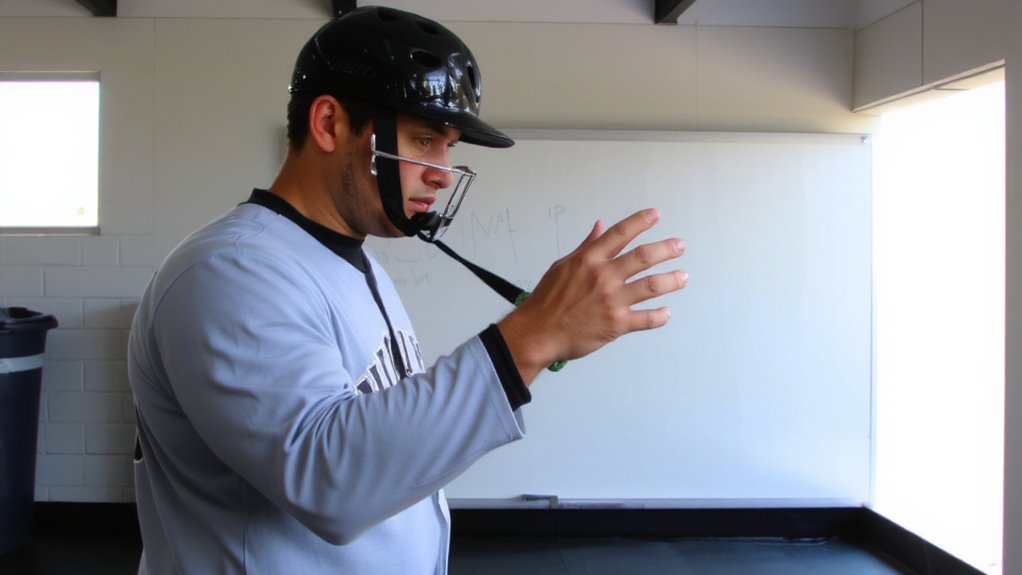
You’re already putting strain on your forearm with every catch, and once that medial epicondyle starts flaring up, you’re playing catch-up-literally and figuratively. Prehab isn’t just about injury prevention; it’s a smart investment in long-term performance enhancement. Think of it this way: rehab fixes what’s broken, but prehab keeps it from breaking.
| Approach | Outcome |
|---|---|
| Prehab | Fewer missed games |
| Rehab | Extended downtime |
| Prehab | Steady strength gains |
| Rehab | Pain management focus |
| Prehab | Consistent field readiness |
You’ll spend less time recovering and more time excelling behind the plate. Unlike rehab, which reacts, prehab acts-building resilience before stress turns into strain. When you prioritize prevention, you’re not just avoiding injury; you’re optimizing for peak performance. In the long season, that edge matters.
Strengthen Your Wrist Flexors to Protect Your Elbow
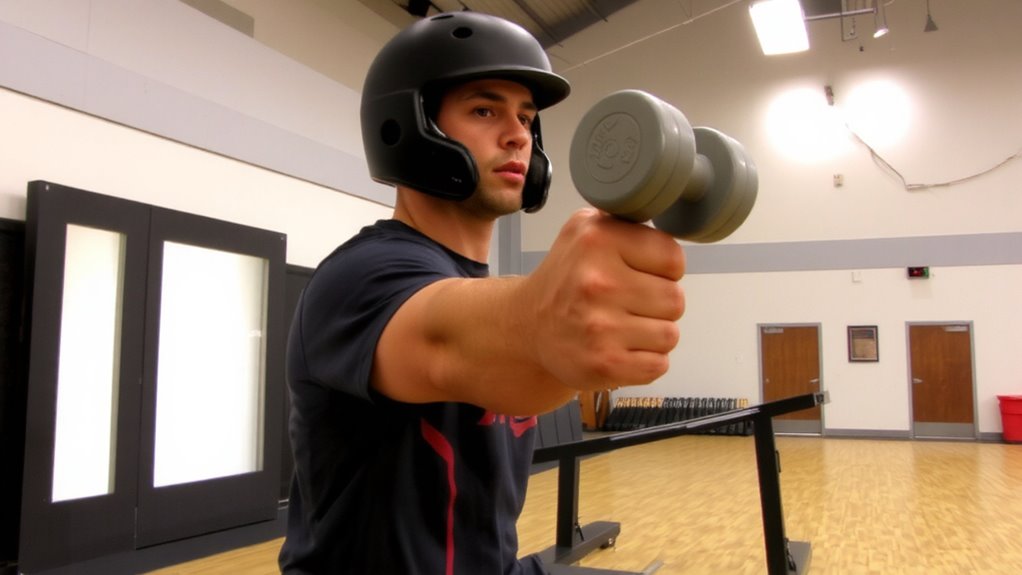
While the demands on a catcher’s arm are relentless, focusing on wrist flexor strength can considerably reduce the risk of elbow injuries, particularly ulnar collateral ligament (UCL) strain. You need strong wrist flexors to enhance forearm stability and absorb repetitive impact from pitches. Weak flexors force your elbow to compensate, increasing stress on the medial elbow-exactly where medial epicondylitis develops. Training these muscles improves grip endurance, allowing you to maintain a secure hold on the mitt during long innings without fatigue. Use exercises like wrist curls, reverse curls, and squeeze ball drills three times weekly. Gradually add resistance to build capacity without overloading tendons. This targeted strengthening isn’t just preventive-it’s foundational. With better forearm stability, you’re not only protecting your elbow but also boosting overall catching efficiency. Equipment like adjustable hand grippers or resistance bands offer reliable, progressive overload. Consistency here pays off in durability behind the plate.
Control Your Forearm Rotation
Because your ability to shift smoothly between pronation and supination affects both glove control and throwing mechanics, mastering forearm rotation is essential for catchers who face rapid directional changes behind the plate. Proper forearm stability reduces stress on the medial elbow, decreasing the risk of overuse injuries like medial epicondylitis. You need dynamic control-not just strength-so exercises should emphasize slow, deliberate movements through full ranges. Incorporating tools like resistance bands or weighted dowels can enhance neuromuscular coordination, improving both grip control and joint awareness. Rotational drills also train the brachioradialis and pronator teres, key muscles for stabilizing the forearm during fast pitch framing and throw-downs. Without this control, even strong wrists and shoulders can’t compensate for sloppy rotation. Consistent practice builds precision, allowing you to maintain alignment from glove to shoulder. Think quality over speed: controlled reps today prevent chronic issues tomorrow.
Strengthen Your Shoulder Blades to Reduce Elbow Strain
Poor shoulder blade control often manifests as elbow pain, especially when the demands of catching-repetitive blocking, quick transfers, and high-velocity throws-overload a poorly supported joint. You need scapular stability to create a strong, coordinated link between your arm and torso. Without it, forces from throws and blocks transfer abnormally to the elbow, increasing injury risk. Strengthening your shoulder blades improves rotator cuff activation, ensuring the humeral head stays centered during dynamic motion. Exercises like prone Y-raises and scapular push-ups enhance neuromuscular control, promoting efficient force distribution. These movements don’t just build endurance-they refine the timing of muscle firing patterns critical for protecting your elbow. Consistent training develops resilience, allowing you to handle the physical toll of games. Prioritize form and control over load to maximize carryover. Over time, better scapular stability reduces compensatory strain throughout the kinetic chain, especially at the medial elbow.
Use Eccentric Exercises to Build Tendon Strength
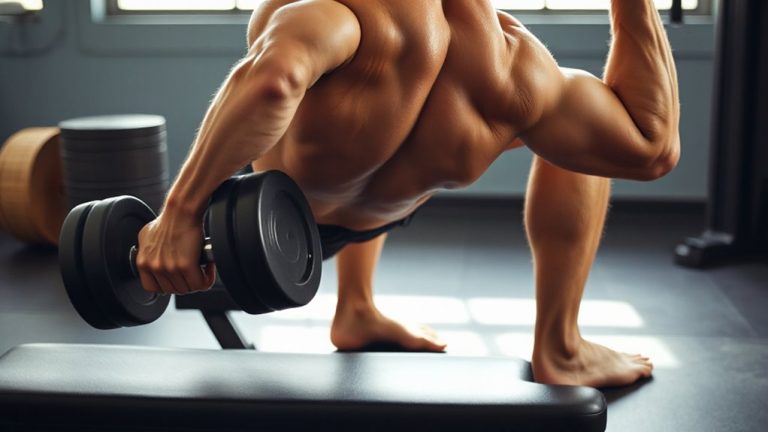
One of the most effective ways to fortify your throwing arm against the rigors of the season is through eccentric training, which targets the lengthening phase of muscle contraction to build stronger, more resilient tendons. You’ll benefit substantially from eccentric loading, especially in the forearm and wrist flexors-key areas prone to medial epicondylitis. By slowly lowering resistance after a contraction, like controlling the descent of a dumbbell during wrist curls, you stimulate tendon resilience and improve load tolerance. Studies show this type of training enhances collagen production, helping tendons adapt to repetitive stress. It’s not just about strength-it’s about durability. For catchers, whose arms endure constant strain, integrating eccentric exercises two to three times weekly can make a measurable difference. Use proper form to maximize effectiveness, and pair it with adequate rest to allow tissue remodeling. Consistency here pays off when game pressure mounts.
7-Day Prehab Routine for Catchers
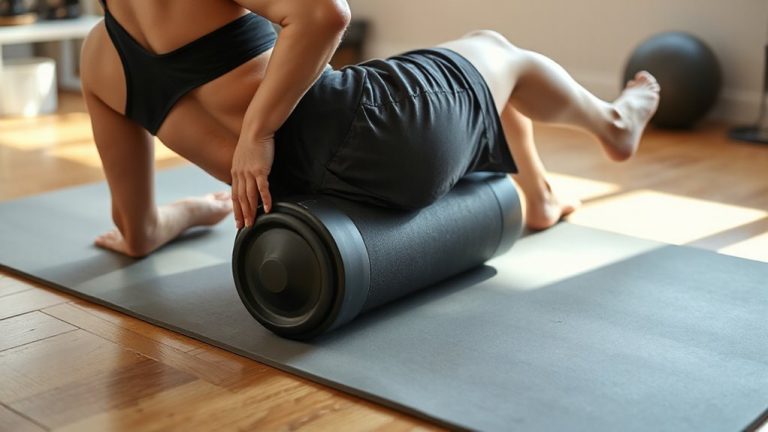
While you might be tempted to dive straight into catching drills or throwing sessions, carving out time for a structured prehab routine each day can substantially elevate your resilience and performance behind the plate. Start with dynamic warm ups-arm circles, leg swings, and torso rotations-to prime your muscles and joints for movement. Follow with injury screening checks: assess grip strength, wrist mobility, and elbow response to detect early strain signs. Incorporate resistance band work for rotator cuff activation and wrist pronation/supination drills to support medial elbow stability. These exercises, when done consistently, improve tissue tolerance and neuromuscular control. Pair your routine with recovery gear like compression sleeves or percussion tools if soreness appears, but don’t rely on them as substitutes for proper mechanics or load management. The best prevention combines smart preparation, self-awareness, and timely adjustments based on daily physical feedback.
On a final note
You’re more likely to prevent medial epicondylitis by addressing weaknesses before they become injuries. This prehab routine strengthens wrist flexors, improves forearm control, and enhances scapular stability-key for reducing elbow strain. Eccentric exercises build resilient tendons, while consistent form and recovery support long-term joint health. Investing in proper gear, like supportive braces and quality gloves, complements these efforts. Prevention, backed by smart training and recovery practices, ultimately outperforms rehab in keeping catchers on the field.