Synchronized Bilateral Pulling on Air-Resisted Rowers for Symmetric Neurological Input
You’re using synchronized bilateral pulling on air-resisted rowers to promote balanced neurological input, where both arms and legs engage in rhythmic, coordinated motion. This boosts interhemispheric communication and supports neuroplastic recovery after stroke. Air resistance gives real-time, effort-responsive feedback, smoothing movement and reducing asymmetry. Proper form, moderate intensity, and structured intervals maximize motor relearning-there’s more to discover about optimizing each session for rehabilitation gains.
Notable Insights
- Synchronized bilateral rowing promotes interhemispheric communication through simultaneous, symmetric neural activation.
- Air-resisted rowers provide scalable, real-time feedback essential for symmetric neurological retraining.
- Rhythmic, coordinated pulling enhances motor redundancy and supports neuroplastic adaptation post-injury.
- Equal force application during bilateral pulls corrects motor asymmetries and prevents compensatory patterns.
- Structured, moderate-intensity intervals on rowers reinforce neural symmetry with measurable performance feedback.
What Is Synchronized Bilateral Rowing After Stroke?
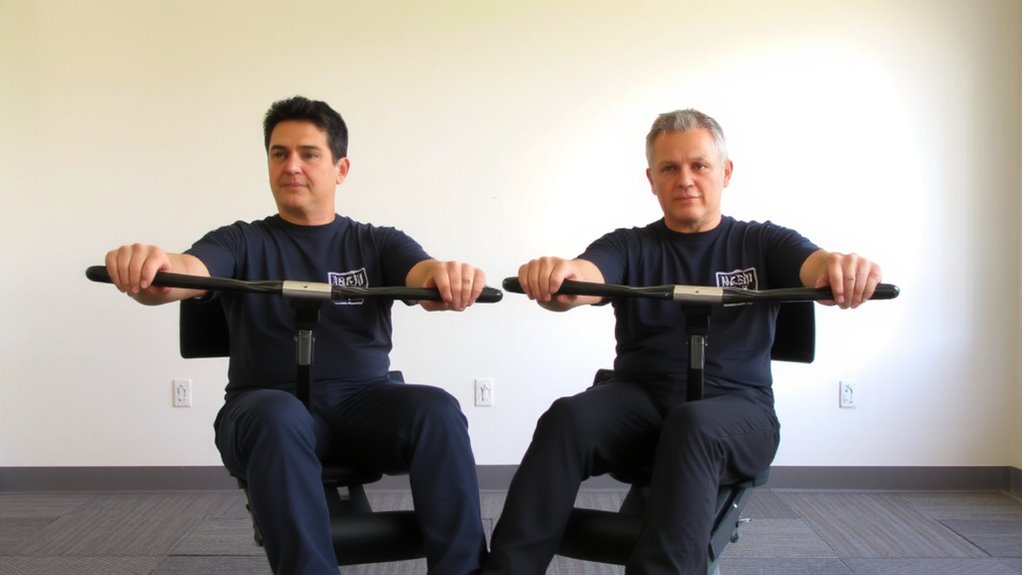
How do you regain strength and coordination after a stroke, especially when it comes to rebuilding functional movement? Synchronized bilateral rowing offers a structured way to train both sides of your body simultaneously on air-resisted rowers. This method promotes balanced motor coordination by engaging matching muscle groups in rhythmic, controlled pulls. Post-stroke assessment often reveals asymmetries in strength and timing, which this type of workout directly addresses. The consistent resistance from the flywheel challenges your neural pathways, reinforcing symmetry with each stroke. Fitness recovery isn’t just about effort-it’s about targeted, repeatable motion that supports neurological retraining. Equipment like AirBikes or ergometers provide measurable feedback, helping track progress. Unlike unilateral training, bilateral pulling reduces compensatory movement patterns. It’s durable, low-impact, and scalable for different fitness levels. With regular use, you’re not just rebuilding endurance-you’re re-establishing control, timing, and precision essential for daily function.
Why Bilateral Movement Speeds Neurological Recovery
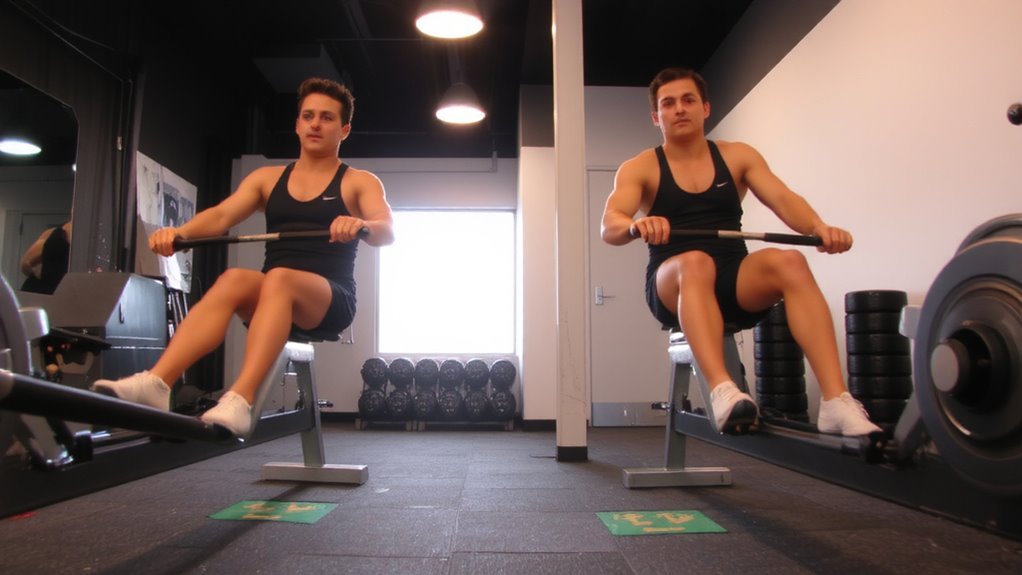
While your brain is healing after a stroke, coordinated bilateral movements-like those used in synchronized rowing-can accelerate neurological recovery by promoting interhemispheric communication. You’re engaging both hemispheres simultaneously, which strengthens neural plasticity, the brain’s ability to reorganize and form new pathways. This symmetry encourages motor redundancy, where unused neural routes can compensate for damaged ones, improving functional outcomes. Unlike unilateral exercises, bilateral pulling guarantees neither side dominates, fostering balanced activation. Studies show this leads to quicker, more durable gains in coordination and strength. The rhythmic, repetitive nature of rowing further supports neurologic retraining by providing predictable sensory feedback. When you use synchronized movements consistently, you’re not just rebuilding muscle-you’re rewiring your brain. Fitness gear like air-resisted rowers enhances this effect, though symmetric input remains the core driver. Recovery isn’t just about effort-it’s about smart, evidence-backed movement patterns that align with how your brain naturally heals. For optimal results, pairing this therapy with a durable and responsive machine such as a top-rated air-resisted rower ensures consistent resistance and smooth motion critical for rehabilitation.
How Air Resistance Strengthens Symmetric Feedback
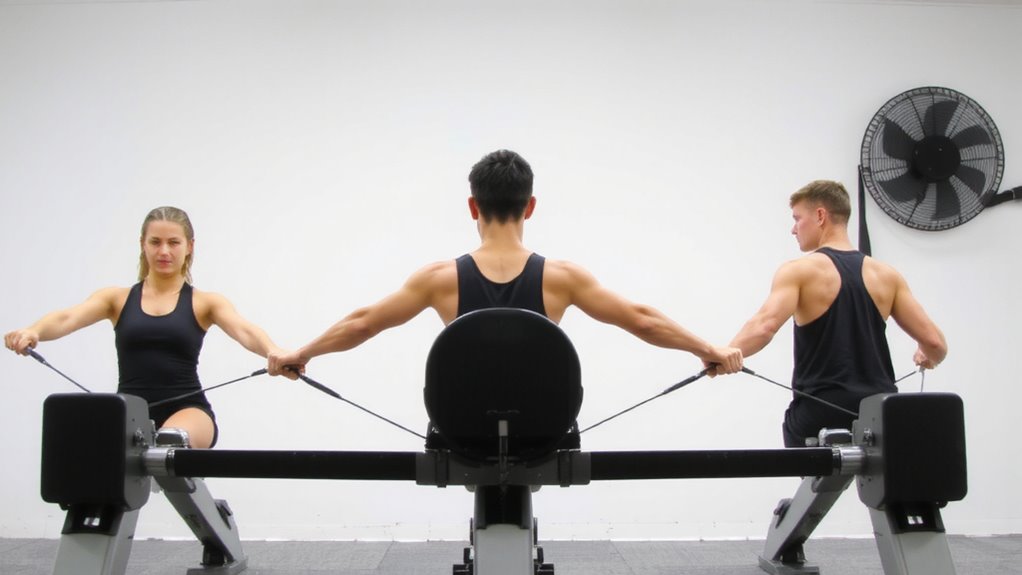
Air resistance rowers give you a dynamic form of resistance that scales naturally with your effort-pull harder, and the flywheel spins faster, increasing the load in real time. This responsiveness demands consistent bilateral engagement, making each stroke a test of coordination and balance. Unlike fixed-resistance machines, air resistance forces both sides of your body to contribute equally, or you’ll feel the imbalance in the stroke’s rhythm. That immediate feedback loop sharpens proprioception and supports neural symmetry by reinforcing mirrored motor patterns. Because the resistance adjusts instantaneously, your nervous system receives continuous, symmetrical input-critical for rebuilding interhemispheric communication after neurological injury. The flywheel’s inertia also smooths the pull, reducing jerking motions that could skew muscle recruitment. Over time, this promotes more integrated, coordinated movement. Air resistance isn’t just physically adaptive; it’s neurologically instructive, making it a valuable tool in recovery-centered fitness gear.
How to Row Safely With Stroke-Related Weakness
Because stroke-related weakness can affect coordination, muscle control, and endurance, choosing the right exercise approach is essential for safe, effective recovery-and rowing, when adapted properly, can be a smart addition to your rehab routine. Proper posture is critical: sit upright, engage your core, and avoid hunching to prevent strain and support neural re-education. Use a chair or cushion if needed to maintain hip alignment. Equipment stability matters just as much-ensure the rower is on a level surface and locked securely in place to minimize wobbling during movement. Look for models with wide footplates and adjustable resistance to accommodate limited strength. Begin with passive or assisted repetitions, letting your stronger side guide tempo while gently engaging the affected limb. Monitoring form in a mirror helps correct asymmetries early. With consistent attention to mechanics and reliable gear, rowing promotes balanced neuromuscular activation without compromising safety. For stroke survivors, selecting a durable and adjustable machine like those featured in top indoor rowing machine rankings can further enhance safety and long-term usability.
Adjusting Rowing Intensity for Rehabilitation Goals
You’ve set up your rowing routine with proper posture, stable equipment, and bilateral movement in mind, which lays the foundation for safe engagement after a stroke. Now, you can fine-tune your session using intensity modulation to match rehabilitation goals. Start with low resistance scaling-adjusting the damper setting or fan tension-so you maintain control while building endurance. Small increases in resistance let you gradually challenge weakened muscles without overexertion. Data from monitored sessions show that precise intensity modulation supports motor relearning by keeping neural load consistent yet progressive. Air-resisted rowers excel here, offering smooth, scalable resistance that responds to your effort in real time. You’re not just exercising; you’re training your nervous system to reestablish balanced output. Consistent, measured resistance scaling guarantees each stroke contributes to symmetry, not compensation. Over weeks, this approach fosters improved coordination and muscular balance, essential for functional recovery.
How Stroke Survivors Benefit From Mirrored Pulling?
Why do stroke survivors experience deeper motor relearning when each stroke mirrors the other across the body’s midline? When you engage in synchronized bilateral pulling, you activate mirror coordination-both sides of your body move in unison, strengthening communication between hemispheres. This symmetry isn’t just physical; it promotes neural symmetry, helping your brain rebuild balanced motor pathways. Studies show this mirrored movement enhances interhemispheric crosstalk, reducing abnormal muscle tone and improving coordination. Air-resisted rowers offer smooth, predictable resistance that supports repetitive, controlled motion-ideal for rehabilitation. Unlike free weights or unilateral machines, they force both limbs to contribute equally, preventing compensation. You’re not just building strength; you’re retraining your brain to recognize both sides as equally capable. Over time, this leads to more functional recovery, translating into everyday tasks. Rowers designed for rehab allow precision in resistance and stroke length, making mirror coordination measurable and progressive.
How to Structure a Rehab Rowing Session
While consistency matters in rehabilitation, how you structure each rowingトイ can make the difference between steady progress and plateaued gains. Begin with a thorough equipment check-inspect the damper setting, monitor function, and seat motion to guarantee safety and symmetry. Use session timing to divide effort: warm up for 5–7 minutes at low resistance, then perform 3–4 blocks of 4-minute intervals at moderate intensity, focusing on bilateral synchronization. Rest 90 seconds between sets, emphasizing form over speed. Cool down with 5 minutes of light rowing and stretching. Keep sessions to 30–40 minutes to avoid fatigue-induced compensation. Real-time feedback from the rower’s performance monitor helps refine neuro-muscular coordination. Proper session timing prevents overtraining while promoting neuroplastic adaptation. Consistent structuring supports motor relearning, turning each workout into a targeted neurological input session.
On a final note
You’re likely to see meaningful gains in symmetry and endurance with synchronized bilateral rowing on air-resisted machines. The drag curve offers smooth, predictable resistance that reinforces balanced neuromuscular feedback-key after stroke. When properly adjusted, these ergometers support safe, effective rehab by matching effort to recovery stage. You’ll benefit from mirrored movement patterns while minimizing compensation. Consistent, monitored use yields measurable motor improvements, making it a practical, evidence-backed tool in neurorehab.