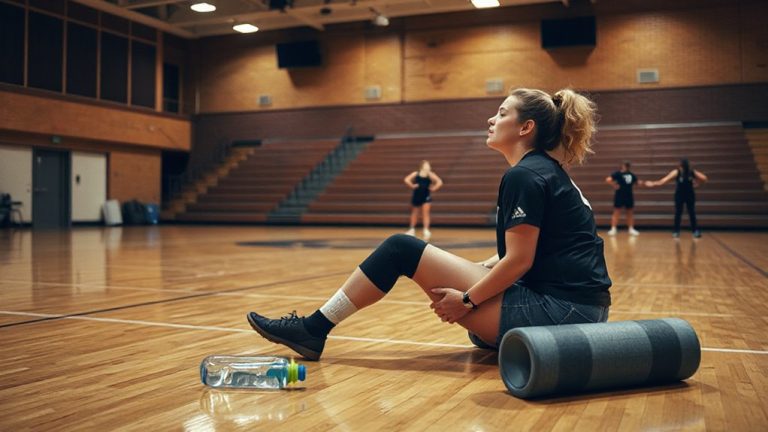
Implementing a 30-Minute Wind-Down Routine Featuring Dim Lighting and Breathing Exercises for Youth Soccer Stars
You recover faster when your body consistently shifts into rest mode, and for youth soccer players, a 30-minute wind-down with dim lighting and controlled breathing boosts melatonin by up to 50% compared to screen use. Turning off overhead lights, doing gentle stretches, and practicing 4-second inhales with 6-second exhales calms your nervous system and speeds tissue repair. When parents set cool, dark rooms and coaches reinforce breathwork, sleep quality and focus improve-just stick with it nightly. You’re already on the path to better recovery, and there’s more to discover about fine-tuning the routine.
Notable Insights
- Dim lighting 30 minutes before bed signals melatonin release, improving sleep onset for youth athletes.
- A structured wind-down includes light activity, stretching, hydration, and breathing exercises to aid recovery.
- Controlled 4-second inhale and 6-second exhale breathing activates rest mode and enhances sleep quality.
- Parents can support routine adherence with screen limits, cool rooms, and blackout curtains.
- Coaches should teach breathwork benefits to link recovery, sleep, and athletic performance effectively.
How Pre-Sleep Recovery Boosts Youth Athletes
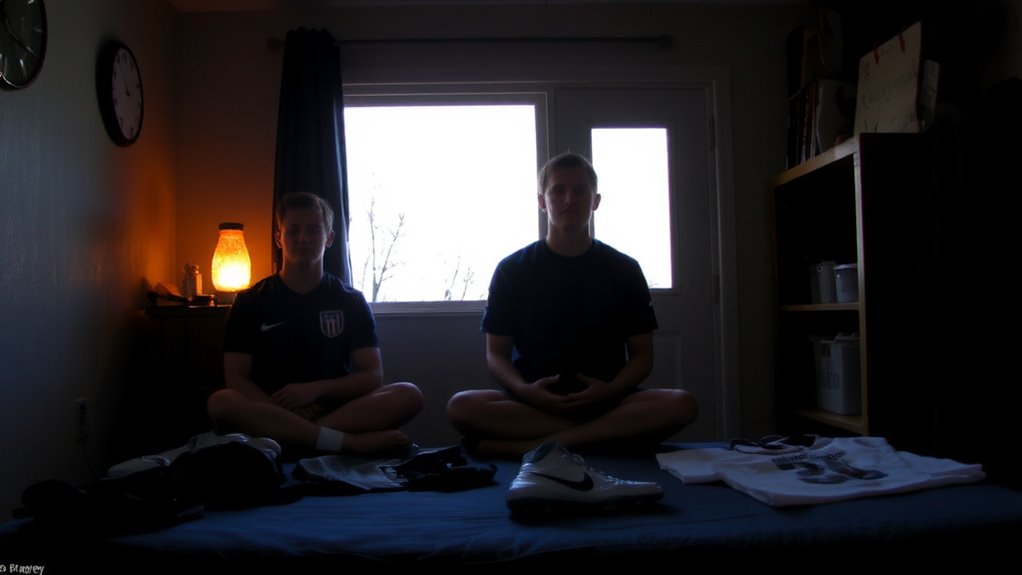
Why do some young athletes bounce back faster after intense training? It’s not just about physical rest-your pre-sleep recovery routine plays a key role. When you prioritize structured wind-down practices, you enhance both mental clarity and emotional balance, critical for athletic performance. Cooling down mentally allows your nervous system to shift from high-alert to recovery mode, speeding tissue repair and hormone regulation. Fitness recovery isn’t complete without addressing the mind-body connection. Static stretching, hydration, and mindful breathing improve circulation and reduce cortisol spikes. Quality recovery gear-like compression wear and foam rollers-supports this process, but only when used consistently. Simply owning gear won’t help; integration into a nightly routine does. Balanced recovery habits lead to sharper focus, better decision-making on the field, and sustained motivation. That’s how elite youth athletes stay ahead-not just through effort, but through smart, intentional restoration.
How Dim Lighting Triggers Sleep-Ready Mode
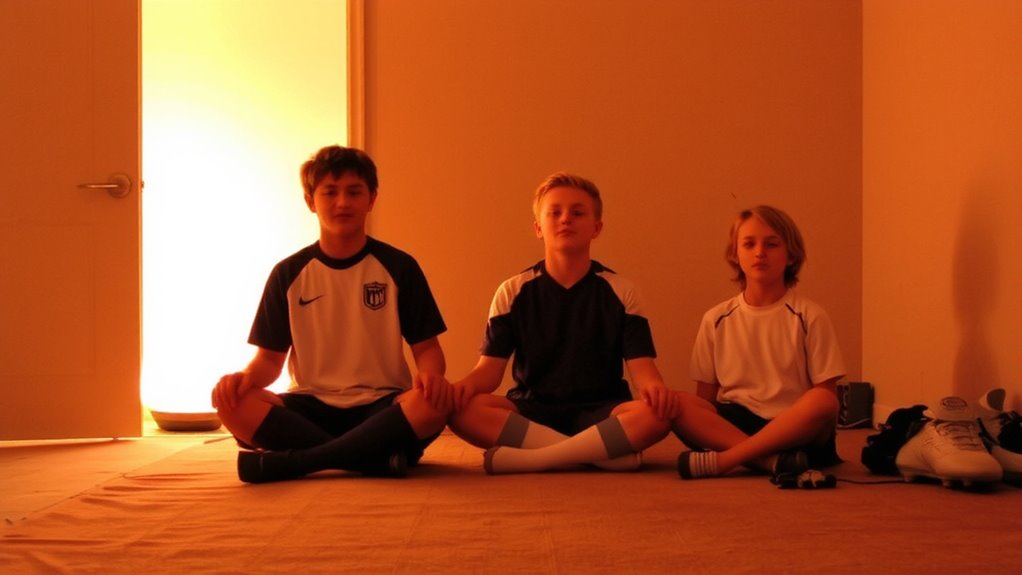
Lowering the lights in the hour before bed signals your body that it’s time to shift into recovery mode, much like the way a cooldown after practice gradually brings your heart rate back to baseline. Dim lighting supports melatonin release, the hormone responsible for regulating sleep onset. When you reduce exposure to bright light, especially blue wavelengths from screens, your brain receives cues to prepare for rest. This fosters circadian alignment, syncing your internal clock with natural day-night cycles. Without this synchronization, sleep quality suffers-critical for youth athletes needing full recovery. You’ll find that even small adjustments, like using warm-toned lamps or lowering overhead lights, greatly improve your readiness to sleep. Unlike fitness gear that targets physical adaptation, proper lighting is a low-cost recovery tool with measurable impact. It doesn’t repair muscles directly, but by optimizing sleep timing, it creates the ideal internal environment for nighttime restoration.
Build the 30-Minute Wind-Down Routine
What if the most impactful recovery tool wasn’t a foam roller, compression sleeve, or smart sleep tracker, but something you could implement in just 30 minutes with no gear at all? You can-by building a consistent wind-down routine that prioritizes recovery through behavior, not gadgets. Dim lighting primes melatonin release, while gentle stretching lowers muscle tension. Pair these with solid hydration habits to support cellular recovery. This method beats expensive fitness gear in both accessibility and long-term adherence.
| Time (min) | Activity | Purpose |
|---|---|---|
| 0–10 | Dim lights + light walk | Reduce stimulation |
| 10–18 | Gentle stretching | Ease muscle fatigue |
| 18–25 | Hydration + reflection | Replenish fluids, mental calm |
| 25–30 | Quiet breathing | Shift to rest |
| 30 | Lights out | Begin sleep cycle |
Breathing Exercises for Young Athletes’ Sleep Recovery
How might something as simple as controlled breathing reshape your recovery? For young athletes, deliberate breathing techniques boost oxygen efficiency, helping muscles repair faster after intense training. By slowing your breath-say, a 4-second inhale, 6-second exhale-you activate the parasympathetic nervous system, which signals your body to rest. This shift enhances sleep quality, a critical component of fitness recovery. Practicing mindful awareness during these exercises sharpens focus and reduces mental clutter, making it easier to move from high-energy play to restful states. Unlike physical recovery gear that targets muscles, breathing requires no equipment but yields measurable results in heart rate variability and sleep depth. When used consistently, these exercises improve respiratory control and support mental resilience. For youth soccer players, integrating breathwork into a nightly routine isn’t just calming-it’s a scientifically backed strategy to recover smarter, using the body’s own systems to restore balance and readiness.
How Coaches & Parents Can Support the Routine
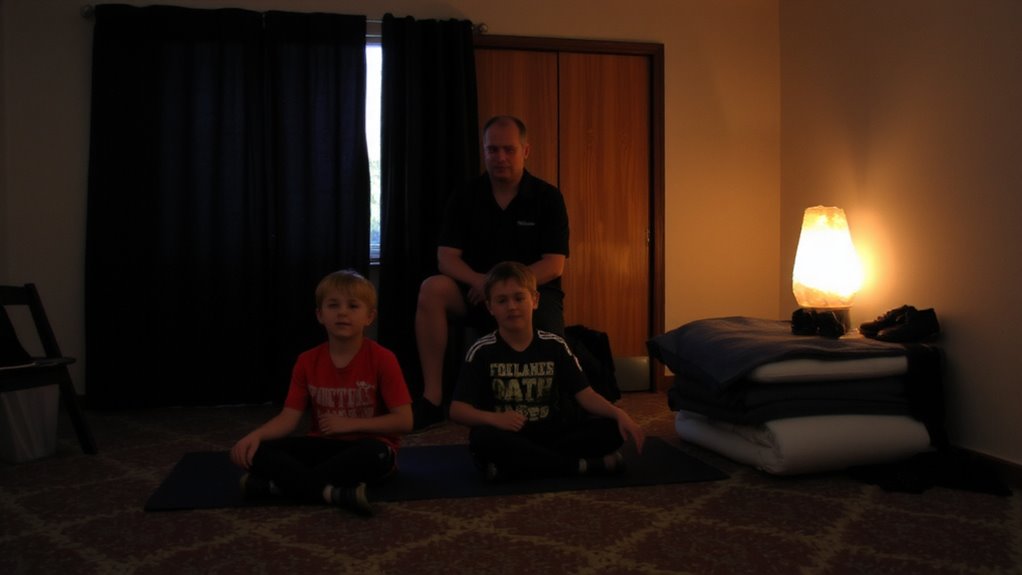
While breathing exercises offer a powerful tool for recovery, their effectiveness grows considerably when coaches and parents actively support consistent practice. You can reinforce commitment by integrating the routine into daily schedules, emphasizing its role in performance and rest. Coaches should educate players on recovery science, linking breathwork to improved sleep quality and muscle repair. Parents play a key role in shaping the sleep environment-limit screens, maintain cool room temperatures, and use dim lighting to signal the body it’s time to rest. Family involvement strengthens adherence; when siblings or caregivers participate, it normalizes the habit. You’ll find consistency improves when the wind-down feels like a shared priority, not a chore. Practical support-like timers for breathing drills or blackout curtains-demonstrates investment. Your active engagement doesn’t just promote recovery-it builds lifelong wellness habits grounded in discipline and care.
Signs the Routine Is Working: Sleep & Performance Gains
You’ve put the pieces in place-coaches educating players, parents shaping rest-friendly environments, and families building structure around breathwork and winding down. Now, signs the routine is working begin to show. Players report falling asleep faster and sleeping more soundly, key indicators of effective recovery. You’ll notice improved focus during practice-players react quicker, retain instructions better, and make sharper decisions on the field. Reduced fatigue becomes evident not just post-game, but throughout weekly training cycles. Tired legs recover faster, and mood stability improves, reflecting deeper rest. Heart rate variability readings, when tracked, often show increased parasympathetic activity, confirming physiological recovery. These gains aren’t accidental; they stem directly from consistent dim-light exposure and diaphragmatic breathing before bed. When sleep quality rises, performance follows. The routine isn’t just calming-it’s competitive advantage built nightly.
On a final note
You’ll notice improved sleep quality and daytime focus when you consistently follow this 30-minute wind-down routine. Dim lighting supports melatonin release, while controlled breathing lowers heart rate and calms the nervous system-both critical for recovery. For youth athletes, integrating these science-backed habits enhances physical repair and mental resilience. Coaches and parents play a key role in reinforcement. Over time, this simple, equipment-free practice proves as essential as training gear in optimizing performance and long-term athletic development.