Utilizing Cold Showers to Accelerate Hormonal Responses and Adaptation Post-Training Sessions
You trigger a sharp norepinephrine surge when you take a cold shower right after training, sharpening focus and supporting mood. This consistent stimulus enhances hormonal efficiency over time, helping your body adapt to physical stress. Cortisol stays modulated, avoiding spikes while maintaining essential function. At 10–15°C for 2–5 minutes, you get measurable recovery benefits without extreme protocols. It’s practical, accessible, and effective-especially when timed within 15 minutes post-cooldown. There’s more to optimizing this routine than temperature alone.
Notable Insights
- Cold showers activate the sympathetic nervous system, triggering norepinephrine release for enhanced focus and mood post-exercise.
- Regular cold exposure elevates baseline norepinephrine levels, supporting hormonal adaptation to physical stress over time.
- Immersion immediately after cooldown optimizes hormonal responses by aligning with post-workout metabolic and circulatory shifts.
- Short durations of 2–5 minutes at 10–15°C effectively stimulate hormonal changes without impairing muscle adaptation.
- Consistent cold showers improve endocrine efficiency, helping regulate cortisol and enhance recovery from repeated training stress.
How Cold Showers Speed Up Post-Workout Recovery
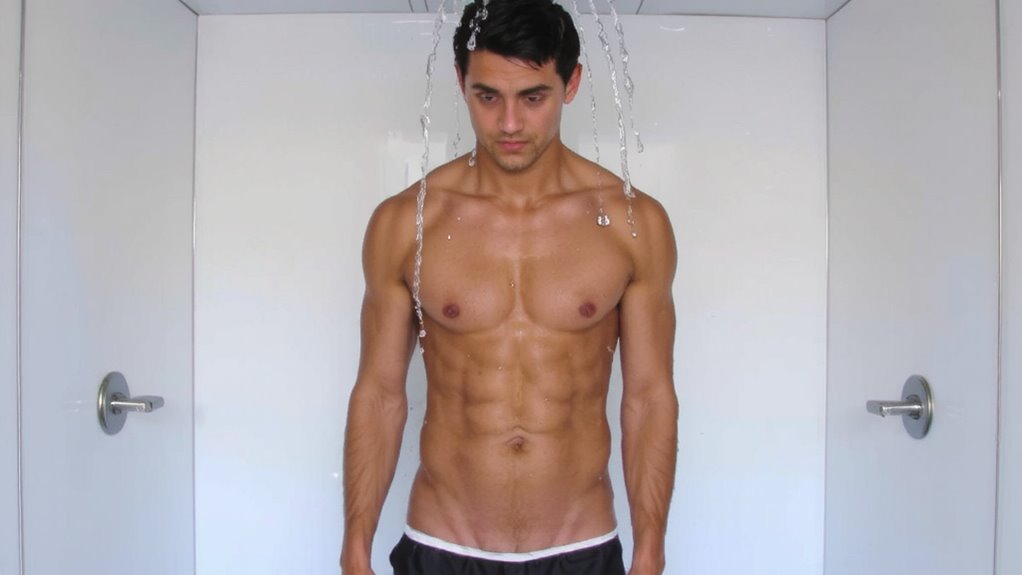
While your muscles are still warm and inflammation beginning to set in after a tough session, hopping into a cold shower can make a real difference in how quickly you bounce back. The cold constricts blood vessels, reducing blood flow to overworked areas, which helps minimize swelling and flush out metabolic waste like lactic acid. This temporary vasoconstriction, followed by rebound dilation when you warm up, acts like a pump for circulation-enhancing recovery. You’ll notice reduced muscle soreness in the hours and days after, especially following intense resistance or endurance work. Though basic, cold showers are far more accessible than cryotherapy chambers, making them a practical recovery “tool.” For serious trainees, consistency matters more than extreme temperatures. A 2–5 minute rinse at 10–15°C post-workout, combined with proper hydration and sleep, supports faster adaptation. It’s not a magic fix, but when used smartly, it’s a solid upgrade to recovery routines.
What Science Says About Cold Showers and Hormones
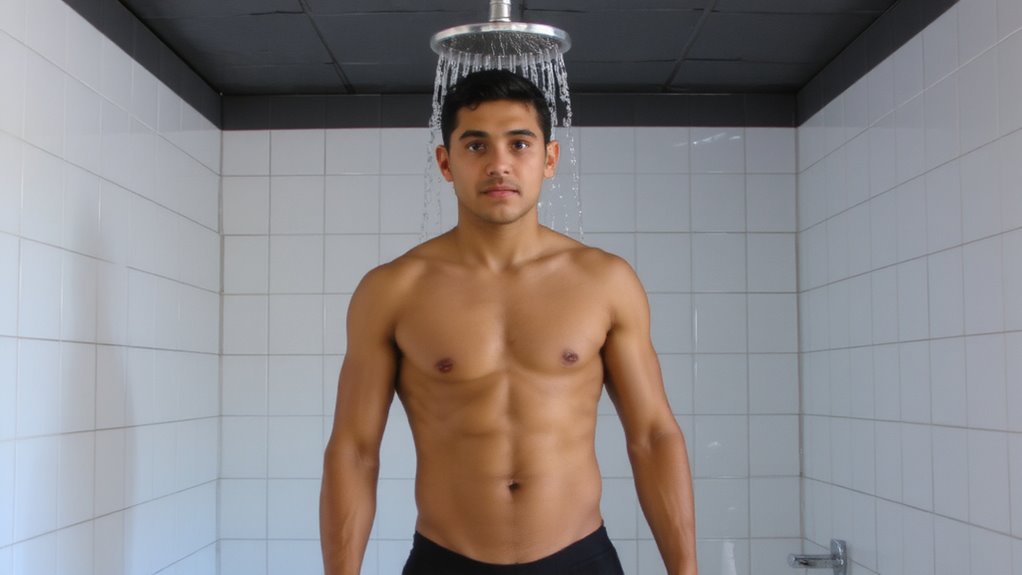
If you’re aiming to optimize recovery, you might be surprised how cold showers influence key hormones tied to stress and metabolism. Exposure to cold activates your sympathetic nervous system, triggering a rush of norepinephrine-this sharpens focus and supports hormonal balance. Studies show regular cold exposure can elevate baseline levels of this hormone, enhancing alertness and mood. Cold water immersion also modulates cortisol, helping your body manage stress adaptation without suppressing necessary stress responses. Over time, this trains your endocrine system to respond more efficiently to physical demands like intense training. You’re not just cooling down-you’re signaling your body to recalibrate hormone output for better recovery and resilience. While individual responses vary, the evidence points to cold showers as a practical tool to support endocrine function. When used consistently, they promote long-term stress adaptation and contribute to overall hormonal balance-key for athletes prioritizing recovery and performance without relying on supplements or gear.
Find Your Ideal Cold Shower Length and Temp
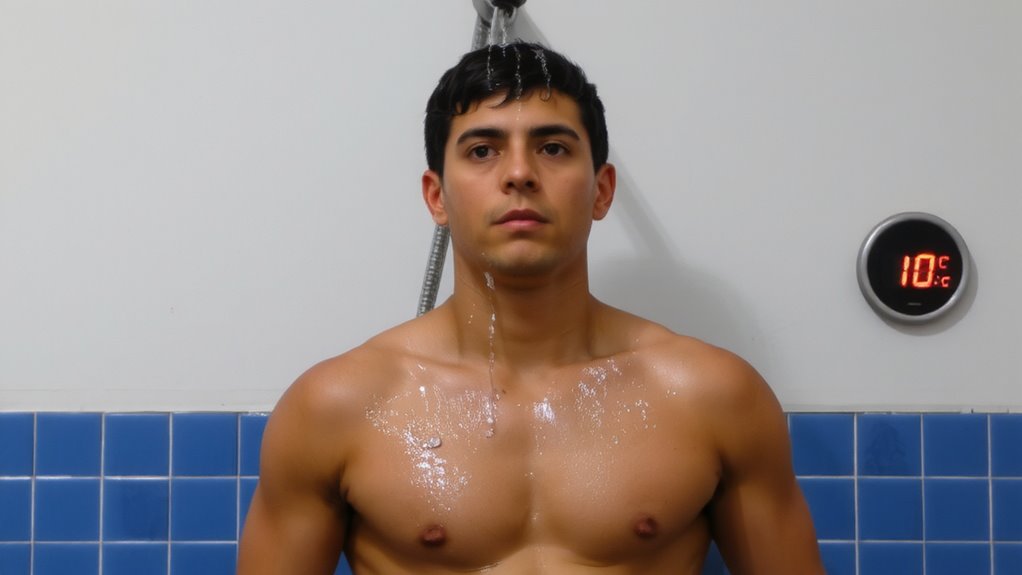
How long should your cold shower last, and just how cold does it need to be to actually aid recovery? It depends on your tolerance and training intensity, but research suggests starting conservatively and progressing. Shower timing is essential-too short and you won’t trigger adaptation; too long and you risk tissue stiffness. Most benefits occur between 2 to 5 minutes at 50–59°F (10–15°C). Water pressure also matters-it should be steady to enhance circulation without bruising skin. Here’s a quick guide:
| Experience | Duration | Temperature |
|---|---|---|
| Beginner | 2 min | 59°F (15°C) |
| Intermediate | 3–4 min | 55°F (13°C) |
| Advanced | 4–5 min | 50°F (10°C) |
| Elite | 5 min | 50°F (10°C) |
Adjust based on recovery needs, gear performance, and personal response.
When to Take a Cold Shower for Best Results
Though timing your cold shower might seem like a minor detail, getting it right can considerably influence recovery quality and training adaptation. Ideal shower timing means taking your cold shower immediately after your post exercise cooldown, once your core temperature has safely lowered. This sequence helps preserve the acute inflammatory signals from training while enhancing circulation and hormonal responsiveness. Waiting too long-more than 10–15 minutes-can reduce the effectiveness of the cold exposure. For strength and hypertrophy training, immediate post-cooldown immersion supports muscle recovery without blunting long-term adaptation. Endurance athletes also benefit from prompt cold exposure, as it accelerates autonomic recovery. You’ll maximize results by treating the cold shower as a deliberate recovery tool, not just a refreshment. Consistency in timing improves your body’s response, making this small step a high-impact recovery habit you can rely on.
Cold Showers vs. Ice Baths: Which Is Better for Recovery?
What sets cold showers and ice baths apart when it comes to post-workout recovery isn’t just temperature-it’s intensity, accessibility, and how each method interacts with your body’s repair systems. A cold exposure comparison shows ice baths offer deeper, more uniform tissue cooling, which can enhance recovery method efficacy by reducing inflammation more effectively than showers. But they demand equipment, space, and time to prepare. Cold showers, while less intense, are far more accessible-no special gear, just willpower and a strong faucet. They still trigger vasoconstriction and hormonal responses beneficial for recovery. For most athletes, the practicality of showers outweighs the marginal gains of baths. Unless you’re training at elite levels, the recovery method efficacy of cold showers is more than sufficient. They integrate seamlessly into daily routines and maintain consistency, a key often overlooked in recovery strategies.
How to Stick to Cold Showers After Every Workout
Consistency often separates effective recovery from fleeting habits, and sticking to cold showers after every workout demands more than willpower-it requires strategy. Common consistency challenges include discomfort, forgetfulness, and fatigue. Overcome them through deliberate mindset shifts: view cold exposure as essential recovery, not punishment. Pair the shower with a post-workout cue, like stretching or hydration, to anchor the habit. Gradually decrease water temperature to build tolerance. Track progress weekly to reinforce commitment.
| Strategy | Benefit | Practical Use |
|---|---|---|
| Immediate post-workout timing | Maximizes vasoconstriction for recovery | Start within 5 minutes of finishing |
| Habit stacking | Reduces mental resistance | Link shower to post-lift protein intake |
| Gradual exposure | Enhances adherence | Begin at lukewarm, drop 2°F every few days |
| Tracking | Encourages long-term mindset shifts | Use app or journal to log sessions |
On a final note
Cold showers can boost post-workout recovery by sharpening hormonal responses and reducing inflammation, making them a practical tool for adaptation. While not as intense as ice baths, they’re easier to maintain and still effective when timed right-ideally within 20 minutes post-exercise. For best results, aim for 2–5 minutes at 50–60°F. Paired with proper fitness gear like moisture-wicking towels and reliable thermometers, cold showers offer a science-backed, accessible recovery method worth integrating into most routines.