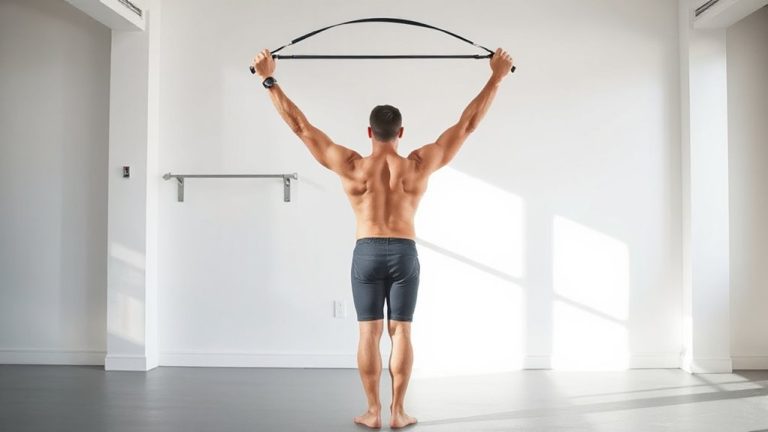
Designing a Prehabilitation Program for Overhead Athletes With Scapular Dyskinesis
You need to correct scapular dyskinesis early to protect your shoulder during overhead motions. Focus on retraining serratus anterior and lower trapezius activation with low-resistance, high-rep exercises like wall slides and prone Y-raises. Address muscle imbalances by reducing upper trap dominance through proper cueing and neuromuscular control. Improve thoracic mobility with foam rolling and segmental drills. Integrate dynamic, throwing-specific movements to reinforce proper scapulohumeral rhythm-your performance and joint health will improve as motor patterns reset.
Notable Insights
- Address scapular dyskinesis by retraining serratus anterior and lower trapezius activation to restore proper scapular rhythm.
- Use low-resistance, high-repetition exercises to build muscular endurance for sustained overhead performance.
- Correct muscle imbalances by reducing upper trapezius dominance through targeted neuromuscular re-education.
- Incorporate thoracic spine mobility work to improve segmental motion and reduce compensatory movements.
- Integrate scapular stability exercises like wall slides, prone Y-raises, and push-up plus into prehab routines.
Spot Scapular Dyskinesis Before Injury Strikes
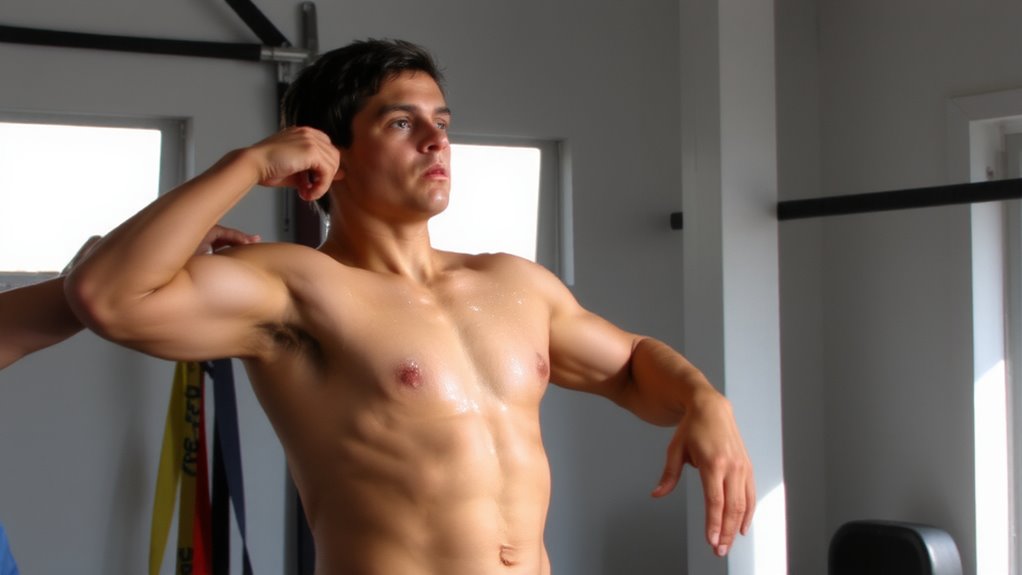
While you’re focusing on strength and performance, don’t overlook the subtle warning signs your body gives-scapular dyskinesis is one of them. This altered movement pattern often shows up during overhead motions, where poor scapular positioning disrupts shoulder mechanics. You might notice winging or tipping of the shoulder blade, especially during lifts or throws. These changes usually point to faulty muscle activation, with the serratus anterior and lower trapezius underperforming while compensatory muscles take over. Left unchecked, this imbalance increases joint stress and raises injury risk. Recognizing these early signs allows timely intervention. Fitness recovery tools like resistance bands and feedback mirrors help detect movement flaws, but consistent self-assessment is key. Preventative gear, such as posture-correcting shirts, offers cues but shouldn’t replace proper neuromuscular control. Watching your scapular positioning during routine exercises reveals more than numbers on a scale-smart training means listening to your body before pain starts.
Fix Shoulder Blade Control in Overhead Athletes
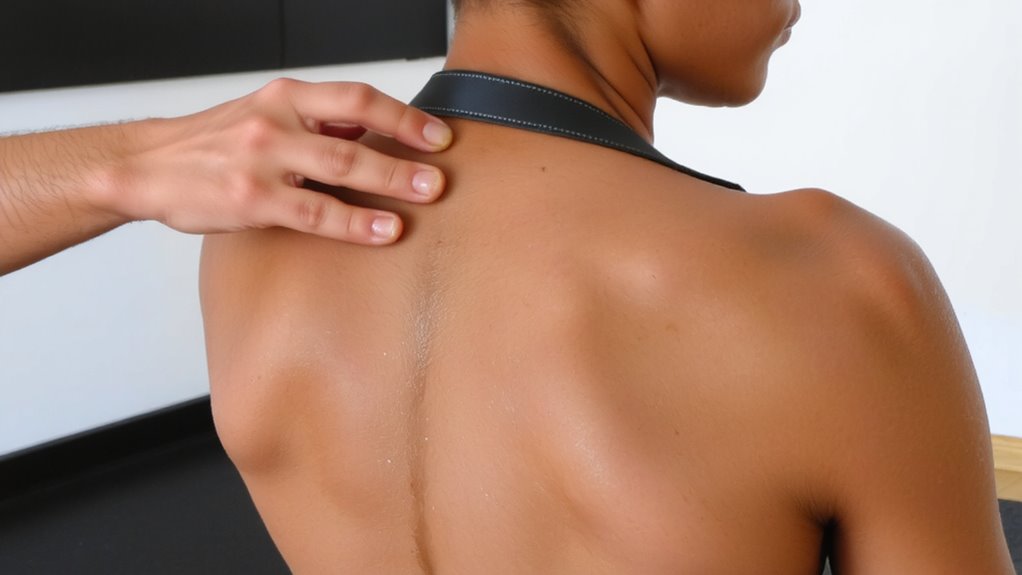
You’ve learned to spot the red flags of scapular dyskinesis-now it’s time to take action and rebuild proper shoulder blade control. Restoring scapular rhythm is essential for overhead athletes, as faulty movement patterns increase injury risk and reduce performance. You need precise coordination between the scapula and humerus, and that starts with neuromuscular re-education. Focus on exercises that challenge stability while promoting timed muscle activation. Your program must prioritize muscular endurance over pure strength-repetitive overhead motion demands fatigue-resistant scapular stabilizers. Scapular rhythm improves when serratus anterior, lower trapezius, and rhomboids work in sync, minimizing winging and tipping. Use low-resistance, high-repetition sets to train control through full range of motion. Treadmill walking with arm elevation drills or prone Y-raises build endurance while reinforcing motor patterns. Consistent, mindful practice yields measurable improvements in control and joint efficiency-key for long-term shoulder health.
Strengthen Serratus Anterior to Prevent Winged Scapula
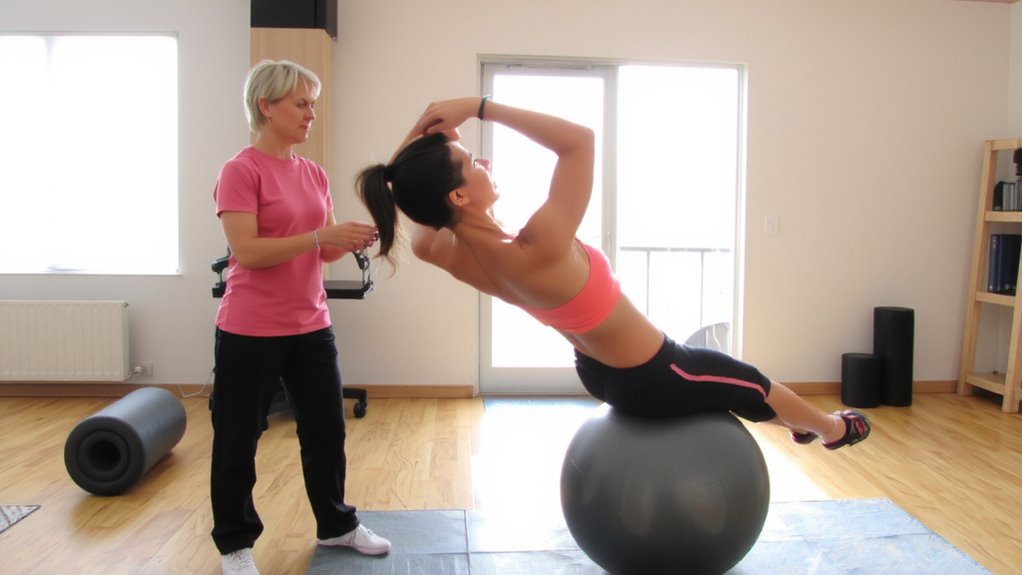
The serratus anterior is the unsung hero of shoulder stability, and without it, overhead athletes risk developing a winged scapula-a telltale sign of weak scapulothoracic control. You need this muscle to maintain proper scapular stability during overhead motions, especially in sports like swimming or baseball. When it’s underactive, your shoulder blade protrudes, compromising power and increasing injury risk. Strengthening it isn’t just about force production-it’s about muscular endurance, allowing sustained activation through repetitive motions. Exercises like the scapular punch in a push-up plus position or serratus wall slides work well because they isolate protraction while promoting endurance. These moves integrate easily into prehab routines and don’t require specialized gear, though resistance bands can enhance difficulty. Consistent, low-load training over time builds the endurance needed for functional stability. Ignoring this muscle undermines your entire shoulder mechanic chain, no matter how strong other muscles seem.
Balance Scapular Muscles: Lower Trap vs. Upper Trap
Why do so many overhead athletes struggle with shoulder fatigue despite solid strength training? The answer often lies in scapular muscle imbalance-specifically, an overpowering upper trapezius dominating the weaker lower trapezius. This muscle dominance disrupts ideal scapular positioning during overhead motion, increasing joint stress. Poor neuromuscular timing further compounds the issue, as the lower trap fires too late or too weakly to stabilize the shoulder blade. Restoring balance isn’t just about strength-it’s about retraining coordination.
| Muscle | Role in Scapular Control |
|---|---|
| Upper Trap | Elevates and upwardly rotates |
| Lower Trap | Depresses and upwardly rotates |
| Serratus Ant | Protracts and stabilizes |
Cueing proper activation and integrating low-load endurance drills improves timing and reduces fatigue long-term.
Unlock Thoracic Spine for Better Shoulder Motion
Don’t overlook how stiff segments in your upper back limit overhead reach-no matter how well you’ve balanced your scapular muscles. Restricted thoracic mobility directly compromises shoulder function, reducing range and increasing injury risk. When your mid-spine lacks motion, your body compensates through the neck or lumbar region, disrupting spinal alignment. You need segmental movement, especially at T4–T8, to allow full overhead arm elevation. Soft tissue work and joint mobilizations can restore motion, but active drills-like thoracic rotations and foam rolling-are key for lasting change. These moves enhance neuromuscular control, improving not just flexibility but dynamic stability. Without addressing thoracic mobility, even the best scapular strengthening falls short. Think of your spine as the foundation: misaligned or stiff, and everything above it suffers. Prioritize mobility drills early in prehab to build a stable, aligned base for overhead motion. It’s not just about flexibility-it’s functional readiness. A high-density foam roller can enhance the effectiveness of thoracic soft tissue release during these drills.
Integrate Throwing-Specific Drills Into Prehab
How do you bridge the gap between rehab exercises and actual performance on the mound or court? You integrate throwing-specific drills into prehab. These drills aren’t about max effort; they’re about retraining movement patterns with precision. By incorporating medicine ball throws and resisted band rotations, you build rotational power safely while maintaining scapular control. Focus on controlled, low-load repetitions that mimic your sport’s demands. This builds neuromuscular familiarity without overloading healing tissues. Equally important is developing deceleration control-the ability to manage arm speed after release. Use eccentric-focused tubing drills to strengthen the posterior cuff and scapular stabilizers during follow-through. These prehab drills should progress gradually, matching your functional improvements. When done right, they turn isolated strength gains into dynamic resilience. The result? A smoother shift from rehab to competition-and lower injury risk when you return to full throwing.
On a final note
You’ve addressed scapular dyskinesis head-on, targeting muscle imbalances and mobility limits before they derail performance. A well-designed prehab program boosts control, strength, and joint alignment, especially with serratus anterior activation and thoracic spine mobility. Throwing-specific drills bridge rehab to sport demands. Consistent use of proper recovery gear-like resistance bands and foam rollers-supports gains, but technique and progression matter most. Stick with it, and you’ll see fewer injuries and sharper overhead mechanics.