Cupping Therapy Basics: Utilizing Ancient Chinese Practices to Alleviate Muscular Soreness
You’re using cupping therapy to ease muscular soreness by boosting circulation and loosening tight tissues with controlled suction. Rooted in ancient Chinese medicine, it lifts skin and muscles, increasing blood flow to speed recovery. Dry cupping is your safest bet-non-invasive and effective-while wet cupping carries higher risk. Sessions leave temporary marks but are generally comfortable. If you’re dealing with chronic tension and want a drug-free recovery tool, this could be worth exploring further.
Notable Insights
- Cupping therapy originated in ancient Chinese medicine and uses suction to relieve muscular soreness and improve energy flow.
- The therapy increases blood circulation to sore muscles, delivering oxygen and nutrients that support recovery and reduce inflammation.
- Dry cupping, the most common form, uses suction only and is safe for alleviating muscle tension without breaking the skin.
- Suction from cups lifts skin and tissues, helping release tight muscles and break up chronic pain patterns effectively.
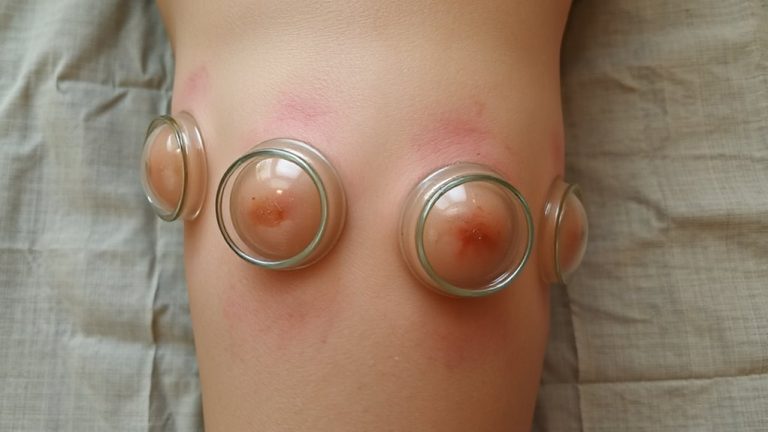
- Circular marks may appear after treatment due to broken capillaries but fade within days and are typically not painful.
What Is Cupping Therapy?
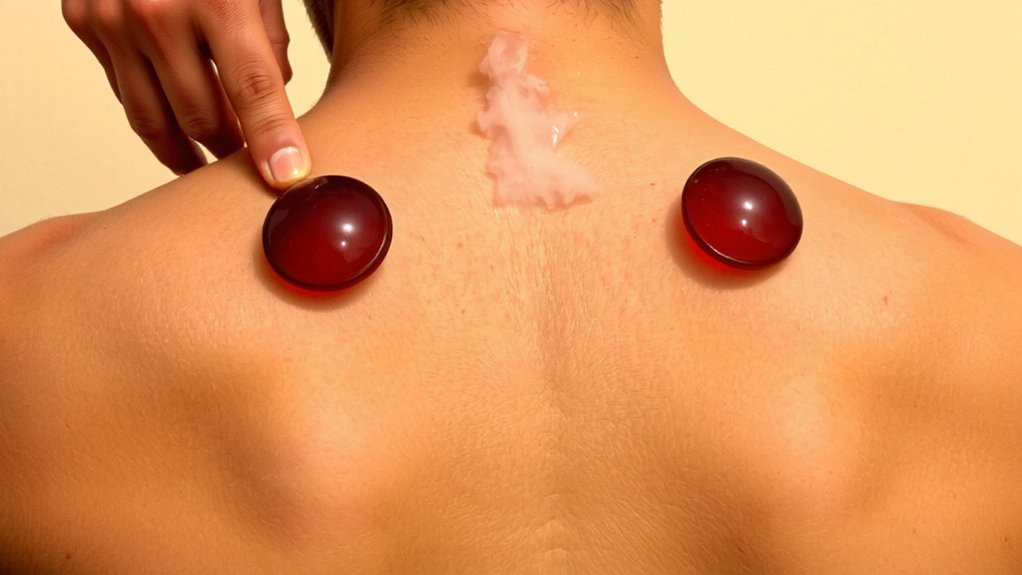
While you may have seen those distinctive circular marks on athletes or celebrities, cupping therapy is more than just a trendy recovery tool-it’s a practice with roots stretching back thousands of years. Its history origins trace to ancient Chinese, Egyptian, and Middle Eastern medicine, where healers used hollowed-out animal horns or bamboo to draw toxins from the body. You now use modern silicone, glass, or plastic cups, designed for better suction control and hygiene. The cultural significance of cupping remains strong, especially in traditional Chinese medicine, where it’s believed to balance qi and improve circulation. Though scientific evidence is still evolving, many find it valuable as a complementary method within fitness recovery regimens. When paired with proper recovery gear like massage tools or foam rollers, cupping fits into a holistic approach-offering a centuries-old technique adapted for today’s active lifestyles. For those interested in starting at home, high-quality cupping sets are widely available and designed for safe, effective self-application.
How Does Cupping Therapy Relieve Pain and Speed Recovery?
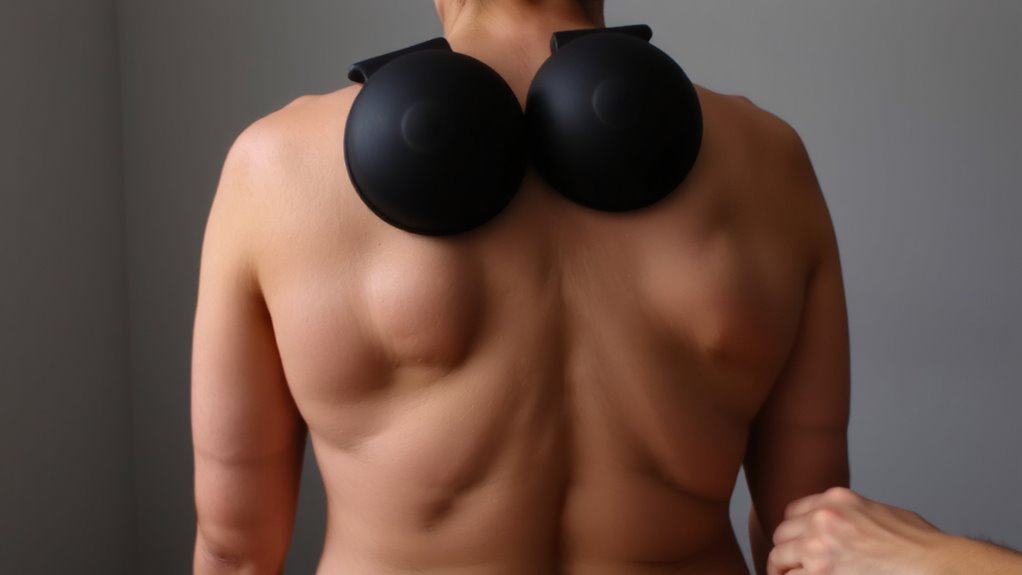
Because cupping creates negative pressure on the skin and underlying tissues, it’s believed to increase blood flow, loosen tight muscles, and reduce inflammation-all of which play a role in pain relief and faster recovery. You’ll likely notice improved flexibility and tenderness in treated areas, thanks to enhanced circulation that delivers oxygen and nutrients essential for tissue repair. The therapy supports pain reduction by interrupting chronic tension patterns, which can mimic the effects of deep-tissue massage. Inflammation control is another key benefit, as cupping may encourage the release of anti-inflammatory biomarkers. While research remains mixed, many users report quicker recovery times post-exercise, making it a practical addition to fitness recovery routines. When paired with proper hydration and rest, cupping doesn’t replace but complements other recovery tools-like foam rollers or compression gear-offering a low-tech, non-invasive option for sustained muscle health. For those interested in trying this therapy at home, a high-quality cupping set can provide consistent results and ease of use.
What Are the Different Types of Cupping Therapy?
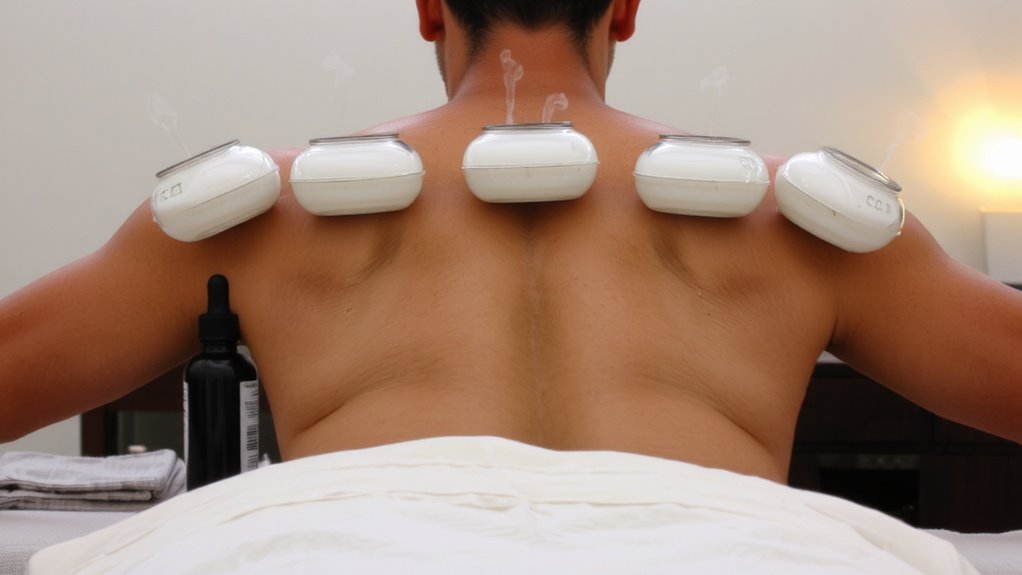
How do the various types of cupping therapy differ, and which might work best for your recovery routine? Dry cupping uses suction only, drawing skin upward into the cup to ease muscle tension and improve circulation-ideal if you’re seeking non-invasive recovery. It’s commonly used by athletes for soreness relief and pairs well with fitness recovery protocols. Wet cupping, on the other hand, combines suction with controlled, minor bloodletting. After removing the cup, small incisions are made to draw out a small amount of blood, believed to release toxins. While some find wet cupping more potent, it’s not for everyone-especially if you’re wary of minor skin breaks. Dry cupping is generally safer, more accessible, and easier to integrate into regular routines. Both methods stem from traditional Chinese medicine, but dry cupping aligns better with modern fitness gear and self-care practices. For those interested in trying this at home, a high-quality cupping therapy set can make the process safer and more effective.
What Happens During a Cupping Session?
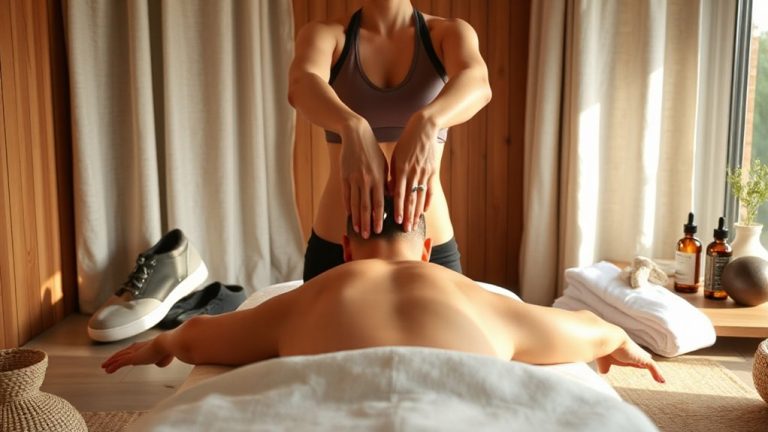
You’ve likely seen the circular marks on athletes’ backs or heard friends describe the suction sensation of cupping therapy, but what actually takes place during a session? You lie comfortably while a practitioner applies cups to specific areas, creating suction typically via heat or a hand pump. The vacuum lifts your skin slightly, stimulating blood flow and targeting muscle tension. Session duration usually ranges from 10 to 20 minutes, depending on your needs and the method used. As the cups pull at your tissue, you may feel a tight, warm sensation, but it’s generally not painful. Skin response often includes red or purple circular marks caused by broken capillaries-these aren’t bruises and fade within days. While modern fitness recovery tools like compression gear offer similar circulation benefits, cupping provides a unique tactile therapy rooted in tradition. It’s a hands-on option worth considering for recovery and muscular relief.
Who Should Avoid Cupping Therapy?
While cupping can offer notable relief for muscle tension and support recovery, it isn’t suitable for everyone. You should avoid the practice if you have bleeding disorders, as the suction can cause bruising or prolonged bleeding. Pregnant women are also advised to skip cupping, particularly on the abdomen and lower back, due to potential risks and limited research on fetal safety. If you’re on blood thinners or have sensitive skin conditions like eczema or psoriasis, you’re better off steering clear. Even if you use top-tier recovery gear, cupping adds mechanical stress that your body might not tolerate well under these conditions. While the therapy works well for many athletes, its benefits don’t outweigh the risks in high-sensitivity cases. Always consult your healthcare provider before starting, especially when managing pre-existing conditions.
On a final note
You’ll find cupping therapy offers a grounded option for easing muscular soreness, drawing from centuries of practice. While it may leave temporary marks, many report quicker recovery and reduced tension. Used alongside proper hydration and rest, it complements modern recovery tools like foam rollers or massage guns. Though not for everyone, particularly those with skin conditions or blood disorders, it’s a low-risk choice when done correctly.