Improving Recovery Time With the Right Nutrition for Sports Injuries
You’re cutting recovery time when you fuel your body with the right nutrients after a sports injury. Protein helps rebuild tissue, while vitamins C and D, zinc, and omega-3s reduce inflammation and support repair. Hydration boosts cellular function, and avoiding sugary, processed foods keeps inflammation low. Think of nutrition as foundational-you’re not just healing, you’re enhancing how recovery gear like compression sleeves and foam rollers work. There’s a smarter way to recover, and it starts on your plate.
Notable Insights
- Consume 1.6–2.2 g/kg of protein daily, spreading intake across meals to optimize tissue repair and muscle recovery.
- Include antioxidant-rich foods like berries, spinach, and turmeric to reduce inflammation and support cellular healing after injury.
- Pair vitamin C-rich foods with protein to enhance collagen synthesis for stronger tendon and ligament regeneration.
- Stay hydrated with balanced electrolytes to improve nutrient delivery, joint lubrication, and metabolic waste removal.
- Avoid sugary and processed foods, which increase inflammation and impair immune function during recovery.
How Nutrition Speeds Up Sports Injury Recovery
While your body works hard to repair damaged tissues after a sports injury, what you eat plays a critical role in how quickly and effectively that healing happens. You need proper nutrition to support collagen formation, reduce oxidative stress, and maintain energy for recovery. Prioritizing gut health guarantees better absorption of key nutrients like protein and zinc, both essential for tissue repair. A disrupted gut can slow progress, even with ideal intake. Meanwhile, antioxidant intake from colorful fruits and vegetables combats inflammation caused by injury and intense training. Vitamins C and E, selenium, and polyphenols all contribute to cellular protection and faster healing. While fitness recovery gear may help manage symptoms, it’s what you eat that fuels deep physiological repair. Solid nutrition doesn’t replace physical therapy or proper rest, but without it, recovery lags regardless of equipment used.
Top 5 Anti-Inflammatory Foods for Injury Healing
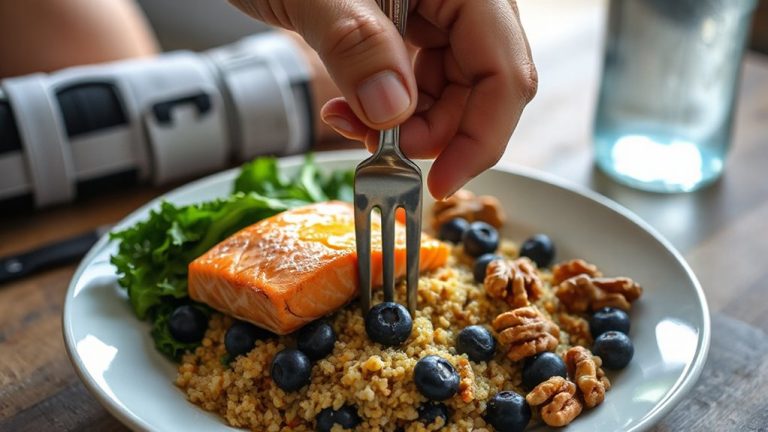
What if the key to faster injury recovery wasn’t in your medicine cabinet or fitness recovery gear, but on your plate? You’re likely overlooking powerful natural tools already proven to reduce inflammation and support healing. Incorporating anti-inflammatory foods can make a measurable difference in your recovery timeline. Turmeric benefits include potent curcumin, which dampens inflammatory pathways linked to pain and swelling. When paired with black pepper, its absorption increases markedly. Ginger properties offer similar advantages, with compounds like gingerol that ease muscle soreness and improve circulation. Fatty fish rich in omega-3s, berries packed with antioxidants, leafy greens loaded with flavonoids, and extra virgin olive oil with its polyphenols round out the top five. Unlike passive recovery tools, these foods actively support your body’s repair mechanisms. They’re not replacements for medical care, but strategic allies in recovery-backed by both science and practical results.
Protein Needs for Muscle and Tissue Repair
Since your body can’t repair damaged muscle and connective tissue without adequate building blocks, hitting the right protein intake isn’t just helpful-it’s vital for effective recovery. You need about 1.6 to 2.2 grams of protein per kilogram of body weight daily to support muscle repair and collagen synthesis. Spreading intake across meals improves utilization, with 20–30 grams per serving being ideal. Whey supplementation offers a fast-absorbing, complete protein rich in leucine, making it ideal post-injury or after rehab sessions. Collagen synthesis, fundamental for tendons and ligaments, benefits from protein intake paired with vitamin C-though that’s a deeper dive for later. While whole foods should anchor your diet, whey supplementation provides a convenient, precise way to meet higher demands. Choosing high-quality proteins guarantees your recovery isn’t stalled by preventable deficits.
Vitamins C, D, and Zinc: Key Nutrients for Recovery
Though recovery hinges on more than just one nutrient, getting enough vitamin C, vitamin D, and zinc can make or break your healing process. You rely on vitamin C for collagen synthesis, a critical step in repairing tendons, ligaments, and skin. Without it, tissue regeneration slows considerably. Vitamin D isn’t just for bones-it supports immune function and modulates inflammation, helping your body respond appropriately to injury. Zinc steps in as a catalyst for protein synthesis and immune support, speeding up wound healing and reducing infection risk. Together, these nutrients create a synergistic effect, enhancing your body’s ability to rebound. While supplements can help, whole foods like citrus, fatty fish, and shellfish offer better absorption and added co-factors. Ignoring these micronutrients may extend downtime, even with perfect rest and rehab.
Why Hydration Speeds Recovery
When you’re recovering from a sports injury, staying well-hydrated isn’t just about quenching thirst-it’s a foundational part of tissue repair and inflammation control. Proper cellular hydration ensures nutrients reach damaged tissues efficiently, while waste products are flushed out. Electrolyte balance supports nerve function and muscle contraction, both essential during rehabilitation. Dehydration slows cellular processes, potentially prolonging recovery.
| Factor | Impact on Recovery | Key Benefit |
|---|---|---|
| Cellular hydration | Enhances nutrient transport | Faster tissue repair |
| Electrolyte balance | Prevents cramps, supports circulation | Stable muscle function |
| Consistent fluid intake | Maintains joint lubrication | Reduced stiffness |
You don’t need high-end fitness gear to stay hydrated-just consistent intake of water and, when needed, electrolyte-rich fluids. This simple practice outperforms many recovery gadgets by directly supporting your body’s biological needs. Prioritize hydration like you would rest or therapy-it’s just as crucial.
Sugary and Processed Foods That Slow Healing
While your body works hard to repair damaged tissues, feeding it sugary and processed foods can undermine recovery by fueling inflammation and disrupting metabolic balance. You might not realize how much the sugar impact affects your healing-excess glucose spikes insulin, promoting fat storage and suppressing immune function. That chocolate bar or soda may taste good, but it slows tissue regeneration. Processed delays are just as harmful; refined grains, fast food, and packaged snacks contain trans fats and additives that impair circulation and cellular repair. These foods lack the micronutrients your body needs and replace them with empty calories. Choosing whole foods instead of processed options supports steady energy and reduces oxidative stress. You’re not just eating to satisfy hunger-you’re either helping or hindering recovery. Smart nutrition is as essential as rest and rehab when healing from injury.
Sample Meal Plan for Faster Injury Recovery
Cutting out sugary and processed foods removes a major barrier to healing, but actively fueling your body with nutrient-dense meals accelerates tissue repair and reduces recovery time. Meal timing and portion control are key-spacing meals every 3–4 hours stabilizes energy and supports muscle regeneration. Focus on lean proteins, healthy fats, and complex carbs to maximize recovery.
| What You Eat | How You Feel |
|---|---|
| Grilled salmon, quinoa, broccoli | Energized, focused |
| Greek yogurt with berries and almonds | Satisfied, calm |
| Turkey wrap with spinach and avocado | Light, steady energy |
| Oatmeal with banana and chia seeds | Mentally clear, motivated |
Consistent, balanced meals reduce inflammation and enhance physical resilience. Proper nutrition isn’t just supportive-it’s therapeutic. When paired with effective fitness recovery gear, smart eating habits speed up your return to form.
On a final note
You’ll heal faster when nutrition supports recovery as effectively as proper fitness gear supports performance. Anti-inflammatory foods, adequate protein, and key vitamins don’t just help-you need them. Hydration and avoiding processed sugars make a measurable difference. Smart dietary choices complement rest and rehab, cutting downtime. Ultimately, recovery isn’t passive; it’s fueled by what you eat, drink, and prioritize every day.