Why REM Sleep Is Critical for Motor Skill Consolidation in Sports Training
You’re not just resting during REM sleep-you’re refining your skills. REM reactivates motor circuits, replaying and fine-tuning movement patterns from training. Without it, neural fatigue lingers, coordination slips, and skill retention drops by nearly 50%. Even intense practice fails if REM doesn’t consolidate those gains. Peak athletic performance isn’t built in the gym alone-it’s locked in overnight. Your nervous system’s precision depends on it, and optimizing REM could be the edge you’ve overlooked.
Notable Insights
- REM sleep reactivates motor circuits, strengthening neural pathways for precision and coordination.
- Neural replay during REM consolidates motor skills learned during training.
- Synaptic pruning in REM enhances signal efficiency by eliminating weak neural connections.
- Insufficient REM impairs motor memory, slowing reaction time and skill retention.
- Later sleep cycles have longer REM periods, critical for optimal motor skill consolidation.
Why REM Sleep Is Non-Negotiable for Athletes
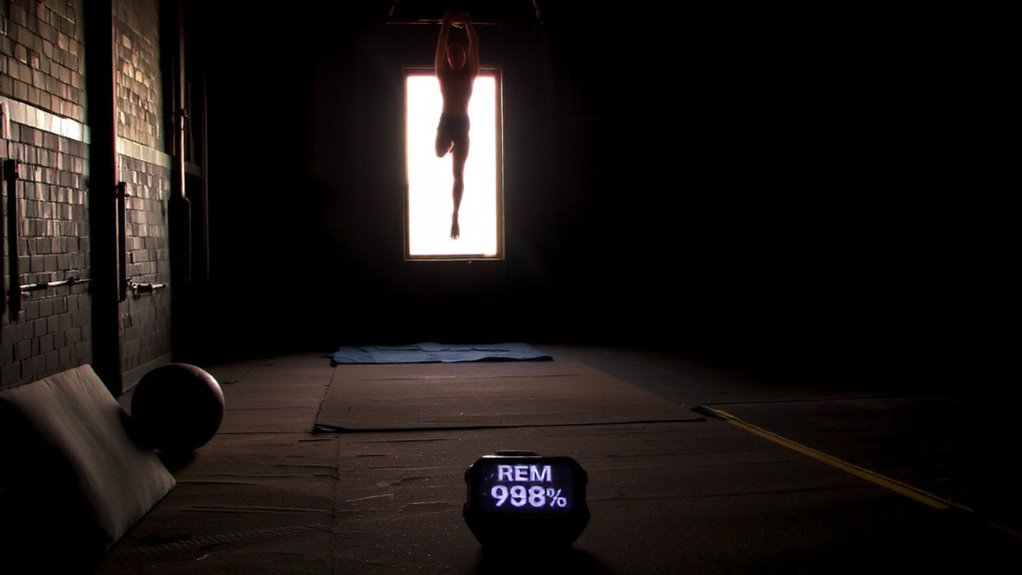
Ever wonder why elite athletes prioritize sleep like it’s part of their training regimen? You’re not just recovering physically-your brain is fighting neural fatigue, especially during REM sleep. Without enough REM cycles, motor skill retention drops, reaction times slow, and focus wavers, no matter how advanced your fitness recovery gear is. Dream analysis shows heightened activity in motor-related brain regions, suggesting your mind rehearses movements even while unconscious. This isn’t incidental; it’s essential. High-performance athletes who cut sleep short deprive themselves of this neurobiological reset. Even the best compression wear or recovery supplements can’t compensate for the cognitive deficits caused by REM deprivation. When you consistently ignore deep sleep phases, you risk plateauing despite rigorous training. Bottom line: optimizing REM isn’t a luxury-it’s as critical as practice itself. Prioritize it, track it, and treat it like any other pillar of athletic performance.
How REM Reactivates Motor Circuits for Skill Refinement

While your body remains still during REM sleep, your brain isn’t just idle-it’s actively reactivating the motor circuits you used during training, strengthening neural pathways that govern precision, timing, and coordination. This is where neural replay kicks in: your brain reenacts the sequences you practiced, fine-tuning movement patterns like a coach reviewing game footage. You’re not just resting-you’re refining. At the same time, synaptic pruning trims weak or redundant connections, sharpening the signal-to-noise ratio in motor networks. This cleanup makes your movements more efficient and accurate over time. Unlike passive recovery, REM sleep actively upgrades performance by solidifying muscle memory. It’s not just about logging hours on the field-it’s about what your brain does afterward. For athletes committed to peak performance, this nightly recalibration is as essential as training gear, if not more so.
Why Practice Alone Isn’t Enough Without REM Recovery

How much of your training truly sticks if your brain doesn’t have the chance to process it? You can push through reps and drills, but without REM recovery, gains stall. Your brain needs this phase to consolidate motor patterns, turning effort into skill. During deep REM cycles, neural fatigue from intense practice gets reset-your nervous system clears metabolic buildup and restores responsiveness. Without it, cognitive interference creeps in, muddling newly learned movements with old habits or distractions. That sloppy free throw or mistimed serve? Likely a product of poor recovery, not poor practice. Think of REM sleep as essential maintenance, like hydrating or using compression gear post-workout. High-tech recovery tools help, but they can’t replace what sleep does internally. You wouldn’t skip rest days with a resistance band or skimp on nutrition with a protein shaker-so don’t undervalue REM. It’s not just rest-it’s where training becomes mastery.
How Sleep Deprivation Blocks Motor Skill Gains
One night of poor sleep cuts your motor learning by nearly half, and chronic sleep deprivation does even more damage over time. Without proper rest, your brain can’t consolidate motor skills, leaving hours of training wasted. Neural fatigue builds up, impairing coordination and slowing reaction time. You’ll also face cognitive lag, making it harder to focus during drills or adapt to new movements. Even the best fitness gear won’t compensate for a tired nervous system.
| Effect | Impact on Performance |
|---|---|
| Neural fatigue | Reduced muscle control |
| Cognitive lag | Slower decision-making |
| Poor REM | Weak skill retention |
| Sleep loss | Increased injury risk |
| Training overload | Diminished gains |
Your body needs recovery as much as it needs reps. Skimp on sleep, and you’re fundamentally practicing in reverse.
Sync Your Training With Natural REM Cycles
You’ve seen how skipping sleep sabotages motor learning, but optimizing your rest goes beyond just clocking hours-it’s about syncing your training with natural REM cycles. Your brain cycles through sleep stages every 90 minutes, with REM periods lengthening toward morning. Timing your training so skills are practiced 6–8 hours before bedtime supports better consolidation, as overnight REM then reinforces neural patterns. This training timing aligns motor memory formation with peak brain activity during cycle alignment. Studies show athletes who respect this rhythm learn complex moves faster and make fewer errors. It’s not just about recovery duration, but precision-your nervous system integrates movement more efficiently when sleep architecture and workout schedules cooperate. Even high-end recovery gear can’t compensate for poor timing. Align your routine with biology, and you’ll see sharper, more consistent performance gains without extra strain.
7 Science-Backed Ways to Boost REM for Athletes
While genetics play a role in sleep structure, you can still influence the quality and duration of your REM cycles with targeted, science-backed adjustments to your environment and routine. Optimizing nutrition timing-such as avoiding heavy meals late at night and consuming tryptophan-rich foods earlier-supports deeper REM phases. Equally important is stress management; techniques like mindfulness, controlled breathing, or even post-training journaling reduce cortisol, which otherwise fragments sleep. Athletes using recovery tracking wearables report improved REM when they align sleep schedules with circadian peaks and minimize blue light exposure. Cooling mattresses and blackout environments also enhance sleep continuity, creating ideal conditions for REM. While fitness recovery gear like compression devices aids physical restoration, it doesn’t directly extend REM-your habits do. Ultimately, consistent routines paired with smart stress management and precise nutrition timing deliver the most measurable gains in REM-driven motor skill consolidation.
On a final note
You need REM sleep to lock in motor skills, not just practice them. Without it, neural refinement stalls, limiting athletic gains. Quality recovery isn’t passive-it’s when your brain replays and sharpens movement patterns. Sleep-tracking wearables and temperature-regulating recovery gear can support deeper REM cycles, but consistency matters most. Prioritize sleep hygiene like you do training: because real progress happens when you’re off your feet, not on them. REM isn’t optional-it’s foundational.