Deep Tissue Massage Alternative: Self-Applied Ball Work With Slow Nasal Breathing
You can get deep tissue relief at home using a massage ball and slow nasal breathing. Pick a firm rubber or textured ball to target tight spots in your neck, shoulders, or lower back. Place it precisely on trigger points-like the upper trapezius or thoracolumbar fascia-and apply steady pressure. Slow nasal breathing calms your nervous system, helping muscles release. This method offers more precision than foam rolling, making self-massage effective and sustainable with daily use-there’s a smarter way to recover.
Notable Insights
- Use a firm rubber or textured massage ball to target deep muscle layers and trigger points effectively.
- Place the ball precisely on tight muscles like the upper trapezius or lower back, avoiding the spine.
- Apply sustained pressure to adhesions while breathing slowly through your nose to enhance relaxation.
- Focus on small areas with a smaller ball or broad zones with a 4-inch ball for accuracy.
- Practice daily for 5–10 minutes with slow nasal breathing to reduce tension and improve mobility.
Choose the Right Massage Ball for Your Needs
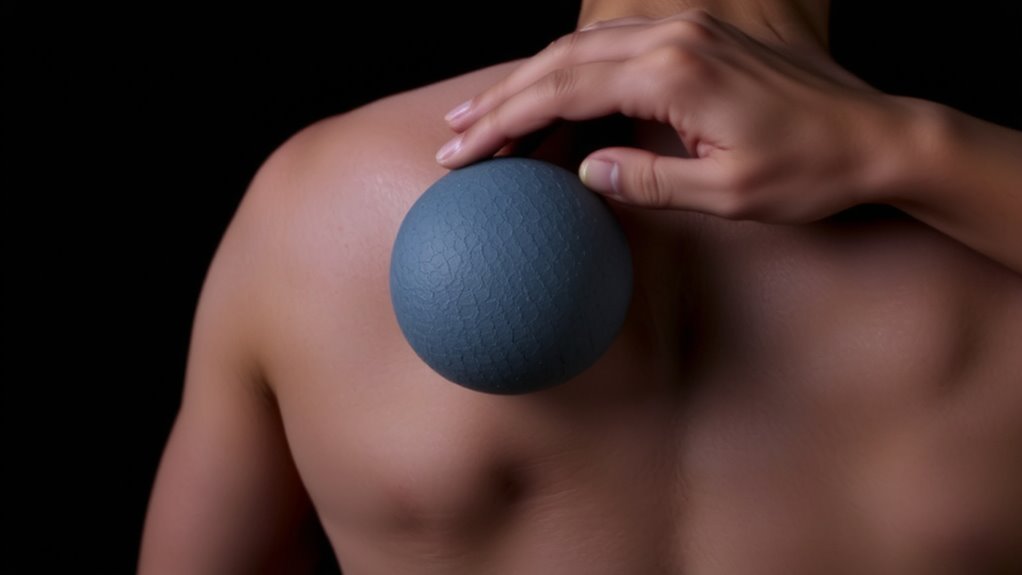
A good massage ball can make all the difference in your recovery routine, especially when you’re targeting tight muscles or stubborn knots. You need to take into account ball materials carefully-rubber offers resilience and slight give, while plastic provides firm, unyielding surface for deep pressure. Some come with textured surfaces to mimic therapist’s hands, enhancing tissue engagement. Your choice affects pressure control, which is essential when working alone. Softer balls let you ease into tension, ideal for beginners or sensitive areas. Denser options demand caution but deliver intense release for chronic tightness. Take into account size, too-smaller balls localize pressure, improving accuracy. Always pair deliberate movements with slow nasal breathing to avoid tensing up. High-quality materials last longer and resist deformation, maintaining consistent performance over time. Choose wisely-your body’s response depends on both design and mindful use. For targeted relief, consider using Best Recovery Balls for Muscle Relief based on expert-tested models designed for varying levels of muscle tension.
Use Massage Balls on Neck, Shoulders, and Lower Back
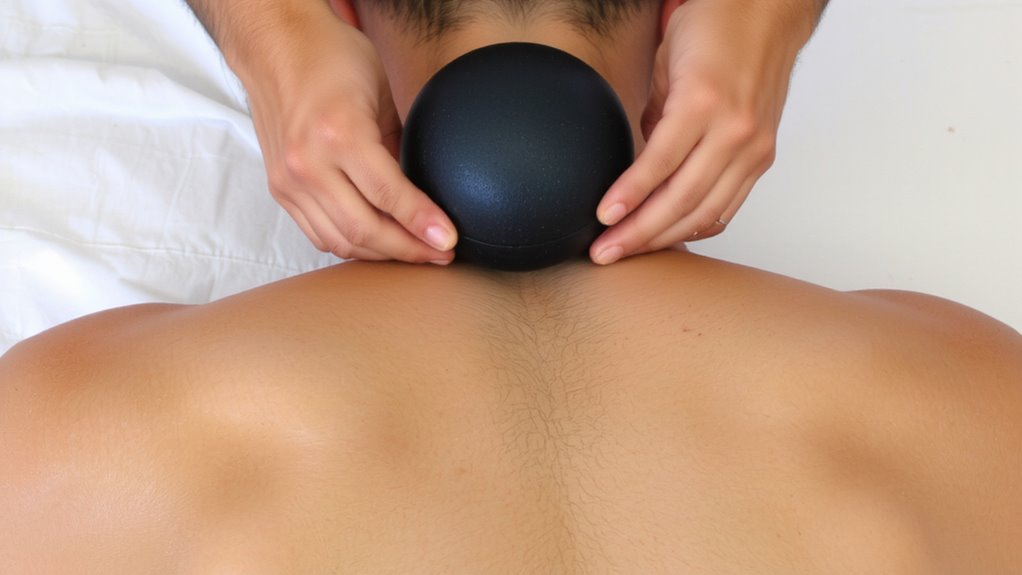
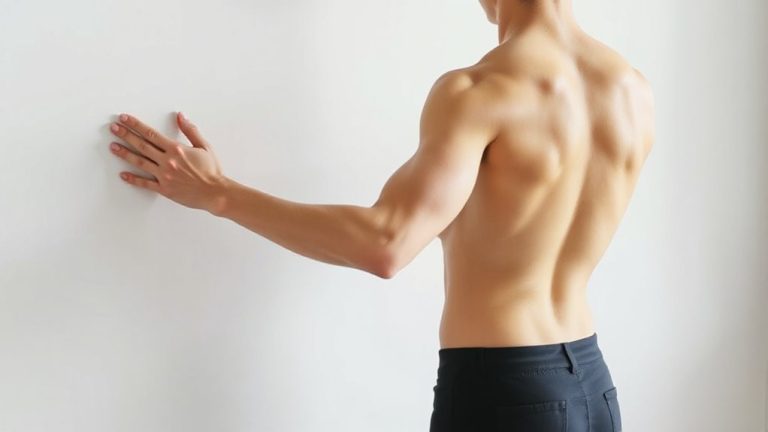
Tension hotspots in your neck, shoulders, and lower back respond well to targeted pressure from massage balls, especially when you lack access to a therapist. You can effectively address muscle fatigue by rolling the ball over stiff areas, allowing deep compression that promotes blood flow and eases tightness. Trigger points-knots of contracted muscle fibers-often release with sustained, gentle pressure, reducing discomfort and improving mobility. Using slow nasal breathing while applying the ball enhances relaxation and helps you tolerate discomfort more efficiently. The firmness of most massage balls lets you modulate intensity based on your tolerance, making them practical for regular recovery. Unlike foam rollers, balls offer precision, reaching small, dense areas with accuracy. Though not a full replacement for manual therapy, they’re a durable, portable solution backed by physiotherapists for self-myofascial release. Their low cost and minimal maintenance boost long-term usability. For those seeking alternatives, some find relief with a top neck massager that combines heat and vibration for similar deep-tissue effects.
Place Balls Correctly on Tight Muscles
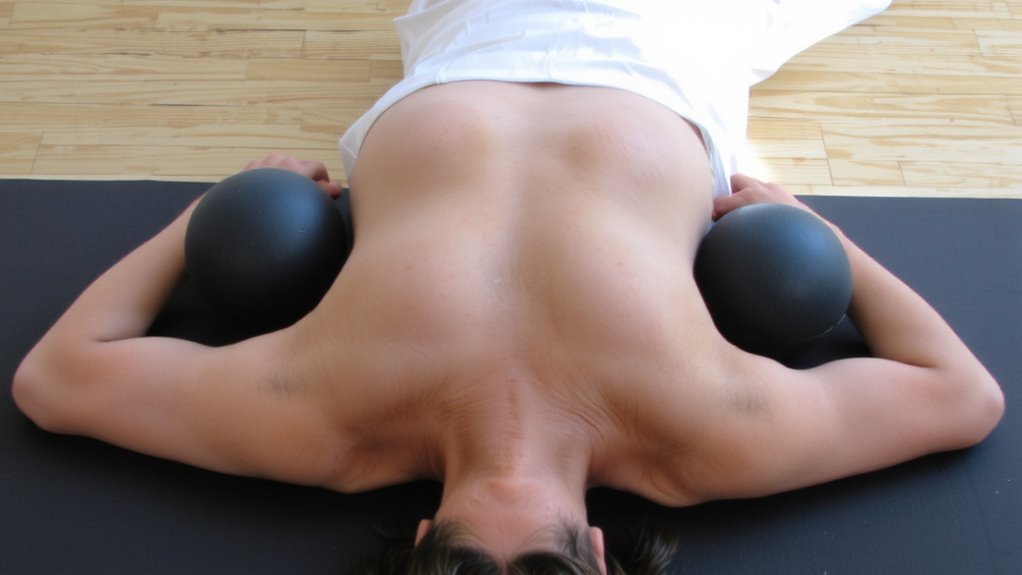
Precision matters when you’re hunting down tightness with massage balls-placement determines effectiveness. You’ve got to position the ball directly on the tight muscle, not just near it, to achieve real relief. Ball placement precision guarantees you’re applying focused pressure where adhesions and trigger points live. For example, on your upper trapezius, center the ball just behind the neck’s edge, not along the spine. Shift slightly until you feel that concentrated knot soften. Muscle targeting accuracy separates effective self-massage from random rolling. Using a firm ball with a non-slip surface improves control, letting you maintain exact positioning while you move. Too soft, and the ball deforms uselessly; too small, and it digs inefficiently. A 4-inch diameter ball usually works best for broad areas like the thoracolumbar fascia. Consistent, deliberate placement multiplies results-especially when you stay still and let the pressure work. Choosing the right density is key, so consider the best foam rollers based on firmness and texture for optimal self-myofascial release.
Breathe Slowly Through Your Nose to Release Tension
You’ll get the most out of your massage ball session by syncing your breath with the pressure-specifically, breathing slowly and deeply through your nose. This nasal breathing triggers a nervous system reset, shifting your body from fight-or-flight to rest-and-digest mode, which helps muscles relax under the ball’s pressure. Unlike mouth breathing, nasal inhalation filters and warms air while supporting steady oxygen exchange, enhancing recovery. When combined with intentional breathing techniques, this method improves parasympathetic tone, reducing overall tension. You’ll likely notice less discomfort on tight spots as your nervous system calms. These techniques transform self-massage from painful grinding to an effective, meditative recovery tool. Consistent nasal breathing during use enhances tissue response, making it a superior addition to fitness recovery protocols. Though subtle, this physiological shift substantially affects performance and muscle resilience. Properly applied, it maximizes the functional benefits of massage balls, elevating their role beyond mere physical tools to instruments of nervous system regulation.
Build a Daily Self-Massage Routine
How do you turn brief moments of self-care into a lasting recovery habit? You start small and stay consistent. Dedicate just 5–10 minutes daily to self-applied ball work, focusing on major muscle groups like calves, glutes, or shoulders. This routine delivers foam rolling benefits-enhanced circulation, reduced stiffness-while offering more precision than a foam roller. Incorporating trigger point therapy, you apply sustained pressure to tight spots, allowing muscle fibers to release. Use slow nasal breathing to deepen relaxation and improve tissue response. Over time, this daily practice supports faster recovery, improves mobility, and prevents chronic tension. Consistency matters more than duration; even short sessions build resilience. Pair the routine with mindful awareness to notice changes in tension and movement quality. With the right technique and regular use, self-massage becomes a sustainable, effective alternative to deep tissue work-no appointment needed.
Why Massage Balls Work Better Than Deep Tissue
Massage balls outperform deep tissue massage in specific recovery scenarios because they put control and accuracy directly in your hands. You can target a trigger point longer and with better angle precision than most therapists apply. Combined with slow nasal breathing, they enhance fascial release by allowing deeper tissue response without triggering protective tension. Unlike broad-handed techniques, balls isolate tight areas efficiently. Their portability and low cost add to long-term usability.
| Feature | Massage Ball | Deep Tissue Massage |
|---|---|---|
| User Control | High | Low |
| Trigger Point Focus | Precise | Variable |
| Fascial Release | Gradual, sustained | Immediate, therapist-led |
| Cost Over Time | Low | High |
| Accessibility | Anytime, anywhere | Appointment-dependent |
On a final note
You’ve likely found deep tissue massage effective, but self-applied ball work with slow nasal breathing offers a practical, cost-efficient alternative. Targeted pressure from sturdy rubber or polypropylene balls-paired with diaphragmatic breath-releases myofascial tension just as reliably. It’s portable, customizable, and fits daily routines. Over time, consistent use improves mobility and recovery, matching clinical treatments for many. With proper placement and mindful breathing, this method maximizes results, making it a smart, sustainable addition to fitness recovery.