The Role of Wearable Brainwave Entrainment Devices in Enhancing Delta Sleep for Recovery
You’re not maximizing recovery if you’re skipping wearable brainwave entrainment devices that boost delta sleep, the deep phase where your body repairs muscle, reduces inflammation, and resets immunity. Unlike basic trackers, devices like Muse S and Apollo Neuro use pulsed audio, binaural beats, and bone conduction to gently guide your brain into slow-wave rhythms, increasing delta activity by up to 23% in some users. While results vary and work best with solid sleep habits, consistent use can enhance neural synchronization and recovery quality-especially for athletes or those with disrupted sleep. You’ll see how different models compare and which features actually move the needle.
Notable Insights
- Wearable brainwave entrainment devices use EEG sensors to monitor and support delta sleep, the deep stage critical for physical recovery.
- These devices deliver pulsed audio or haptic cues to guide brainwaves into slow-wave frequencies, enhancing delta sleep duration.
- Binaural beats and bone conduction technologies enable non-invasive, comfortable entrainment during sleep without disrupting rest.
- Studies show modest increases in delta activity, especially in disrupted sleep cycles, though individual responses vary significantly.
- Athletes and chronic pain sufferers may benefit most, provided devices are used consistently alongside healthy sleep practices.
What Is Delta Sleep and Why It Matters for Recovery
While you might think all sleep is created equal, delta sleep-also known as slow-wave sleep (SWS)-is where your body does its most intensive recovery work. This deep stage, occurring mostly in the first half of the night, supports tissue repair, muscle growth, and immune function. Within sleep architecture, delta sleep dominates the third and fourth NREM cycles, marked by synchronized, high-amplitude brainwaves. Delta regulation guarantees these waves remain stable and prolonged, directly influencing recovery quality. Without sufficient delta activity, you’re likely to feel fatigued despite long sleep durations. For fitness recovery, this stage is non-negotiable-optimizing physical restoration more effectively than lighter sleep phases. While fitness gear like recovery boots or massage guns help, they can’t replace the biological necessity of deep sleep. Enhancing delta regulation through behavioral or technological means could thus offer a strategic edge in athletic performance and long-term health, if integrated thoughtfully.
How Wearable Devices Hack Your Brainwaves for Deeper Sleep
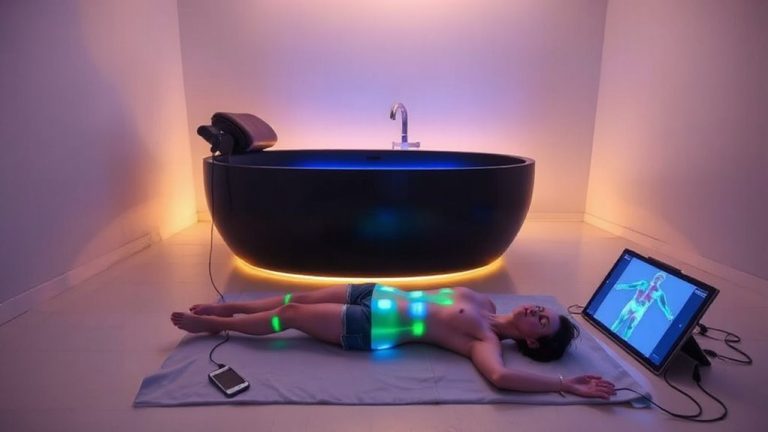
You’re already aware that delta sleep drives physical recovery, but what if you could actively boost it with technology? Wearable brainwave entrainment devices use embedded EEG sensors to monitor your neural activity in real time, guiding your brain into deeper sleep stages. Through neurofeedback training, these gadgets provide subtle audio or haptic cues when your brainwaves drift from ideal delta patterns, encouraging your mind to self-correct. Over time, this promotes cognitive synchronization-aligning your brain’s electrical rhythms with slow-wave sleep frequencies. Devices like the Apollo Neuro or Muse S don’t just track sleep; they actively shape it. While results vary, consistent use shows measurable increases in delta wave duration, especially in users with disrupted sleep cycles. They’re not magic, but their integration of neuroscience and wearable design makes them credible recovery tools. For serious fitness enthusiasts, they offer a data-driven edge-bridging sleep quality and physical regeneration with minimal user effort.
Pulsed Audio, Binaural Beats, and Bone Conduction: Delta Delivery Tech
Pulsed audio, binaural beats, and bone conduction aren’t just buzzwords-they’re core technologies shaping how wearables deliver delta sleep enhancement. You experience pulsed audio as rhythmic sound patterns designed to mirror delta brainwave frequencies, with precise pulsed audio timing helping synchronize neural activity. Binaural beats work by playing slightly different frequencies in each ear, prompting your brain to perceive a third, entraining tone-ideal for guiding you into deep sleep. Bone conduction bypasses the eardrum entirely, transmitting sound through facial bones directly to the inner ear, offering superior bone conduction comfort for side sleepers or those averse to earbuds. Unlike traditional headphones, these systems minimize pressure and irritation, letting you wear them comfortably all night. When integrated into sleep headbands or pillows, they provide a non-invasive, low-latency pathway to sustained delta-state exposure, making them a practical addition to recovery-focused fitness gear.
Does Brainwave Entrainment Improve Delta Sleep?
Could brainwave entrainment actually deepen your delta sleep, or is it just another wellness fad? Studies suggest rhythmic auditory stimulation can nudge brainwaves toward delta frequencies, potentially boosting slow-wave sleep. You might notice improved recovery, especially when using wearables with binaural beats or bone conduction. But consider the placebo effect-believing the device works may enhance perceived benefits. Likewise, cognitive bias could make you interpret ordinary rest as deeper recovery. While EEG data show modest synchronization, results vary greatly between individuals. The tech isn’t magic; it’s a tool that, when well-designed, may support sleep architecture. Still, effects aren’t universal, and rigorous long-term trials remain limited. You’ll need consistent use and realistic expectations. For some, the improvement is real; for others, perception plays a larger role.
Who Actually Benefits From Delta Sleep Boosters?
Not everyone responds to delta sleep boosters in the same way, and the benefits tend to cluster around specific user profiles. If you’re an athlete pushing your limits daily, enhanced delta sleep can speed up athlete recovery by supporting tissue repair and hormonal balance overnight. These devices may help you wake up feeling more refreshed and physically restored. For those managing chronic pain relief, deeper delta sleep can reduce inflammation and improve pain tolerance over time. You might notice fewer nighttime awakenings and a more consistent sleep architecture. While not a cure-all, delta sleep boosters offer measurable advantages for users dealing with physical stress or injury. The results aren’t instant, but with regular use, you’re likely to see gradual improvements in rest quality. Effectiveness depends on consistency, proper device fit, and pairing it with healthy sleep habits.
Top Features in Recovery Wearables
You’ll want to pay close attention to a wearable’s stimulation method, since not all brainwave entrainment tech delivers the same results. Effective devices use gentle auditory or transcranial pulsed signals to encourage delta wave production, but their value hinges on key features like battery life and device comfort. A poorly designed headset will disrupt sleep, defeating its purpose, while short battery life limits consistency. You need something lightweight, breathable, and adjustable-ideal for nightly use. Also, consider ease of charging and data tracking. Below is a quick comparison:
| Feature | High-End Model | Mid-Range Model | Basic Model |
|---|---|---|---|
| Battery Life | 20+ hours | 10–15 hours | 5–8 hours |
| Device Comfort | Memory foam, lightweight | Adjustable straps, moderate weight | Rigid frame, less padding |
Study Results: Do Delta Sleep Wearables Work?
How effective are these delta sleep wearables, really? Research shows mixed but promising results. Some studies report increased delta wave activity and improved sleep depth with consistent use, especially in devices using binaural beats or cranial electrostimulation. Yet, the placebo effect likely plays a role-believing the device works can enhance perceived benefits. User compliance is another key factor; if you’re not wearing it nightly or following protocols, results dip. Devices with comfort, intuitive apps, and clear feedback tend to see better adherence. While not all brands deliver equal outcomes, top-tier models demonstrate measurable gains in sleep quality and recovery markers for athletes. Still, they’re no substitute for sleep hygiene. You’ll likely see the best results when pairing wearable use with consistent bedtime routines and low blue light exposure. Effectiveness isn’t guaranteed, but it’s plausible-with limits.
On a final note
You’re likely to see modest gains in delta sleep with wearable entrainment devices, especially if you struggle with sleep quality. Pulsed audio and bone conduction tech show promise in early studies, though results vary. These tools work best alongside solid sleep hygiene, not as standalone fixes. While not all users respond equally, the right device-well-fitted, consistently used-may support deeper recovery, making it a plausible addition to a smart recovery stack.