Using Body Awareness to Adjust Sleep Posture for Mental Calmness in Wrestlers
You improve mental recovery by aligning your spine and releasing tension through body-aware sleep adjustments. Notice where your shoulders, neck, and back hold stress after training. Support your neck with a contoured pillow to maintain neutral alignment and enable deeper, diaphragmatic breathing. Choose sleep positions that reduce pressure points and let muscles fully relax. Track your posture nightly to build consistency, and refine your routine to sharpen focus and emotional control-discover how small nightly changes compound into sharper performance.
Notable Insights
- Wrestlers can use body scanning to detect and release residual muscle tension that disrupts sleep posture and mental calmness.
- Diaphragmatic breathing before bed enhances spinal alignment and signals the nervous system to enter rest mode.
- Consistent neck support maintains neutral spine positioning, improving breathing and reducing nighttime arousal.
- Awareness of physical tension cues helps wrestlers adjust sleep positions for optimal recovery and mental clarity.
- Integrating posture tracking with biometrics reinforces body awareness and promotes restful, uninterrupted sleep.
Why Sleep Posture Affects Wrestlers’ Mental Recovery
How often do you consider what your body is doing while you sleep, especially after a grueling practice or competition? Your sleep posture directly influences mental recovery, particularly through breathing patterns and muscle relaxation. When your spine is misaligned, it restricts diaphragm movement, leading to shallow breaths that reduce oxygen flow and hinder nervous system restoration. Proper posture supports deeper, rhythmic breathing, which calms neural activity. Likewise, correct alignment allows for full muscle relaxation, preventing residual tension from accumulating in the neck, shoulders, and back. Without it, your brain perceives ongoing physical stress, delaying mental recovery. Fitness recovery isn’t just about gear-foam rollers or compression suits mean little if your body isn’t restoring effectively at night. The right sleep posture acts like recovery equipment itself, optimizing physiological processes critical for mental clarity and emotional balance after intense physical demands. Choosing a pillow that supports spinal alignment, such as one designed for side sleepers, can significantly improve neck support and overall sleep quality.
How Poor Sleep Posture Increases Mental Tension
You might not realize it, but the way you hold your body during sleep can quietly amplify mental tension, especially after the physical grind of wrestling. Poor sleep posture often leads to breathing restriction, reducing oxygen flow and keeping your nervous system on edge. When your airways are compressed-say, from a forward head position or twisted spine-your body struggles to enter deep, restorative sleep. This shallow breathing mimics stress signals, making it harder to mentally unwind. Meanwhile, muscle fatigue lingers because misaligned joints prevent full recovery. Tense shoulders or a cramped lower back aren’t just sore-they feed back into your mental state, heightening irritability and focus issues. Wrestlers, whose bodies endure repetitive strain, can’t afford this added neurological load. Over time, inadequate alignment undermines both physical repair and emotional resilience. Proper posture isn’t just about comfort; it’s a recovery essential. Choosing the right support, such as a best cervical pillow, can significantly improve spinal alignment and reduce neck strain during sleep.
Notice Where Your Body Holds Stress
While your mind may be focused on the next match, your body keeps a physical record of every takedown, drill, and grind-often storing tension in predictable areas like the neck, shoulders, and lower back. You’re likely carrying excess muscle tension without realizing it, especially after intense training. This buildup not only disrupts recovery but also alters your breathing patterns, making them shallow and irregular. Poor breath control further amplifies mental tension, creating a cycle that affects sleep quality. Noticing where you hold stress allows you to intervene early. Simple body scans before bed help identify tight zones, guiding targeted stretching or foam rolling. Wrestlers using recovery gear like compression apparel report reduced muscle tension, though effectiveness depends on consistent use and proper fit. Monitoring your body’s signals isn’t just preventative-it’s a strategic part of recovery. Aligning physical awareness with intentional rest supports mental calmness and long-term performance. A high-density foam roller can enhance myofascial release and improve recovery when used consistently.
Support Your Neck and Spine for Calmer Sleep
Proper spinal alignment during sleep plays a key role in recovery, especially when your training schedule pushes muscles and joints to their limits. You need consistent neck support to prevent strain and maintain a neutral posture throughout the night. Without it, even minor misalignments can disrupt rest and slow tissue repair. Choosing gear that actively promotes proper spinal alignment makes a measurable difference in sleep quality and daily readiness. Look for contoured pillows or adjustable mattresses that support your natural curvature without exaggerating it. Performance isn’t just about materials-design and long-term durability matter, too.
| Feature | Benefit |
|---|---|
| Contoured foam | Enhances neck support |
| Breathable cover | Regulates temperature |
| Adjustable loft | Customizes spinal alignment |
Choose Sleep Postures That Relax the Mind
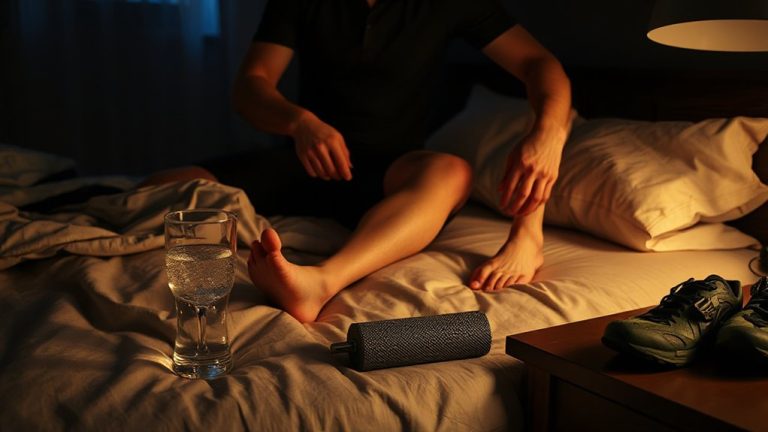
How often does your mind race at night, replaying the intensity of a training session or dissecting a missed move on the mat? Choosing a sleep posture that calms mental chatter is essential for recovery. Lying in a neutral position-like supine with knees slightly elevated-reduces physical strain and supports mental ease. Pair this with mindful breathing: inhale slowly through your nose, expanding your diaphragm, then exhale fully. This signals your nervous system to shift into rest mode. Follow with body scanning, mentally noting each muscle group from toes to head, releasing tension where you find it. Wrestlers who use these techniques report falling asleep faster and waking less at night. Unlike recovery gear that promises results but lacks evidence, these methods are low-cost, proven, and within your control. They work not because of materials or design, but through deliberate, consistent use-making them reliable tools for mental calmness.
Use a Posture-Focused Routine to Wind Down
Because your body carries the day’s physical load long after practice ends, guiding it into a deliberate wind-down routine makes a meaningful difference in recovery quality. You can enhance this process by incorporating breath control and muscle relaxation techniques that signal your nervous system to shift into rest mode. Start with five minutes of diaphragmatic breathing-slow inhales through the nose, controlled exhales through the mouth-to reduce physiological arousal. Pair this with progressive muscle relaxation, tensing and releasing muscle groups from feet to shoulders. This routine primes your body for ideal sleep posture, minimizing tension in key areas like the neck and lower back. When practiced consistently, it improves recovery efficiency and mental calmness. While fitness gear like supportive pillows or recovery mats can assist, they work best when paired with intentional behavioral habits. You don’t need advanced tools-just disciplined application of body awareness before bed.
Track Posture to Build Mental Resilience
A wrestler’s body tells stories the mind sometimes overlooks, and tracking your sleep posture is more than a recovery tactic-it’s a form of mental training. When you monitor how you lie each night, you begin to notice patterns tied to stress, fatigue, or lingering tension. Consistently aligning your spine supports natural breathing alignment, which calms the nervous system over time. Devices like posture-tracking mattresses or sleep-sensing pads provide feedback, helping you adjust for ideal muscle relaxation. You’ll likely sleep deeper and wake more composed. Wrestlers using such fitness recovery tools report improved focus and emotional control, suggesting a mental resilience component. While gear varies in accuracy and comfort, models with biometric sensors offer valuable insights when used consistently. It’s not about perfection-it’s about awareness. Over time, disciplined posture tracking conditions both body and mind, turning rest into a strategic part of mental toughness training.
On a final note
You’ll recover better when your sleep posture supports spinal alignment and reduces muscular tension. For wrestlers, this means choosing positions that keep the neck neutral and the spine supported, enhancing mental calmness. Using supportive gear like contoured pillows or firm mattresses isn’t just comfort-it’s recovery strategy. Over time, tracking posture improves both physical restoration and mental resilience, making disciplined sleep hygiene as essential as training itself.