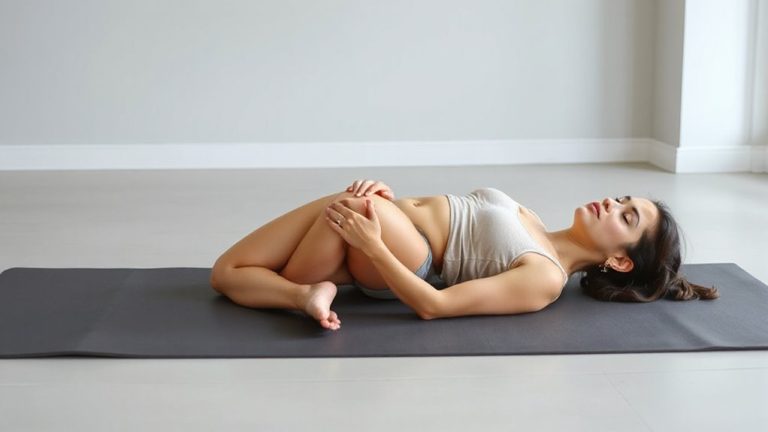
Progressive Muscle Relaxation Paired With Controlled Inhalation for Faster Recovery
You can speed up recovery by pairing progressive muscle relaxation with controlled inhalation, a method that activates your parasympathetic nervous system, lowers heart rate, and reduces muscle tension. This combo enhances oxygen delivery, sharpens focus, and regulates stress far better than passive rest. When practiced correctly, it builds emotional resilience and supports faster physical and mental reset-especially when aligned with biometrics and recovery gear. There’s more to how timing and technique shape results.
Notable Insights
- Combining Progressive Muscle Relaxation (PMR) with controlled inhalation enhances parasympathetic activation for faster physiological recovery.
- Synchronizing deep inhalation with muscle contraction and slow exhalation with release optimizes nervous system regulation and tension reduction.
- This paired technique lowers heart rate, reduces muscle tension, and accelerates return to baseline more effectively than rest alone.
- Practicing sequentially from head to toe with diaphragmatic breathing (inhale 4, hold 2, exhale 6) maximizes relaxation and recovery efficiency.
- Daily integration-especially post-workout or before sleep-improves sleep quality, mental focus, and stress resilience without requiring special equipment.
Why This Combo Speeds Up Recovery From Stress and Exercise?
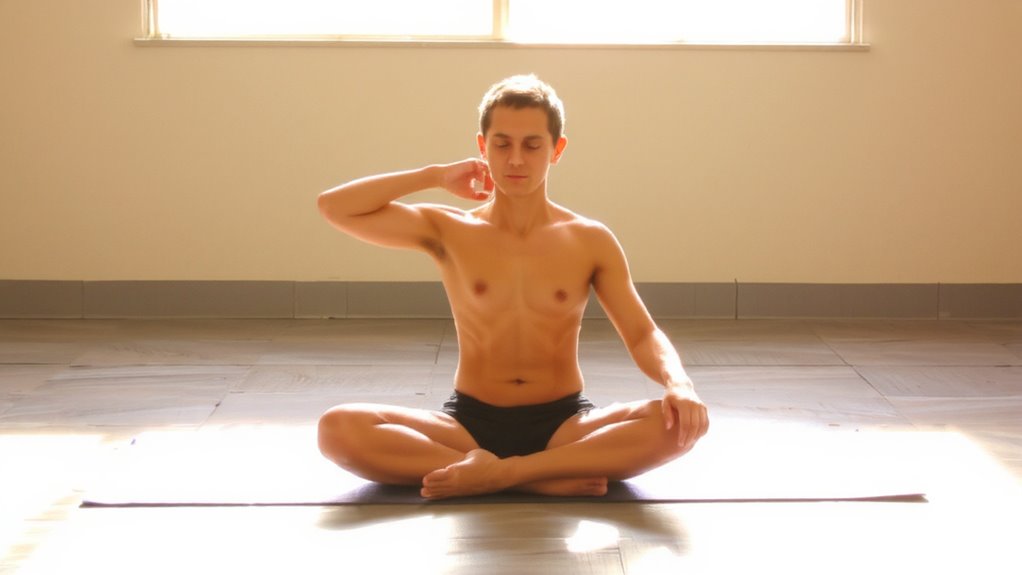
While your body naturally works to bounce back after stress or intense exercise, pairing progressive muscle relaxation with controlled breathing gives that process a noticeable boost. You activate your parasympathetic nervous system, which supports recovery by lowering heart rate and reducing muscle tension. This combo isn’t just about physical ease-it sharpens cognitive reframing, helping you shift from panic to patience. By focusing on breath and tension release, you build emotional regulation, making it easier to manage post-exercise discomfort or daily stressors. Fitness gear like biofeedback devices or guided meditation apps can enhance this practice, offering real-time feedback and structure. These tools don’t replace technique but refine it. When used consistently, the method proves more effective than passive rest. You’re not just recovering-you’re training your body and mind to respond with greater resilience. It’s practical, evidence-backed, and within reach. Devices such as muscle stimulators can complement this recovery approach by further reducing muscle tension and enhancing circulation.
What Progressive Muscle Relaxation and Controlled Inhalation Really Do
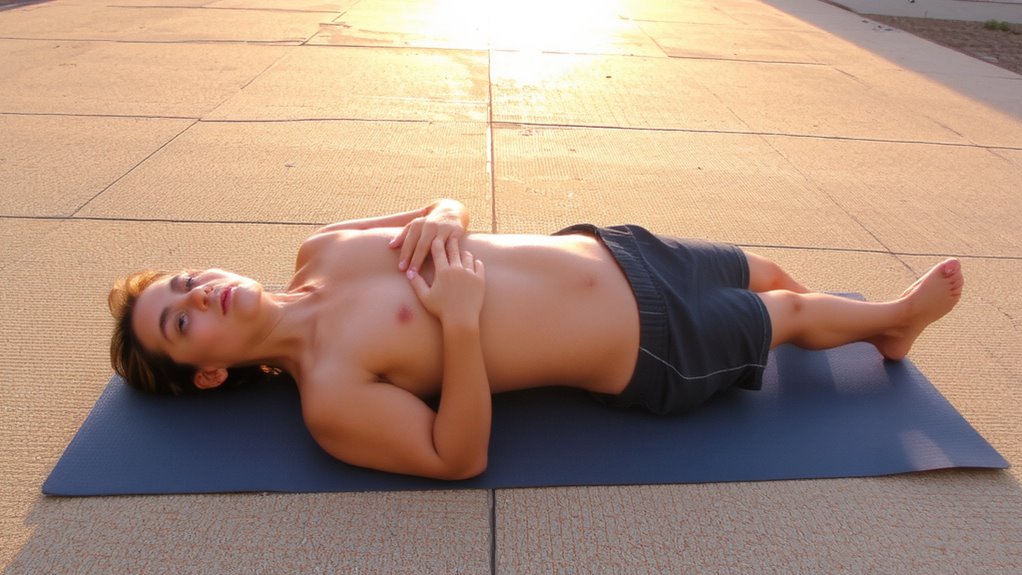
You’re already aware that combining progressive muscle relaxation with controlled breathing accelerates recovery by engaging the parasympathetic nervous system, but understanding exactly what these techniques do on a physiological and psychological level makes their value even clearer. They promote parasympathetic activation, slowing heart rate and lowering blood pressure, while improving neural efficiency by streamlining signal transmission between brain and muscles. This means your body recovers faster with less energy wasted. Below is how these processes align:
| Process | Physiological Effect | Psychological Benefit |
|---|---|---|
| Muscle Relaxation | Reduces tension, improves circulation | Decreases perceived stress |
| Controlled Inhalation | Enhances oxygen uptake, stabilizes HRV | Sharpens focus, calms mind |
| Combined Practice | Boosts parasympathetic activation, optimizes neural efficiency | Accelerates mental and physical recovery |
These methods don’t just relax you-they refine your body’s response systems, making recovery more efficient and sustainable over time.
How to Pair Muscle Tension With Breathing in 5 Steps
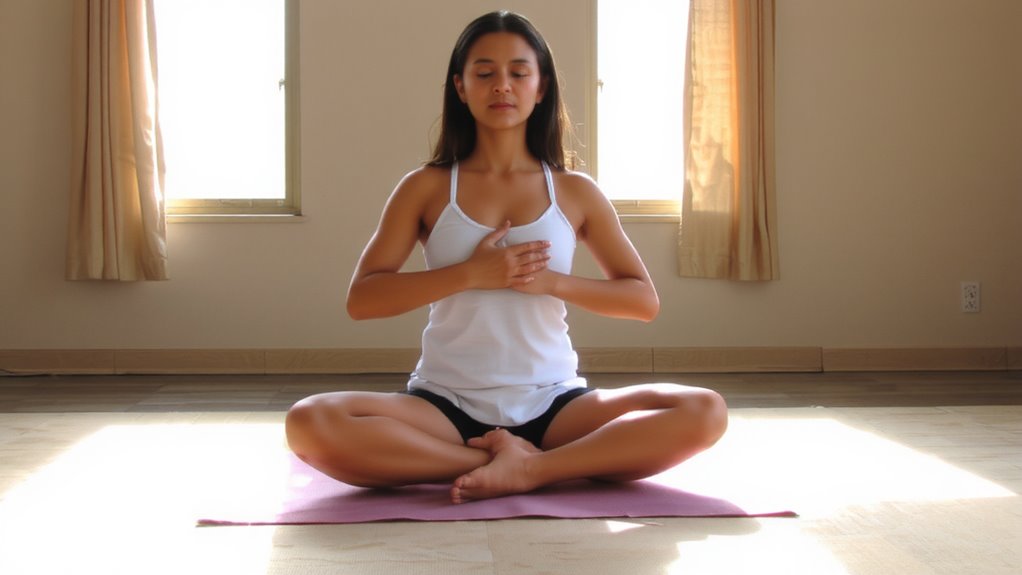
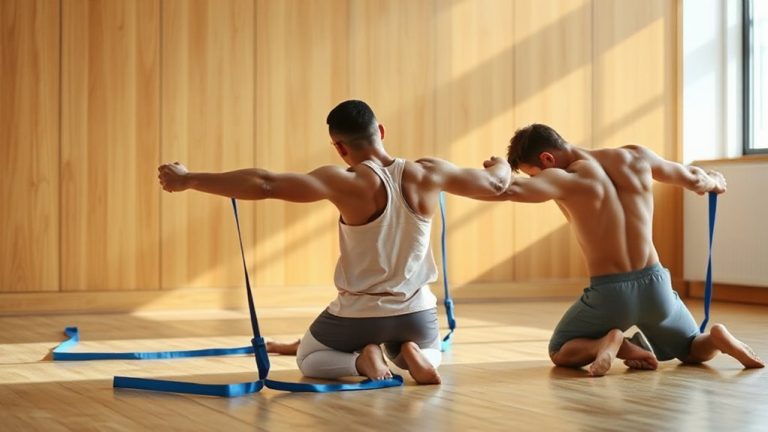
Since coordination between breath and muscle engagement lies at the heart of effective recovery, pairing tension with controlled breathing follows a structured rhythm that amplifies parasympathetic response. First, inhale deeply as you tense a specific muscle group-hold for 5 seconds. Then, exhale slowly while releasing the tension, noticing the contrast. Second, maintain rhythmic synchronization: inhale with contraction, exhale with release. Third, move sequentially through muscle groups, head to toe. Fourth, use mindful visualization-picture tension melting with each breath. Fifth, sustain a slow, steady pace; rushing reduces efficacy. This method isn’t just ritual-it’s physiological design. Controlled inhalation enhances oxygen delivery, while deliberate muscle engagement primes the nervous system for recovery. When practiced correctly, the blend of breath and tension doesn’t merely relax-it recalibrates. Equipment like resistance bands or recovery mats can support proper form, but the real tool is precision, not gear.
When to Practice for Faster Physical and Mental Recovery
When timed strategically, your practice of progressive muscle relaxation and controlled breathing can substantially accelerate both physical and mental recovery. Key timing cues-like post-workout or pre-sleep-align with natural recovery windows, enhancing effectiveness. Using controlled inhalation during these periods helps shift your nervous system into parasympathetic dominance, promoting muscle repair and mental clarity.
| Time of Day | Recovery Benefit | Best For |
|---|---|---|
| Morning | Resets stress baseline | Mental focus |
| Post-Workout | Reduces cortisol, muscle tension | Physical recovery |
| Before Bed | Improves sleep onset and quality | Mental recovery |
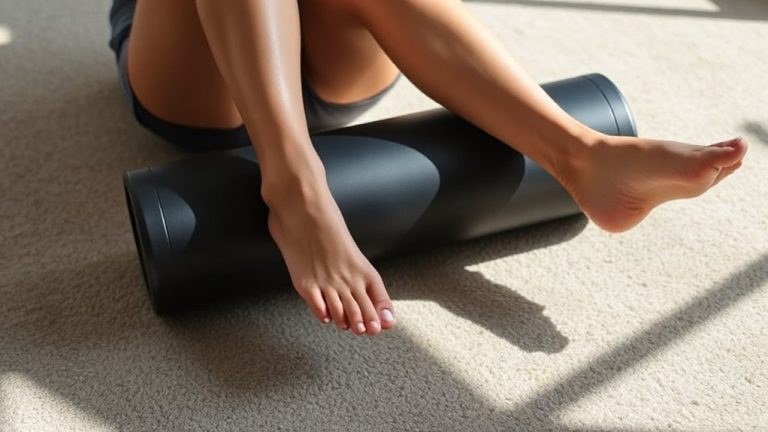
You’ll see better results when you match your routine to these physiological recovery windows. Fitness recovery isn’t just about rest-it’s about intelligent timing. Pairing breath and relaxation with these cues maximizes adaptation, especially when supported by proper gear like moisture-wicking apparel and posture-friendly mats. Incorporating a recovery ball can further enhance muscle relief by targeting deep tissue tension.
Don’t Make These PMR and Breathing Mistakes
Timing your practice of progressive muscle relaxation and controlled breathing can substantially boost recovery, but even well-placed routines fall short if common mistakes go uncorrected. You’re likely overthinking fatigue, turning what should be a rest捽tive practice into a mental burden. This isn’t a test of intensity-tensing muscles too hard or pushing breaths too long adds strain instead of relieving it. Let go of perfection; the goal is awareness, not performance. You’re also probably ignoring posture, slumping on a couch or hunching on a mat. Poor alignment restricts diaphragmatic movement and dampens breathing efficiency. Sit or lie in a neutral spine position-hips stacked, shoulders relaxed, head balanced. Proper posture supports ideal oxygen flow and muscle release, making your recovery gear, from foam rollers to resistance bands, more effective when used afterward. Fix these, and your routine starts working *for* you, not against you.
How to Adapt the Routine on High-Pressure Days
Even if your schedule feels overwhelming, modifying your progressive muscle relaxation and controlled breathing routine doesn’t mean sacrificing effectiveness-you just need to prioritize efficiency. On high-pressure days, shorten each muscle group’s contraction from 10 to 5 seconds and reduce the full cycle to 10 minutes. Focus on major tension zones like shoulders, jaw, and back, skipping isolated areas. Pair this with diaphragmatic breathing: inhale for four counts, hold for two, exhale for six. This supports stress adaptation by calming your nervous system quickly. Routine flexibility is key-use seated variations at work or during breaks. You don’t need special fitness gear; just a quiet space and consistent posture. Though full sessions are ideal, condensed versions maintain resilience. The goal isn’t perfection but continuity. With slight adjustments, you sustain recovery benefits without adding strain. This practical approach guarantees long-term adherence, even when demands spike.
What Science Says About PMR and Controlled Inhalation
Although research into mind-body interventions continues to evolve, the evidence supporting progressive muscle relaxation (PMR) and controlled inhalation remains both robust and consistent. You’ll find that combining these techniques enhances neurological synchronization, helping your brain and body align during recovery. Studies show this pairing improves autonomic balance by reducing sympathetic drive while boosting parasympathetic activity-ideal after intense workouts. When you practice PMR with slow, intentional breathing, heart rate variability improves, signaling better stress resilience. This isn’t just theory; athletes using wearable recovery gear report quicker restoration when breath control and muscle relaxation are integrated. The synergy makes physiological sense: controlled inhalation primes the nervous system, while PMR releases residual tension. Together, they create a feedback loop that supports deeper recovery. You don’t need high-tech tools to benefit, though biometric wearables can help track progress in real time.
On a final note
You’ll find this combo speeds recovery by lowering cortisol and improving oxygen delivery. Progressive muscle relaxation eases tension, while controlled inhalation stabilizes heart rate variability. Paired, they enhance parasympathetic activity more than either technique alone. It’s practical post-workout or during high-stress days. No gear needed-just consistent practice. Though simple, it outperforms passive rest. For recovery-focused fitness routines, this method delivers measurable mental and physical benefits with minimal time investment.