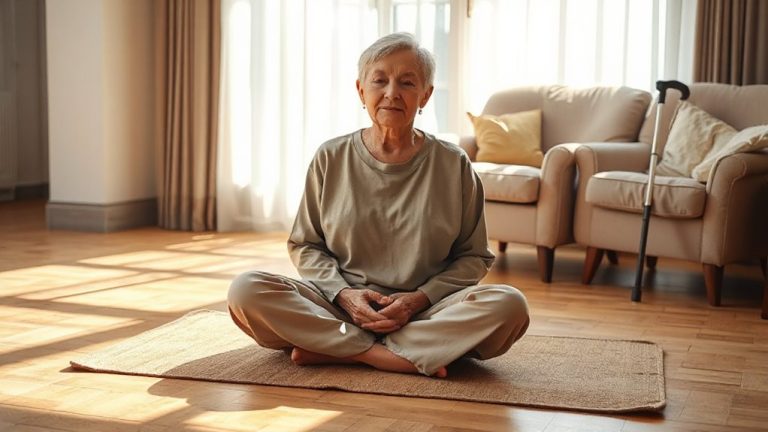
Tai Chi Sword Form Adapted for Core Activation Without Compression Forces
You avoid spinal compression with Tai Chi Sword Form because it builds core strength through smooth, controlled movements instead of repetitive flexion. Each cut and thrust demands balance, engaging your abs, obliques, and lower back without strain. Proper posture guarantees alignment, reducing injury risk while enhancing stability. Unlike crunches or gear-dependent workouts, this method trains deep stabilizers naturally. You develop endurance and coordination in real movement patterns-discover how specific techniques make this both effective and sustainable.
Notable Insights
- Tai Chi Sword Form builds core strength through fluid, full-body movements without spinal flexion or compression.
- Controlled sword sequences activate deep stabilizing muscles like the transverse abdominis and obliques progressively.
- Maintaining neutral spine alignment during practice ensures core engagement while protecting intervertebral discs.
- Sword extensions amplify rotational and postural demands, enhancing neuromuscular efficiency without added spinal load.
- Ideal for injury recovery and older adults, it strengthens the core safely through balanced, mindful motion.
Why Traditional Core Exercises Strain the Body
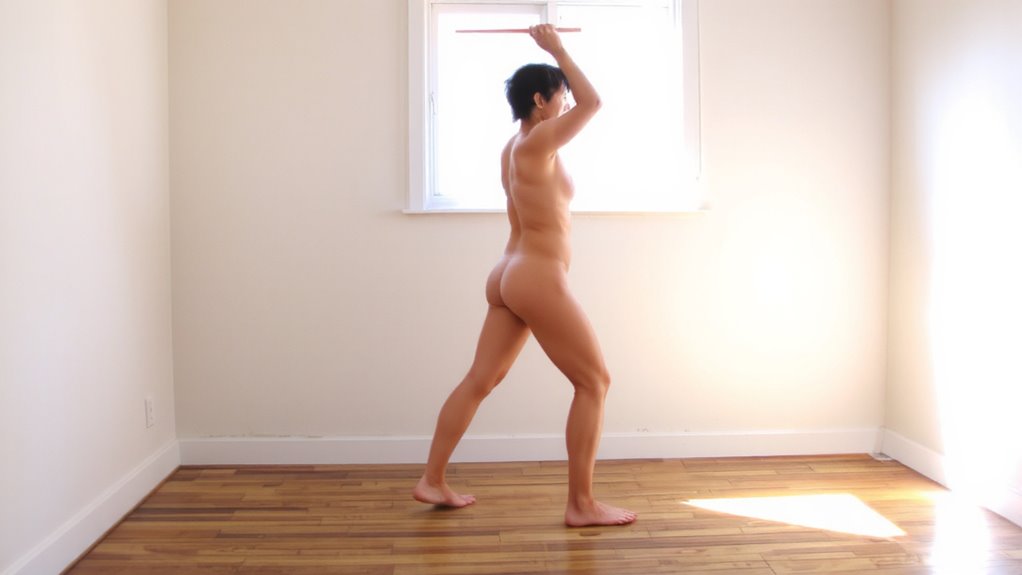
While crunches and sit-ups have long been staples in fitness routines, they often do more harm than good when it comes to core activation and long-term spinal health. You’re repeatedly bending forward, creating excessive spinal flexion, which compresses the discs with every rep. That constant forward curl increases disc pressure markedly-up to eight times your body weight in some positions. Over time, this repetitive stress can lead to wear, herniation, or chronic back pain. These exercises also tend to isolate the superficial abs, neglecting deeper stabilizing muscles. Even with top-tier fitness gear designed for support, like lumbar cushions or ab rollers, the biomechanical flaw remains. Equipment might improve form slightly, but it won’t eliminate the inherent risk. Recovery becomes harder when your routine includes movements that strain rather than strengthen. You’re better off choosing exercises that engage the core without compromising spinal integrity.
How Tai Chi Sword Form Builds Core Strength Safely
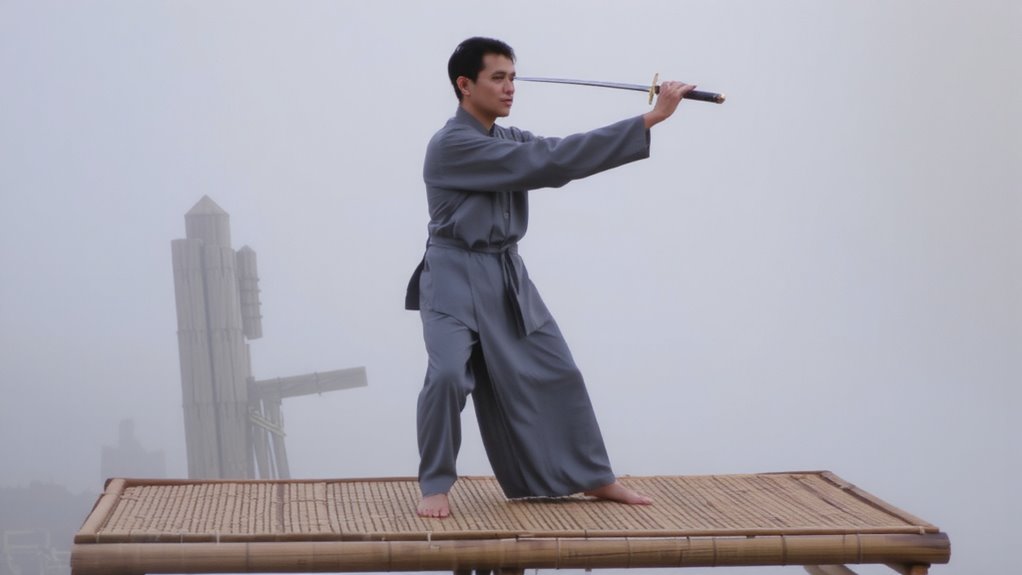
Movement, not isolation, lies at the heart of how Tai Chi Sword Form safely builds core strength. You engage your deep stabilizing muscles through flowing, controlled sequences that emphasize dynamic balance and mindful coordination. Unlike static crunches or loaded twists, this practice activates your core progressively, without compressing the spine. Each shift in weight, pivot, or extension demands integrated effort from your abdominals, obliques, and lower back, reinforcing functional strength. The sword extends your reach, amplifying sensitivity to alignment and requiring subtle adjustments to maintain equilibrium. Over time, you develop neuromuscular efficiency-your body learns to recruit core muscles instinctively during motion. This method reduces injury risk while enhancing stability and control. Gear like flexible, lightweight swords with balanced weighting supports precision and promotes proper technique, aiding in consistent, safe practice without compromising form or recovery.
The Role of Posture in Tai Chi Core Activation
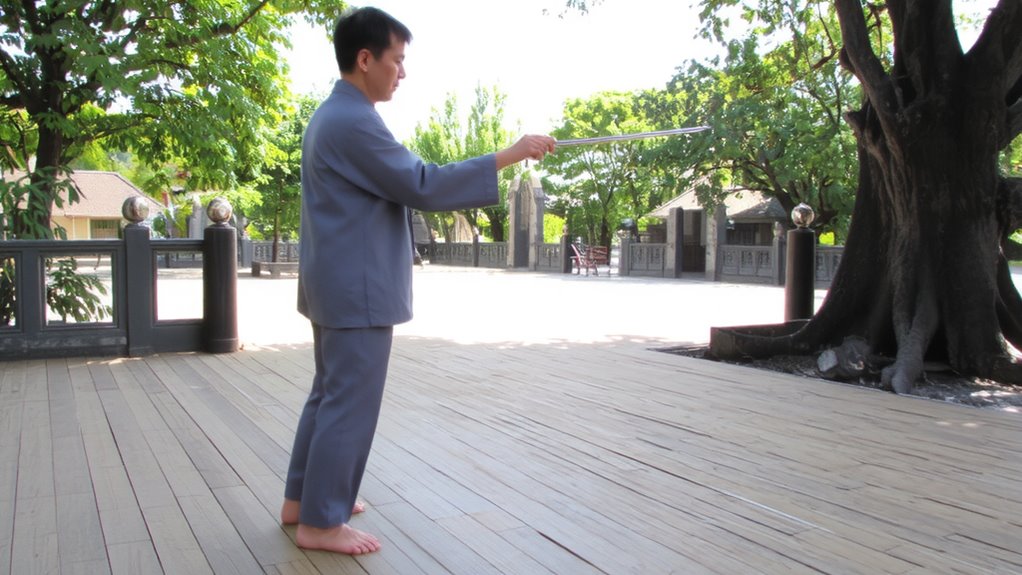
Proper posture isn’t just a foundation-it’s the engine of core activation in Tai Chi Sword Form. You rely on spinal alignment to transmit force efficiently while minimizing joint stress. A neutral pelvic tilt stabilizes your lower back, letting your deep core engage without strain. Without this balance, even precise movements lose their power and protective benefit. Supporting your spine’s natural curvature during rest is just as vital, and using the right pillow can reinforce proper alignment-consider the best pillows for spine alignment to maintain these principles beyond practice.
| Posture Element | Role in Core Activation | Common Error |
|---|---|---|
| Spinal Alignment | Maintains natural curves for ideal load distribution | Overarching or slouching |
| Pelvic Tilt | Engages transverse abdominis and prevents shear forces | Excessive anterior tilt |
| Shoulder Position | Allows breath depth and scapular stability | Hunching or winging |
You’ll notice improvements quickly when alignment becomes intentional-not forced. This isn’t about rigidity; it’s dynamic support. Good posture integrates muscle, breath, and movement, turning each stance into a core exercise that protects as it strengthens.
3 Sword Movements That Activate Your Core
When you perform Tai Chi sword movements with mindful precision, each cut, thrust, and parry becomes a subtle yet powerful core engagement exercise. You maintain balance focus not through rigid stillness but controlled motion, engaging deep stabilizing muscles with every shift. Fluid shifts between postures-like from *Brush Knee* to *Wild Horse Parts the Mane*-require constant abdominal activation, turning the form into dynamic resistance training without joint compression. The sword acts as an extension of your kinetic chain, amplifying the demand on your obliques, transverse abdominis, and lower back. Movements like *Repulse Monkey* or *Wave Hands Like Clouds with Sword* challenge coordination and trunk endurance, fostering functional strength. Unlike high-impact routines, these motions support sustainable fitness recovery, especially when paired with proper gear that allows unrestricted movement. The design of lightweight, balanced swords further enhances form, reducing strain while maximizing core response through repetition and refinement.
Who Gains the Most From Tai Chi Sword Training
You’re already engaging your core with every intentional sweep and controlled lunge in Tai Chi sword practice, but the benefits extend far beyond abdominal activation-certain individuals stand to gain markedly more from this low-impact, high-awareness discipline. Older adults see exceptional improvements in balance enhancement, reducing fall risks through deliberate weight shifts and stability training. Those recovering from injury or managing chronic conditions also benefit, as the form avoids spinal compression while promoting joint mobility. You’ll find mindful coordination becomes second nature, sharpening proprioception and neuromuscular control. Athletes use it to refine movement efficiency, while office workers combat sedentary stiffness. The sword acts as a dynamic extension, increasing focus without strain. Unlike aggressive training tools, Tai Chi swords require neither strength nor speed, making them accessible. With consistent practice, you develop sustainable fitness patterns, integrating breath, motion, and awareness-ideal for long-term health investment and functional recovery across diverse populations.
On a final note
You’re building core strength effectively with tai chi sword form, avoiding spinal compression common in traditional exercises. Its fluid movements enhance stability, coordination, and mindful engagement. When paired with supportive recovery gear-like compression tools or posture-correcting apparel-your practice gains efficiency. This method suits rehab patients, athletes, and aging adults alike, offering low-impact, high-return training. It’s not just exercise; it’s sustainable fitness, blending ancient technique with modern recovery science for long-term resilience.