Step-by-Step Static Stretching Routine for Tight Hamstrings Post-Workout
After your workout, do the standing hamstring stretch with one leg extended and heel down, gently hinging at the hips to lengthen warm muscles safely. Stretch each leg seated, one at a time, keeping your pelvis neutral and spine long to improve symmetry. Use a towel in the lying stretch for controlled tension without back strain. Hold each stretch 30 seconds with slow breaths-inhale to prepare, exhale to release deeper. Consistent post-workout stretching boosts flexibility and recovery faster than occasional efforts, especially when you maintain proper form. There’s more to optimizing this routine for long-term results.
Notable Insights
- Perform static hamstring stretches post-workout when muscles are warm to enhance flexibility and reduce injury risk.
- Use the standing hamstring stretch, holding each leg for 30 seconds with a neutral spine and slight knee bend if needed.
- Try the seated one-leg stretch to improve symmetry, flexing the foot and hinging at the hips with a long spine.
- Apply the lying towel stretch by looping a towel around the foot and gently guiding the leg toward you.
- Breathe slowly-inhale at the start, exhale at 10 seconds-and maintain each stretch for a full 30 seconds.
Do the Standing Hamstring Stretch After Your Workout
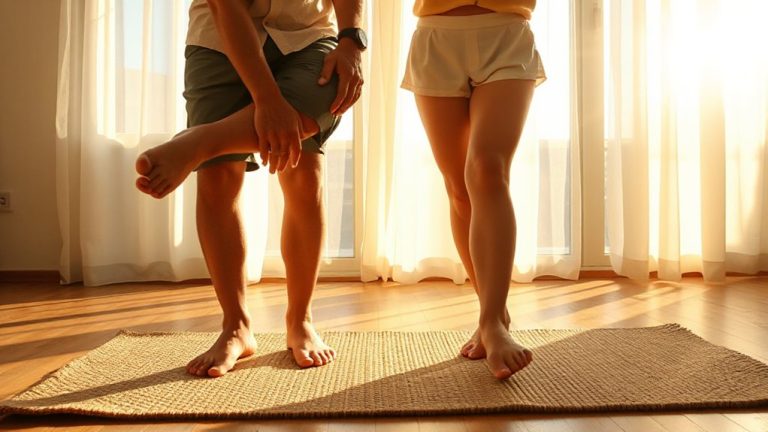
While you might be tempted to stretch your hamstrings before exercise, doing the standing hamstring stretch after your workout is actually more effective for improving flexibility and aiding recovery. Your muscles are warm and more pliable post-exercise, which enhances the flexibility benefits of static stretching. Holding the standing hamstring stretch for 30 seconds per leg allows deeper, safer elongation without triggering protective tension. This timing supports muscle recovery by increasing blood flow, reducing stiffness, and promoting relaxation in overworked tissues. Unlike aggressive pre-workout stretching, which may impair performance, post-activity stretching complements cooldown routines and improves long-term mobility. Fitness recovery isn’t just about rest-it’s also about smart, science-backed practices. Using supportive gear like moisture-wicking, compression-style recovery leggings can further aid circulation. When combined with consistent stretching, these tools optimize your body’s ability to rebound. This approach isn’t a shortcut-it’s a practical, sustainable strategy for lasting hamstring health.
Stretch One Leg at a Time While Seated
Stretching one leg at a time while seated gives you better control and alignment, letting you focus deeply on each hamstring without strain. Seated symmetry guarantees your pelvis stays neutral, reducing the risk of overcompensation from your dominant side. Keep one leg extended, foot flexed, while the other bends with sole resting close to your inner thigh. This position enhances leg alignment and isolates tension more effectively than bilateral stretches. Sit tall-don’t hunch-and hinge slightly at the hips to reach toward your toes. Your spine should remain long, not rounded, to maximize hamstring engagement. This stretch is ideal post-workout when muscles are warm and pliable. Compared to dynamic options, it supports passive recovery, especially useful if you use recovery gear like foam rollers afterward. Seated symmetry also helps detect side-to-side tightness differences, guiding more balanced training. It’s simple, low-impact, and doesn’t require equipment-just mindful form. For enhanced support and deeper flexibility gains, consider incorporating a stretching strap.
Try the Lying Towel Hamstring Stretch
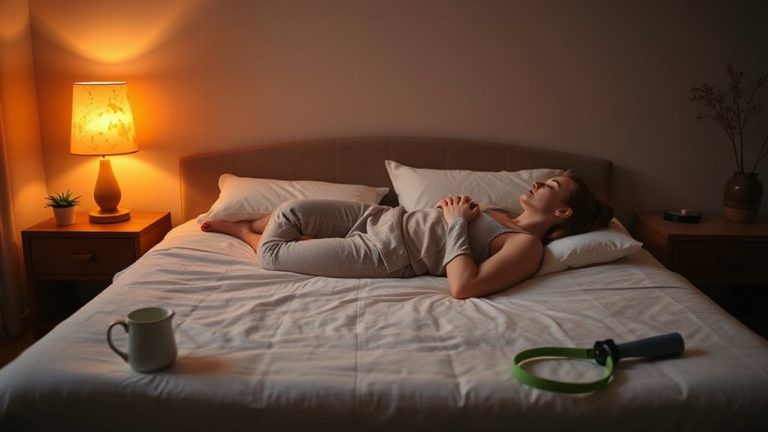
A simple yet effective option for targeting tight hamstrings is the lying towel hamstring stretch, especially when you’re working with limited mobility or recovering from intense activity. You’ll perform this in supine positioning, lying on your back with one leg extended and the other lifted gently toward the ceiling. Loop a towel around your raised foot, using it to apply gentle towel resistance as you pull the leg toward you. Keep your knee slightly bent if needed to avoid strain, focusing on a smooth, gradual stretch along the back of the thigh. This method supports controlled range of motion, making it ideal during fitness recovery when muscles are fatigued. The supine positioning reduces lower back stress, while the towel acts as a practical aid, enhancing precision without expensive gear. It’s effective, accessible, and easily modified-ideal for consistent post-workout use. For added support and durability, consider using a stretching strap designed for flexibility training.
Hold Each Stretch for 30 Seconds With Steady Breathing
You’ve got your towel in place and your leg gently lifted, primed to address that stubborn hamstring tightness. Hold the stretch for 30 seconds-no more, no less. This duration optimizes muscle relaxation without risking overstretching. Maintain proper alignment: keep your spine neutral, the opposite leg flat, and avoid pulling too hard on the towel. Steady breathing enhances oxygen flow and supports nervous system calm, which aids in real muscle release.
| Phase | Breath Pattern | Purpose |
|---|---|---|
| Start | Inhale slowly | Prepares body |
| 10 seconds | Exhale fully | Encourages muscle relaxation |
| 20 seconds | Inhale through nose | Stabilizes focus |
| 25 seconds | Slow exhale | Deepens stretch safely |
| 30 seconds | Natural breath | Promotes recovery |
Proper alignment and muscle relaxation guarantee effective, sustainable results.
Make Progress With Consistent Post-Workout Stretching
While recovery often takes a backseat to more intense training components, prioritizing post-workout stretching-especially for tight hamstrings-can substantially enhance flexibility and reduce injury risk over time. You’ll start seeing real flexibility gains within a few weeks if you stretch consistently after every workout. Static holds of 30 seconds target muscle tension effectively, supporting long-term lengthening of hamstring tissues. This regular practice also accelerates muscle recovery by improving blood flow and reducing soreness. Unlike aggressive or sporadic stretching, a measured, daily approach yields more sustainable results. Recovery gear like foam rollers or supportive yoga mats can enhance your routine by providing comfort and alignment, though they’re not essential. The key isn’t intensity-it’s showing up consistently. Over time, your body adapts, tension decreases, and movement becomes easier. Stick with it, and you’ll notice not just better flexibility gains, but improved overall muscle recovery, too.
On a final note
You’ll recover faster and improve flexibility by doing this routine consistently after workouts. Static stretching lowers muscle tension and supports hamstring health when held for 30 seconds with controlled breathing. Over time, you’ll notice better range of motion and reduced soreness. Quality fitness gear, like supportive mats and grippy socks, enhances stability and comfort during stretches, making recovery more effective and safer with regular use.