Nutritional Strategies to Prevent Muscle Atrophy During Immobilization Periods
You lose muscle fast when immobilized because your body shifts into breakdown mode, and doing nothing guarantees you’ll pay the price. Fight it by eating high-quality protein every 3–4 hours-aim for 20–30 grams per meal, with eggs, chicken, or Greek yogurt. Prioritize leucine-rich foods like whey or eggs to kickstart muscle repair, and don’t skip vitamin D, magnesium, and antioxidants to support healing. These strategies work best together, so sticking to the full plan gives you the edge-there’s more to get right than just protein alone.
Notable Insights
- Consume high-quality protein at every meal to maintain muscle protein synthesis during immobilization.
- Prioritize leucine-rich foods or supplements, aiming for 2–3 grams per meal to activate muscle repair.
- Distribute protein intake evenly every 3–4 hours to sustain anabolic signaling and reduce muscle loss.
- Ensure adequate vitamin D intake to support muscle function, especially with limited sun exposure.
- Include magnesium and antioxidants to reduce inflammation and support metabolic processes during recovery.
Why Immobilization Causes Rapid Muscle Loss
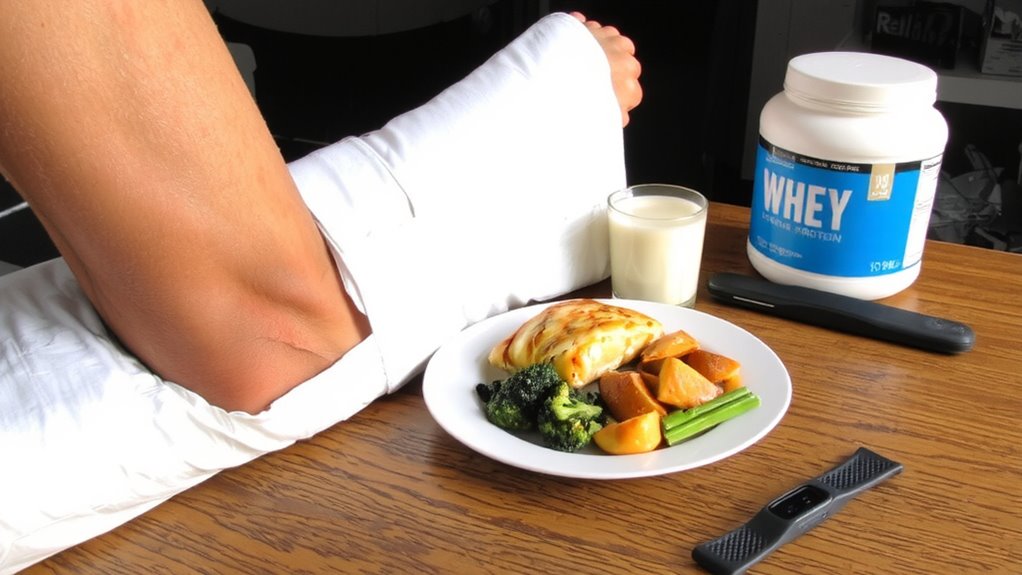
While you might think muscle loss during inactivity is just a matter of “use it or lose it,” the reality is far more complex-and faster-acting than most realize. Within days of immobilization, your body begins shedding muscle mass, not just from disuse, but due to deep physiological shifts. Hormonal changes-like decreased insulin-like growth factor 1 and increased cortisol-tilt your metabolism toward breakdown rather than repair. At the same time, neural suppression occurs, weakening the brain-to-muscle signaling that maintains strength. Even with top-tier fitness gear designed to support recovery, these internal mechanisms outpace external aids. You can’t simply brace or stimulate your way out of this decline. Resistance may slow it, but without targeted interventions, atrophy progresses rapidly. Understanding this helps you recognize that recovery isn’t passive-it demands strategy. Your body’s internal environment, not just mechanical load, determines muscle retention during downtime.
Prioritize High-Quality Protein at Every Meal
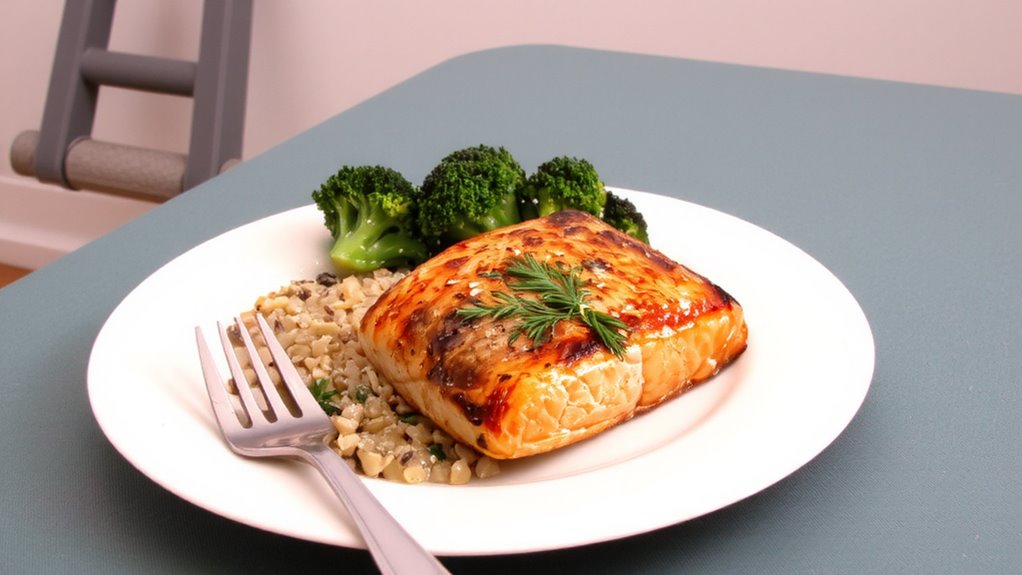
Protein isn’t just a building block-it’s your first line of defense against muscle breakdown during periods of inactivity. You need high-quality protein at every meal to support muscle preservation, especially when movement is limited. Prioritizing protein timing ensures your body receives amino acids consistently, helping maintain synthesis rates. Equally important is amino acid balance-your muscles respond best to complete proteins containing all nine essential amino acids.
| Food Source | Amino Acid Balance & Protein Timing Benefit |
|---|---|
| Eggs | High leucine, ideal balance, rapid delivery |
| Greek Yogurt | Sustained release, excellent daily balance |
| Chicken Breast | Complete profile, ideal post-meal uptake |
These foods deliver both fast and sustained support, making them practical choices. Consistent intake across meals beats cramming protein into one sitting. You’re not just eating-you’re strategically defending muscle.
Boost Leucine Intake to Fight Muscle Breakdown
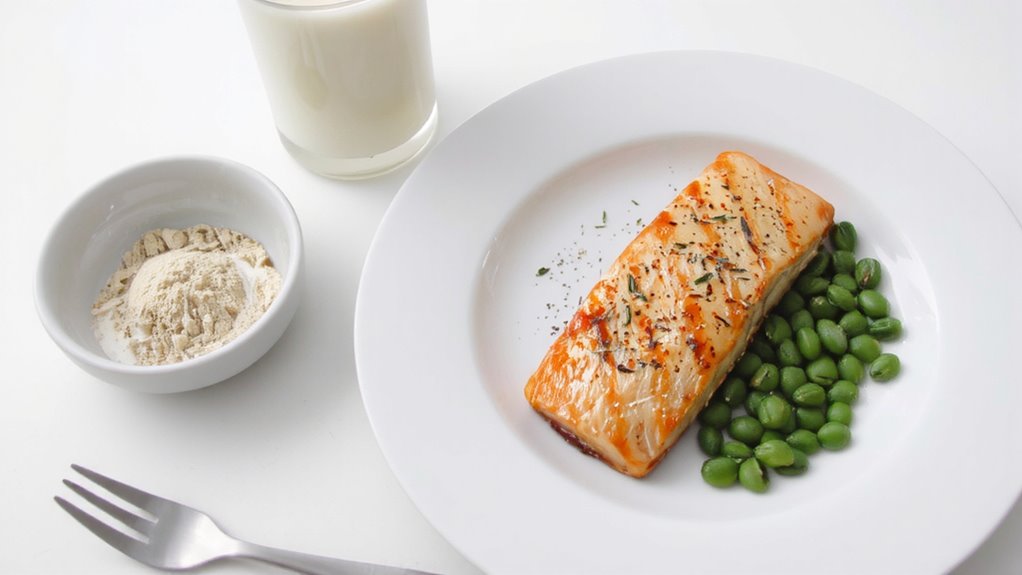
Leucine’s your secret weapon when it comes to slowing muscle breakdown-it’s not just another amino acid, but the primary trigger for muscle protein synthesis. You need about 2–3 grams per meal to effectively activate muscle signaling pathways that kickstart repair and growth. During immobilization, these signals weaken, making leucine timing essential-consuming it early and consistently helps maintain anabolic activity. Foods like whey, eggs, and lean meats are rich sources, but supplements can help hit targets efficiently. While whole proteins offer additional benefits, isolated leucine provides a targeted boost where it’s needed most. Research supports its role in reducing atrophy, especially when combined with proper nutrition overall. It won’t replace movement, but it does give your muscles a biochemical nudge to resist deterioration. Smart leucine timing isn’t just convenient-it’s a practical strategy backed by strong physiological mechanisms.
Eat Protein Every 3–4 Hours for Best Results
Spacing your protein intake every 3–4 hours keeps muscle synthesis humming throughout the day, giving your body a steady stream of amino acids to work with. Timing matters because muscles respond best when fed consistently, not just at one large meal. Frequency counts-spreading protein across the day maximizes utilization and minimizes breakdown during inactivity. Think 20–30 grams per meal: a Greek yogurt, eggs, or a shake, timed around waking, mid-morning, lunch, afternoon, and dinner. Without regular intake, your body dips into negative balance, losing ground when you can’t afford to. It’s not just how much you eat, but when and how often. This rhythm supports sustained repair, especially critical when movement is limited. Unlike passive recovery tools or costly recovery gear, this strategy relies on control you already have-your schedule. Practical, affordable, and effective, it’s a cornerstone of nutritional resilience.
Add Vitamin D, Magnesium, and Antioxidants for Recovery
While protein keeps your muscles primed for repair, you’re not fully supporting recovery if you’re overlooking key micronutrients like vitamin D, magnesium, and antioxidants. Vitamin D deficiency is common during immobilization, especially if you’re indoors more-it weakens muscle function and slows healing. You need at least 600–800 IU daily, but many require more based on blood levels. Magnesium helps regulate muscle contractions and supports over 300 enzymatic reactions tied to recovery. If you’re cramping or stiff, it might be low. Antioxidant supplementation combats oxidative stress from inactivity, which can worsen muscle atrophy. Vitamins C and E, plus polyphenols, reduce inflammation and improve circulation. Together, these nutrients enhance how well your body responds to rehab efforts and fitness recovery protocols. While they don’t replace movement, they’re essential support-like maintaining high-quality fitness gear, you must care for internal systems to restore performance efficiently.
On a final note
You’ll lose muscle fast when immobilized, but smart nutrition helps. Hitting protein targets every 3–4 hours, prioritizing leucine-rich foods, and spreading intake evenly fights breakdown. Don’t skip vitamin D and magnesium-they support recovery on a cellular level. While fitness gear like braces or cuffs may aid mobility, they’re no substitute for proper fuel. Pair targeted supplementation with sound dietary habits, and you’re giving your body the best shot at minimizing atrophy during downtime.